Proof
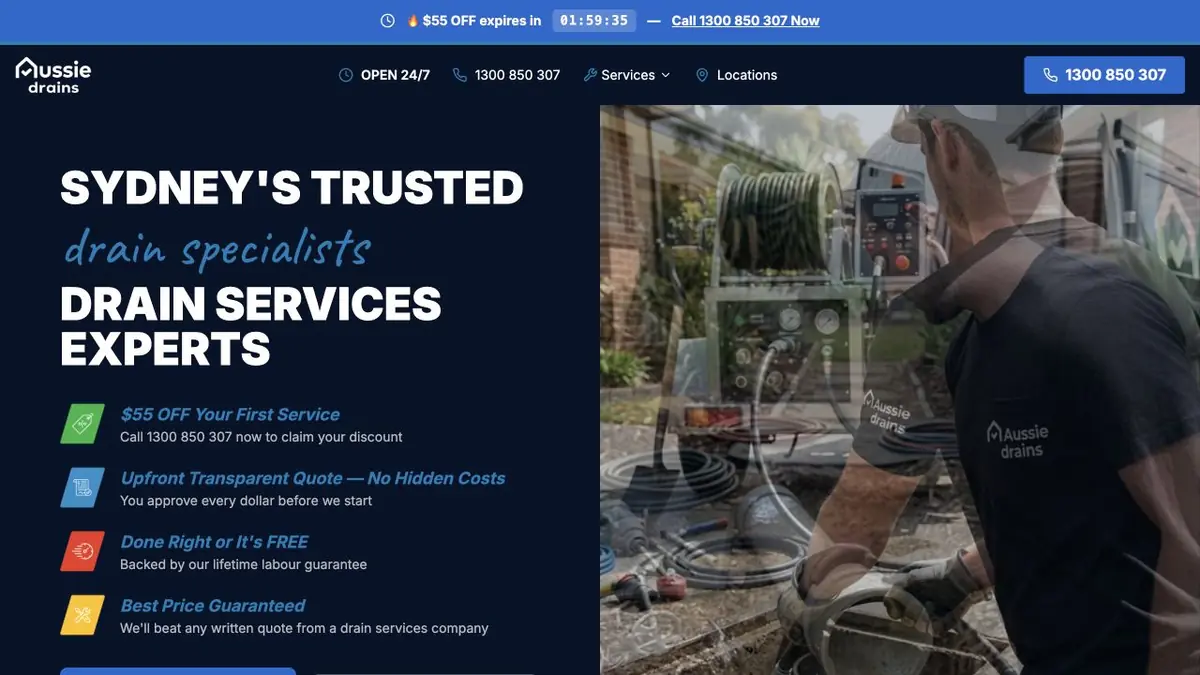
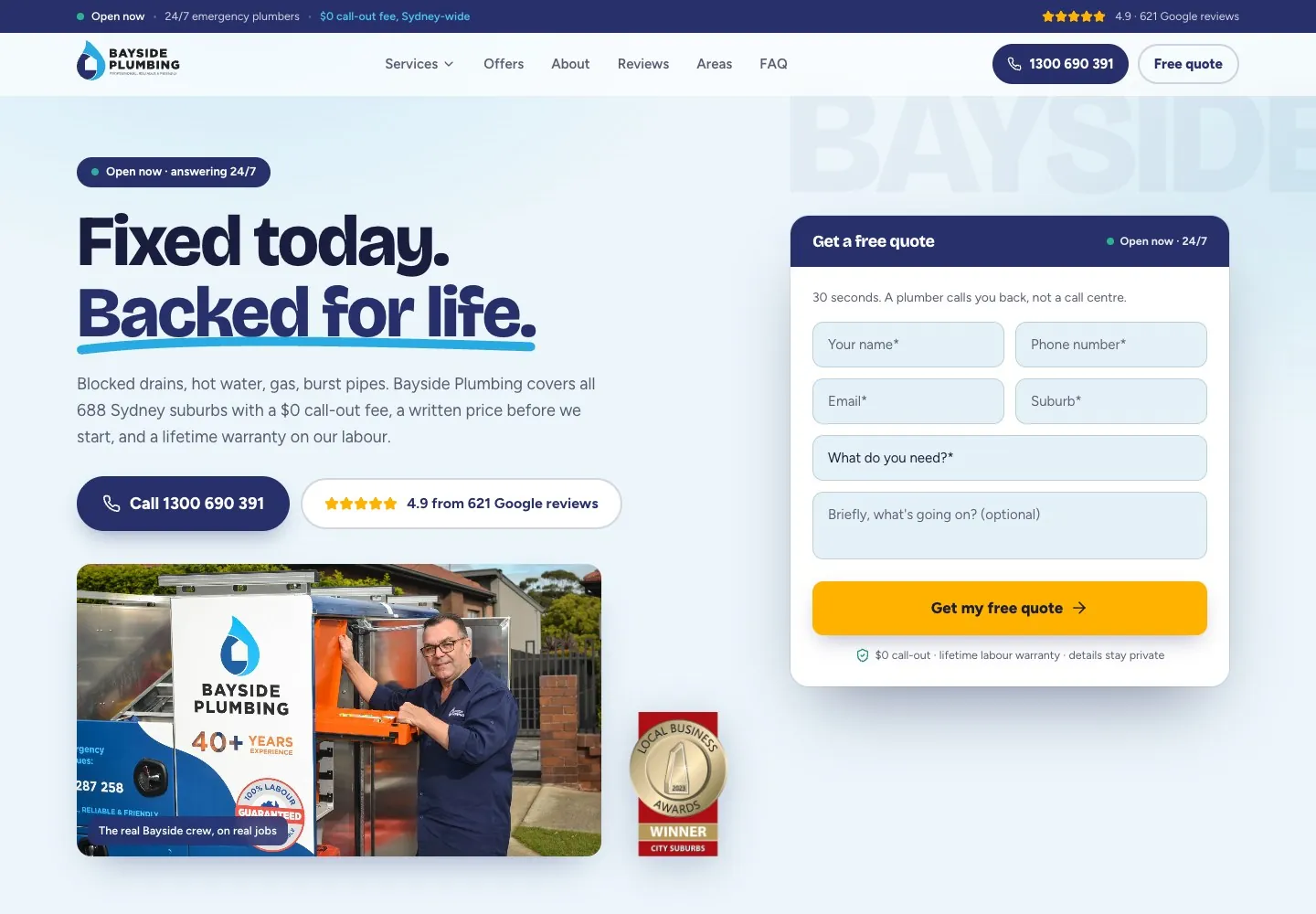
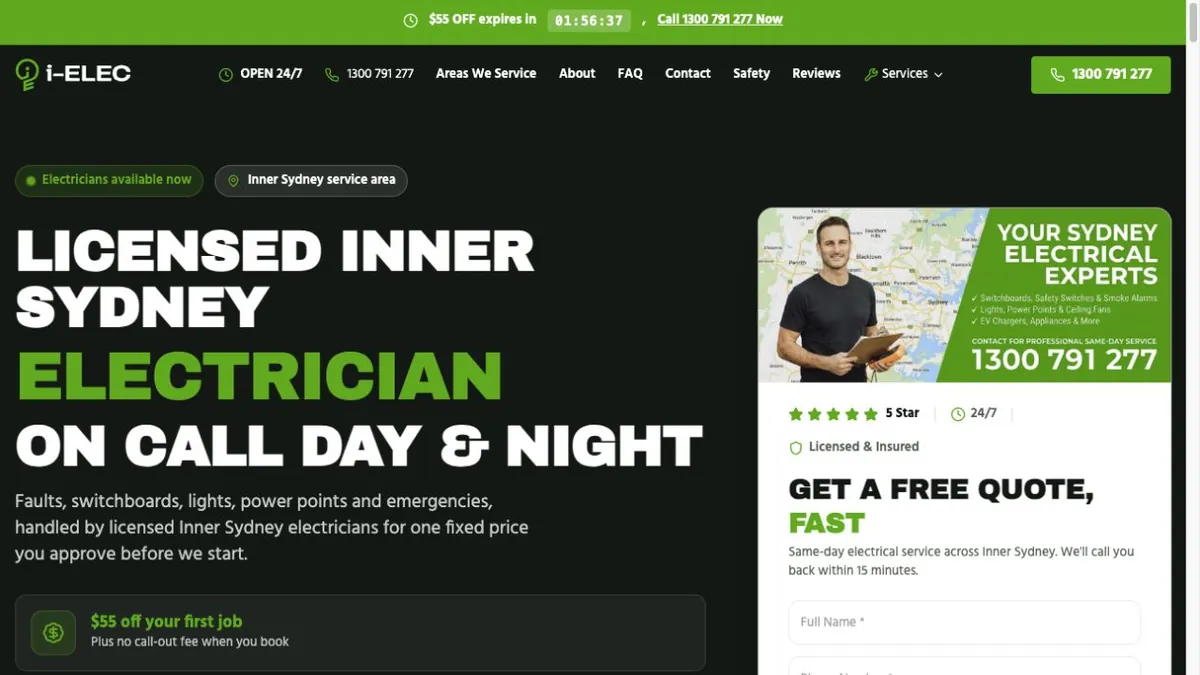
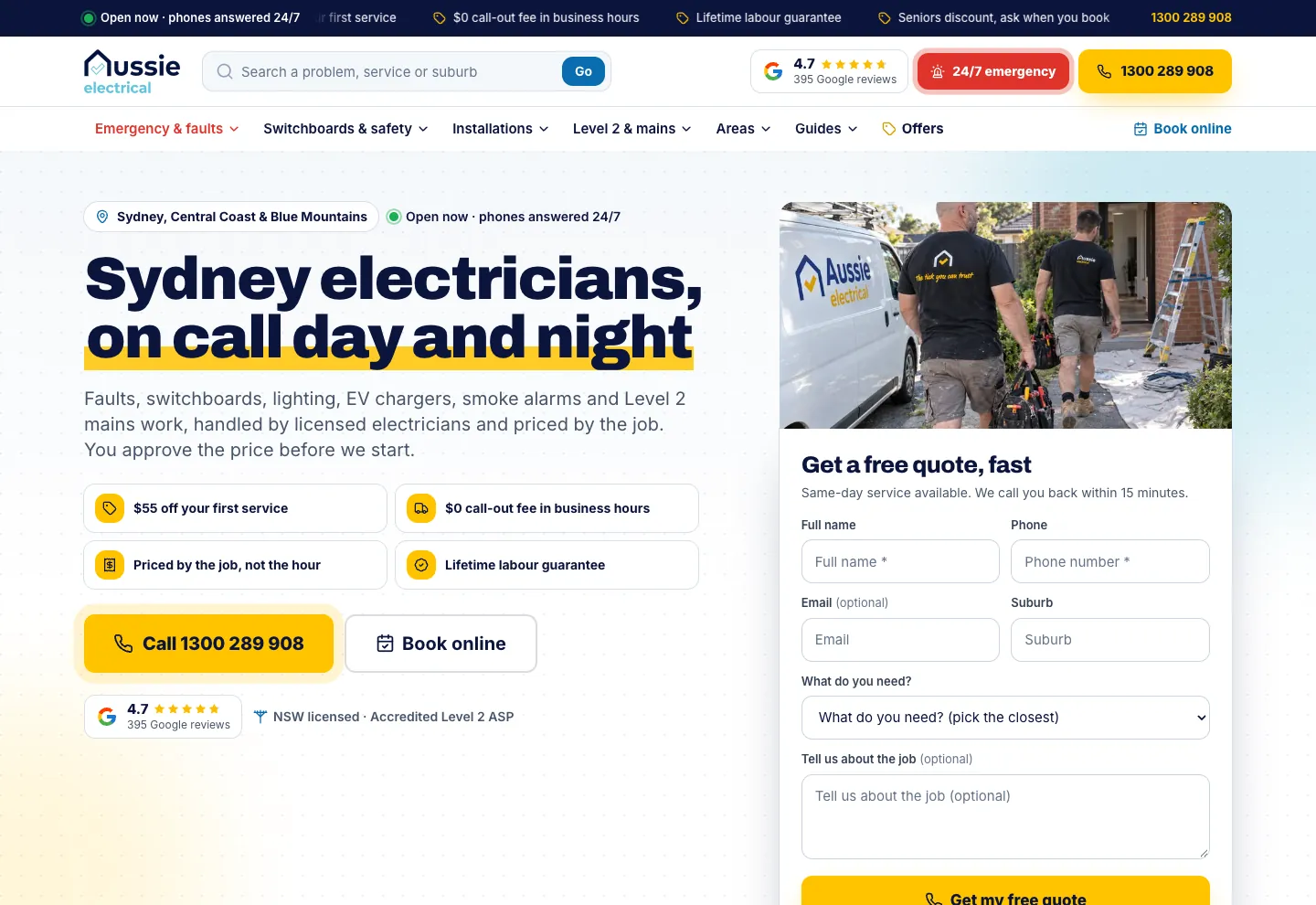
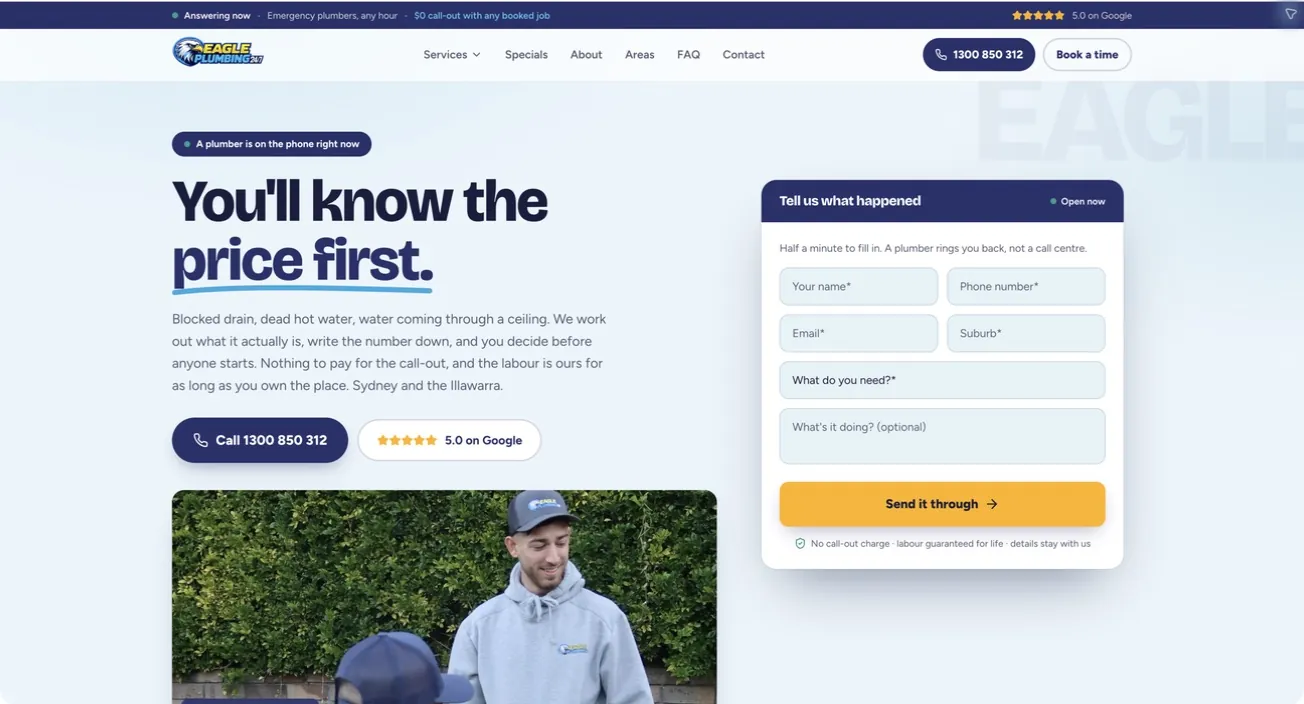
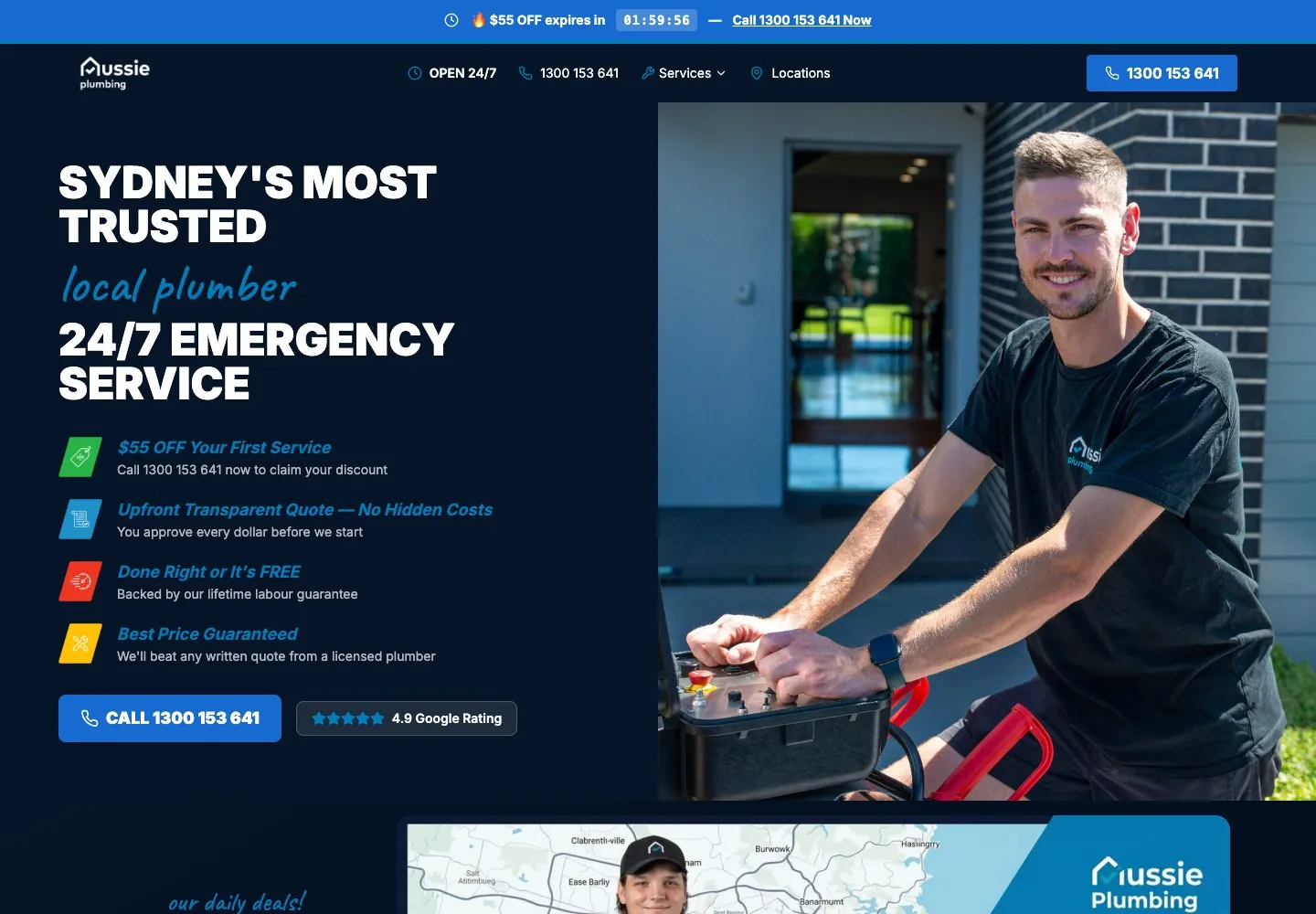
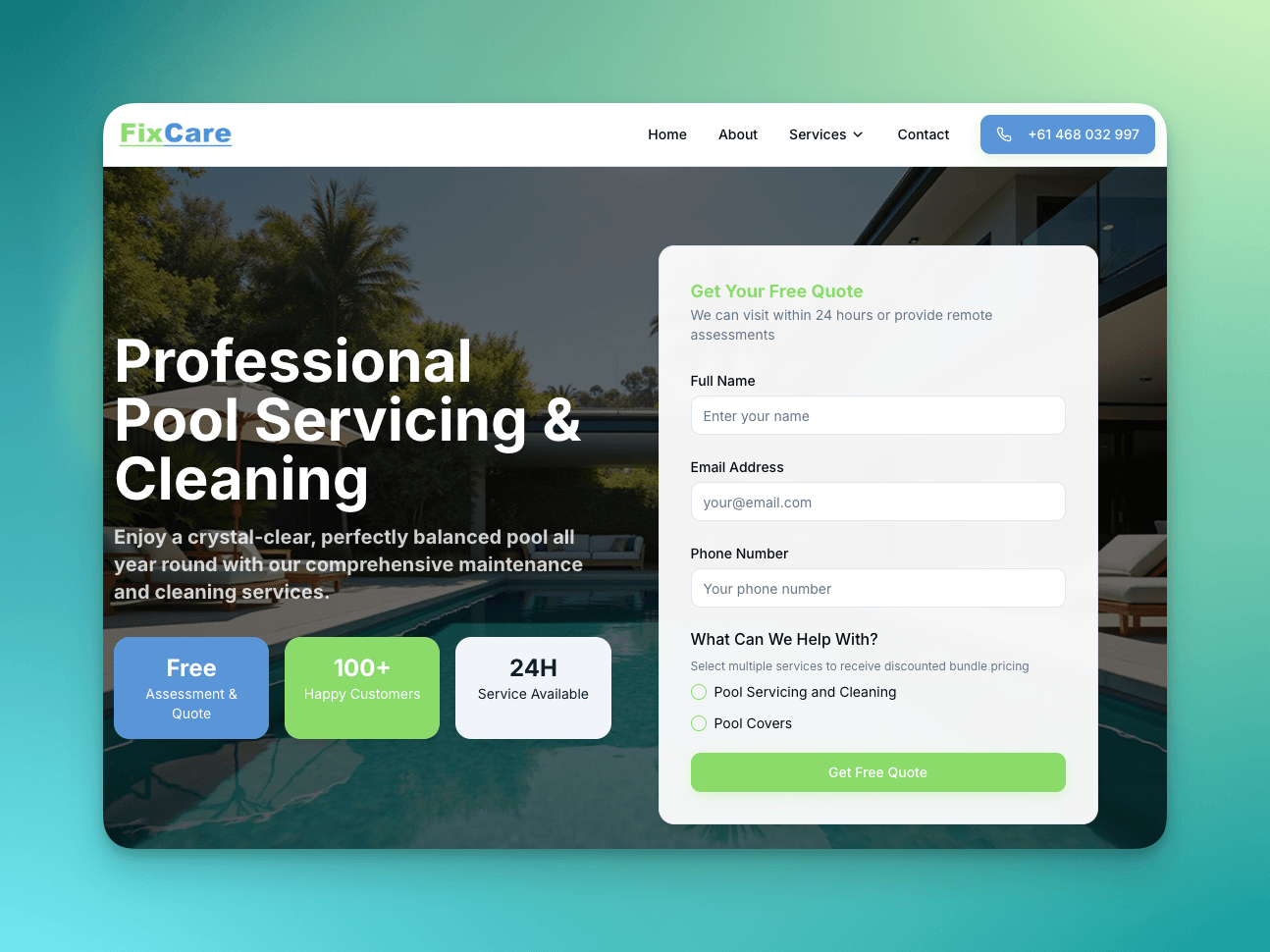
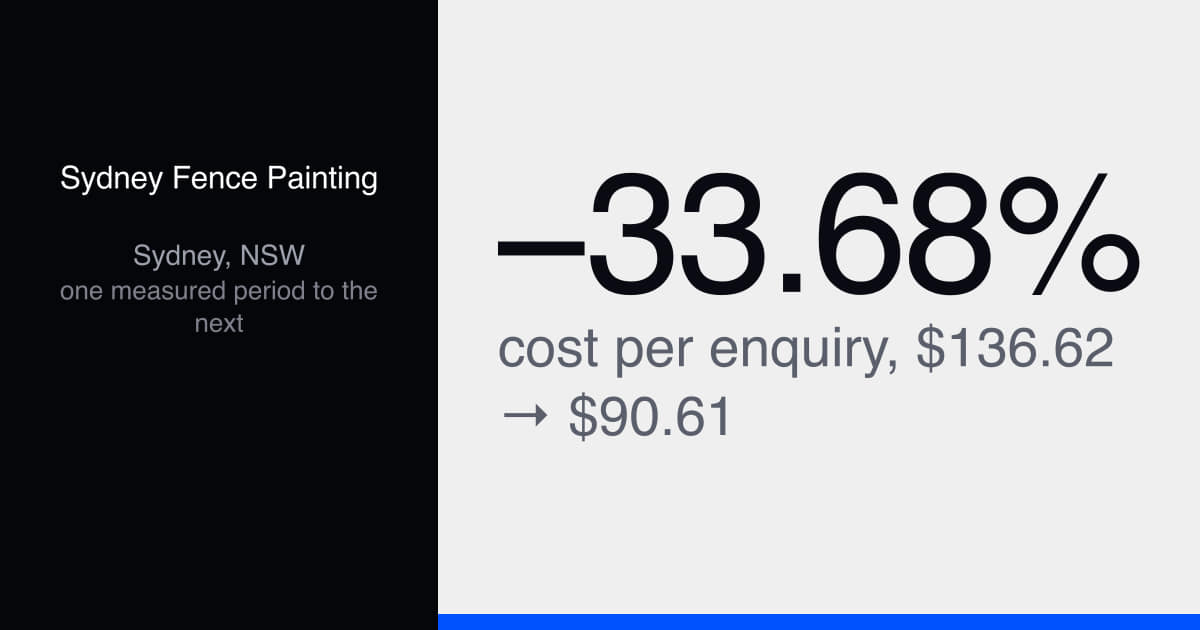
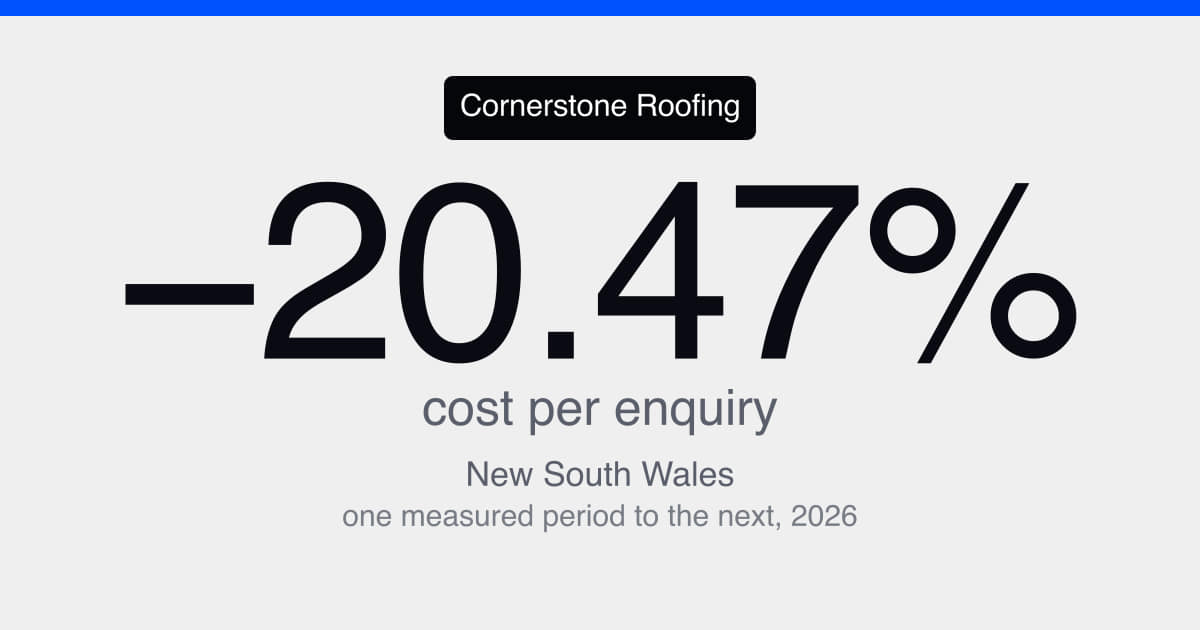
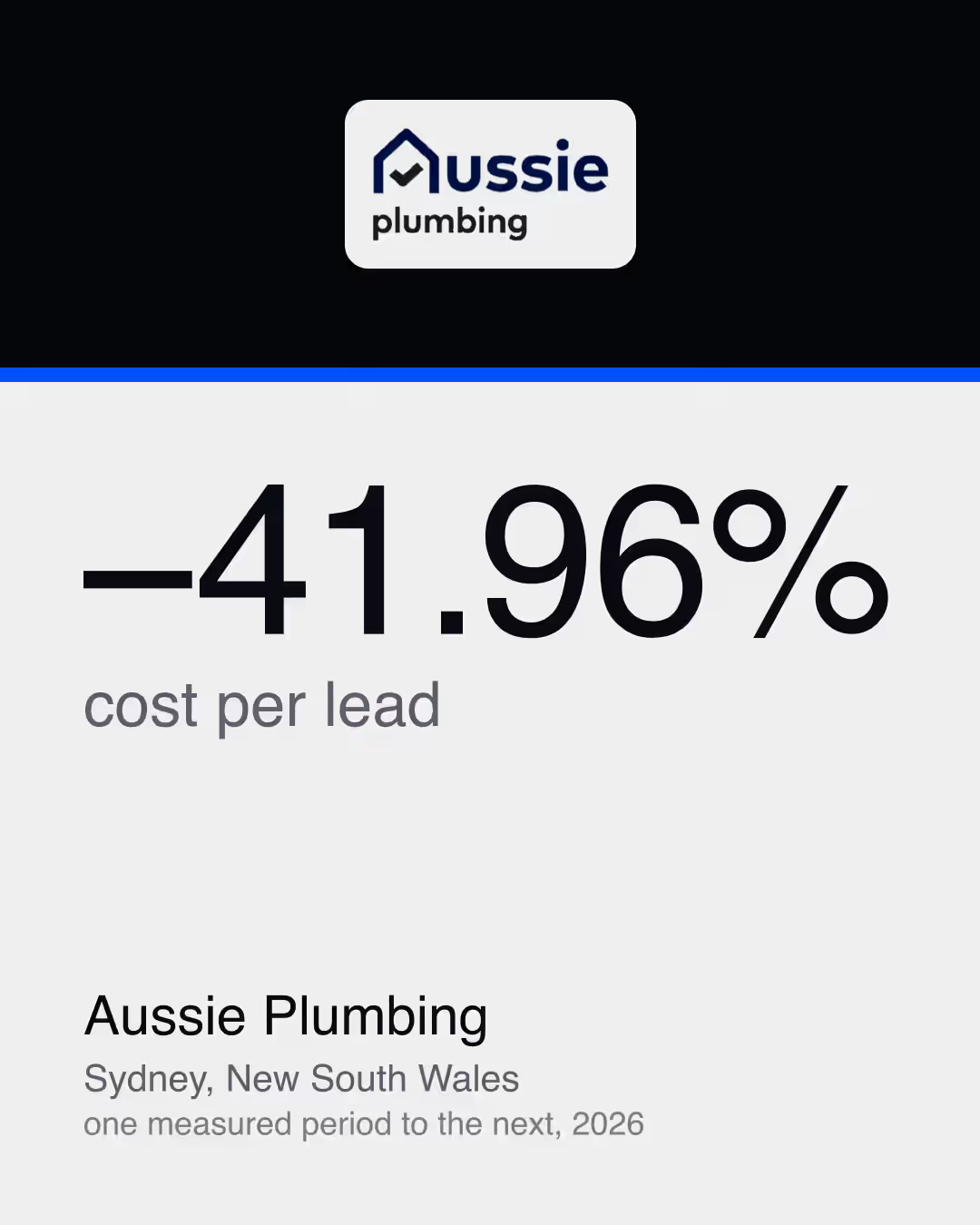
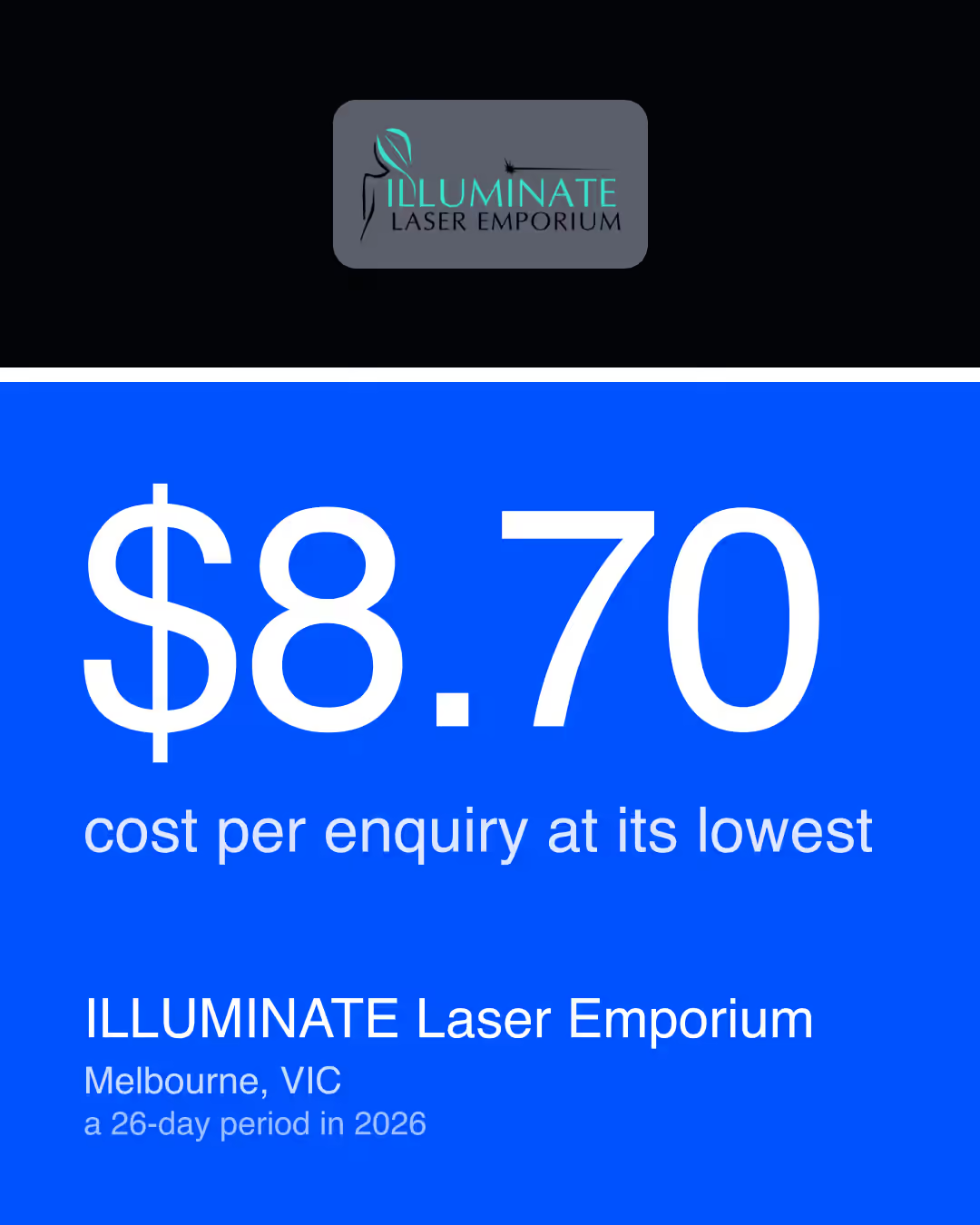
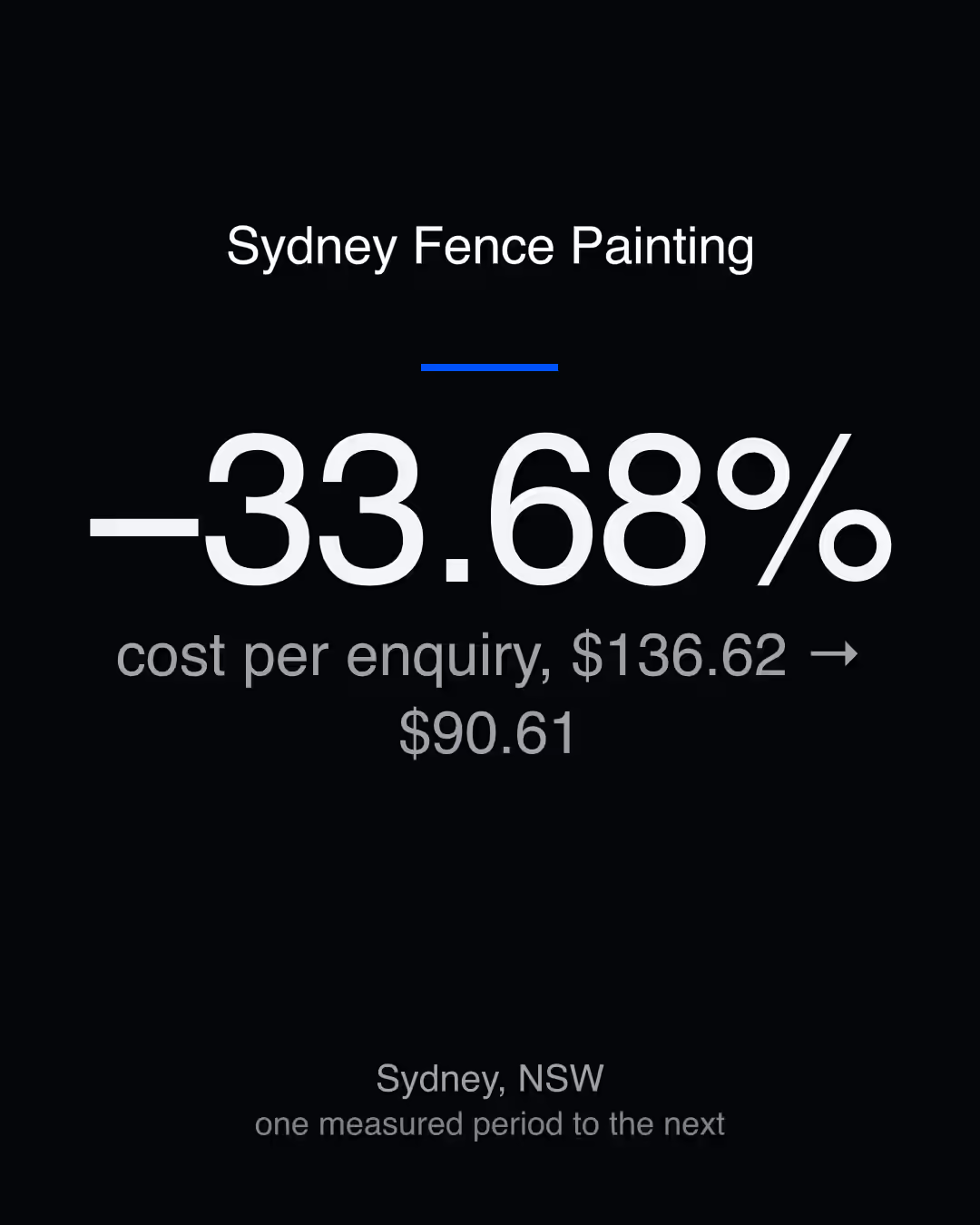
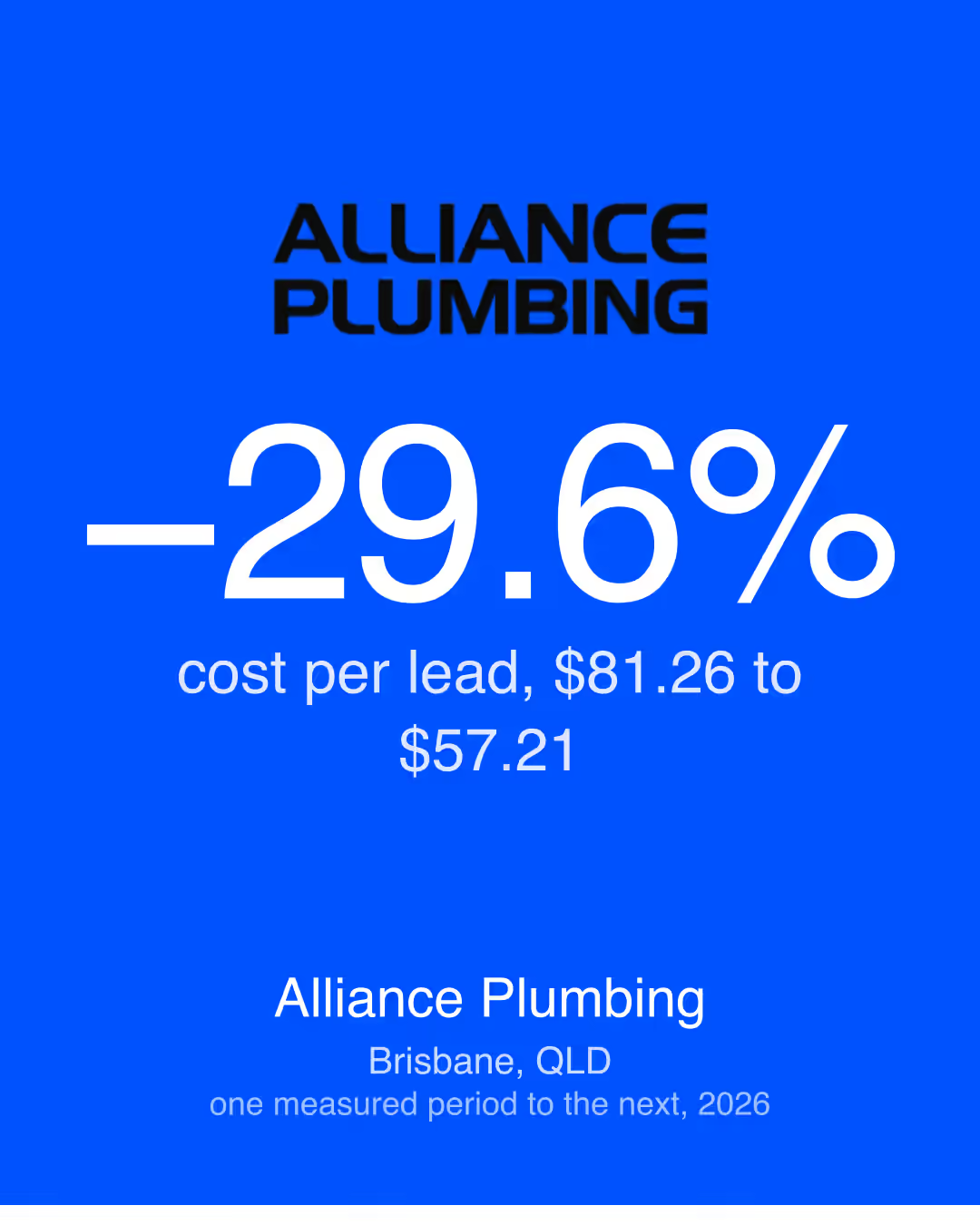
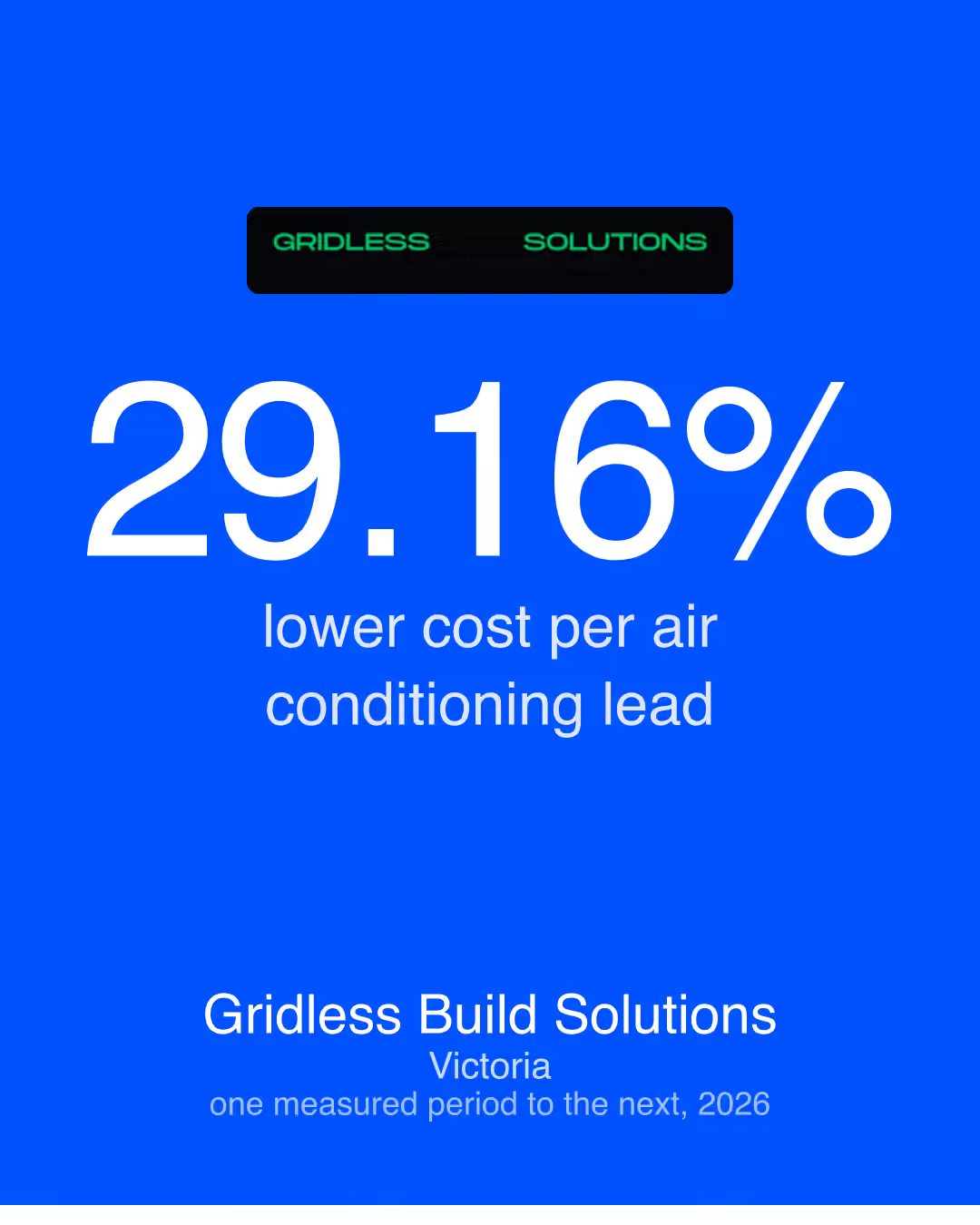
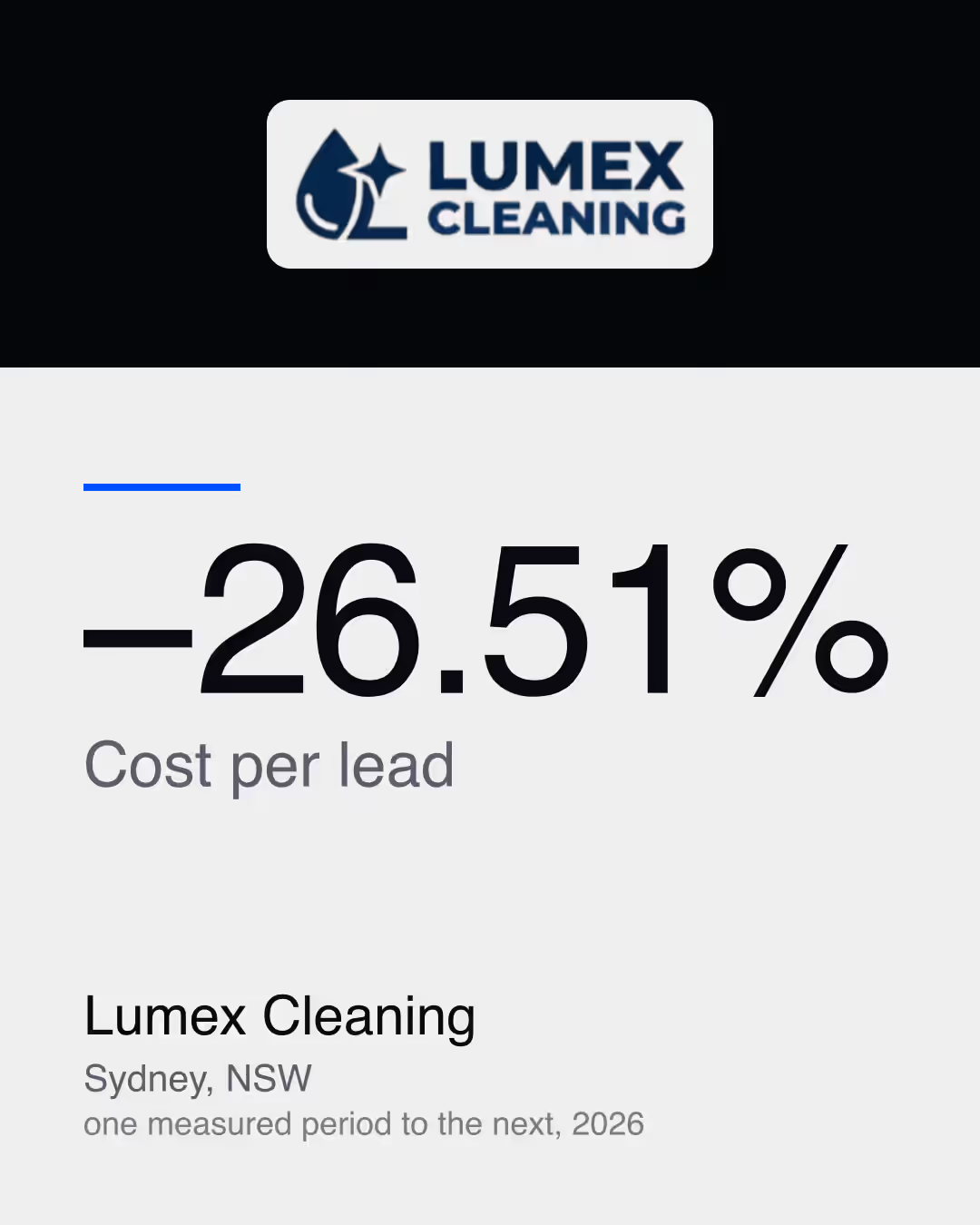
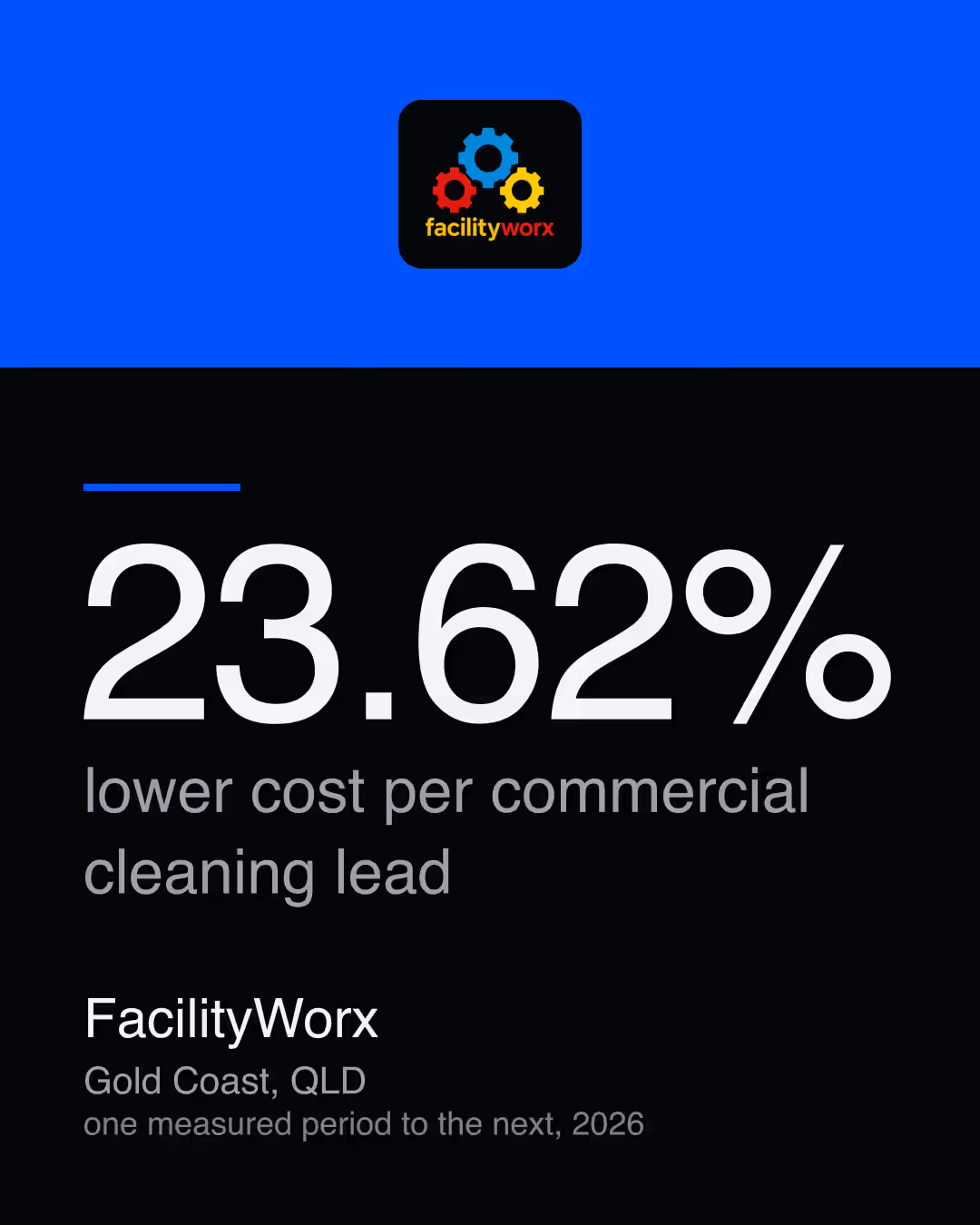
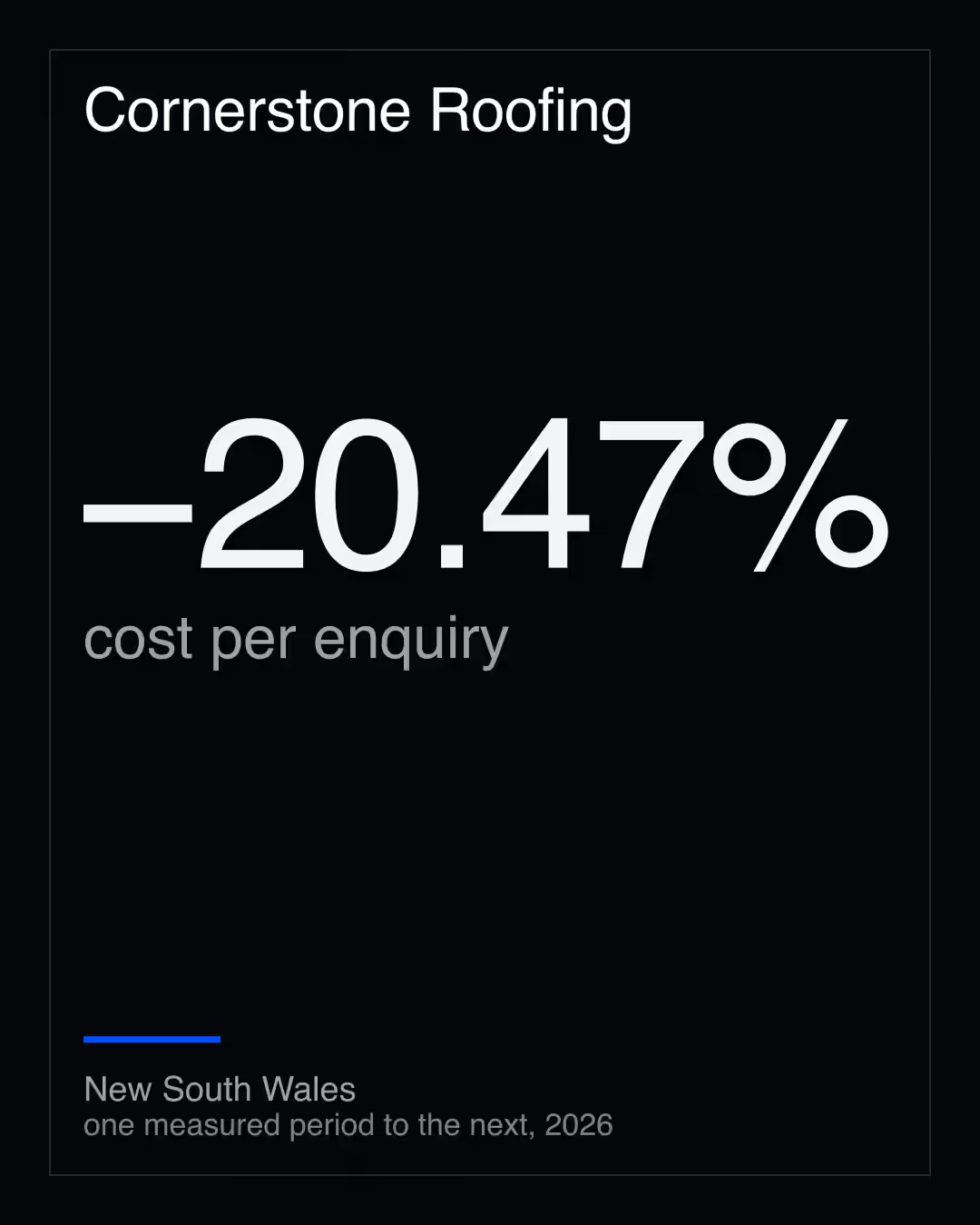
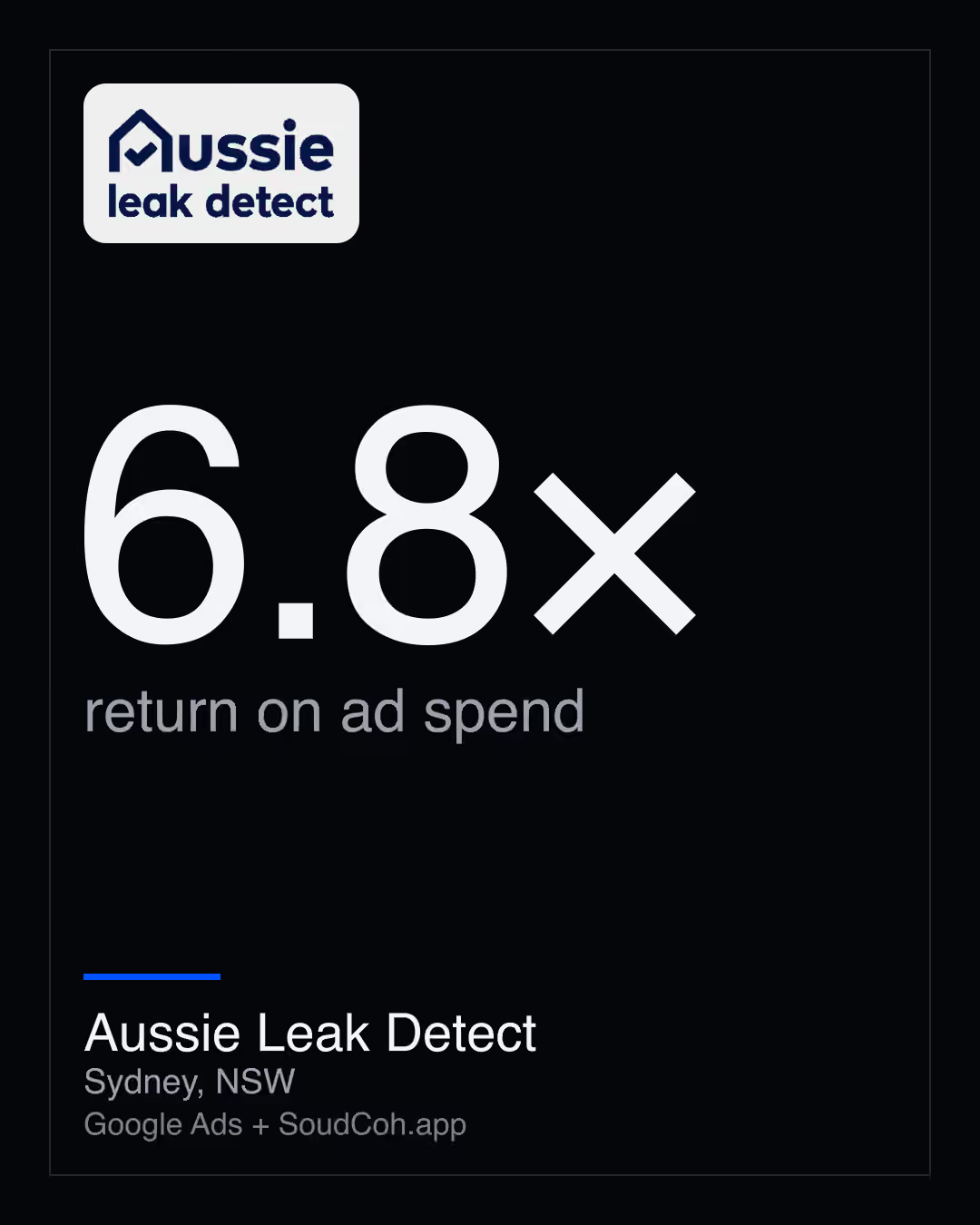
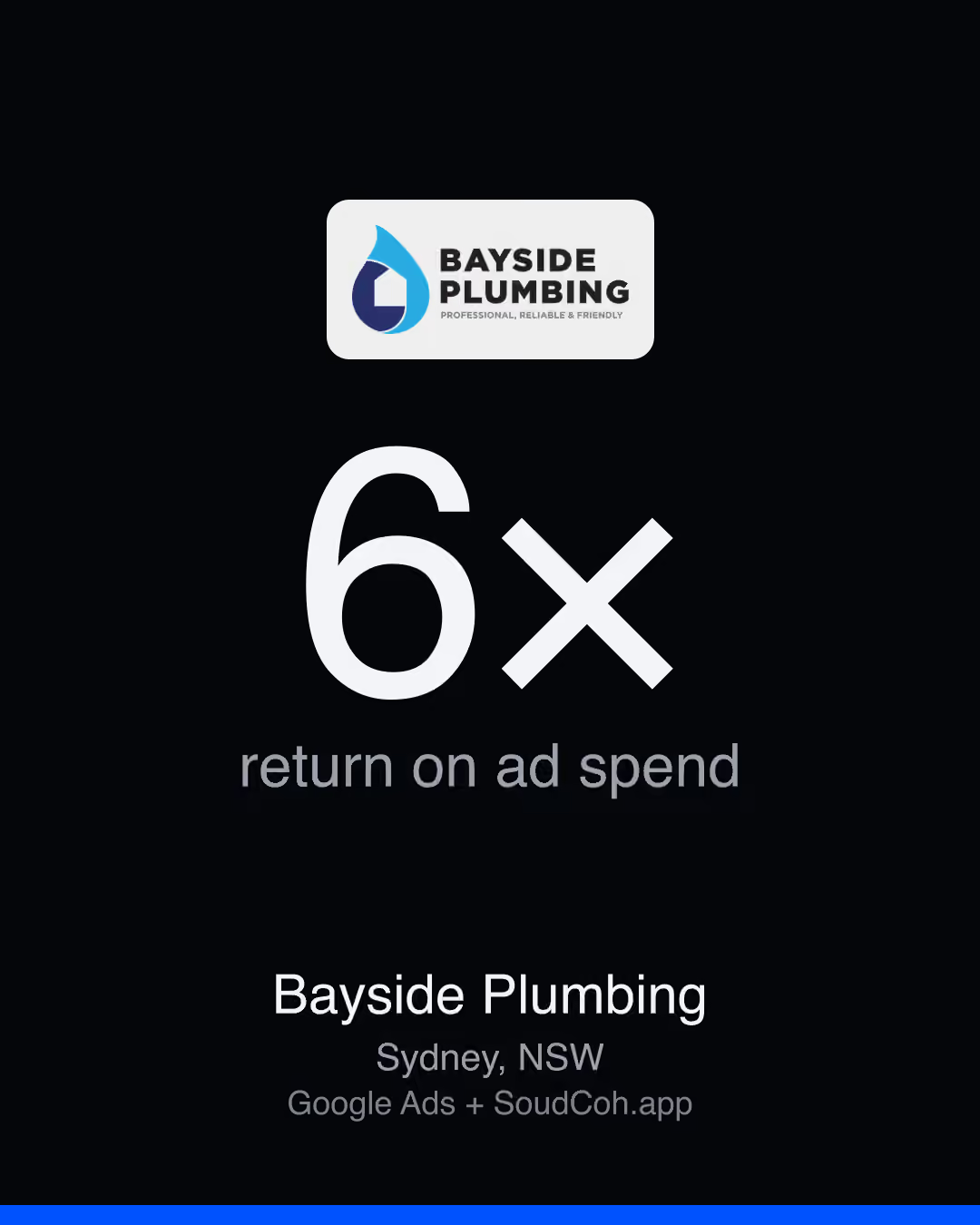
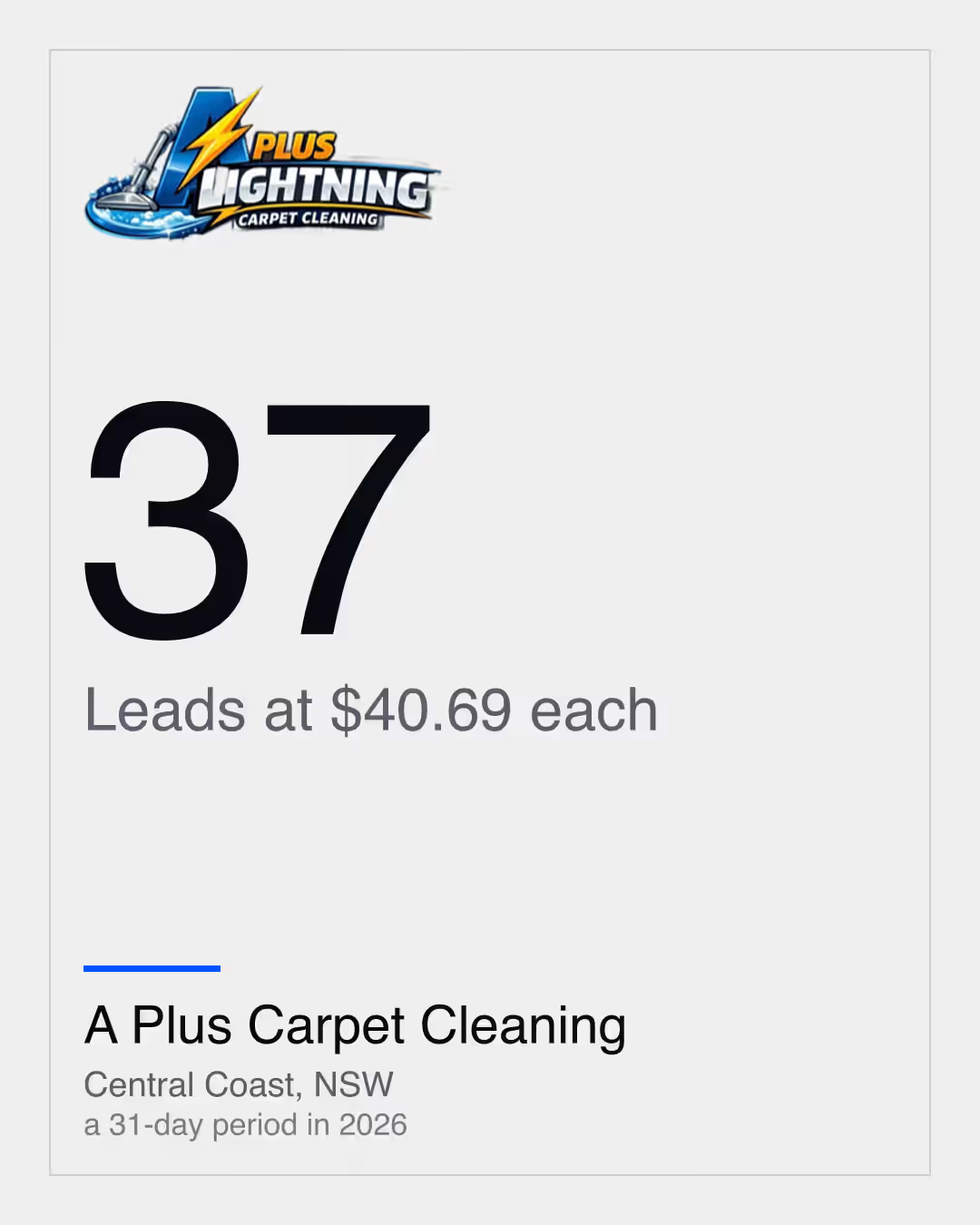
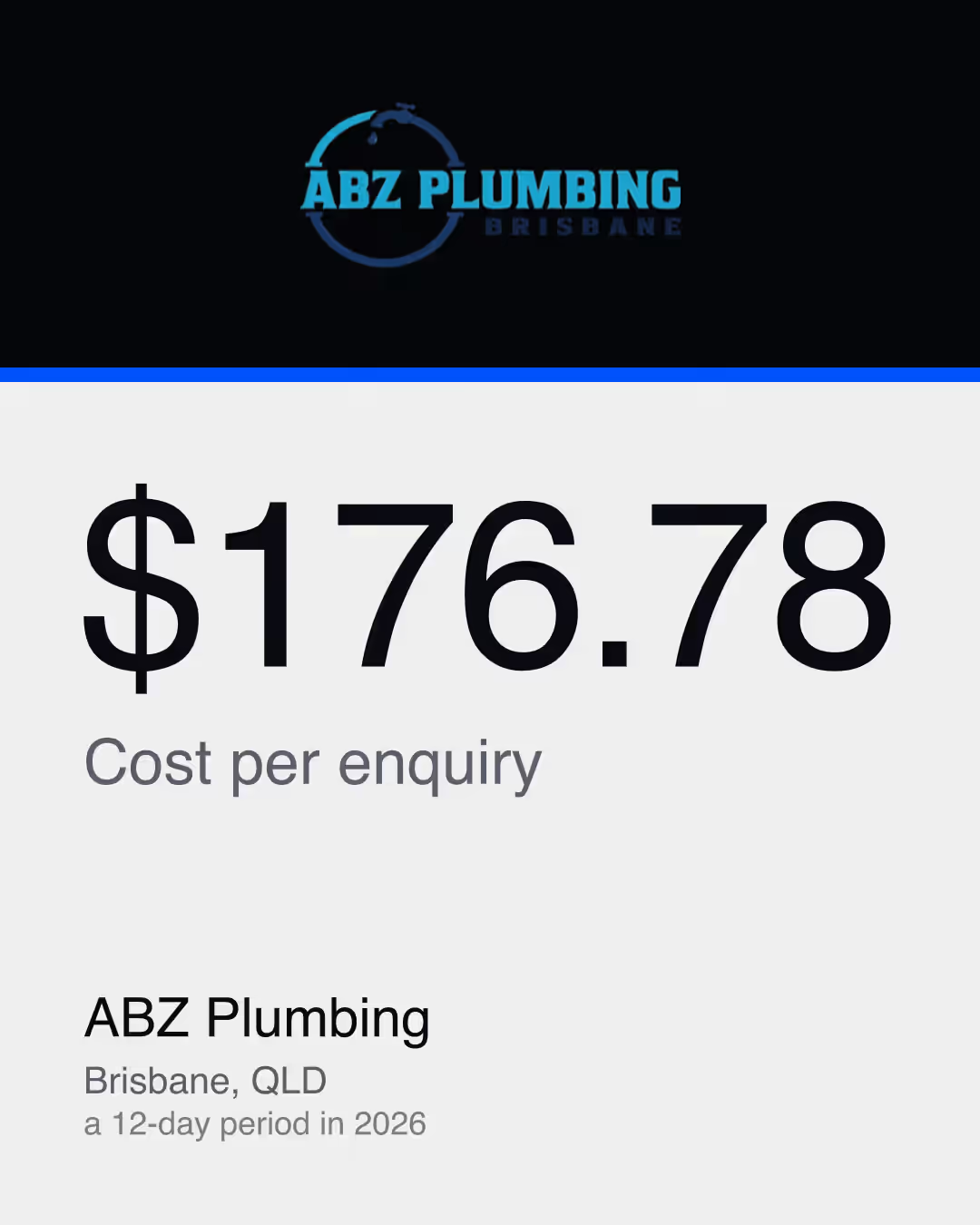
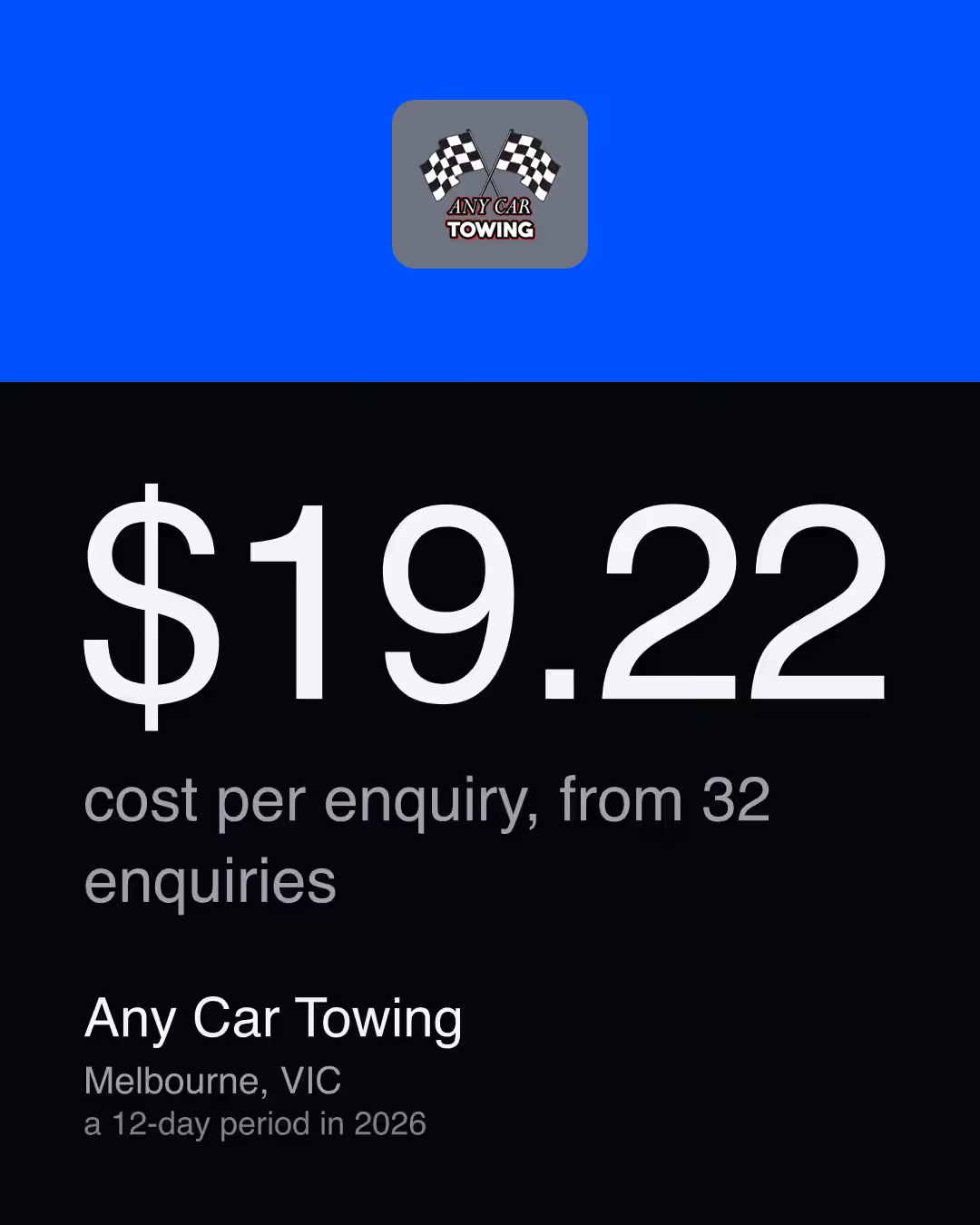
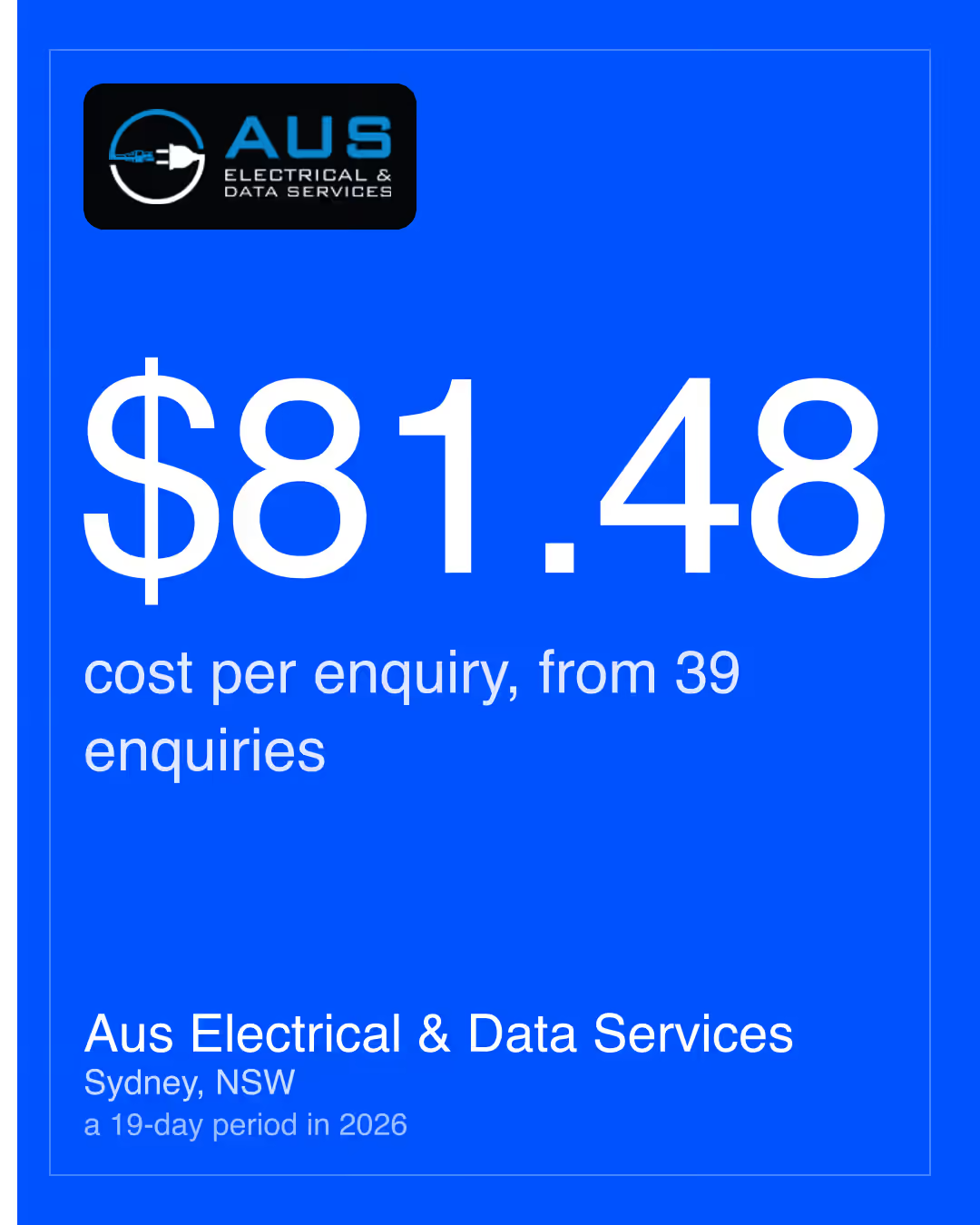
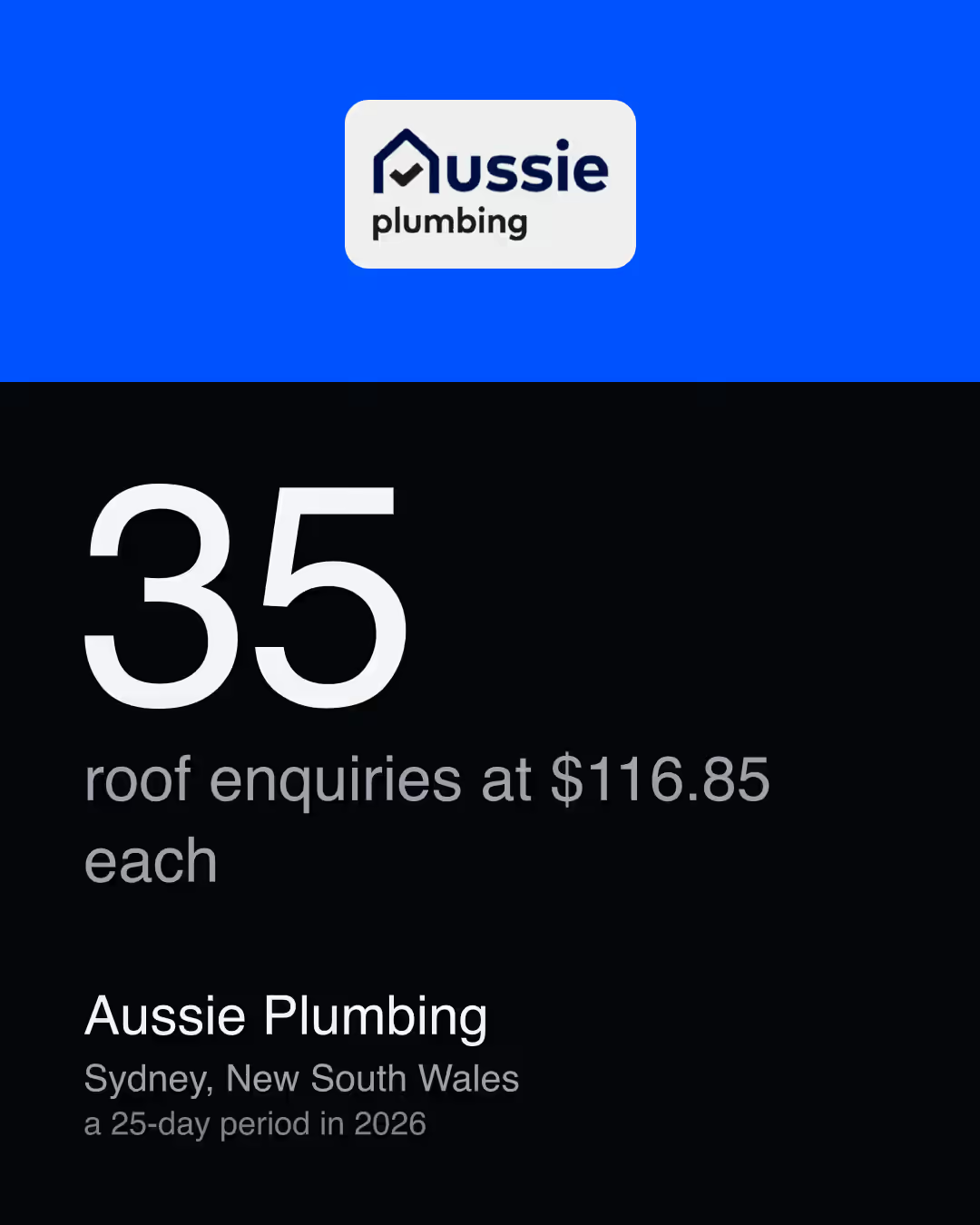
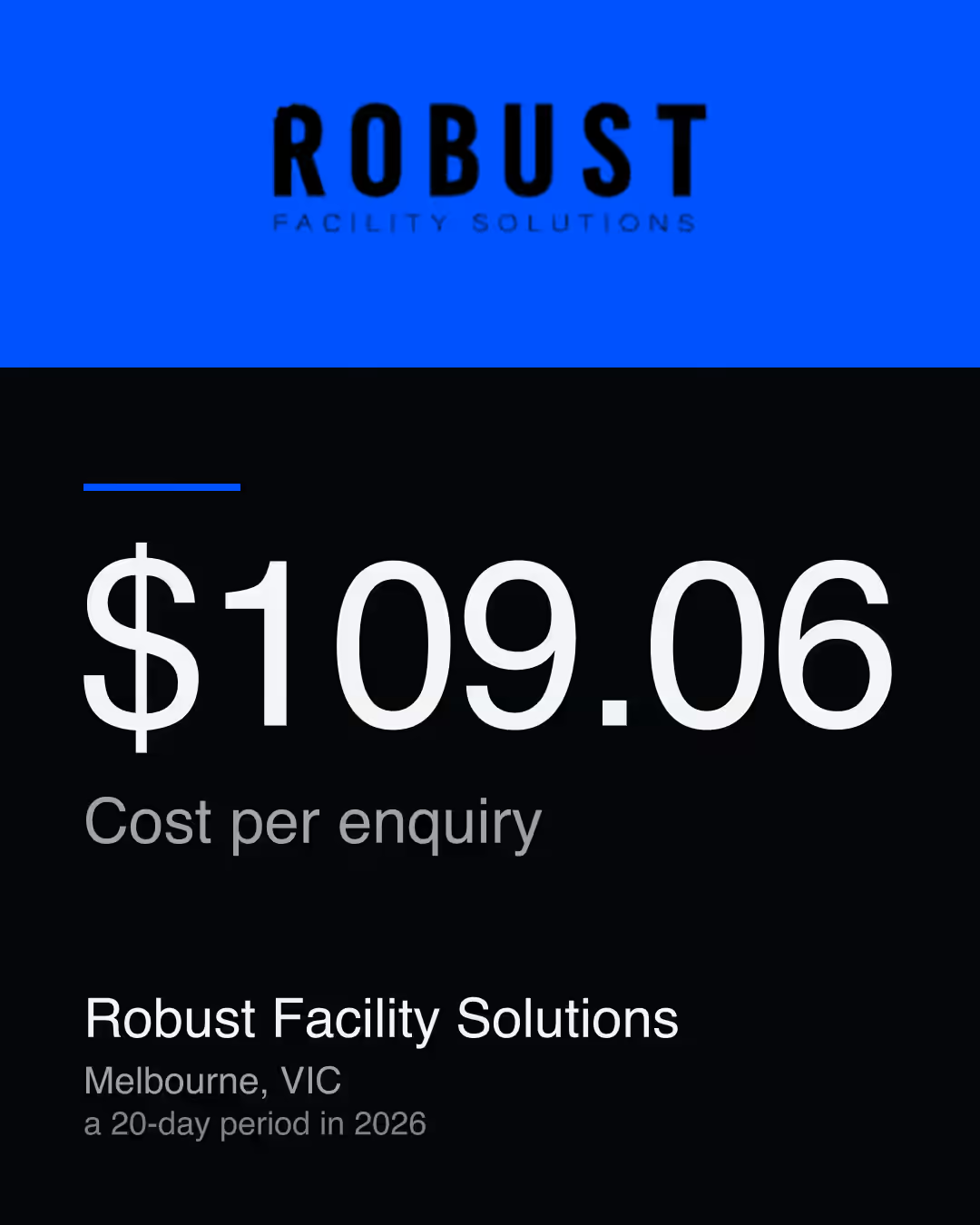
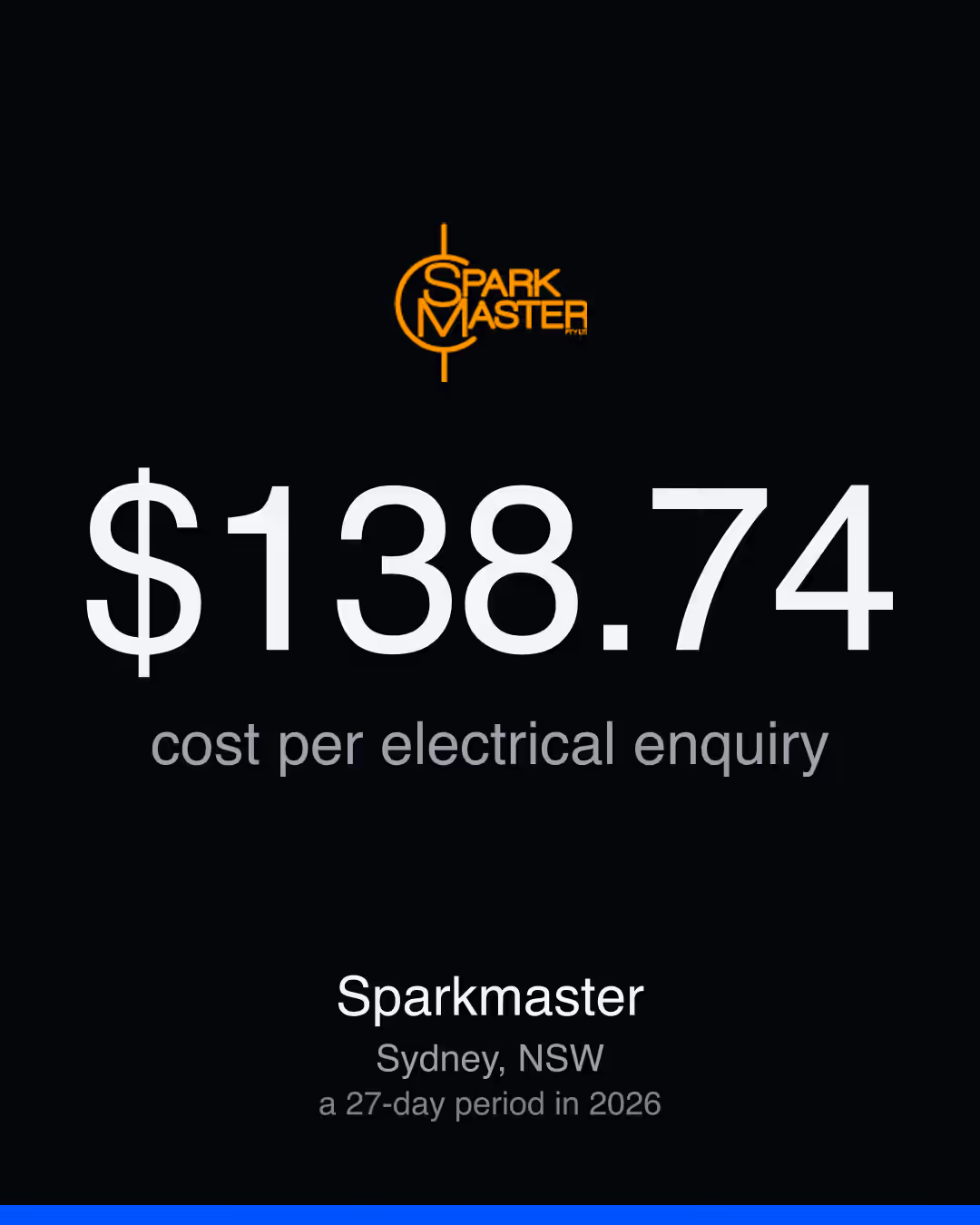
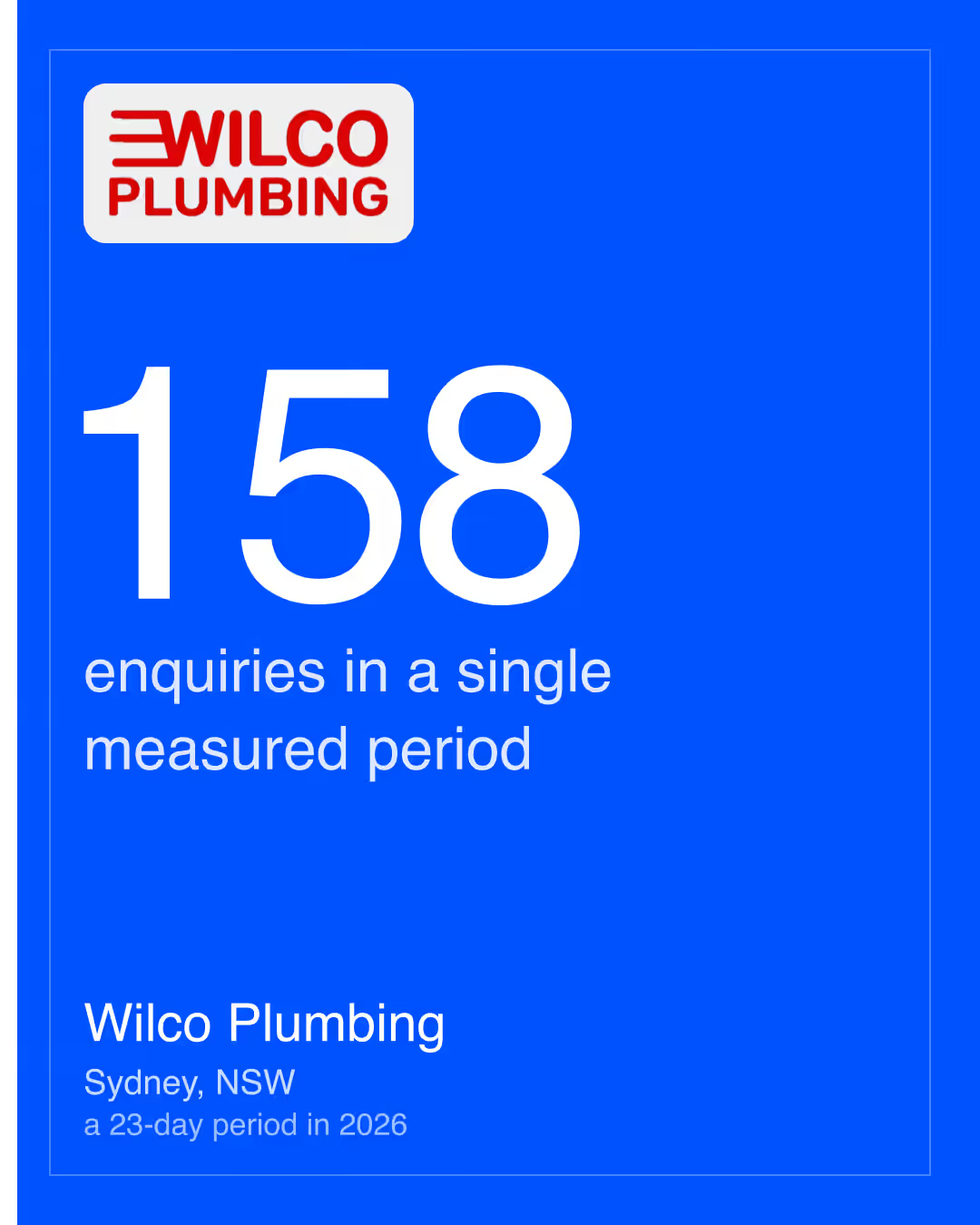
    Impress Blinds — cost per enquiry down 62.63%, $23.6 to $8.82SLS Solicitors — cost per enquiry down 58.48%, $84.64 to $35.14FixCare Property — cost per enquiry down 56.36%, $35.24 to $15.38Rubbish Removal WA — cost per enquiry down 53.18%, $71.02 to $33.25Floral Cakery — cost per enquiry down 49.82%, $13.83 to $6.94ILLUMINATE Laser Emporium — cost per enquiry down 48.54%, $138.65 to $71.35Aussie Plumbing — cost per enquiry down 41.96%, $117.75 to $68.34Sydney Fence Painting — cost per enquiry down 33.68%, $136.62 to $90.61Alliance Plumbing — cost per enquiry down 29.6%, $81.26 to $57.21Gridless Build Solutions — cost per enquiry down 29.16%, $78.16 to $55.37FacilityWorx — cost per enquiry down 23.62%, $157.13 to $120.01Cornerstone Roofing — cost per enquiry down 20.47%, $41.71 to $33.17A council finance platform — 194 of 194 requirements metA council finance build — 14 weeks to UAT, −34% 10-yr costA cultural institution — $634K of $750K kept workingA council platform — $470,106 built vs $503,262 SaaSA federal agency — n=5,000 prevalence survey at ±1.4%A civic mural — 36 concepts for a 71m × 9m wallA regional shire — 32-page visitor guide, 3 weeks earlyA shire council — one platform retiring 8 of 9 vendorsA pressure washing business — 138 jobs at A$20.43 eachA pressure washing business — 21.20% conversion rateA carpet cleaner — 53 jobs in 15 days at A$24.92 eachA roofing company — 68 quote requests in 35 daysA CCTV installer — 39 qualified leads in 15 daysA fence painter — 36 jobs in 24 days, quotes by day 3A maintenance business — live in 8 weeks, 3 stacks gone41 numbered clauses, published in full5.0 across every Google review$120M+ in media under management250+ active engagements across five countries

    Case studies Our work, with the numbers left in.

    Digital marketing case studies from live Australian accounts — lead generation, paid media, SEO, content and the platforms we build. Every figure below came out of a real account, over a window we name, with the money that produced it printed beside it.

    138 jobs in 41 days at A$20.43 each · Pink Flamingo, an end-of-lease cleaning business in Melbourne · Full breakdown in the case study

    The library

    Every study we have published.

    All 96 on one page, newest work first, each one showing the figure it is known for and where it was measured. Filter by trade, by industry or by the work involved — only trades and industries we have actually published in are listed, so nothing you can click returns an empty page.

    Trade
    Industry
    Showing 96 of 96
    Service

    The rest of the accounts, by the size of the movement

    34 more

    Earlier work, with the account screenshots

    59 studies
    How to read these

    Most agency results
    cannot be checked.

    Six rules every study above is held to. Each one is there because it is the thing normally left out, and leaving it out is what makes a number impossible to check.

    • The window is dated, and it is a length

      “Recent results” can quietly mean the one good month inside a bad year, and the peak fortnight of a twelve-month account makes almost anything look like a success story. Every study here names its own measurement period — “138 jobs in 41 days” — and where it covers a launch the clock starts the day the campaigns went live, not the day the graph looked best.

    • The spend sits next to the result

      Leads are easy to buy; what matters is what each one cost. So where we publish a lead or job count, the money that produced it is published beside it. A lead count quoted without the ad spend behind it is half a sentence.

    • A percentage never travels without its starting number

      “Up 300%” is a real 300% whether it went from three enquiries to twelve or from three hundred to twelve hundred. Without the base you cannot tell a breakthrough from a rounding error, so the base is printed.

    • It came out of a live account, uncropped

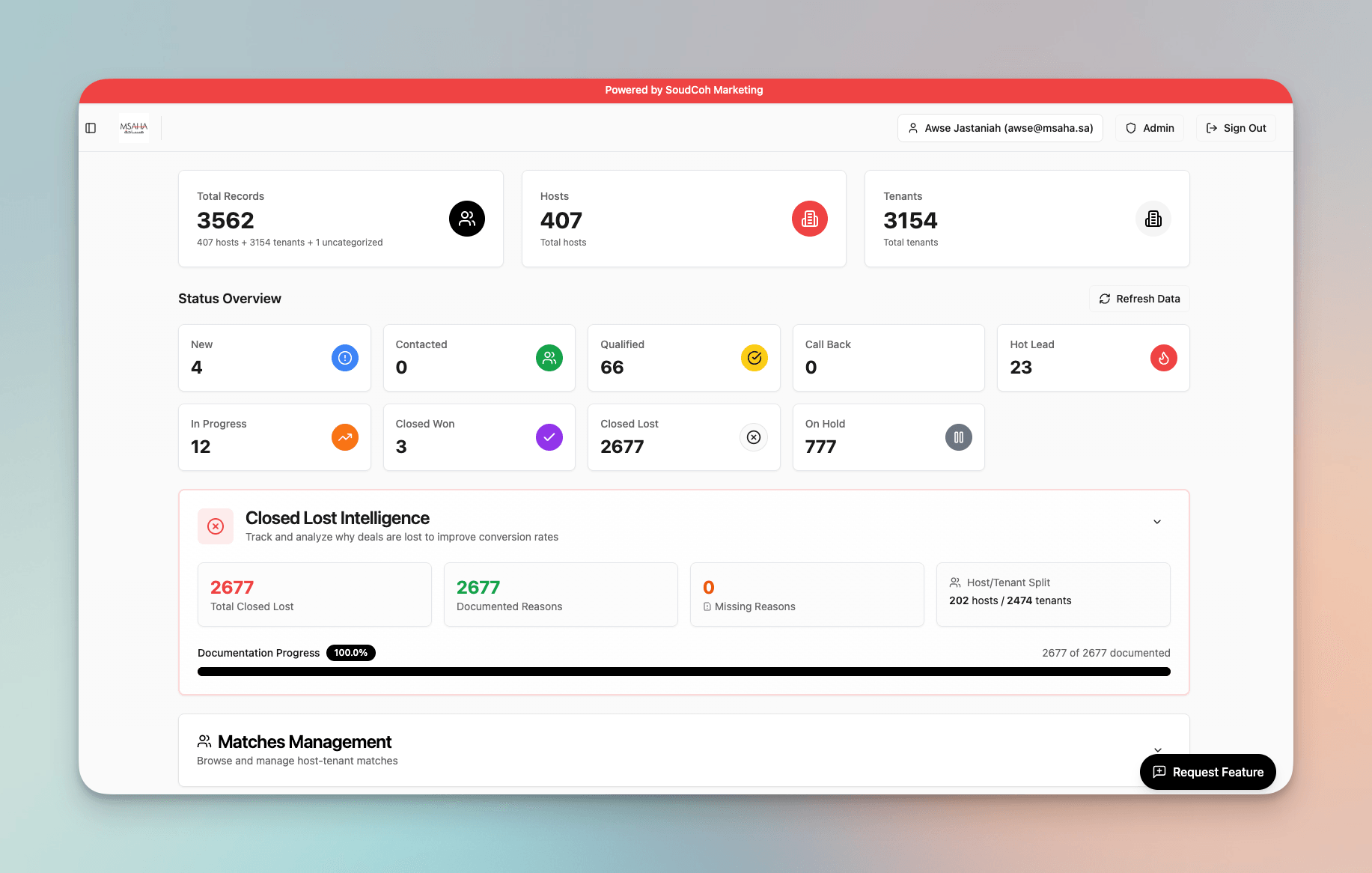
      Every figure here was read out of a real advertising account or a real platform we built and run — none of it modelled, projected or reconstructed afterwards. The ad, keyword and dashboard images inside the studies are screen-grabs of that account. Half a dashboard is a design decision, not evidence: if the conversion column is shown, the cost column is in the same picture.

    • One conversion is one real action

      A page view is not a lead and a form load is not a booking. A conversion on this page is a phone call that lasted long enough to be a conversation, a submitted form, a booking or a purchase — counted separately, with values attached, so the headline number still means something.

    • None of it is a guarantee

      These are records of what happened on specific accounts, in specific markets, at specific budgets. What another business did is evidence, not a forecast for you, and we will never tell you your account will do the same.

    So the studies above are written the other way round: the window first, then the spend, then what it produced — in that order, every time. The shortest example of the format is the Pink Flamingo write-up: a 41-day window, A$2,819.92 of ad spend, 138 jobs booked. Read it in that order and you can check the arithmetic yourself.

    What none of it can tell you is what your own numbers would look like — for that, work out your own cost per lead from your click price and your close rate. And before you trust any figure on any results page, including this one, what a single mis-set tag does to every number after it is the way we most often watch one go quietly wrong.

    Two notes on the set itself. Government, council and cultural-institution engagements appear as sector and jurisdiction only — those clients engaged us to do work, not to become marketing material. And the reason a page like this can exist at all is the way the work is already recorded: every keyword, negative, bid change and ad rewrite lands in a dated record as it happens, so writing the study afterwards is reading a file rather than reconstructing a memory.

    Before you ask us anything

    Here is what everybody asks first.

    FAQ

    The results page, answered.

    Whether the numbers are real, why some clients are unnamed, what this costs, how long it takes, and what happens when it does not work.

    The first call is free and there is no deck.

    Book a call

    Yes. Every figure on this page and inside each study was read out of a live client account — the advertising platform, the call tracking, or the platform we built for them. The spend is shown next to the result and the measurement window is named, so you can work out the maths yourself. Where a study shows an ad or a dashboard, that image is a screen-grab of the real account rather than a recreation. If a number matters to your decision, ask us about it on the first call and we will talk you through the account behind it.

    Government, council and cultural-institution engagements are published as sector and jurisdiction only — for example a major Victorian council or a national cultural institution. Those organisations engaged us to do work, not to become marketing material, and several operate under procurement rules that make naming them inappropriate. The work, the scope and the measured outcome are all still described in full. Every private-sector client on this page has agreed to be named.

    There are two separate numbers. Your ad spend goes to the platform, and what it needs to be depends on how competitive your market is and how many jobs you want — the smallest companies we work with invest a minimum of A$3,000 a month, and our largest clients run multiple eight figures a month across paid channels. Our management fee is separate and scales with the work involved. There is no single answer, which is why the first call is free: you leave it with a real number for your situation before you commit to anything.

    It depends heavily on the channel. Paid search meets demand that already exists, so calls and form submissions can arrive within hours of launch — Cleanetic booked 53 jobs in its first 15 days on a brand-new account. The first two to four weeks are an optimisation period where we read search terms daily and cut waste. Most accounts settle into their best rhythm around 60 to 90 days. SEO and content work on a much longer clock, usually months rather than weeks. Your industry, competition and budget move all of that.

    No long-term lock-in. We would rather keep the work because it is producing than because a contract says you have to stay. What we do ask for is enough runway to be fair to the account — a campaign judged on its first ten days is being judged during the part where we are still cutting waste out of it. The terms are put in front of you in plain English before anything is signed.

    We own and run the account, because the build is proprietary methodology refined across hundreds of engagements — bidding architecture, negative-keyword libraries, audience stacks and conversion tracking. You get full-visibility reporting on performance and spend at all times, and on long-term marketing agreements ownership and handover options are available to discuss. You will never be in the dark about what is in the account or what it is doing.

    We tell you, in the report, in plain English, and we change what we are doing. A campaign that is not producing gets restructured, repointed at a different set of searches, or stopped. If the honest answer is that a channel is not right for your business at this point, we would rather say so than keep billing you for it. What we will not do is let it run quietly and hope it comes good.

    A fixed cadence, good news or bad. Each report covers what was spent, what it produced, what we changed and why, and what happens next — written in the language you use about your own business rather than platform jargon. You can also see live performance and spend for yourself at any time. The case studies on this page are simply the public version of a report the client already had.

    Filter the library above by industry and see. There are studies across cleaning, painting, roofing, plumbing-adjacent trades, blinds and shutters, HVAC, pest control, handyman services, solar, removals, finance, real estate, automotive, security, healthcare, education, sports, legal and technology. Only industries we have actually published in appear in the filter, so an empty result is impossible — if yours is not listed, that usually means we have not published one yet rather than that we have not done the work. Ask on the first call.

    Yes. Shopping campaigns, product feeds, online-store builds and e-commerce SEO are all part of what we do, and marketplace platforms we designed and built are among the studies on this page. Product businesses are run differently to service businesses — the feed, the product data and the category pages do work that ad copy does elsewhere — but they are firmly in scope.

    Not exactly, and anyone who says otherwise is guessing. What they can tell you is what is achievable in a comparable market at a comparable budget, which searches turned into customers, and what the work actually involved. On the first call we take your own numbers — what a customer is worth, how many you can handle — and build the picture from those instead of from someone else's account.

    New studies go up as engagements reach a point where there is something honest to report, which is usually after the first full measurement window rather than in the first fortnight. Existing studies are left alone once published — we do not quietly restate an old number to make it look better. The library above is the complete published set: every study we have, on one page, with filters rather than a sample.

    Where the work behind these pages is explained.

    A case study tells you what happened. These pages tell you how, and what it would look like on your account.

    Everything listed below is a page about the work. Two things worth reading beside them are not: the calculators put your own click price, close rate and margin through the same arithmetic these studies report, and how long a campaign has to run before its number means anything is worth settling before you compare any window on this page with your own.

    Ready to be the next one?

    Thirty minutes on your numbers rather than ours, and a written list of what we would change first. Yours to keep either way.

    No pitch deck. No upsell. A real conversation and a written list of leaks.