We built a Services menu that sorts 22 services into five groups by pest. We also added a clipboard quote form that switches between home and business and arrives with the service chosen.
The business
Local Pests Control is a Melbourne pest control business working across the metropolitan area, seven days a week. Its licensed technicians treat homes, rentals, cafes, warehouses and strata buildings for cockroaches, ants, spiders, rodents, possums, wasps and bee swarms, and fit bird proofing, solar panel mesh and gutter guards. Every job starts with an inspection and a fixed price before any treatment.
The brief
People rarely look for pest control in general. They look for help with the thing they can see, such as a bee swarm on the fence or pigeons under the solar panels, or for someone who works in their suburb. The site needed a page for each of those, written about exactly that pest or place, with the quote form and the phone number never more than a glance away.
It also had to serve two kinds of customer from the first screen: a householder worried about the family and the pets, and a business that needs reports for an audit and visits outside trading hours.
A page for every pest, service and suburb
The live site holds 352 pages. There are 23 main service pages and 79 pages for a specific pest or job, from bee hive removal and fire ants to metal gutter guards. Eight services, including general pest control, bird control and new home inspections, each have a page for the same 20 Melbourne suburbs, which makes 160 suburb pages. A further 78 guides answer the questions people ask before they call, such as when lawn grubs strike or what to do about a wasp nest.
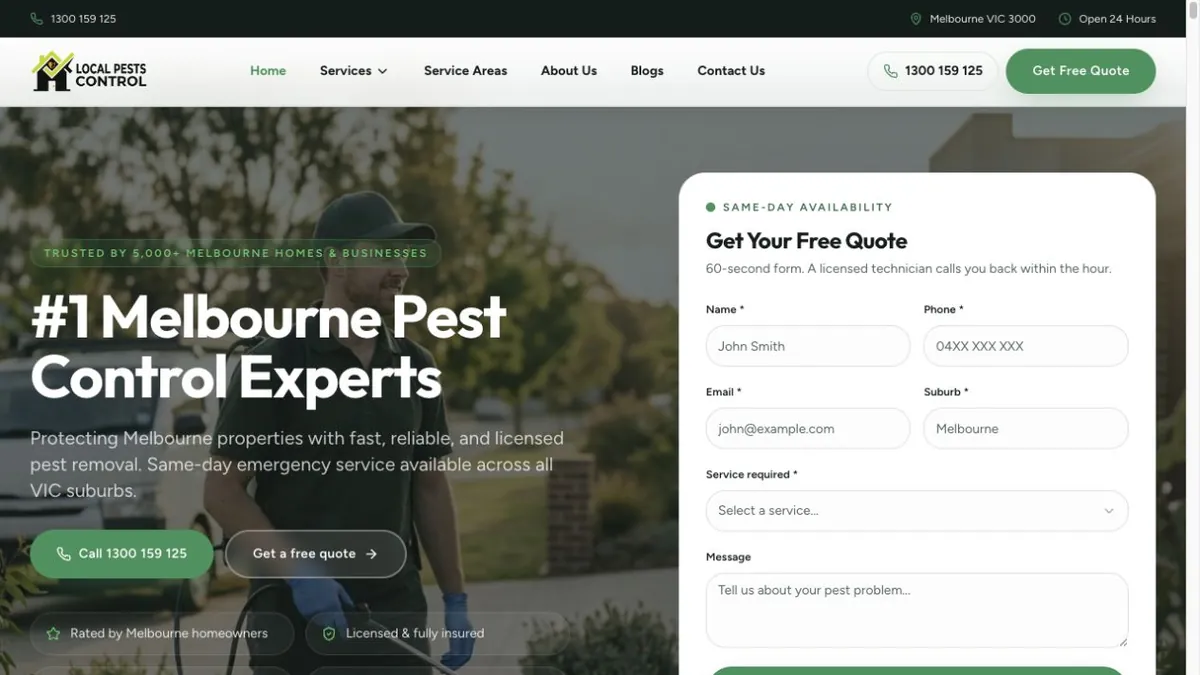
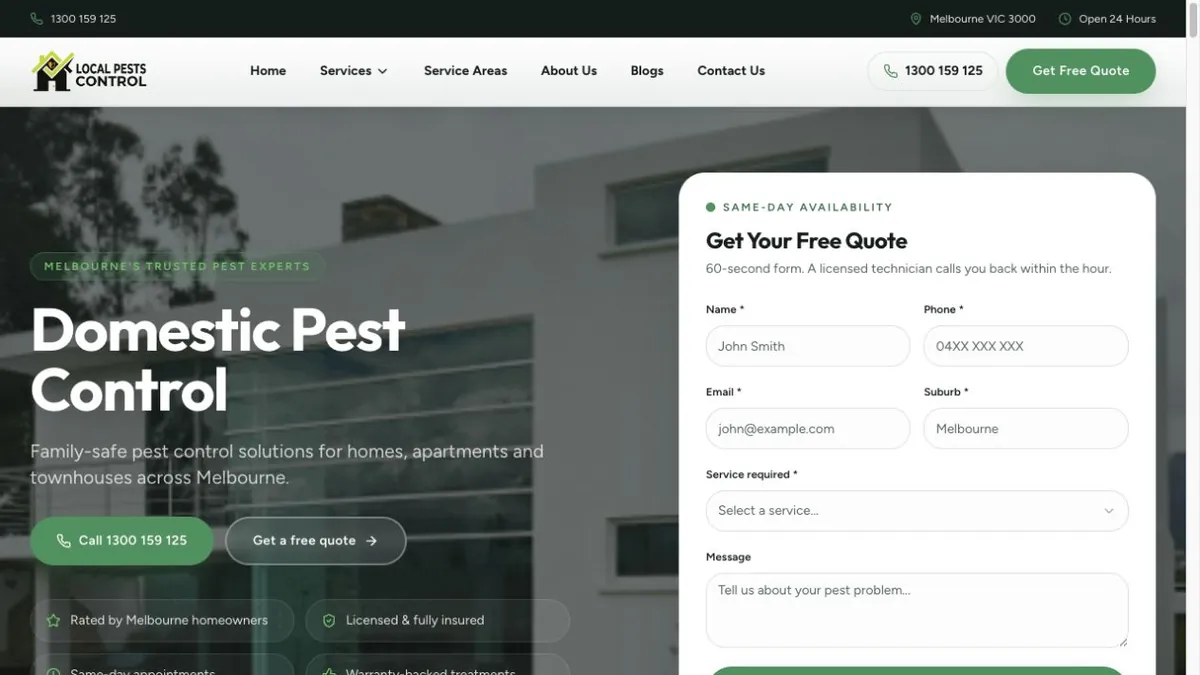
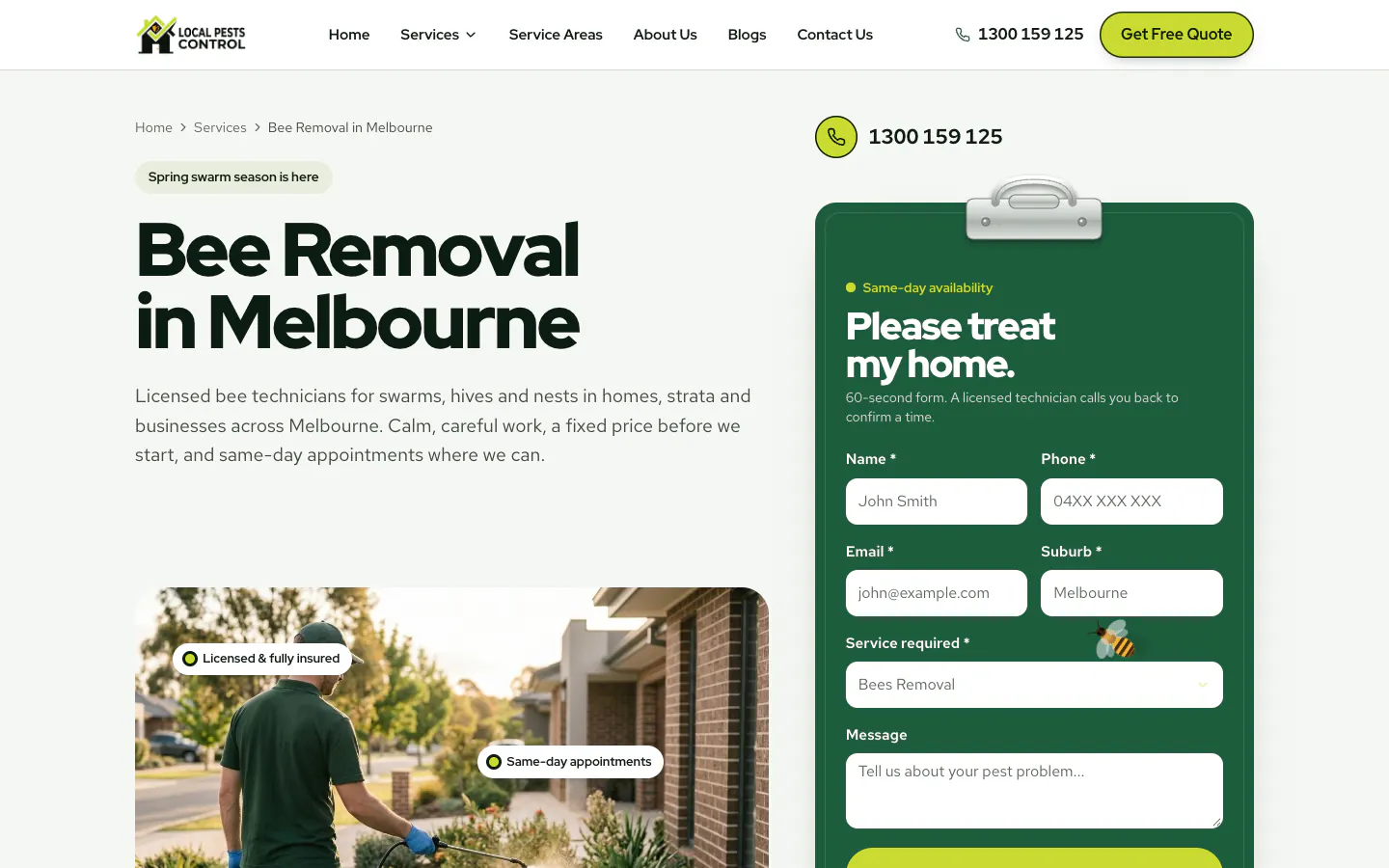
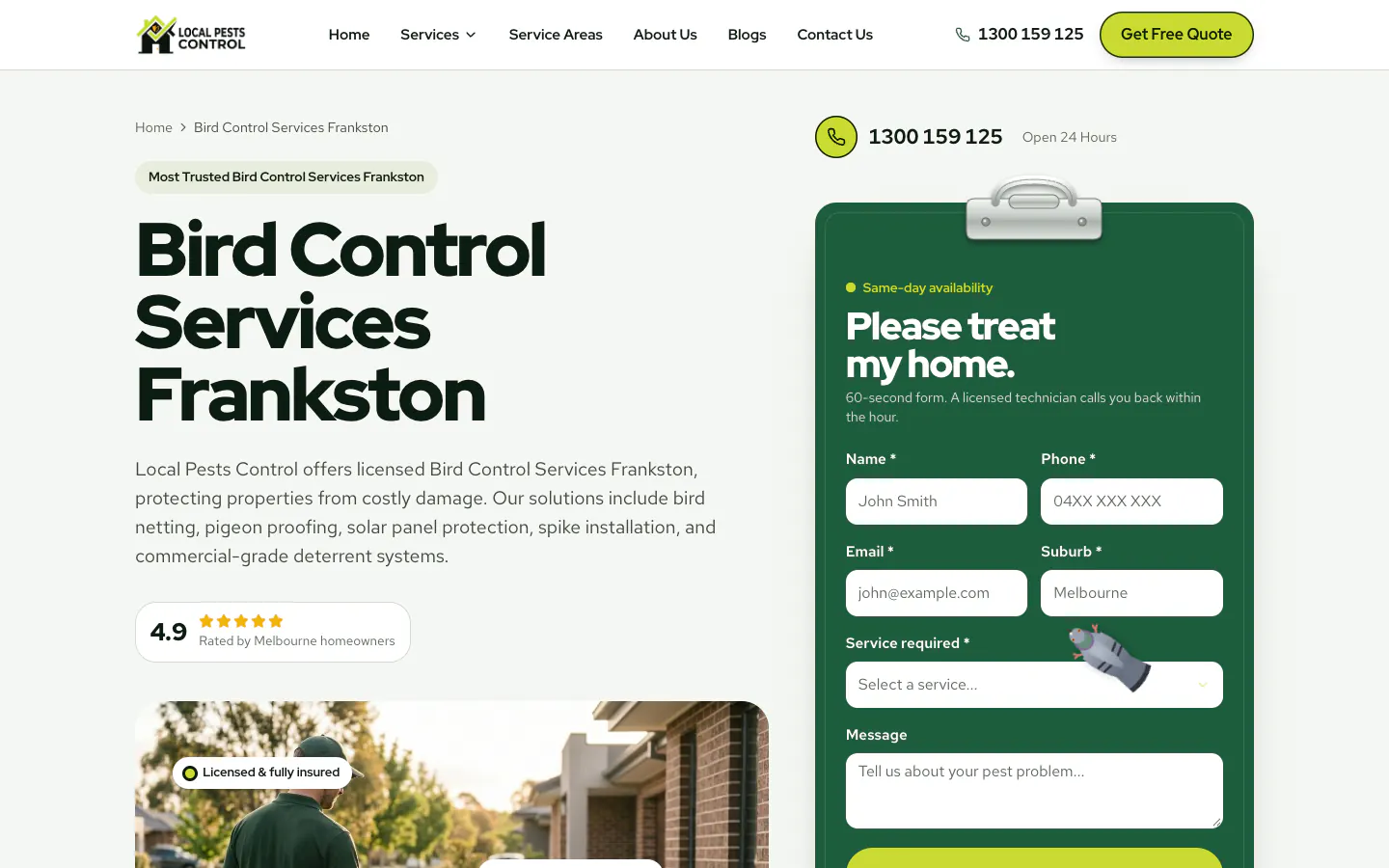
Each page follows one pattern. A breadcrumb and a short label sit above a large heading, the rating from Melbourne homeowners sits under the opening line, and the quote form waits on the right. Further down, service pages explain the signs, how the treatment works and what affects the price, and the bee removal page goes as far as telling honey bees, native bees and European wasps apart.
A menu sorted by pest
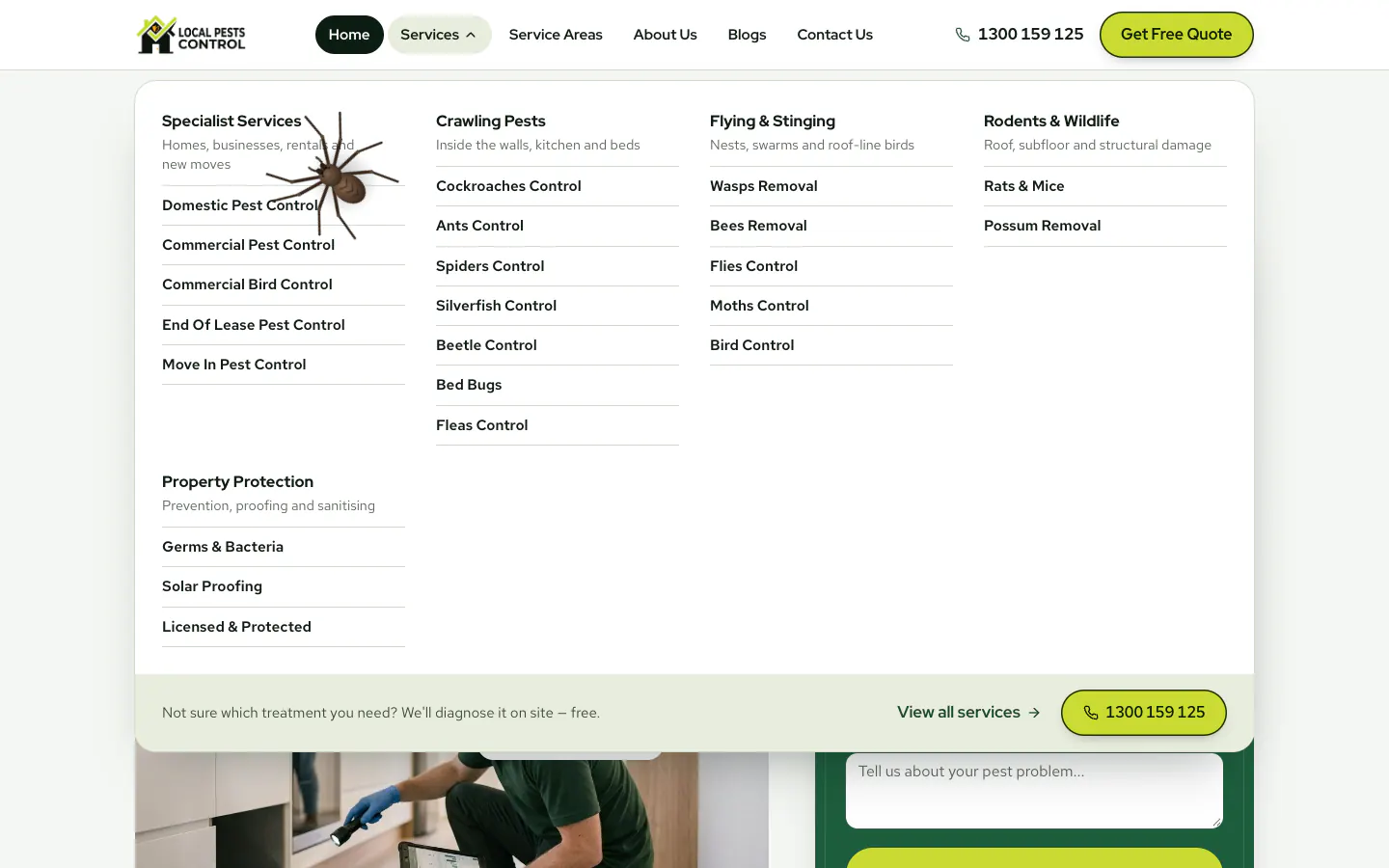
The Services menu opens on five groups: specialist services, crawling pests, flying and stinging insects, rodents and wildlife, and property protection. Each group carries one line on where the trouble happens, such as inside the walls, kitchen and beds. A bar along the bottom offers a free on-site diagnosis for anyone who cannot name the pest.
A quote form on a clipboard
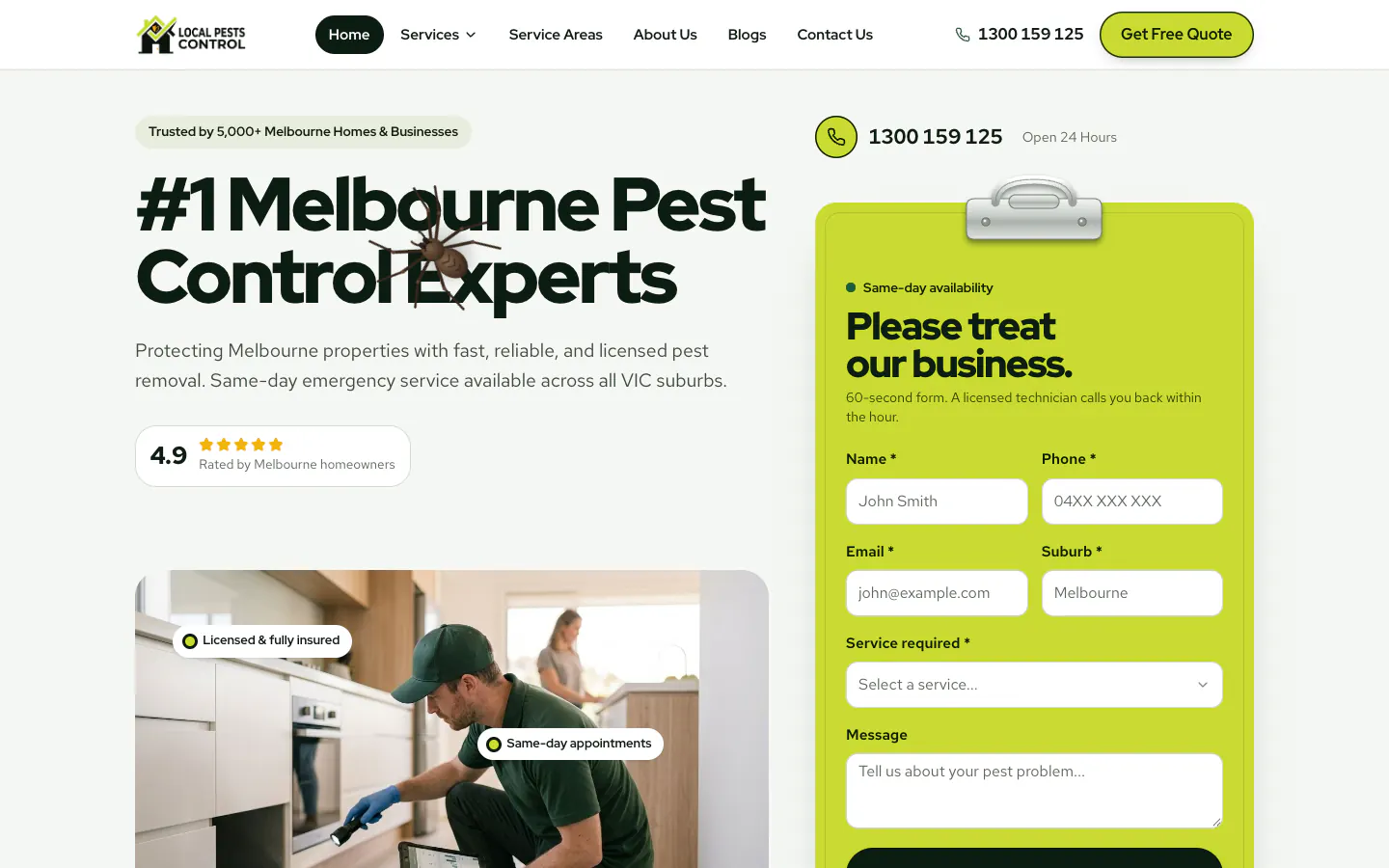
The quote form is drawn as a clipboard with a metal clip at the top. It opens as Please treat my home, and one tap on Business and hospitality swaps it for Please treat our business. Both ask for a name, a number, an email, the suburb and the service, and on a service page that service is already chosen, so the technician who calls back knows the job.
Small details with a sense of humour
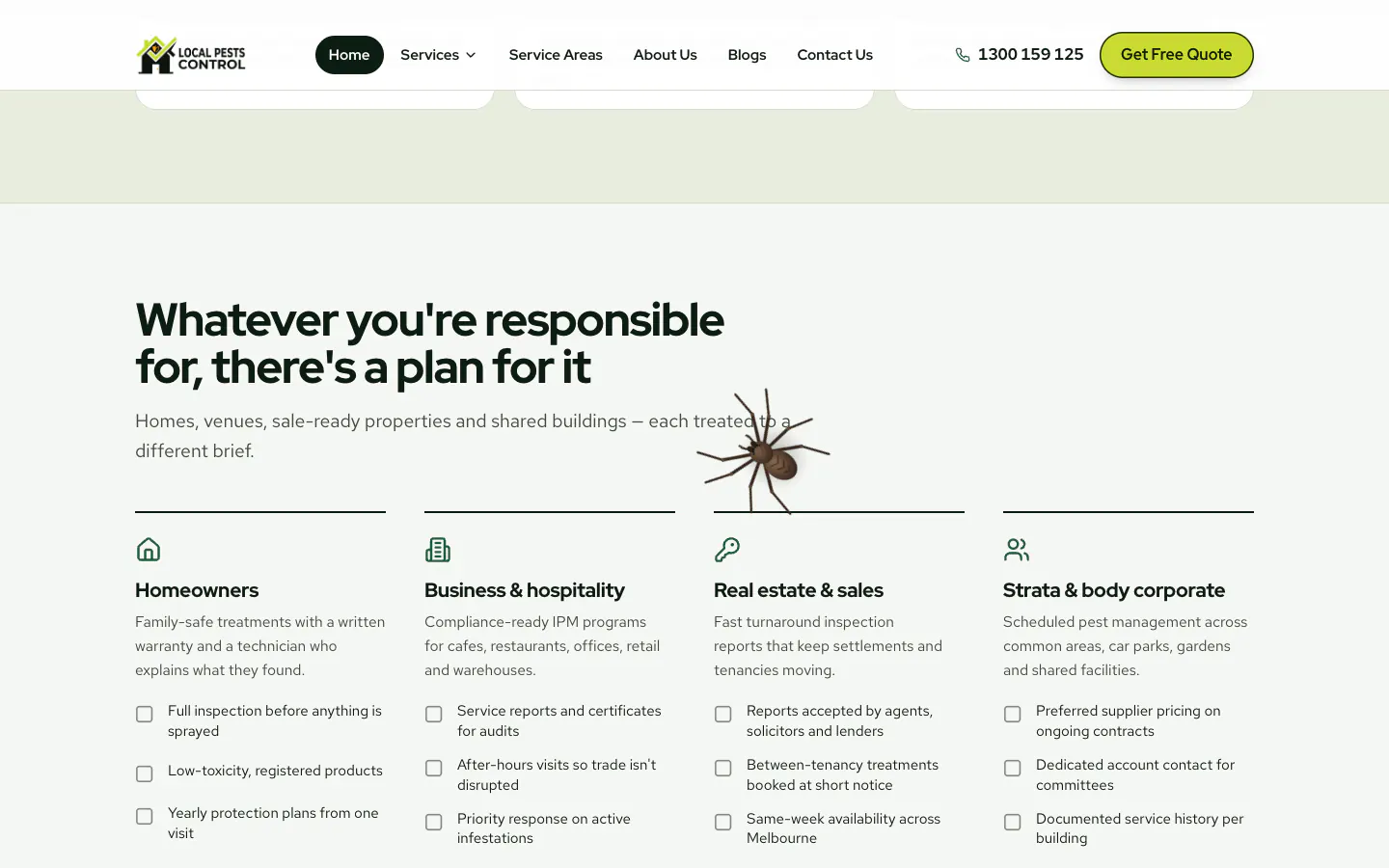
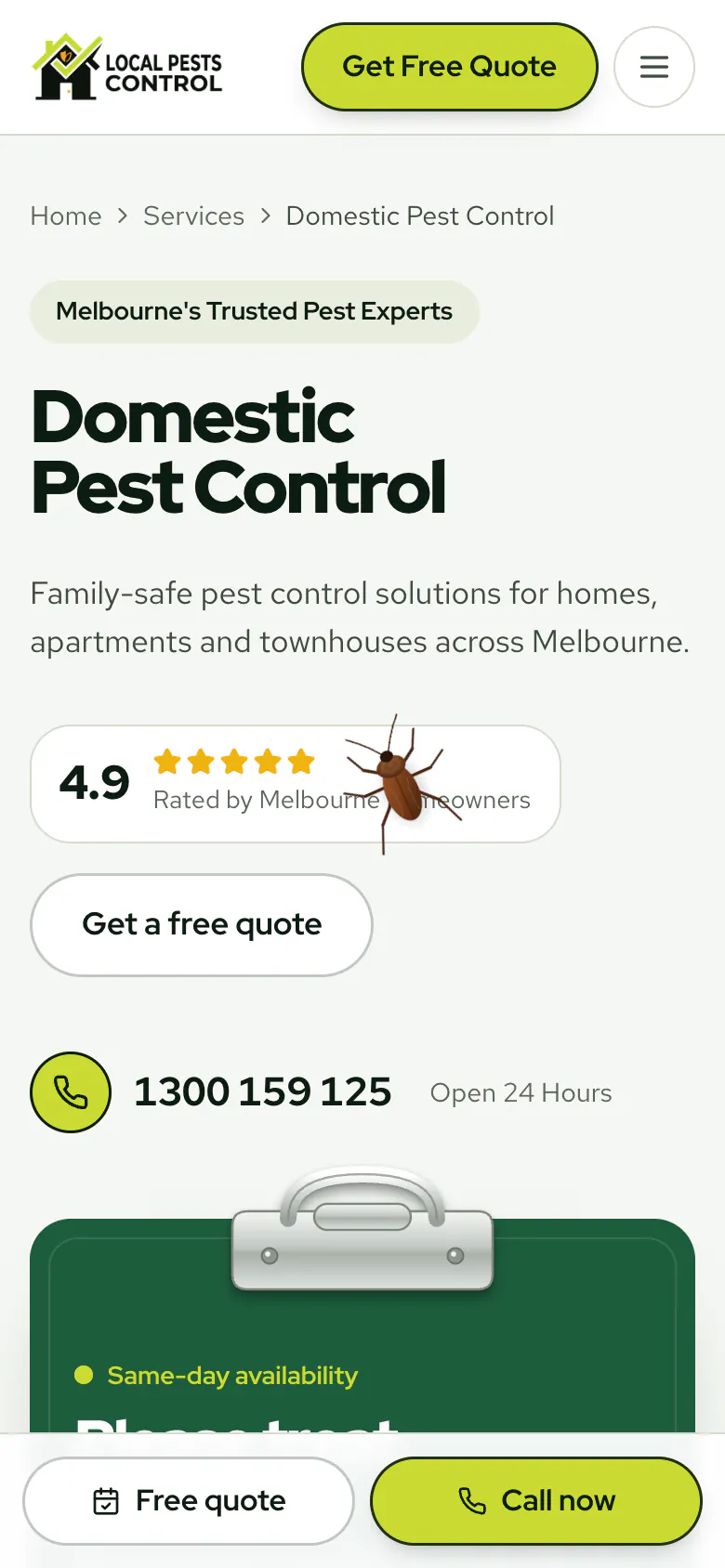
An animated pest crawls across the top of each page. It is a spider on the home page, a cockroach on the domestic page, a bee on the bee removal page and a pigeon on the bird control page. Lower down the home page, four cards set out a plan for homeowners, businesses, real estate agents and strata committees, and three levels of protection run from a single treatment to year-round care.
Built for phones
On a phone the header shrinks to the logo, a Get Free Quote button and the menu. A bar fixed to the bottom of every page keeps Free quote and Call now in reach while the visitor reads, and the clipboard form follows the opening lines and the rating.
What it connects to
The site is where Local Pests Control's Google Ads send people. Each ad for a pest or a service opens the page for that problem, and the suburb campaign named the suburb and, where one existed, opened that suburb's page. Over the first five weeks of Google Ads, 29% of the web-form enquiries the ads brought in became won jobs. The Local Pests Control Google Ads case study sets out how that was measured.
For a trade business that needs this depth of pages, see our website design services.