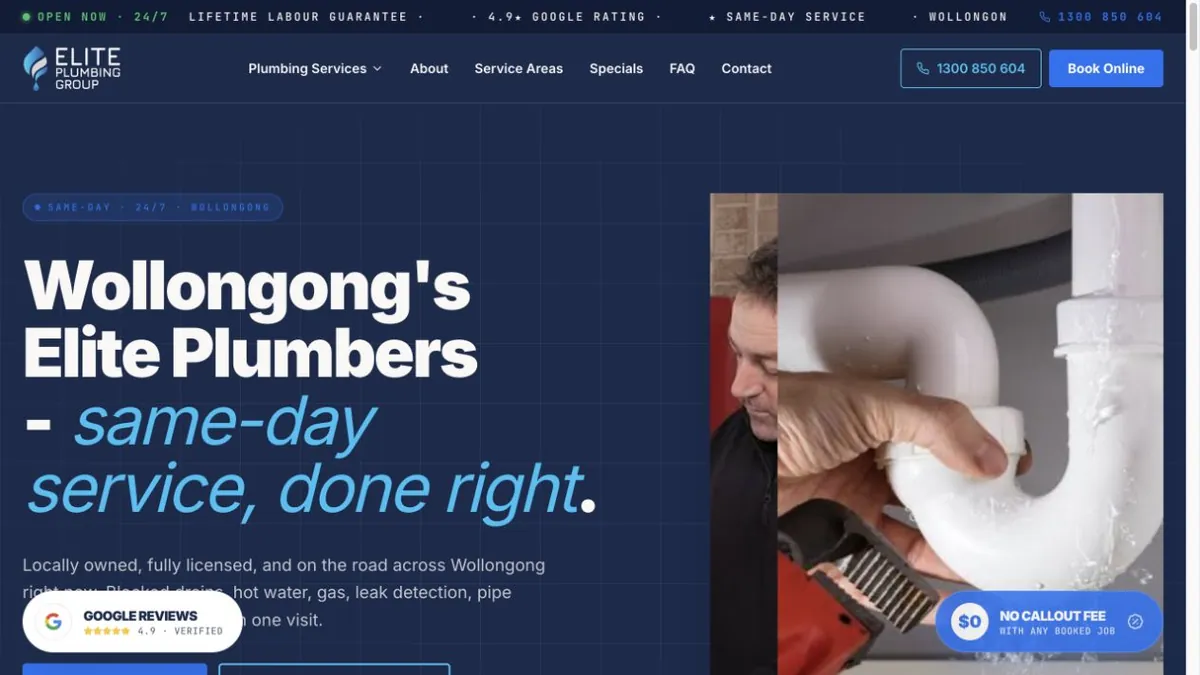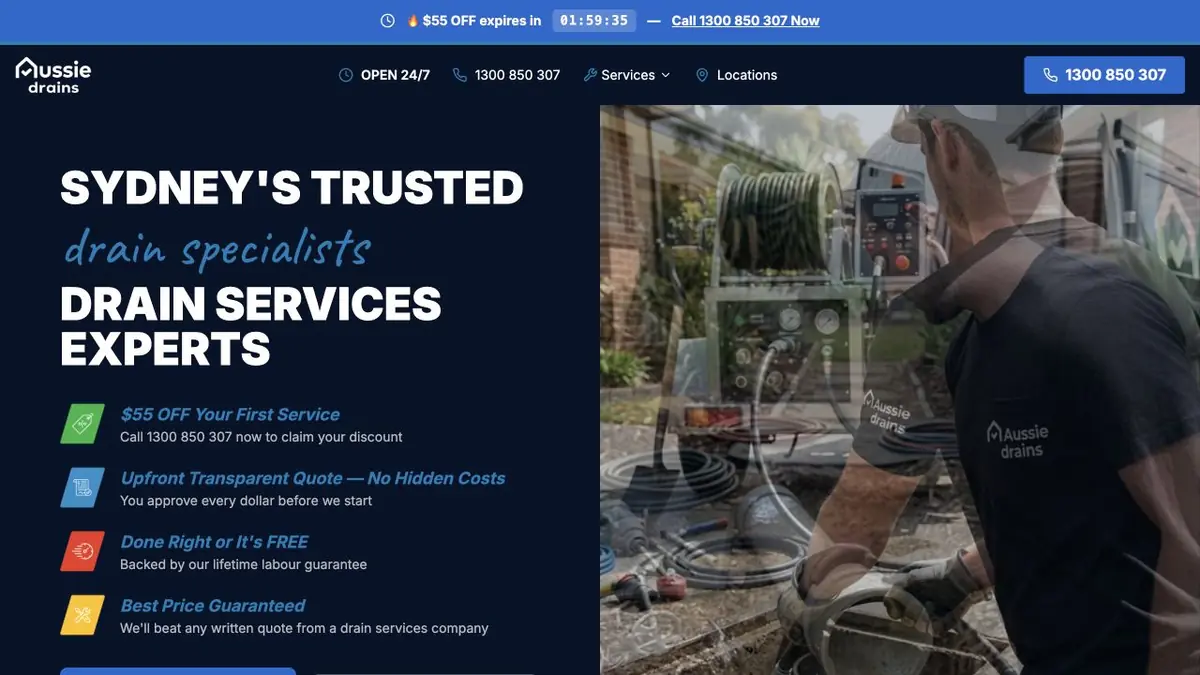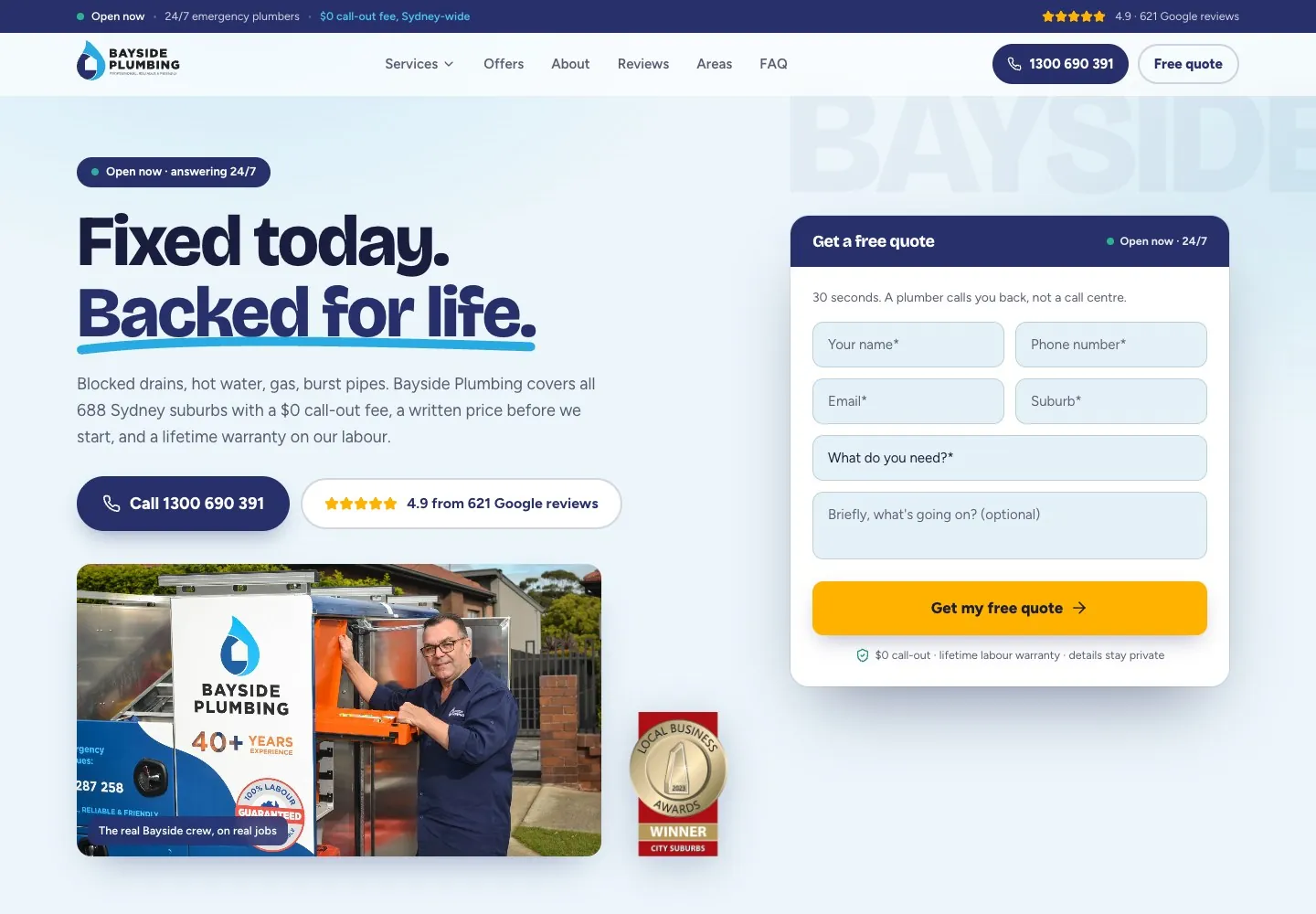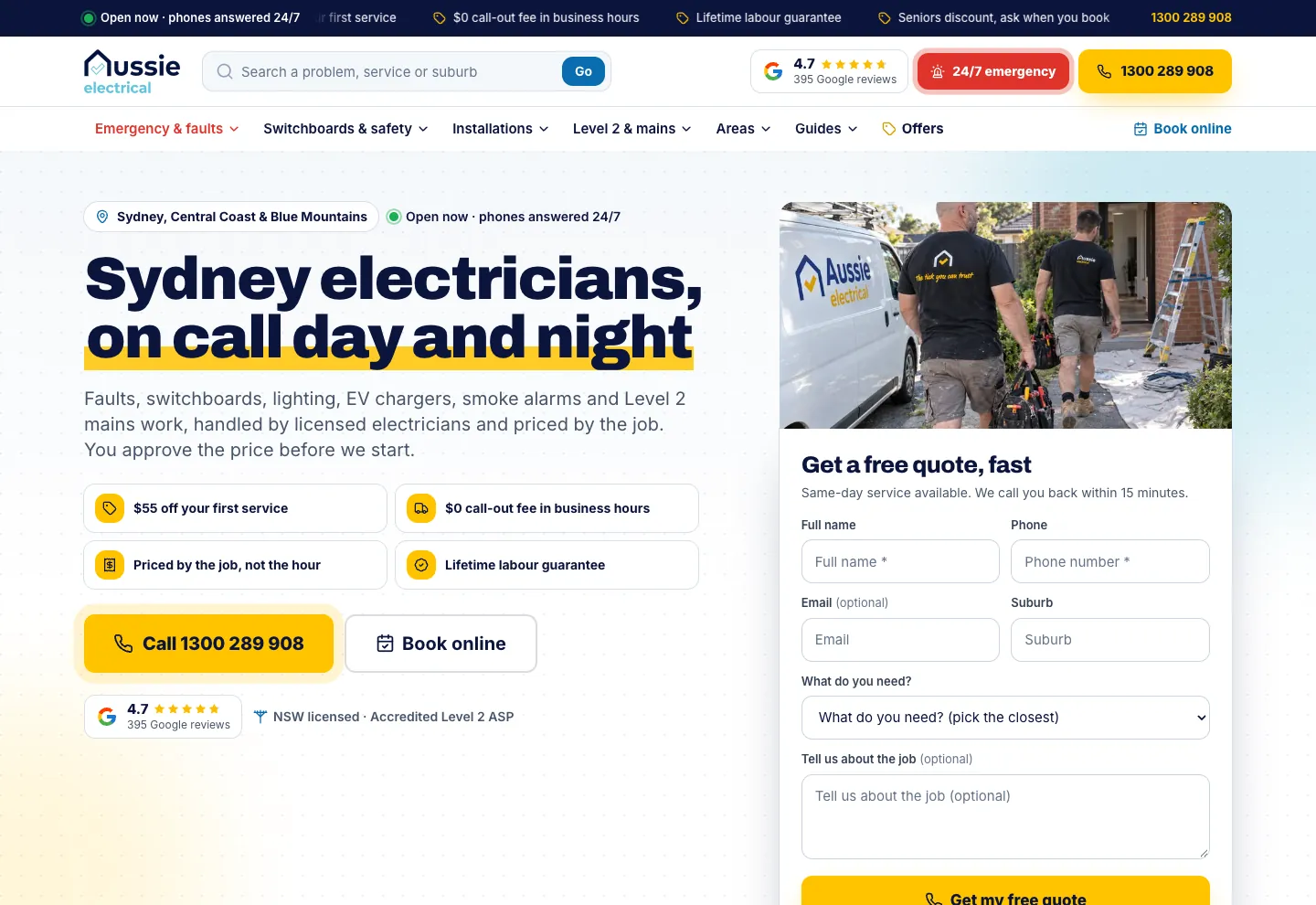

Generative engine optimisation When the AI answers, it should name you.
More and more buyers ask an assistant before they ask a search engine, and the assistant answers in one paragraph that names two or three businesses. Generative engine optimisation is the work that makes yours one of them.
We publish an llms.txt and a full-text corpus on this site so an answer engine can read us without guessing · 250+ active client engagements across five countries
Seven reasons the
answer names somebody else.
None of these are mysterious and none of them require a model to like you. They are the ordinary, checkable reasons a system decides it cannot use you as a source.
Nothing on the site says plainly what the business is
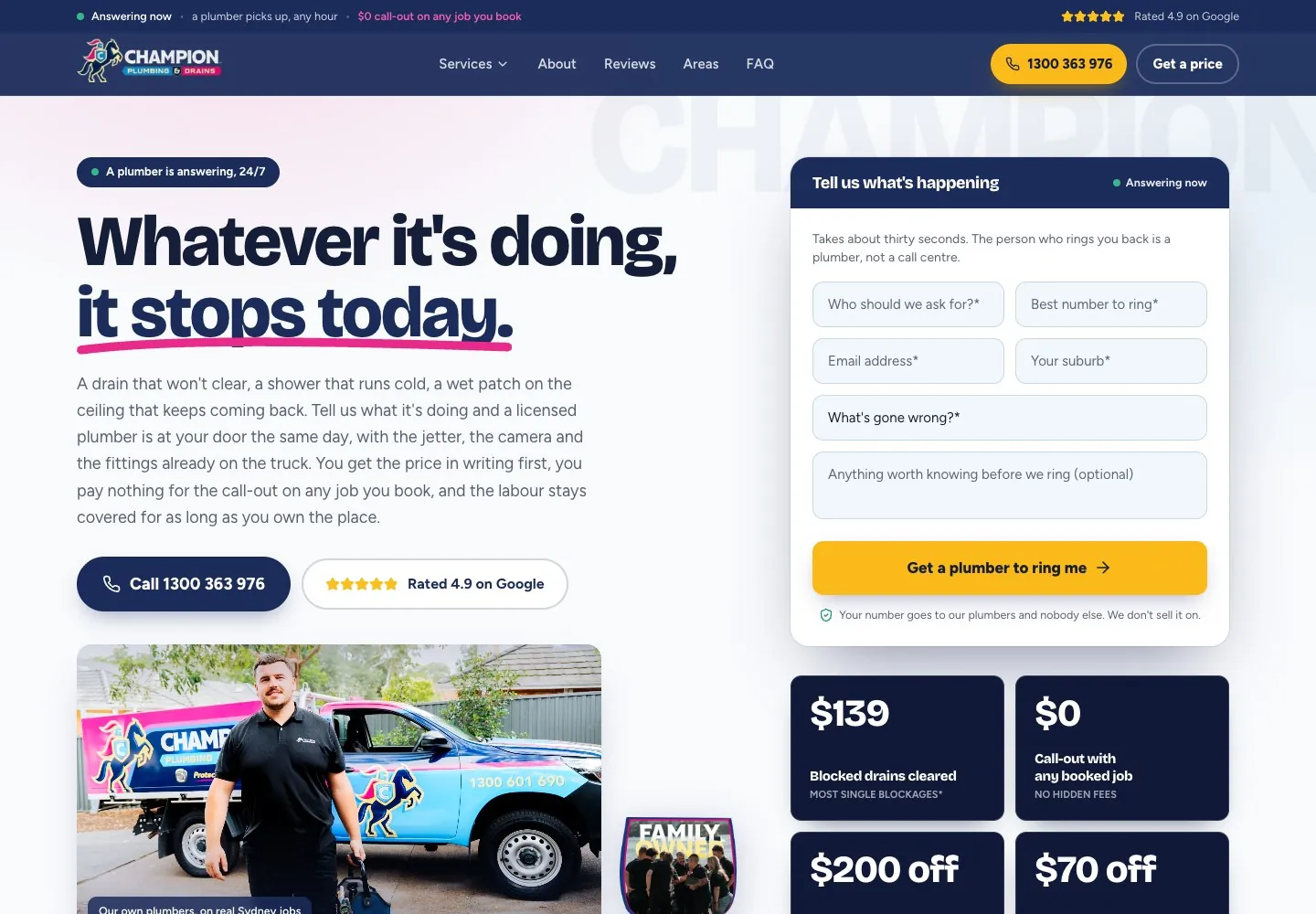
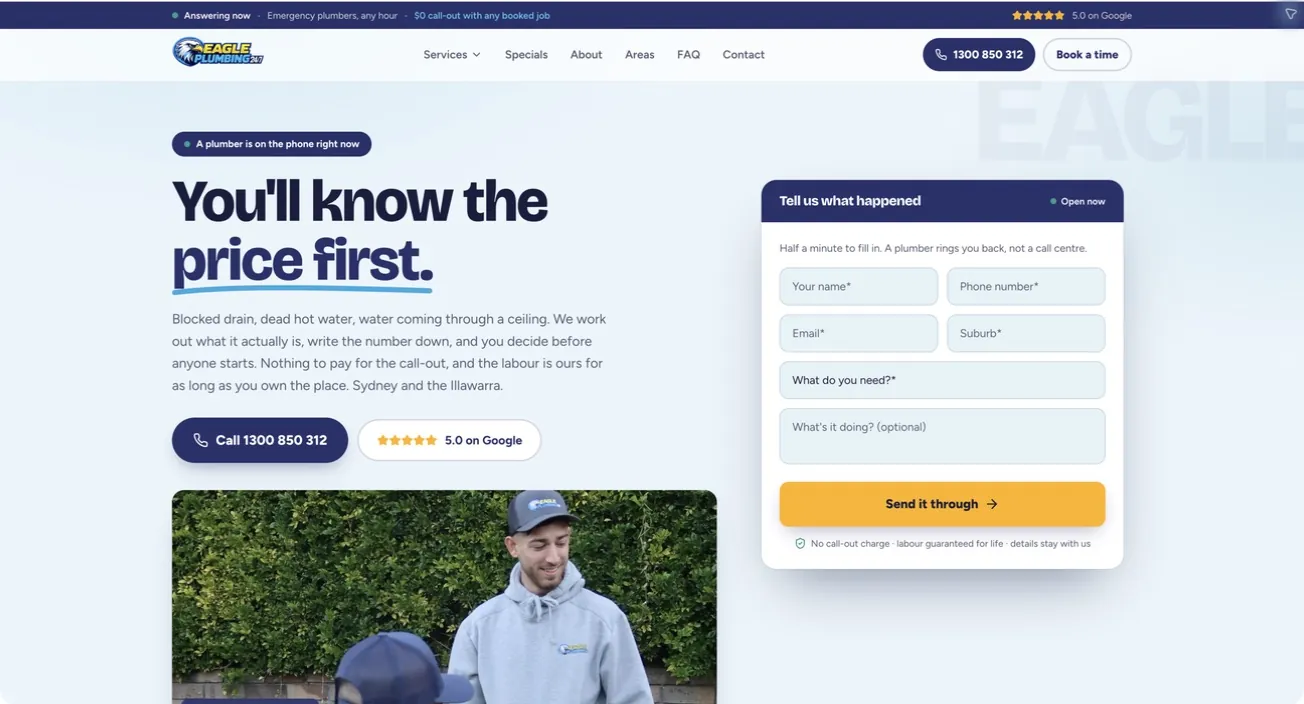
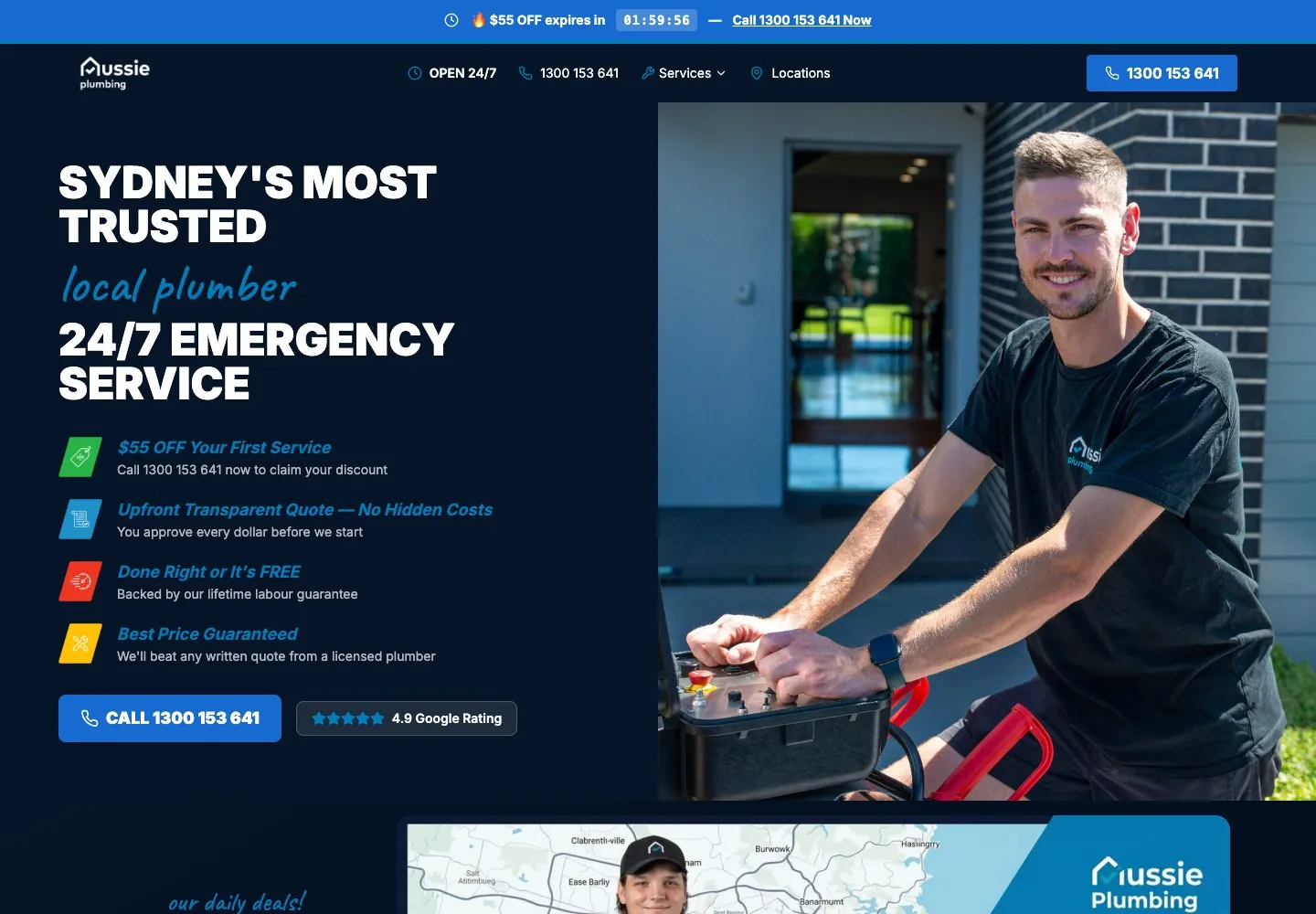
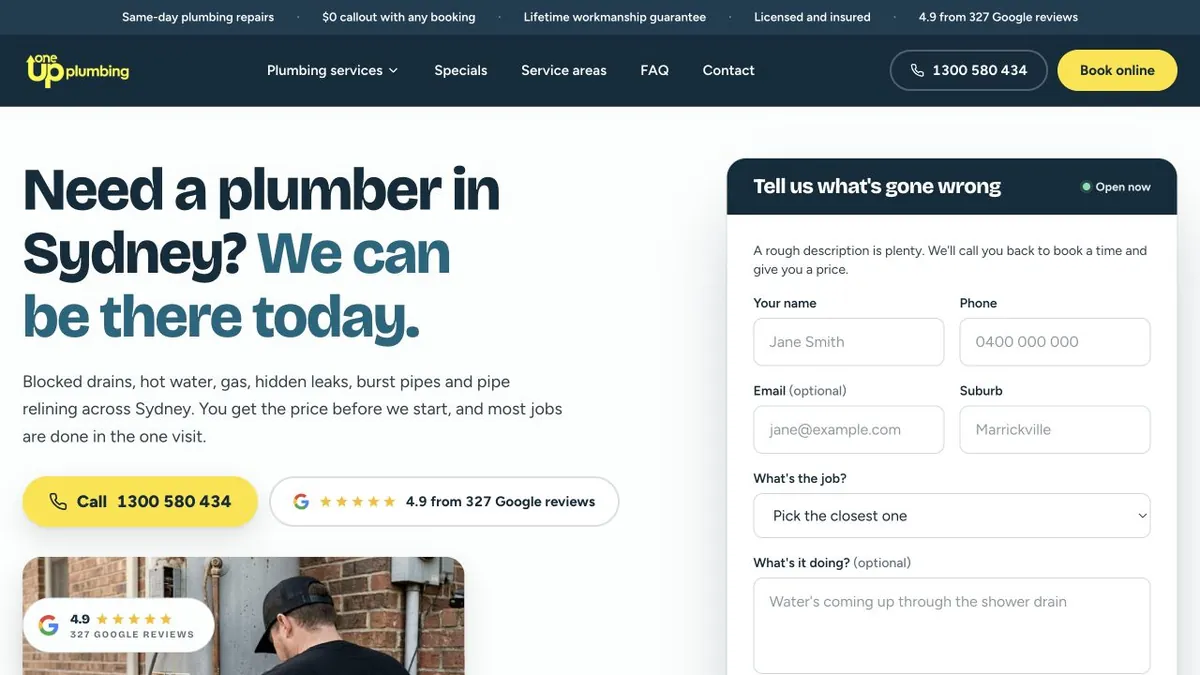
Before an assistant can decide whether you answer a question, it has to work out what kind of business you are. If that means reading between the lines of a slogan, it picks somebody clearer.
- Hard to read: “Solutions that move your business forward”
- Easy to read: “Emergency plumbers, 24 hours, across northern Melbourne”
- The test: could a stranger say what you do after ten seconds?
The answer is on page four of a blog post
Assistants lift a passage, not a whole page. If the answer sits under six paragraphs of build-up, there is nothing clean to lift.
- The question a buyer asks: “what does it cost to unblock a drain?”
- What they need to find: a number, near the top, in a sentence
- What usually happens instead: 800 words before the price appears
The AI crawlers are blocked, and nobody meant to do it
A crawler is the software that reads your site on a company's behalf. The AI ones are separate switches from Google's, and a plugin or a copied settings file turns them off silently.
- The names: GPTBot, Google-Extended, PerplexityBot, ClaudeBot
- Where the switch lives: a file on your site called robots.txt
- Who usually set it: a security or SEO plugin, without telling anyone
- How long it takes to check: about five minutes
No structured data, so the machine has to guess
Structured data is a small block of code that states your facts in a format machines read directly. Without it, every fact about you is a guess — and guesses lose to facts.
- Who you are, and what kind of business
- What you sell, and where you operate
- What you charge, and what is included
- Who wrote the page, and when it was last true
Nobody else backs up what you say
These systems weigh whether sources agree with each other. If your claims exist only on your own website, there is nothing to check them against.
- Industry bodies and licence registers
- Directories and local listings
- Reviews written in customers' own words
- Genuine press or supplier pages that mention you
The site says nothing only you could say
Rewritten generic advice reads as one more copy of something the model already has. The specifics are the part nobody else can supply.
- Your actual price ranges
- Your actual response times
- How you do the job, step by step
- Numbers from your own jobs, not an industry average
The important content only exists inside JavaScript or a PDF
Answer engines read plain web pages, and several read them far less patiently than Google does. Content that needs a browser to appear may as well not be there.
- A price list that only exists as a downloadable PDF
- Service details that appear only after a script runs
- A menu or table loaded from somewhere else after the page opens
One paragraph, two or three names.
That is the whole shape of the problem. Somebody asks a question, gets a written answer back, and a small number of businesses are named inside it. Generative engine optimisation — GEO — is the work of being one of them.
These are the six places that answer gets written. Each reads differently, so being missing from one removes a whole assistant rather than a slice of traffic.
Google AI Overviews
The summary block above the results. It cites sources, which makes being one of them the entire objective, and it is the surface most Australian businesses feel first.
Google AI Mode
Google's conversational search experience. Same index, different reading behaviour: it wants a direct answer to a specific question rather than a page about a topic.
ChatGPT search
Browses live and names sources. It leans on brand signals, review presence and content clear enough to be summarised without distortion.
Google Gemini
Draws heavily on Google's entity graph. If your business is not clearly defined as an entity with a consistent name, category and location, there is little for it to attach to.
Perplexity
Citation-first by design — every claim carries a link. It rewards pages that answer one question completely rather than pages that cover a subject broadly.
Microsoft Copilot
Reads from Bing's index, which many businesses have never checked. Being absent from Bing is a common and entirely fixable reason to be missing from one whole assistant.
And what it is not.
It is not a separate product from SEO, not a keyword list for chatbots, and not a way of tricking a model.
- There is no submission form
- There is no partner programme
- There is no back door, at any price
- Anyone offering you one is describing something that does not exist
What there is: being the clearest, best-evidenced answer available.
It is also not one service per acronym. Answer engine optimisation, AI overview optimisation and generative engine optimisation are three names for the same job on different surfaces, which is why this is one page rather than three.
SoudCoh · client record
250+
Active client engagements
Australia, the United Kingdom, Saudi Arabia, the UAE and New Zealand
SoudCoh Compound™
41
Numbered clauses, published in full
The operating standard every engagement is run under
Published on this site
2
Machine-readable corpora for AI crawlers
An llms.txt and a full-text file — we do on our own site what we ask of yours
These describe SoudCoh's practice, not AI search outcomes. There is no honest industry benchmark for citation rates and no agency controls whether a model cites anybody — so there is no outcome figure on this page.
Ten things happen on a GEO engagement. Here they are, in order.
Steps one to four sit on your own website and move fastest. Steps six and seven live off it and take longest. Software runs the monthly panel and checks the markup; the judgement goes out with a name against it.
Describe the business once, then say it the same way everywhere
One description of who you are, what you do and where you do it — matched everywhere your business appears. Disagreement between those places is the most common reason a model cannot place you.
- Your own website, on every page
- Your Google Business Profile
- Directories, listings and social profiles
- The code block on your site that states your business details
Answer the question in the first sixty words
A heading shaped like the question a person actually asks, then the answer straight underneath. Everything else can follow. This is the single change that most often gets a page quoted.
- Heading: “How much does end-of-lease cleaning cost in Melbourne?”
- First line: the price range, plainly, with what it includes
- Then: the detail, the exceptions and the rest of the page
Publish the things only you can publish
Generic advice is already inside the model. Specifics are the thing it has to come to you for.
- Your price ranges
- Your response times and your service areas
- Your process, step by step
- Data from your own jobs, claims or bookings
Mark up the facts so nothing has to be guessed
Structured data is a small block of code stating your facts in a format machines read directly. Here it is not a ranking trick — it is the difference between a fact and a guess.
- Your organisation: name, address, phone, hours
- Your services and products, with what they cover
- Your FAQs, so an answer can be lifted whole
- Author and date, so a page can be judged as current
Decide crawler access on purpose
These are separate switches with different consequences. We check what your site currently allows — often not what anyone intended — explain the trade, and you decide. It is your content.
- The switches: GPTBot, Google-Extended, PerplexityBot, ClaudeBot, CCBot
- Allow: you become eligible to be read and named
- Block: your content stays out of training, and out of the answers
- Most service businesses want to be found. Publishers often do not.
Get backed up somewhere other than your own site
These systems check whether other sources agree with you, so the agreement has to exist somewhere. This half does not live on your website, and it takes the longest to move.
- Industry bodies and association listings
- Directories and local council registers
- Supplier and partner pages
- Local press and genuine editorial
Keep reviews recent and specific
Reviews are one of the few sources that describe you in a customer's own words, which is exactly the kind of text these systems read well.
- Recent, not from three years ago
- On the platforms that actually get read
- Naming the real service and the real suburb
- With replies from you underneath them
Fix the boring technical layer
Answer engines are less patient readers than Google. Anything that needs work to appear often does not get read at all.
- The important content in the page itself, not loaded in afterwards
- Pages that load fast
- Headings and links that make the structure obvious
- Nothing important trapped inside a PDF
Publish a machine-readable version of the site
Two plain text files that point a crawler at what matters and let it read the content without wrestling the layout. We ship both on soudcoh.com — it removes an excuse cheaply.
- llms.txt — a short index of what is on the site
- A full-text file — the content itself, without the design
- Both are public. You can open ours right now.
Run a prompt panel every month
A prompt panel is a fixed list of the questions your buyers actually ask, put to the assistants on a schedule with the answers saved. It is the only honest reporting available in this channel.
- Twenty to fifty real buyer questions
- Asked across each assistant, the same way, every month
- Answers saved, so this month can be compared with last
- Recorded rather than remembered
Baseline first. Then the boring, useful part.
- Weeks 1–2
The audit and the starting point
Before anything is changed, we write down where you stand. Without that, nobody can tell later whether the work moved anything.
- What the assistants say today when asked your buyers' questions
- Who they name instead of you
- How your business is described across the web, and where those disagree
- What facts your site currently states in machine-readable form
- Which crawlers your site currently lets in
- Week 3
The priority order
A ranked list of fixes, each with a reason. You see the order before anyone starts work.
- Split into: helps ordinary search too, and helps AI answers only
- Effort marked against each one
- You can strike anything off the list
- Weeks 3–8
Description, structure and content
The on-site half. This is the part fully within your control, so it goes first.
- One description of the business, matched everywhere
- Facts marked up so nothing has to be guessed
- Pages shaped like the question, answered at the top
- Crawler rules set the way you decided
- Technical blockers cleared
- Weeks 6–12
Getting backed up elsewhere
The half that does not live on your website. It takes the longest to move, so it starts before the on-site work is finished.
- Listings and directories brought into line
- Industry bodies and association pages
- Review presence made recent and specific
- Monthly
The prompt panel and the report
The same questions asked again, recorded against the starting point, then written up in plain English.
- What moved
- What did not, and why we think so
- What we are changing next month
- Ongoing
Re-reading the assistants
These systems change without notice and without a changelog. Part of the retainer is somebody whose job is to notice.
- A new assistant starts mattering
- An existing one changes how it cites
- We tell you when something we relied on stopped being true
The baseline is captured before anything is changed. Without it there is no way to tell later whether the work moved anything, and that is exactly the position most of this industry is happy to leave you in.
No platform reports this, so the reporting has to be built.
Search gives you impressions and clicks. Answer engines give you nothing. Here is exactly what we measure, and the one thing nobody can.
A prompt panel, asked on a schedule
The same buyer questions, put to the assistants every month, with the answers kept.
- Were you named at all?
- Were you linked, or just mentioned?
- What exactly was said about you?
- Saved as text, so nobody has to rely on memory
How often you appear against your competitors
Out of that same panel, how often you show up and how often each competitor does. It is a sample, not a census, and the report says so.
- Counted from the same fixed question list each month
- Named competitors, not a vague “the market”
- Reported as a share of a sample, never as a percentage of reality
Visits arriving from the assistants
Your analytics can see people arriving from ChatGPT, Perplexity, Gemini and Copilot. It undercounts, because plenty of readers search your name instead of clicking the link.
- Visible: someone clicks the citation and lands on your site
- Invisible: someone reads the answer and googles you afterwards
- So this number is a floor, not a total
People searching for your name
Often the clearest sign this is working. Somebody hears your name in an answer, then looks you up.
- Searches for your business name specifically
- Visits where somebody typed your address in directly
- Watched next to the panel, because they tend to move together
Enquiries, still
The panel is an early signal. The number the business actually runs on stays in the report alongside it.
- Calls
- Forms
- Booked jobs
What nobody can measure
There is no impressions report for an AI answer. No platform publishes how often you were shown and not clicked.
- No assistant reports impressions to anybody
- Anyone quoting you an AI impression count is estimating
- We would rather say that than put a made-up number in a report
Separating assistant referrals from everything else is a tracking job in its own right. Tracking and analytics covers how that gets wired.
GEO is not SEO with a new name. Here is the actual difference.
Seven rows, and the last one is the important one: the thing that has not changed is that you have to genuinely be a good answer.
What it wins
SearchA position on a page of links, which the reader then chooses from.
AnswersA sentence inside an answer, with your name in it and a citation beside it.
The unit of work
SearchA page, aimed at a query.

AnswersAn entity, aimed at a question — and the passage that answers it.
What actually gets read
SearchThe page, in its own context, by one crawler.
AnswersA passage, lifted out of context and reassembled next to other people's passages.
Structure that matters
SearchTitles, headings, internal links, crawl and index health.
AnswersA direct answer in the opening lines, plus schema that states what you are without inference.
Who decides
SearchOne ranking system, studied for two decades, reasonably predictable.
AnswersSeveral models, retrained on their own schedules, each citing differently and none of them documented.
How it is measured
SearchPositions, impressions, clicks — all reported by the platform.
AnswersA sampled prompt panel, referral sessions and branded search. No platform reports it for you.
What does not change
SearchBeing genuinely useful, crawlable and corroborated elsewhere.
AnswersBeing genuinely useful, crawlable and corroborated elsewhere.
A new channel needs the measurement stages most.
Compound is how our team works on any engagement — six stages every change passes through. GEO puts most of its weight on these two, because nothing here is reported to you by a platform.
Meter
If it can't be measured, it doesn't get bought.
GEO is the channel where this stage earns its keep, because the platforms report nothing. The prompt panel, the baseline and the referral segmentation are all built before the work starts, so there is something honest to compare against later.
Statement
A fixed rhythm, good news or bad.
A monthly report saying what the assistants said this month, what changed, what did not, and what we are doing next. In a channel this new, the discipline of reporting on a schedule is most of what separates work from theatre.
What we control.
Four things on this list are work you are paying for and can inspect. Two are outside anybody's control, including ours, and any agency saying otherwise is guessing at your expense.
- Inside our control
How clearly your site states what you are
The entity description, the schema, the consistency across every place your business is listed. This is work, it is checkable, and it is the largest single lever.
- Inside our control
Whether there is a clean answer to lift
Question-shaped pages with the answer at the top, written by people who understand the trade. A model cannot quote a passage that was never written.
- Inside our control
Whether the crawlers can read you at all
Crawler rules, rendering, page speed, HTML structure. Boring, unglamorous, and the reason a good number of businesses are invisible right now.
- Inside our control
Whether anyone else corroborates you
Listings, reviews, industry bodies, press. Slower than on-site work and worth more, because it is the part a model uses to check whether you are telling the truth.
- Outside anyone's
Which model answers, and how it feels that day
The same question can produce different answers across assistants, and across two weeks on the same one. Nobody outside those companies controls it and nobody should claim to.
- Outside anyone's
Whether an answer cites anybody at all
Some answers name sources, some do not, and the balance shifts as products change. We can make you eligible and well-positioned. We cannot make a model cite.
Before you ask us anything
Here is what everybody asks first.
AI search, answered.
What GEO is, how it differs from SEO, cost, timing, contracts, who actually does the work, and what happens when nothing moves.
The first call is free and there is no deck.
Ask us about AI searchGEO is the work that makes a business eligible to be named and cited inside AI-generated answers — Google AI Overviews and AI Mode, ChatGPT search, Gemini, Perplexity and Copilot. In practice it means stating clearly what your business is, marking that up as structured data so nothing has to be inferred, writing pages that answer a real question in their opening lines, making sure the AI crawlers can actually read you, and getting other credible sources to corroborate what you say. It is not a new algorithm to game; it is being the clearest and best-evidenced answer available.


SEO wins a position on a page of links, and the reader chooses from that page. GEO wins a sentence inside an answer, with your name in it. That changes the unit of work: SEO optimises a page against a query, GEO optimises an entity against a question and makes sure there is a clean passage to lift. It also changes measurement — search platforms report your impressions and clicks, and no answer engine reports anything at all, so the reporting has to be built rather than downloaded.
No, and anyone selling it as a replacement is selling you something. GEO sits on top of SEO: you still need a site that can be crawled and rendered, content that is genuinely useful, and authority that exists off your own domain. What GEO adds is a layer aimed specifically at how these systems read — direct answers, entity clarity, structured data and corroboration. Most of the work helps both, which is the honest reason it is worth doing even if you are sceptical about the whole category.

Google AI Overviews and AI Mode, which are the ones Australian businesses feel first, plus ChatGPT search, Google Gemini, Perplexity and Microsoft Copilot. The approach is deliberately platform-agnostic, because the signals these systems share — a clear entity, structured data, a direct answer, corroboration from other sources, a readable page — are worth far more than anything tuned to one product that may change next quarter. We do check Bing separately, because being absent from it removes a whole assistant.
The audit and the first round of implementation take four to eight weeks. Changes in what assistants say typically start showing in the monthly prompt panel somewhere between two and four months, and the off-site corroboration work takes longer than that because it does not live on your website. It compounds, in the same way SEO does. What we will not do is give you a date, because the retraining schedules of these models are not published to anybody.

Partly, and we are specific about which parts. We can measure a sampled prompt panel — a fixed list of your buyers' questions asked across the assistants each month, with the answers saved — plus referral sessions arriving from those assistants, branded search volume, direct traffic and, of course, enquiries. What nobody can measure is impressions inside an AI answer: no platform publishes it. If someone quotes you an AI impression figure, it is a model of a model.

It is a monthly engagement, priced on the size of the site, the number of questions worth owning and how much of the corroboration work sits outside your own domain. The audit can be bought on its own if you want to see the baseline before committing to anything, and the first call is free. You get a real number for your situation in writing before you start.
No long-term lock-in. What we do ask for is enough runway to be fair to the work — judging entity and corroboration work at six weeks is judging it during the part where nothing has propagated yet. The terms go in front of you in plain English before anything is signed.
Specialists on your account, using tooling that runs the prompt panel, audits schema, checks crawler rules and monitors changes month to month. The judgement — what your business actually is, which questions are worth owning, what is true enough to publish — goes out with a name against it. Pages are written by someone who understands the trade, because a thin page about a business nobody knows is exactly the content these systems are learning to discount.
We tell you, in the monthly report, and we change what we are doing. Usually the panel shows why: a competitor with far more corroboration, a question we are answering less directly than someone else, a page that is not being read. Where the honest answer is that this channel is not where your buyers are yet, we would rather say so and put the budget somewhere that is producing. What we will not do is let a retainer run quietly and hope.
A monthly document in plain English: the prompt panel results against the baseline, who is being named instead of you and why we think so, what we changed, what moved, what did not, and what happens next — alongside referral sessions, branded search and enquiries. On a fixed rhythm, good news or bad. If a number went backwards you will hear it from us first.
It is your content and it is genuinely a decision, not a default. Allowing GPTBot, Google-Extended, PerplexityBot and similar makes you eligible to be read and cited; blocking them protects content you would rather was not used for training, at the cost of visibility in those answers. Most service businesses want to be found. Publishers and businesses whose content is the product often do not. We audit what your site currently allows — which is frequently not what anyone intended — explain the trade, and set it the way you decide.
GEO does not work on its own.
It sits on top of ordinary search and beside everything else that makes you findable. Most engagements run two or three of these together.
- SEO servicesThe foundation this is built on. There is no version of GEO that works on a site ordinary search cannot read.
- The local half of being findableYour Google Business Profile, categories and reviews — which are also among the strongest entity signals an assistant reads.
- Machine-readable products, prices and stockProduct and category pages have their own answer-engine problems: specifications, availability and price all need to be machine-readable.
- AI systems and automationThe other side of the AI conversation — agents and automations inside your own business, rather than visibility inside someone else's.
- What produces an enquiry this afternoonWhat you run while the organic and answer-engine work compounds, because neither of those produces an enquiry this afternoon.
- Answer engines across more than one marketAssistants answer differently by country and by language. If you sell into more than one, that page is the prerequisite for this one.
- The briefings on how this is changingThis field moves quarterly. The shorter pieces track what actually changed rather than restating the theory.
- Separating assistant referrals from branded searchHow assistant referrals, branded search and enquiries get separated properly. Without it, none of this is measurable at all.
Find out what they say
We ask the assistants twenty of your buyers' real questions, save the answers, and show you who is being named instead of you and the checkable reasons why. Yours to keep either way.
No pitch deck. No promised citations. A saved transcript and a written list of reasons.