Website development

Champion Drains
Sydney, NSW
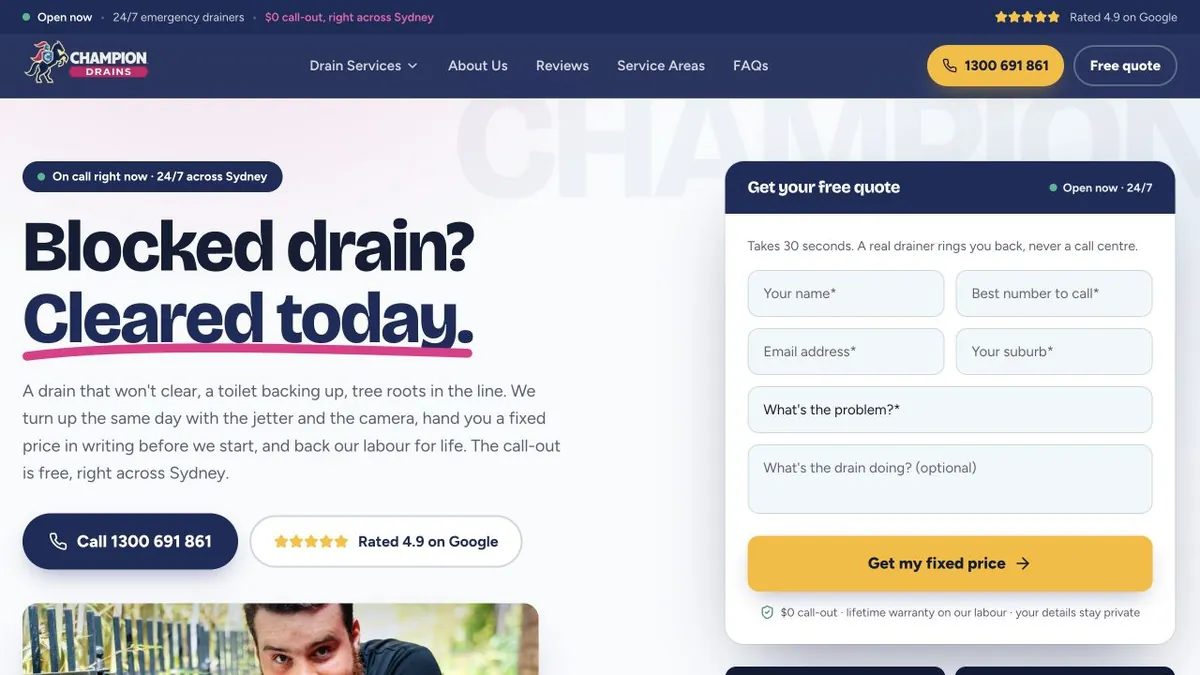
Champion Drains website design: a detailed drain catalogue organised around the customer’s problem, with specific service pages and a clear enquiry journey.
Read full website case study
Aussie Leak Detect · Leak detection · Sydney, NSW
The short version · Website delivery
Aussie Leak Detect — explain hidden leaks before asking for the booking.

Campaign work · Aussie Leak Detect
See the advertising work for Aussie Leak Detect, with the results and measurement explained in each campaign case study.
Campaign case study
Aussie Leak Detect recorded 6.8× return on Google Ads spend and $47.28 per call or form enquiry. A SoudCoh case study in specialist service marketing.
Read the campaign case studyWebsite showcase
Explore Aussie Leak Detect's website, from the first impression to the details.
Use the left and right arrow keys to browse screenshots. Home goes to the first screenshot and End goes to the last.

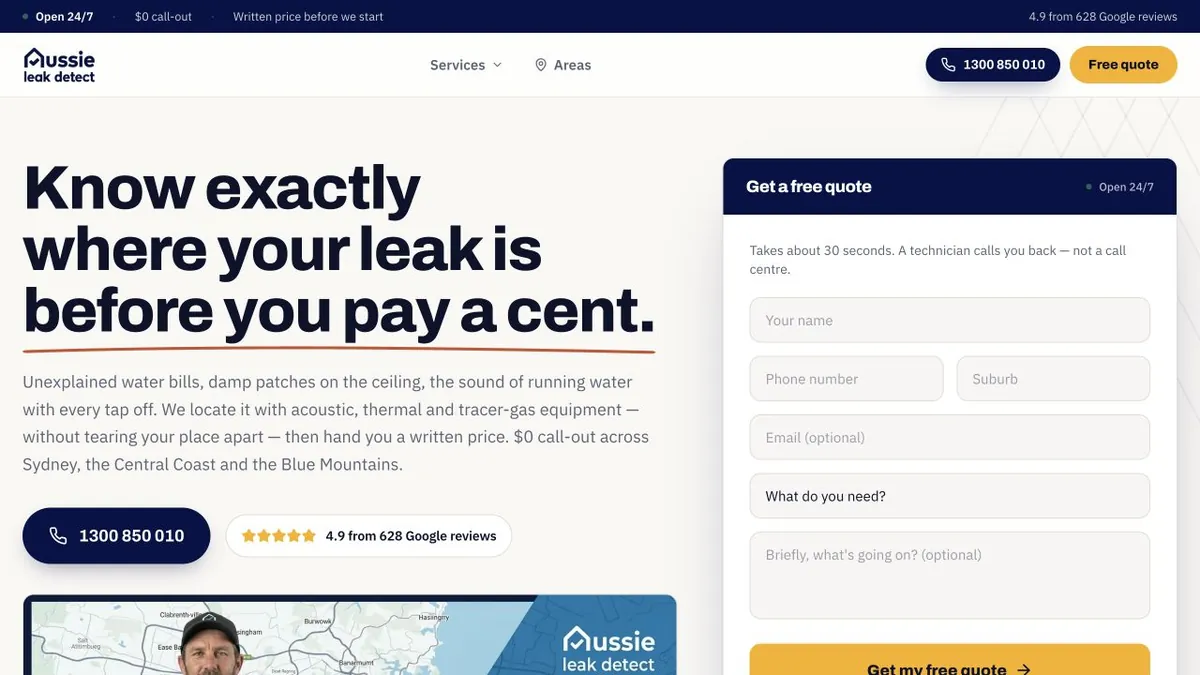
01 / 02 · Explain the offer beside the request — Large navy text introduces the detection service on a light background. The form asks for suburb and leak information, putting the practical property details beside the offer.
Inside the website
Website detail
Large navy text introduces the detection service on a light background. The form asks for suburb and leak information, putting the practical property details beside the offer.

Website detail
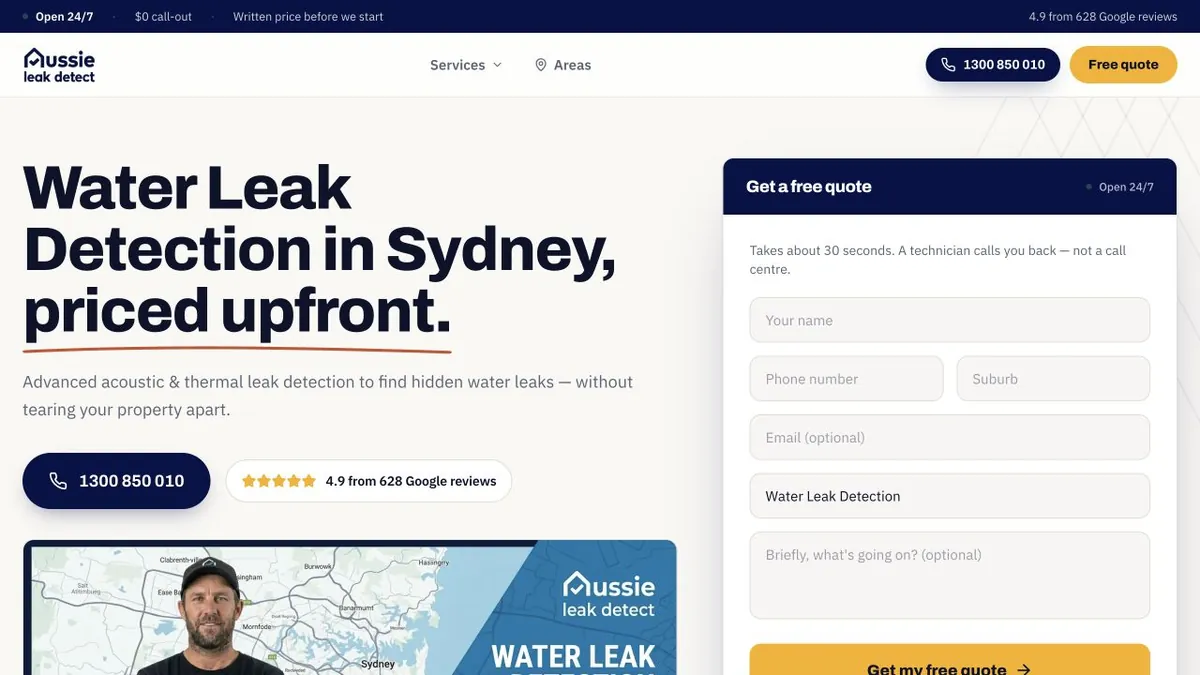
The water-leak page names the service in both its headline and form. The shared layout lets the content become more specific without changing how the customer begins an enquiry.

The short list
The design choices and customer journey behind this website.
SoudCoh’s plumbing website design for Aussie Leak Detect serves Sydney. The build brings the service information, visual identity and enquiry journey together, with the page examples and design decisions explained below.
A customer may notice a damp patch or an unusual water bill before they know where a leak is coming from. SoudCoh structured Aussie Leak Detect’s website around that uncertainty, with separate routes for water, gas, shower and bathroom, roof, slab, underground and concealed-pipe leaks.
Those categories connect the problem to the part of the property affected. They give the customer a way into the service without requiring a technical diagnosis first.
The water-leak content describes reporting the signs, using detection technology, identifying the source and providing a written location report. Acoustic listening, thermal imaging and tracer gas are named within the service explanation.
The design’s role is to make the process understandable. A visitor can see that locating a leak and completing a repair are related but distinct pieces of work, with service detail available before the enquiry.
Gas, roof, slab and bathroom leaks raise different questions, so the website gives them individual service content rather than repeating one broad introduction. Process sections and common questions let a visitor explore the topic that matches their situation.
The main pricing message explains the written-quote approach and the detection offer. Keeping these details alongside the scope helps the customer understand the basis of the conversation they are starting.
Sydney service-area routes sit alongside the specialist pages. Quote and phone choices give visitors a next step after reading, whether they are ready to talk or still collecting details about the property.
The completed website gives a specialist trade a clear information structure. It turns an uncertain symptom into a defined service topic and a practical way to ask for help.
See our website design and development work for how we connect local service information with a clear route to an enquiry.

Tags
A website built around your business.
Tell us about your services, your customers and the next step you want them to take. We will shape the design and page structure around that brief.
The brief, the design and how the website supports the wider customer journey.
The first call is free and there is no deck.
Book a callExplore the campaigns, websites and customer journeys we have built for more businesses in this industry.
PlumbingCampaign case study
Adelaide, SA
46
Plumbing enquiries
a 12-day period in 2026
Plumb SA generated 46 plumbing enquiries at $71.91 per lead across greater Adelaide in 2026, from just 12 days of spend.
Read case studyWebsite development

Sydney, NSW
Champion Drains website design: a detailed drain catalogue organised around the customer’s problem, with specific service pages and a clear enquiry journey.
Read full website case study
PlumbingCampaign case study
Sydney, NSW
13.36%
of clicks became enquiries
a 26-day period in 2026
Sydney plumbing leads for Eagle Plumbing: 80 enquiries in a 26-day period in 2026 at $110.72 each, with 13.36% of clicks converting and 17 tracked phone calls.
Read case studyWebsite development

Sydney, NSW
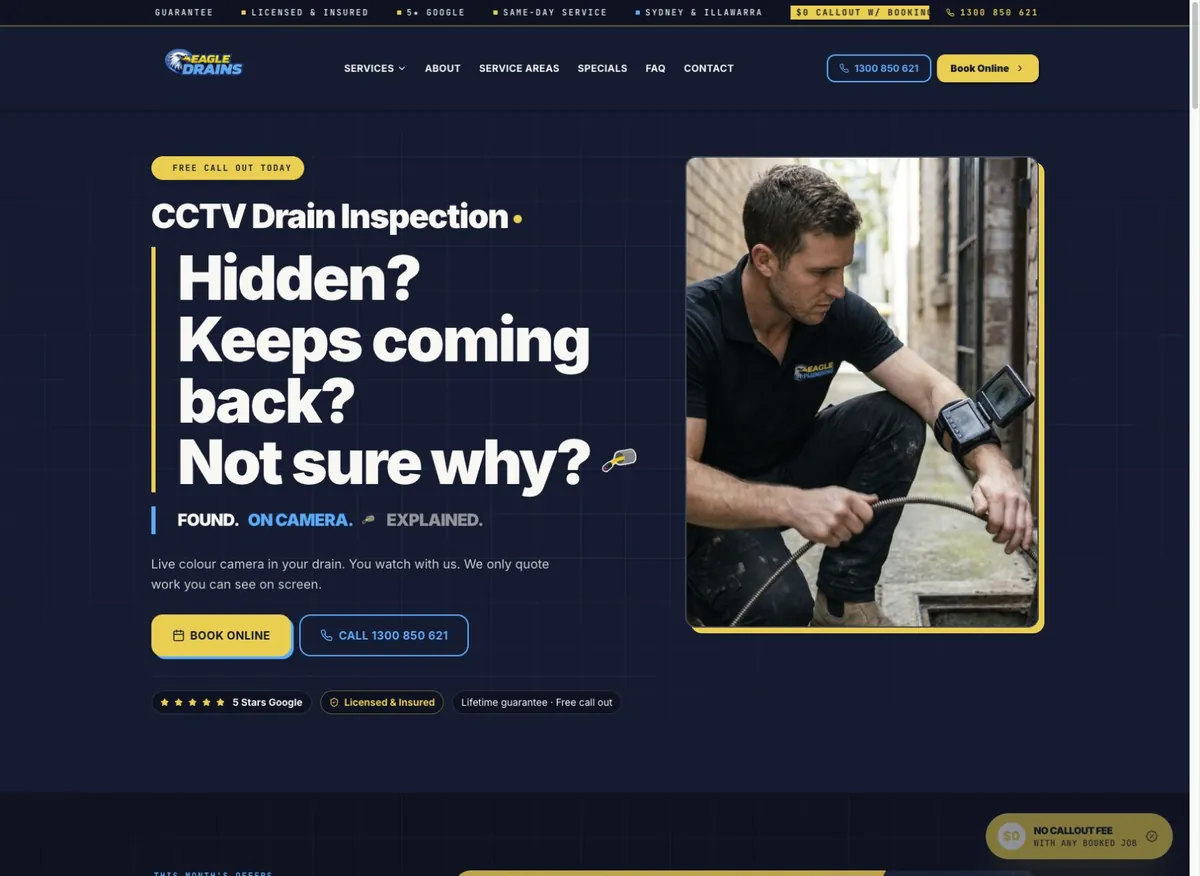
Eagle Drains website design: make drain inspection and repair easy to follow, with specific service pages and a clear enquiry journey.
Read full website case study
PlumbingCampaign case study
Melbourne, VIC
$74.42
cost per plumbing enquiry
a 10-day period in 2026
Melbourne plumbing leads for Your Pro Plumber: 16 enquiries at $74.42 each in a 10-day period in 2026, and 50 enquiries in a later 23-day period.
Read case studyWebsite development

Wollongong, NSW
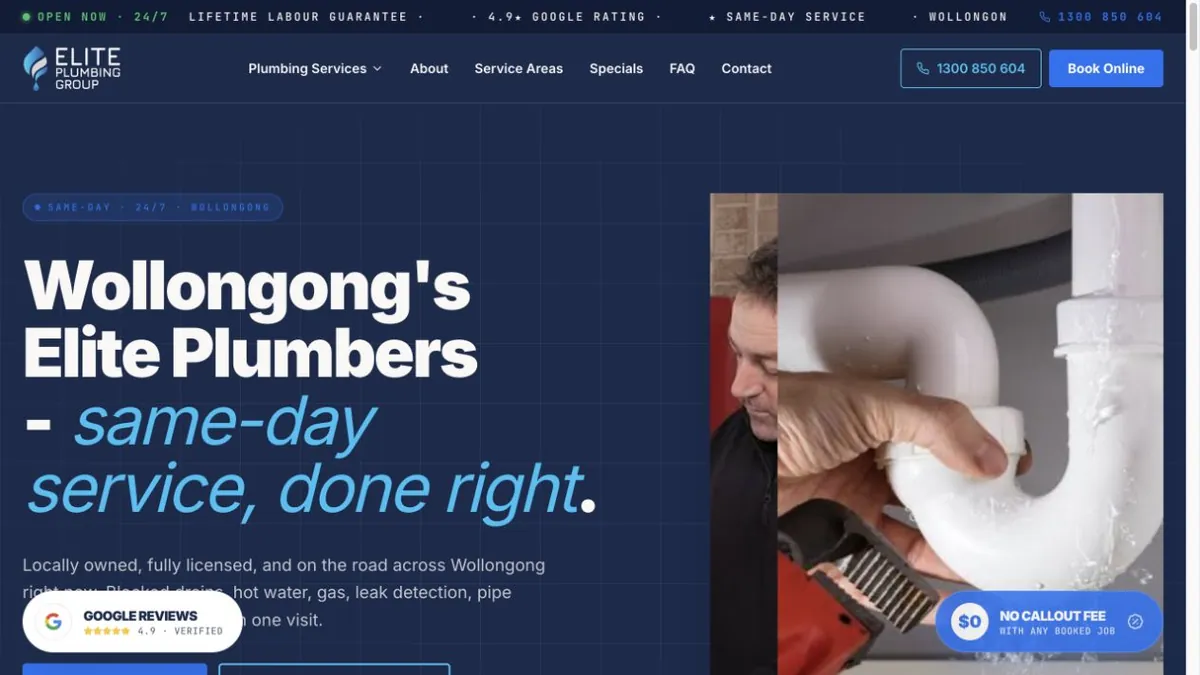
Elite Plumbing Group website design: bring builder-facing experience into a clear residential service journey, with specific service pages and a clear enquiry journey.
Read full website case study
PlumbingCampaign case study
Sydney, NSW
$140.84
cost per plumbing enquiry
a 23-day period in 2026
Sydney plumbing leads for 1UP Plumbing: 84 enquiries at $140.84 each in a 23-day period in 2026, from 639 clicks in a single campaign.
Read case studyWebsite development

South Australia
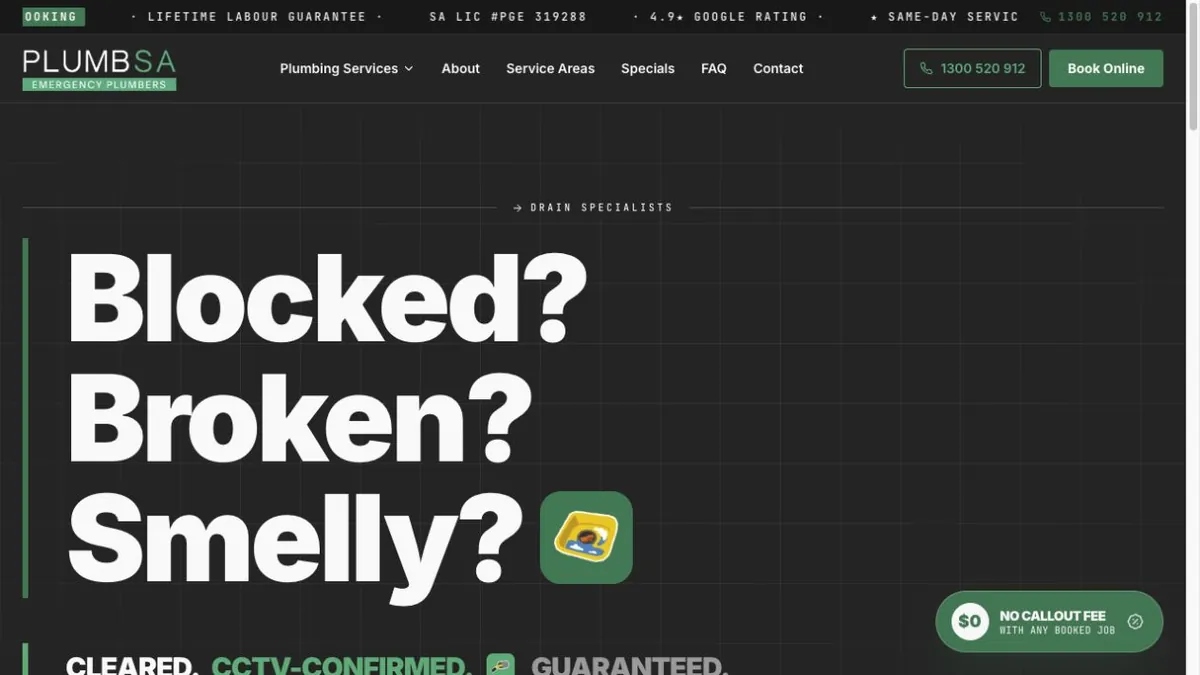
PlumbSA website design: a local plumbing website that connects service groups to the job, with relevant service content and practical contact choices.
Read full website case studyExplore the design, content and enquiry tracking services behind a website like this.
Further reading on the decisions that connect a website with the wider marketing work.
Why the primary and secondary categories must match the work a business actually wants. That case is argued in Google Business Profile categories as a silent rank constraint.
The profile and service-area rules for the mobile businesses represented throughout this library. The other half of it is set out in Ranking a service-area business without publishing a storefront.
The work behind this one is written up in full under where plumbing businesses usually lose the money, and the operating sequence behind every study on this site sets out the sequence in order.
Tell us about your business, your services and what your website needs to do. We’ll help you decide what to build next.
A clear scope, a considered design and a practical next step.