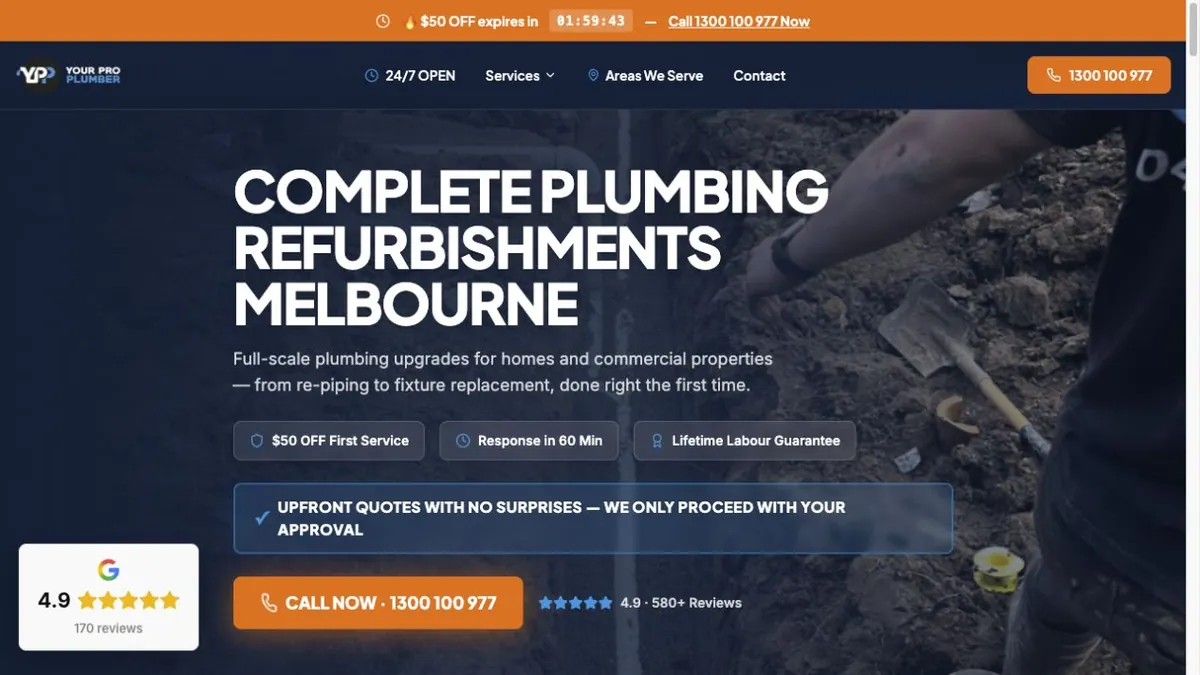
SEO & AI search Rank for the searches that turn into customers.
Search is the only channel that keeps producing after you stop paying for it. It is also the slowest, the most technical and the easiest to waste money on. We build the whole thing — the site underneath, the pages on top, the profile on the map and the answers the AI assistants give — and we report it against enquiries, not positions.
250+ live client engagements · Melbourne-based, working across Australia, the UK, the UAE, Saudi Arabia and New Zealand · First call inside one business day
Seven ways a site
stays invisible.
These are what we find in almost every site we open. None of them are exotic, and not one of them shows up in a monthly rankings report.
You get positions in the report and never a revenue number
A keyword moved from fourteen to six and nobody can say whether it produced a customer. Position is a leading indicator. It is not the thing you are buying.
Nobody built the site so a search engine could read it
Content that only exists after JavaScript runs, filters generating thousands of near-identical URLs, a sitemap full of redirects. None of it shows up in a content plan, and all of it caps the ceiling.
Pages written for a phrase nobody types
A spreadsheet said “affordable services provider”. No human has ever typed that. The page ranks for nothing because it answers nothing.
The map pack left to whoever claimed it first
For a local business the three map results are the page. A half-filled profile with reviews that stopped two years ago loses to a complete one every time, regardless of the website behind it.
Twenty location pages that are one page with the suburb swapped
Search engines have been demoting that pattern for years. Three pages that actually know the area are worth more than twenty that do not.
Links bought by the bundle
Cheap directory and guest-post packages leave a footprint. The bill arrives twice — once for the links, and again for the clean-up.
A redesign that shipped without a redirect map
The most expensive mistake in this field. A replatform can undo years of earned authority in a single deploy, and the traffic chart shows it the following week.
Which of these seven is on your site?
We crawl it, read the backlink profile and tell you which ones we found — in the order they are costing you money.
Australia · UK · KSA · UAE · NZ
250+
Active client engagements
Search, paid media, web and tracking under one roof
Google reviews
5.0
Rating across every review
Published without a count — the count is not wired to a live source
SoudCoh Marketing
$120M+
Media under management
The paid half, planned by the same team that plans the organic half
Firm-level figures from the SoudCoh record, not campaign forecasts. We do not publish organic case studies, so no ranking or traffic figure is claimed on this page — your own baseline is what we report against.
Four jobs.
One corpus.
They share a site, a content library and a technical foundation — but they are answered in four different places. Each one below has a page of its own: what it is, when it is the right call, and what it costs you when it is the wrong one.
- Local SEORead the pageThe three results on the map, and the organic pages under them, for the suburbs you actually drive to.Best forTrades, clinics, services and any business whose customers type a suburb or the words “near me”.Watch outIt is mostly profile, proximity and reviews. A beautiful website will not rescue a neglected Business Profile.
- International SEORead the pageOne business, several countries, without the language and region signals fighting each other.Best forCompanies already selling across borders, or about to, where a second market is a real revenue line.Watch outHreflang is unforgiving. One missing return link and search engines quietly ignore the whole cluster.
- E-commerce SEORead the pageCategory and product pages that rank, and a Merchant Center feed that agrees with them.Best forOnline stores on Shopify, WooCommerce, BigCommerce, Magento or a custom build, at any catalogue size.Watch outThe free listings and the paid Shopping ads read the same feed. Fix it once and both move.
- Generative Engine OptimisationRead the pageBeing cited when somebody asks ChatGPT, Gemini, Claude or Perplexity instead of typing into a search box.Best forBusinesses whose buyers research first and whose category is being answered by an assistant already.Watch outIt is a different job to SEO, on the same corpus. Entities, structured data and citable source pages — not more keywords.
Three questions decide which of the four you fund first.
How long before anything moves, what the result actually depends on, and which number you are allowed to judge it by. Read across a row rather than down a column.
Local SEO
Time to first movementWeeks for the profile work, months for the organic pages underneath it. The fastest-moving of the four.
What it depends onProximity, a complete Business Profile and a real review habit — far more than on the website behind them.
What you judge it onVisibility in the map for the suburbs you actually drive to, and the calls that came from the profile rather than the site.
International SEO
Time to first movementMonths, and longer again if the domain structure has to change before anything else can start.
What it depends onLanguage and region signals that agree with each other. One missing hreflang return link and search engines quietly ignore the whole cluster.
What you judge it onPer country, never blended. A second market that cannibalises the first is a loss reported as growth.
E-commerce SEO
Time to first movementWeeks for the technical and feed work. Quarters before a category page holds its own ground.
What it depends onCategory architecture, how faceted navigation generates URLs, and a Merchant Center feed that agrees with the site.
What you judge it onRevenue by category and by product — plus the free listings, which read the same feed as your paid Shopping campaigns.
Generative Engine Optimisation
Time to first movementThe quickest of the four to show a change, and the least predictable week to week.
What it depends onEntity clarity, structured data and pages that are quotable. It is a different job on the same corpus, not more keywords.
What you judge it onWhether you are cited inside the answer, checked by asking the assistants directly. Position does not apply here.
Three of these four run on the same corpus, so the work overlaps more than the names suggest. What changes is which constraint is binding — proximity, hreflang, the product feed, or being quotable — and that is what decides where the first quarter goes.
One call usually settles which of the four comes first.
Thirty minutes on what a customer is worth to you, where your buyers actually start, and what the site can carry today.
Ten things happen on a search engagement. Here they are, in order.
This is the part most agency pages keep vague, and it is the only part that decides whether the money works. So it is written down.
Start from the money, not the keyword list
We ask what a customer is worth, which services carry the margin, and which enquiries you actually want more of. Write a ranking plan before that conversation and you have guesswork with a spreadsheet attached.
Crawl the site the way a search engine does
We crawl every URL, every status code and every redirect chain, rendered and unrendered. Most sites we open are spending their crawl budget on filter combinations nobody will ever visit.
Fix what stops pages being indexed at all
We chase down canonicals pointing at the wrong page, noindex left over from staging, pagination that hides half the catalogue, and server response times that make a crawler give up. Nothing else counts until this does.
Map real demand onto real pages
We give each question a buyer actually asks one page, then decide together which existing pages fold into it. A smaller set of stronger pages beats a bloated one, every time.
Write for the query, in your own voice
The page has to answer the search in its first screen and then keep going for the people who want detail. Our writers work from your quotes, your jobs and your objections — not from a competitor's page.
Build the internal links on purpose
The cheapest authority on any site is already inside it. Hub pages that link down to every child, children that link back up once, and anchor text that says what the destination is about.
Earn links instead of buying them
Digital PR, industry associations, supplier and partner pages, local sponsorships, genuinely useful data. Slower than a bulk package, and it does not come with a clean-up bill attached.
Make the same corpus readable by AI answer engines
Entity and organisation markup, product and review schema, clear definitions and citable source pages. It is the same content doing a second job — which is why GEO sits in this group rather than beside it.
Track organic as revenue, not sessions
We count calls, forms, bookings and orders separately, put values on them, and keep organic apart from paid so nobody claims the same job twice. Tracking comes first here, not in a phase two.
Report on a fixed rhythm, good news or bad
What we changed, what moved, what did not, and what happens next. Search is slow enough that a quiet month has to be explained rather than skipped.

The first six months, honestly.
- Week 0
The first call and the audit
We spend thirty to forty-five minutes on your business, then audit the site as it stands — technical, content and links. You keep the findings whether or not you hire us.
- Week 1
The ninety-day order
We rank everything we found by what it is worth against what it costs to fix, then tell you plainly what we do first, what waits, and what we are choosing not to do at all.
- Month 1
Technical first
We fix indexing, crawl waste, speed, structure and tracking. It is the unglamorous work, and it decides whether anything we write later ever gets counted.
- Months 2–3
Pages and profiles
Our writers take the priority pages, we finish the Business Profile where local matters, add the structured data, and rebuild the internal linking around the new shape.
- Months 4–6
Authority
We earn links through digital PR, publish on a schedule you can see, and give you the first honest read on which pages are pulling their weight.
- From there
Compounding
We report monthly, sit down with you each quarter on strategy, and keep adding pages that produce long after you paid for them. This is the part that makes the early months worth sitting through.
You keep the audit findings whether or not you hire us. They are written so your own developer could action them without needing us to translate.
Week 0 is a conversation and a crawl.
Thirty to forty-five minutes on the business, then the site read for technical, content and links.
What a search engagement worth paying for looks like.
Seven things that either happen on an engagement or do not. None of them is a promised position. Each comes with the question to ask — of us, or of whoever is doing the work now.
Somebody crawls the site the way a search engine sees it
Every URL, every status code, every redirect chain, rendered and unrendered — read by a person, not skimmed off a dashboard. Most sites we open are spending their crawl budget on filter combinations nobody will ever visit.
Ask thisAsk how many URLs the crawl found and how many of them are indexable. The gap between those two numbers is the first month's work.
Technical comes before content, every time
Indexing, crawl waste, speed, structure and tracking. Pages published onto a site that cannot be read properly sit unread, and the invoice arrives monthly regardless.
Ask thisAsk what is being fixed in month one. If the answer is four blog posts, the order is wrong.
You get organic reported separately from paid
Whoever runs your search work counts calls, forms, bookings and orders as themselves, puts values on them, and keeps organic apart from paid so nobody claims the same job twice.
Ask thisAsk what organic produced last month in enquiries and orders — not in sessions, and not blended with the ad account.
The plan merges pages as often as it adds them
One page per question a buyer actually asks, and somebody deciding out loud which existing pages fold into it. A smaller set of stronger pages beats a bloated one.
Ask thisAsk which pages were merged or retired last quarter. A content plan that only ever adds is a plan that dilutes.
Location pages know the area
Three pages that carry something locally true are worth more than twenty built from one template with the suburb swapped. Search engines have been demoting that pattern for years.
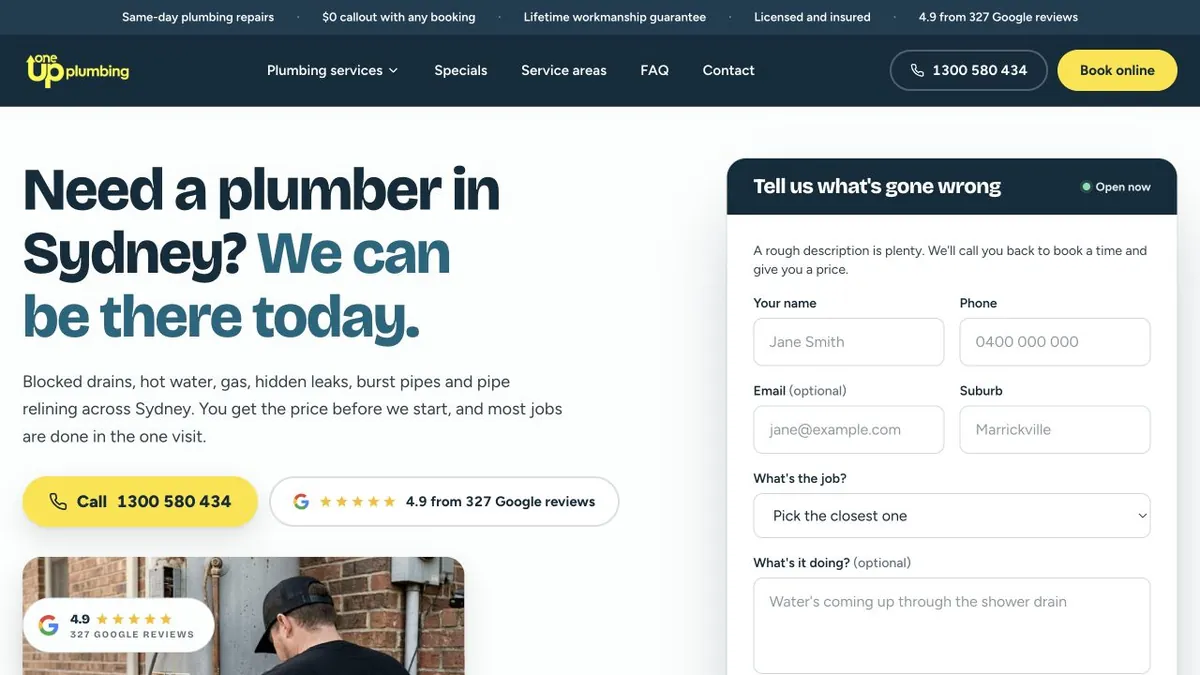
Ask thisRead two of your own location pages side by side. If only the suburb changes, a reader in that suburb can tell.
Somebody earned every link and can tell you where from
Digital PR, industry associations, supplier and partner pages, local sponsorship, genuinely useful data. Slower than a bulk package, and it does not come with a clean-up bill attached.
Ask thisAsk for the last ten links won and where each came from. A list nobody wants to show you is a list you will pay to remove.
Someone owns the redirect map before a redesign ships
A replatform can undo years of earned authority in a single deploy, and the traffic chart shows it the following week. The map is a deliverable, not a courtesy.
Ask thisAsk who owns the redirect map on your next site build. If the answer is nobody, that is the most expensive gap on this page.
None of the seven settles the question that actually decides whether search is worth funding for a year, which is what a customer is worth to you. A break-even figure built on a single job undervalues any business people come back to, so the lifetime value calculator adds the repeat work, the retention and the referrals before it hands you a number. The second is what happens after the click: a position you waited six months for, landing on a page that loses people, is a slower version of the same problem — fixing what the page does with the visit is usually the faster half of the job.
Search leans hardest on two of the six stages.
Compound is how our team works on any account — six stages every change passes through. Organic search puts most of its weight on these two, because it is the channel where the result and the cause are furthest apart in time.
Mandate
You set the number before we spend the money.
Search is the slowest channel we run, so we agree the target with you at the start — what a customer is worth, which enquiries count, and what six months of investment has to return for this to have been worth doing.
Ledger
Every change we make becomes a record you can open.
Organic results arrive weeks after the work. Without a dated record of every change, nobody can tell a search-engine update from something we did — so every technical fix, page and link lands in a log with a date on it.
Six ways a live search engagement still goes wrong.
These are ours as much as anyone's — they are the mistakes available to a team that is paying attention. Each one has a specific guard, and the guard is the reason it does not happen twice.
Publishing onto a site that cannot be read
Content added to a site spending its crawl budget on filter combinations sits unindexed. Six months later there is a library nobody has seen and a bill for writing it.
Prevented byTechnical first, always: we fix indexing, crawl waste, speed and tracking in month one before we commission a single new page.
Writing to a keyword tool instead of a customer
A volume estimate and a real person's phrasing are not the same thing. Pages built from a spreadsheet rank for nothing because they answer nothing.
Prevented byWe map demand from the paid search-term data wherever you have an ad account — those are words people actually typed, and some of them turned into customers.
Mistaking an algorithm update for our own change
Organic results arrive weeks after the work that caused them. That makes the two easy to confuse, and very convenient to confuse.
Prevented byEvery technical fix, page and link lands in a dated log — the Ledger stage of Compound. If a drop lines up with something we did, the record says so before you have to ask.
Scaling a template because it is cheap to produce
Anyone can spin up twenty near-identical pages in an afternoon. They dilute the site, they demote in aggregate, and they tell a reader in that suburb that you have never been there.
Prevented byFewer pages, each carrying something locally true, and a standing decision to merge rather than multiply when two pages answer the same question.
A replatform nobody told us about
The single most expensive mistake in this field. New URLs, no map, and years of earned authority undone in one deploy — usually discovered from the traffic chart.
Prevented byWe ask to be in the room before you sign the build off. We map the URLs and keep a redirect ledger as part of the work, and it costs a fraction of recovering rankings you already paid for once.
Reporting positions because they are easy to move
A keyword going from fourteen to six is a real event that may have produced nothing at all. Position is a leading indicator, and it flatters a quiet quarter.
Prevented byWe end the report in enquiries and orders, separated from paid, and keep positions as context rather than the headline. When a month is quiet we explain it rather than skip it.
Bring these six to the first call.
Every guard beside them is something you can ask us to show you. Ask about the ones that have already happened to you.
What we publish.
The client outcomes below are from paid search accounts, and every tile says so. We do not publish organic case studies, so there is no traffic chart on this page pretending to be yours — search work is reported against your own baseline, in the same format.
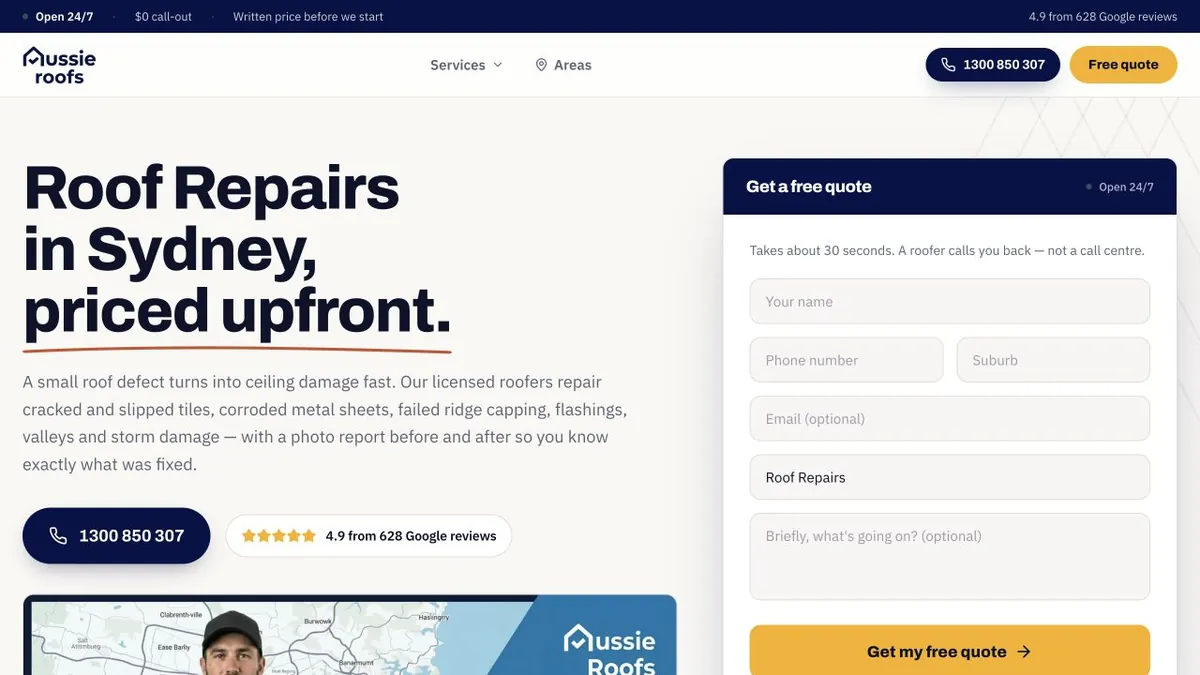
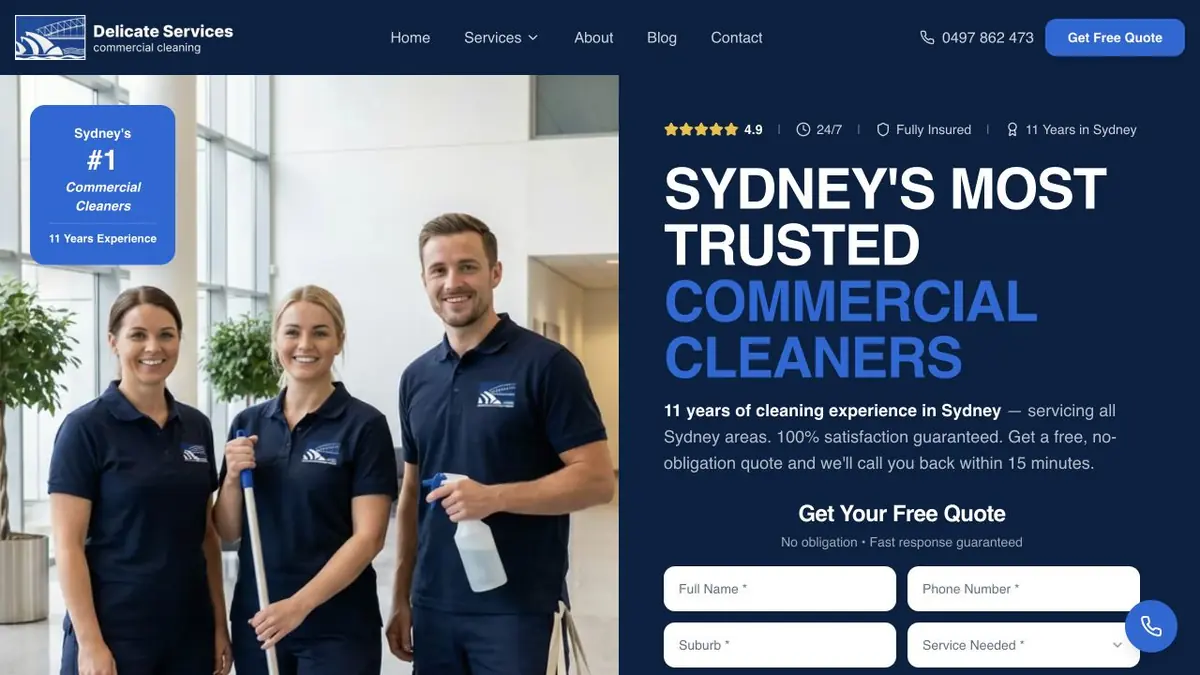
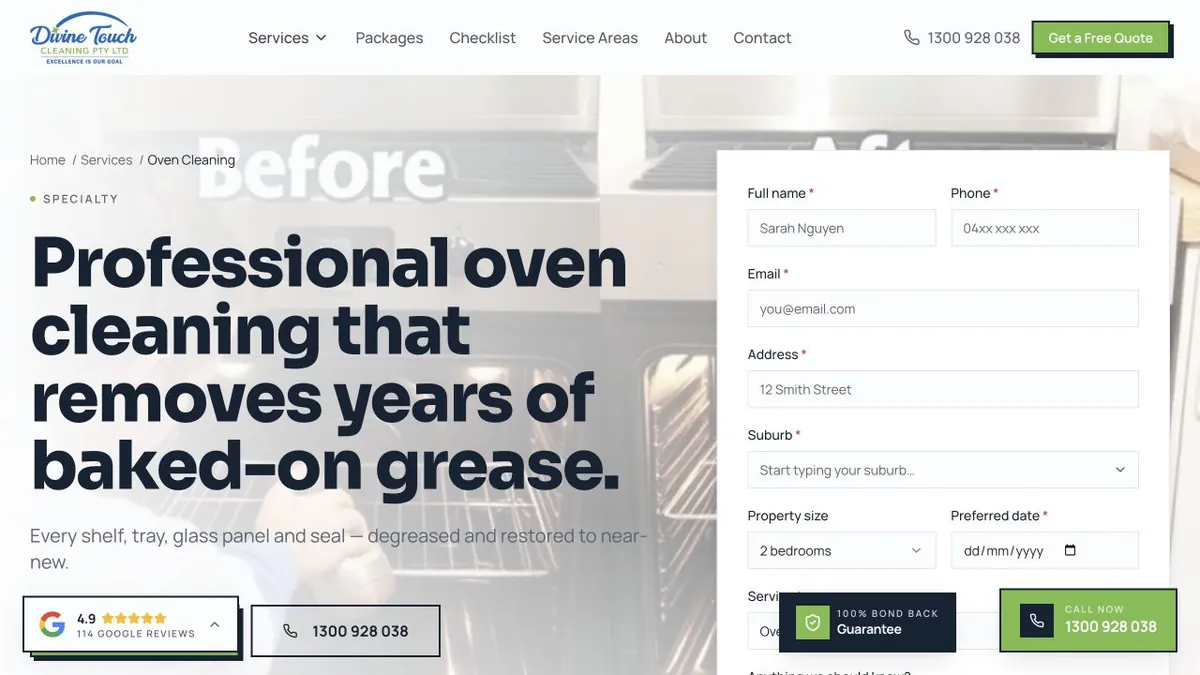
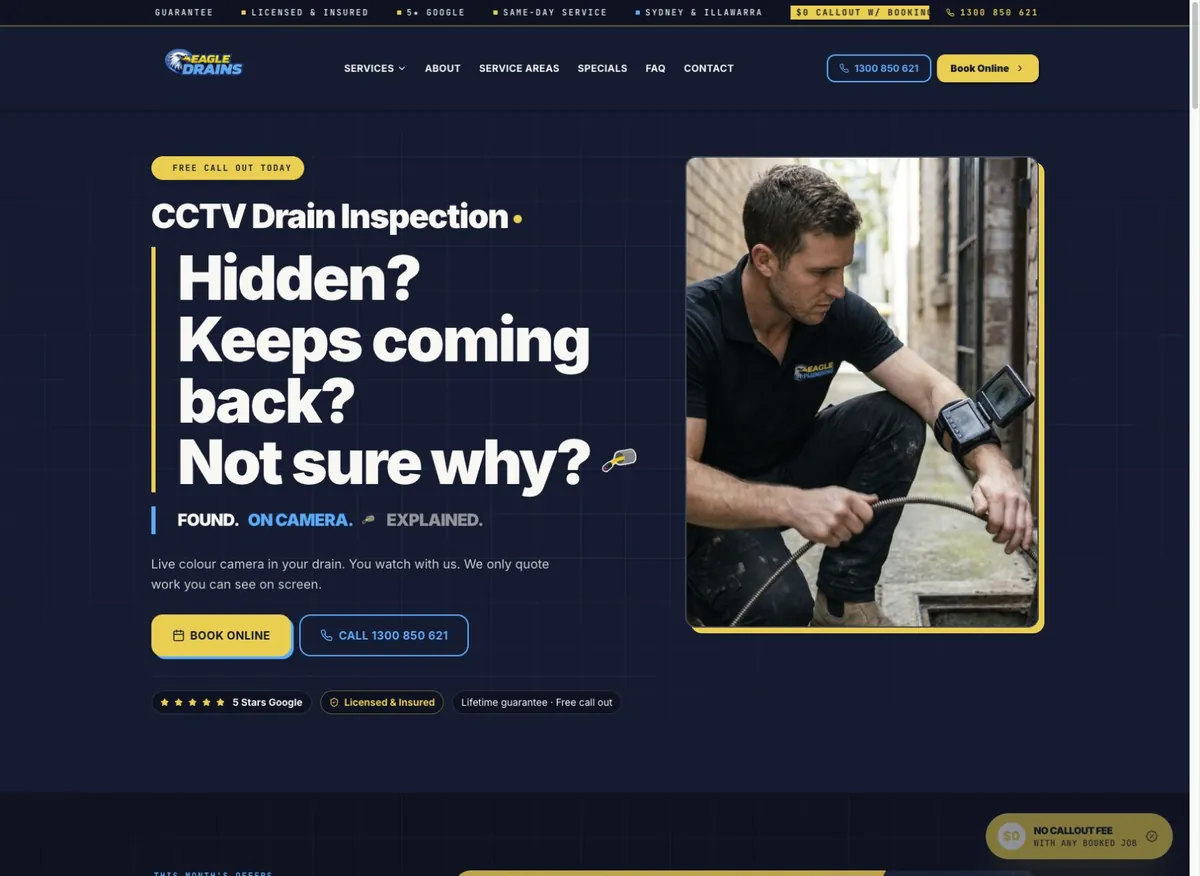
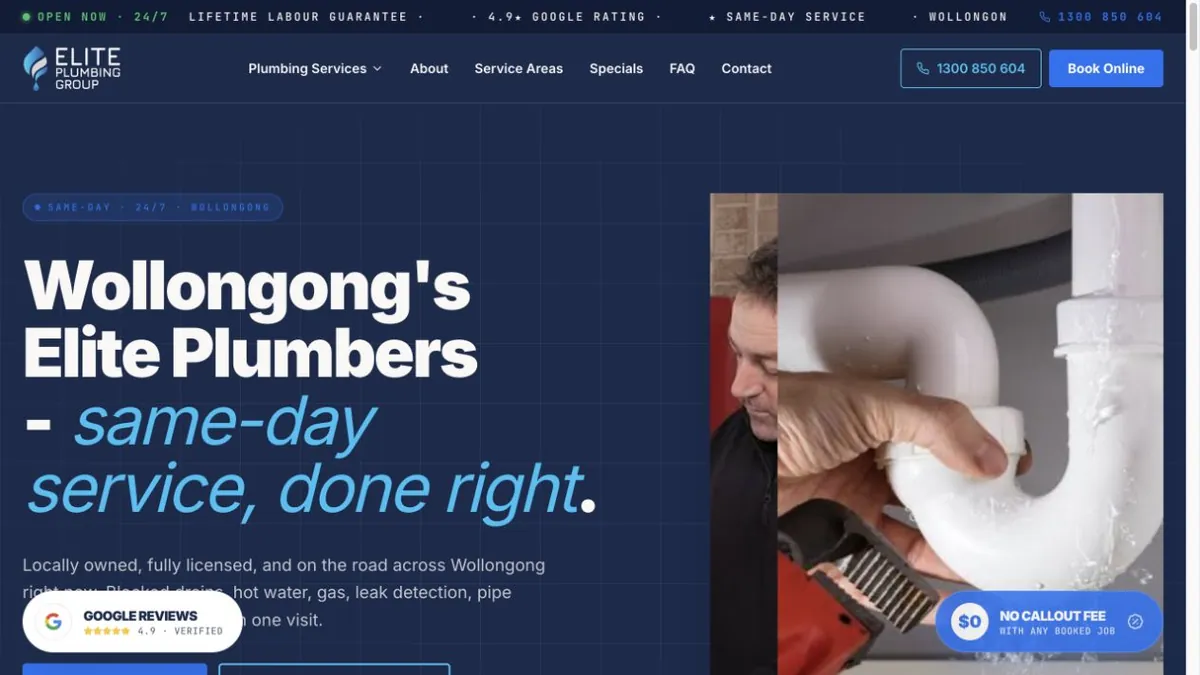
- Paid search · Cleaning · Melbourne138jobs booked in 41 daysA$20.43 cost per job · 21.20% conversion rate · A$2,819.92 ad spendPink Flamingo
- Paid search · Carpet cleaning · Perth53jobs in the first 15 daysA$24.92 cost per job · brand-new account, no conversion history at launchCleanetic
- Paid search · Roofing · Melbourne68quote requests in 35 daysReady before the storm · insurance-literateCornerstone Roofing
- Paid search · Security · New South Wales39qualified leads in 15 daysCommercial and residential split · same-day lead alertsNexData CCTV
The same measurement discipline sits under the organic work: enquiries counted as themselves, organic separated from paid so nobody claims the same job twice, and the same honesty about the months where nothing moved.
To read the format before you commit to it, take the Liverpool solicitors account. It is a paid one, and it earns its place here because most of it is about the searches rather than the spend — two of the hardest-fought corners of UK legal search, who is typing them, and what a firm has to do with the enquiry once it arrives. The keyword thinking transfers; the channel does not.
Browse every case studyThe fair question those results raise is whether the same money would have gone further on ads, so put SEO and paid side by side on your own budget — the calculator names the month one overtakes the other.
Still deciding?
Find your situation below, then read that page.
Which of these do you actually need?
Most businesses need one of these properly rather than four of them a little. Find your situation on the left; the answer is on the right.
- Your customers type a suburb, or the words “near me”.
Local SEO. The map pack, the Business Profile, service-area targeting and reviews — plus organic pages that know the area rather than naming it.
Local SEO- You sell products online.
E-commerce SEO, on category and product pages, with the Merchant Center feed cleaned in the same pass so the free listings and the paid Shopping ads pull together.
E-commerce SEO- You already sell in more than one country.
International SEO. Domain structure, hreflang, localised content and country-by-country link earning, so a second market does not cannibalise the first.
International SEO- Your buyers ask an AI assistant before they open a search engine.
Generative Engine Optimisation. Same corpus, different job: entities, structured data and citable source pages so you turn up inside the answer instead of underneath it.
Generative Engine Optimisation- You need enquiries this month, not this quarter.
Paid search first, organic underneath it. Google Ads buys the demand today while the search work compounds — and running both means the search-term data feeds the content plan.
Google Ads- You are replatforming or redesigning the site.
Talk to us before the build is signed off, not after it launches. URL mapping and a redirect ledger cost a fraction of recovering rankings you already paid for once.
Start with a call
Search is rarely the whole plan.
These sit either side of an organic programme. Most of the businesses we work with run two or three of them together, and the tracking underneath is what lets us tell which one produced the job.
- Attribution for organic trafficHow an organic phone call becomes a number you can act on. Nothing on this page means much without it.
- What you run while the rankings compoundDemand you can buy today while the organic work compounds. The two share search-term data in both directions.
- Website designHalf of what looks like a ranking problem is a page problem — speed, structure and what the first screen says.
- Search, paid and follow-up run by one teamThe full-funnel view: search, paid, pages and follow-up planned by one team rather than bought as four line items.
- Improve lead qualityFor when the enquiries are arriving and the wrong people are sending them.
- Custom web applicationsWhen the ranking ceiling is the platform itself, and the honest fix is to rebuild rather than patch.
- SEO for your trade specificallyCleaning, plumbing, roofing, finance and six more. The same method, but with the search vocabulary and job values of one industry.
- Rankings we have published the numbers forWritten-up accounts with the traffic, the enquiry counts and the dates attached, rather than a logo wall.
SEO, answered.
Cost, timing, contracts, who owns the work, reporting, and what happens when a page is not earning its place.
The first call is free and there is no deck.
Ask us about your rankingsIt is a long-term investment. You will typically see early movement in two to three months, meaningful traffic increases in four to six months, and the strongest compounding return from six to twelve months onward. That said, we usually find quick wins in the first month through technical fixes — pages that were never being indexed, redirect chains, speed problems and tracking that was miscounting. Your industry, your competition and the state of the site when we start all move that timeline, and we will give you an honest read on it after the audit rather than before.
No, and you should be wary of anyone who does — nobody controls a search engine's results, and a promised position is a sales line rather than a plan. What we commit to is a documented methodology, transparent reporting on a fixed cadence, and a record of every change we make so you can see exactly what was done and when. If a page is not moving after a fair run, we say so and change the approach rather than quietly repeating it.
It depends on the size of the site, how competitive your category is and how much content and technical work is in front of us — a single-location trade business and a fifty-thousand-product store are not the same job. Our fee scales with the work rather than sitting on a fixed tier, and it is quoted after the audit so the number is based on what your site actually needs. The first call and the audit findings are free, so you can get a real figure before committing to anything.
No long-term lock-in. What we do ask for is enough runway to be fair to the work — search results arrive weeks after the change that caused them, so an engagement judged on its first six weeks is being judged during the part where we are still fixing the foundations. We would rather keep the work because it is producing than because a document says you have to stay. The terms are put in front of you in plain English before anything is signed.
You do. Content we write, schema we add, pages we build and redirects we map all live on your domain and stay yours if we part ways — that is the difference between search and an ad account. Where we have set up third-party tools on your behalf we hand over the access. What travels with us is our own methodology and our internal libraries, not your site.
We tell you, in the report, in plain English, and we change what we are doing. Where a page is not earning its place, someone on our team rewrites it, merges it into a stronger one, or retires it. If the honest answer is that search is not where your next customers are coming from this year — because the demand simply is not being typed — we would rather say so and point you at the channel that is than keep billing for it.
A full technical crawl analysis, a backlink profile review, content gap analysis, competitor benchmarking, keyword opportunity mapping and a prioritised ninety-day action plan — the audit is valued at $4,000 and provided free. You keep the findings whether or not you go ahead with us, and they are written so your own developer could action them without needing us to explain them.
Monthly reports covering keyword positions, organic traffic, conversions, backlink growth and strategic recommendations, plus a live dashboard you can check at any time. Each report says what we changed, what moved, what did not, and what happens next — in the language you use about your own business rather than platform jargon. The cadence does not change when the news is bad.
Yes. Our in-house content team creates search-optimised blog posts, landing pages and pillar content, and we can also rewrite what you already have where the page is close but not answering the query. We work from your quotes, your jobs and the objections your sales team hears, so the page sounds like your business rather than like every other page in the category.
SEO is about being one of the ten blue links a search engine returns. GEO is about being the source an AI assistant cites when somebody asks it a question instead of searching. They run on the same corpus and a lot of the same work serves both — clean structure, real expertise, structured data, pages that answer a question completely. What differs is the target: GEO leans on entity clarity, citable claims and being quotable, rather than on rankings for a keyword. Most clients need both, and we say which one to fund first based on where your buyers actually start.
Usually both, in that order of patience. Paid search buys demand today and can produce enquiries within hours of going live, which matters if you need work this month. Search builds an asset that keeps producing after the invoice stops, but it takes months to compound. Running them together is better than either alone: the paid search-term data tells us exactly which pages are worth writing, and the organic pages lower what you have to pay for the same click over time.
Often, yes — and local search in particular delivers strong returns for small businesses. Ranking in the map pack and for the searches people type with a suburb attached drives high-intent enquiries at no cost per click. The honest caveat is that it needs consistency: a small business that publishes and maintains its profile for twelve months will outrank a bigger one that did a burst of work and stopped.

Yes, and it has a page of its own. E-commerce search is a different discipline — category architecture, faceted navigation, product page duplication, structured data for price and stock, and a Merchant Center feed that agrees with the site. We work across Shopify, WooCommerce, BigCommerce, Magento and custom builds, at catalogue sizes from a hundred products to well past a hundred thousand, and the same feed powers both your free listings and your paid Shopping campaigns.
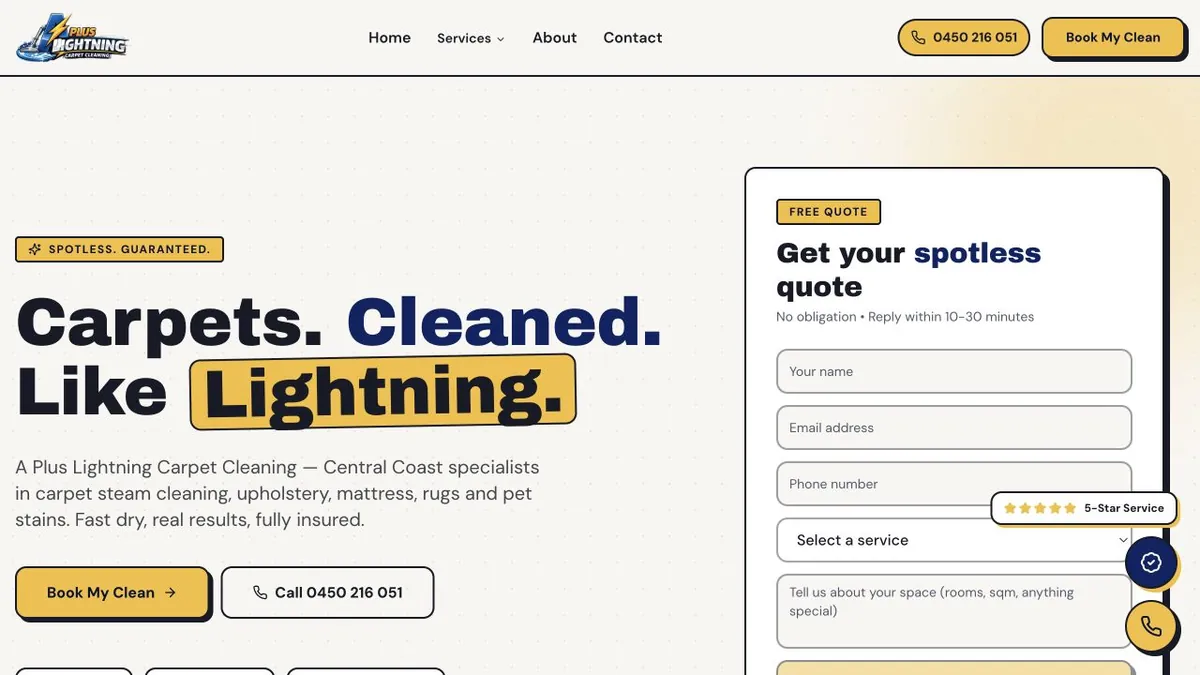

Two pieces of this programme are written up on their own: which directory listings still change anything and ranking without premises a customer can walk into. If the site itself is the constraint rather than the content, how far a business gets with no website at all sets the floor. For where this work gets its brief, what paid search proves before you write a single page sets out why the two are cheaper together than apart.
Get the audit
We crawl the site, read the backlink profile, find the pages that were never being indexed and price the gap between you and whoever is above you. Yours to action, with us or without us.
No pitch deck. No upsell. A real conversation and a written list of what is holding the site back.