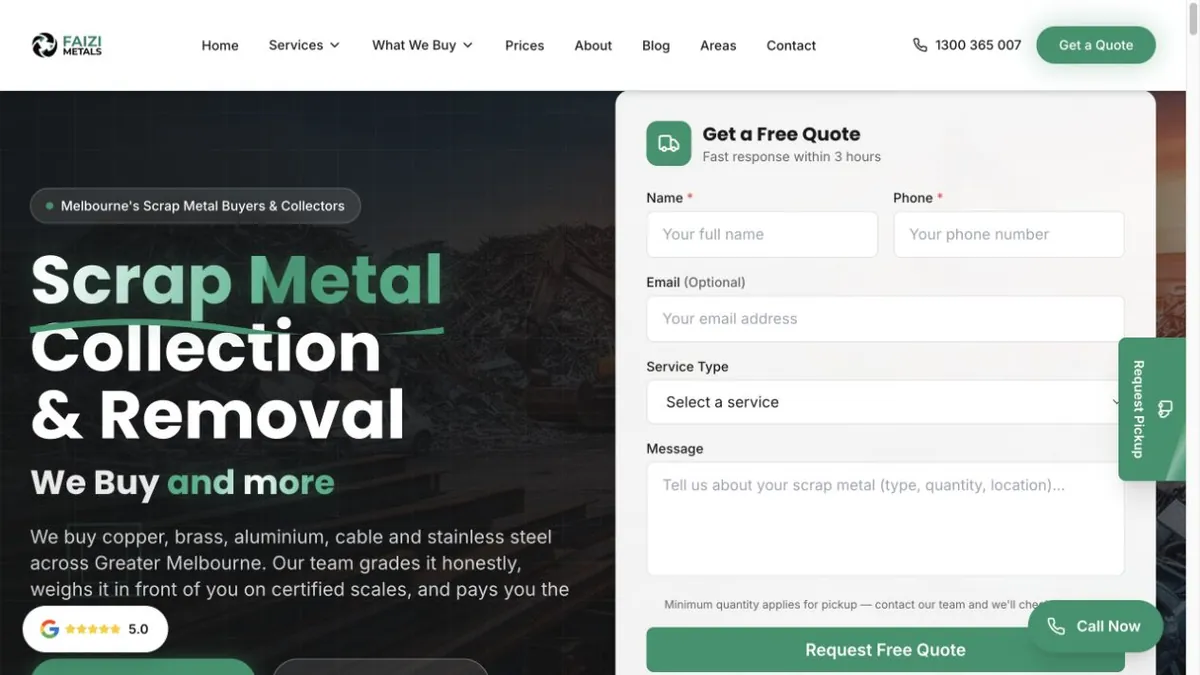
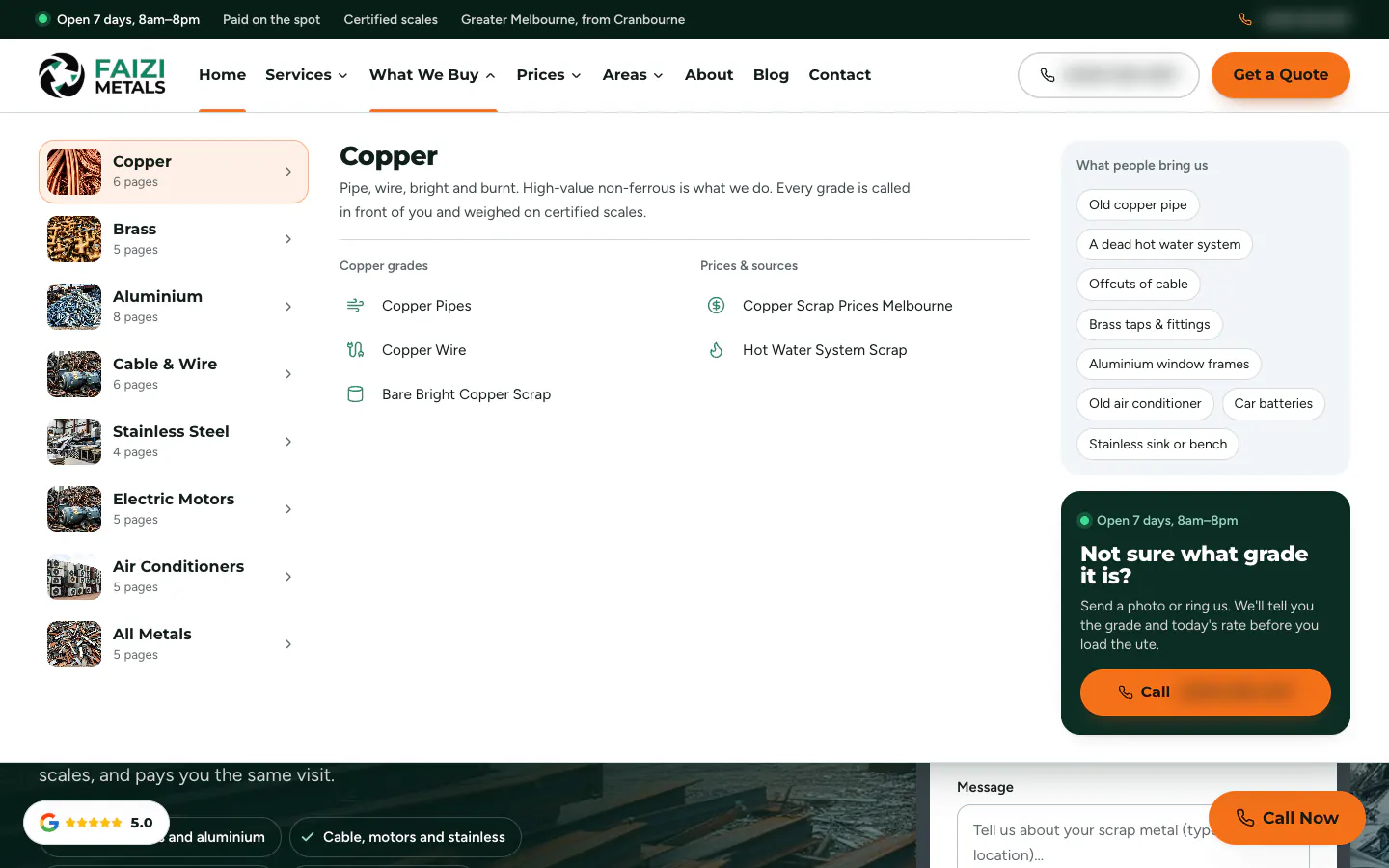
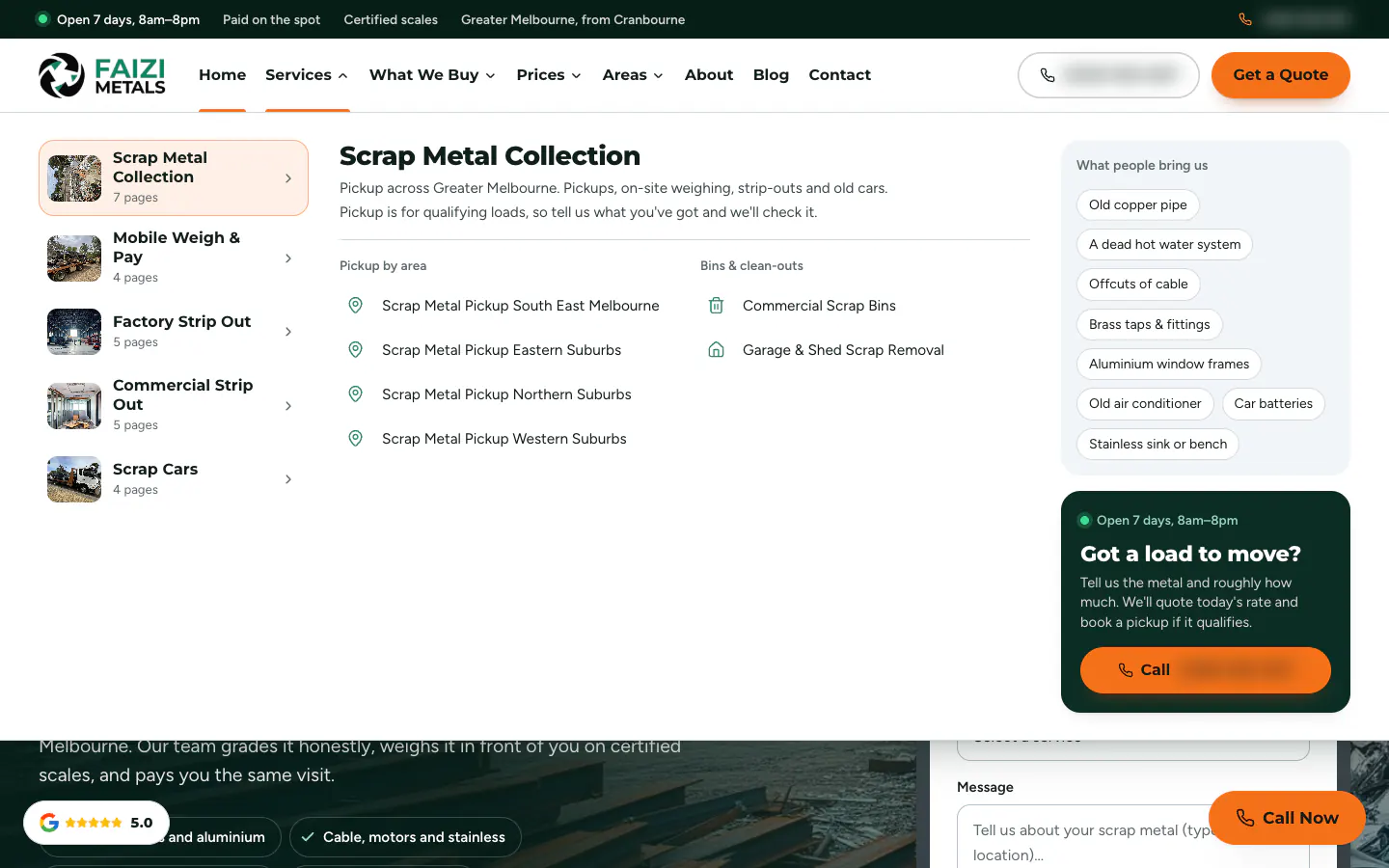
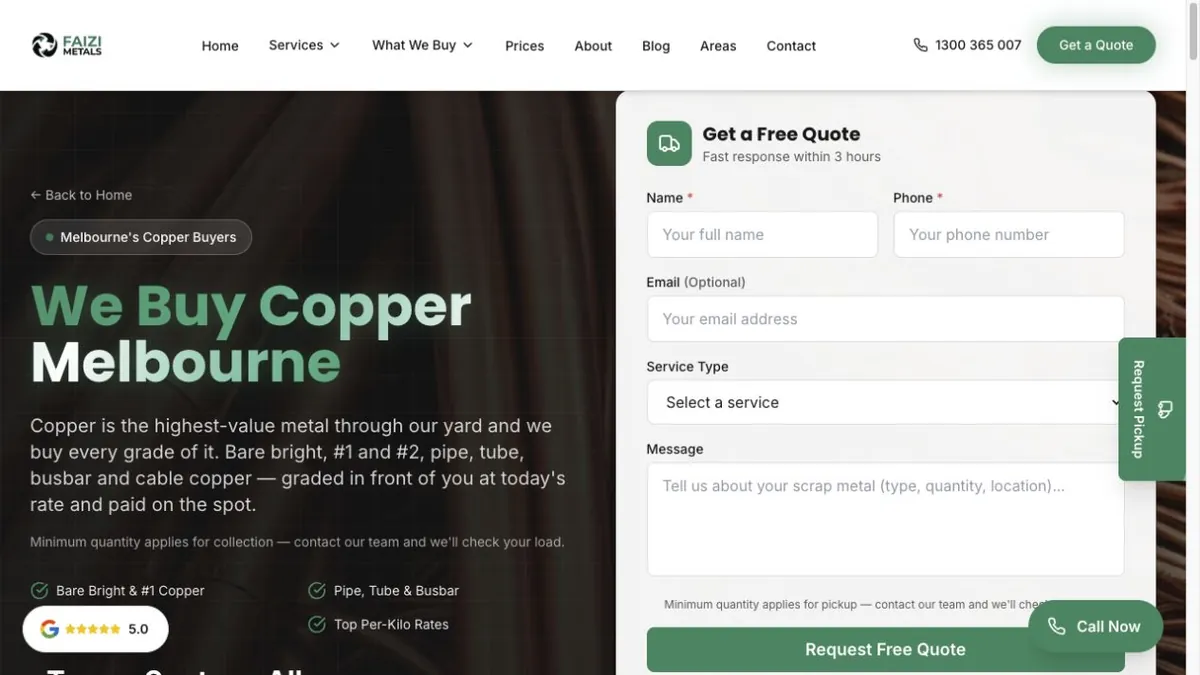
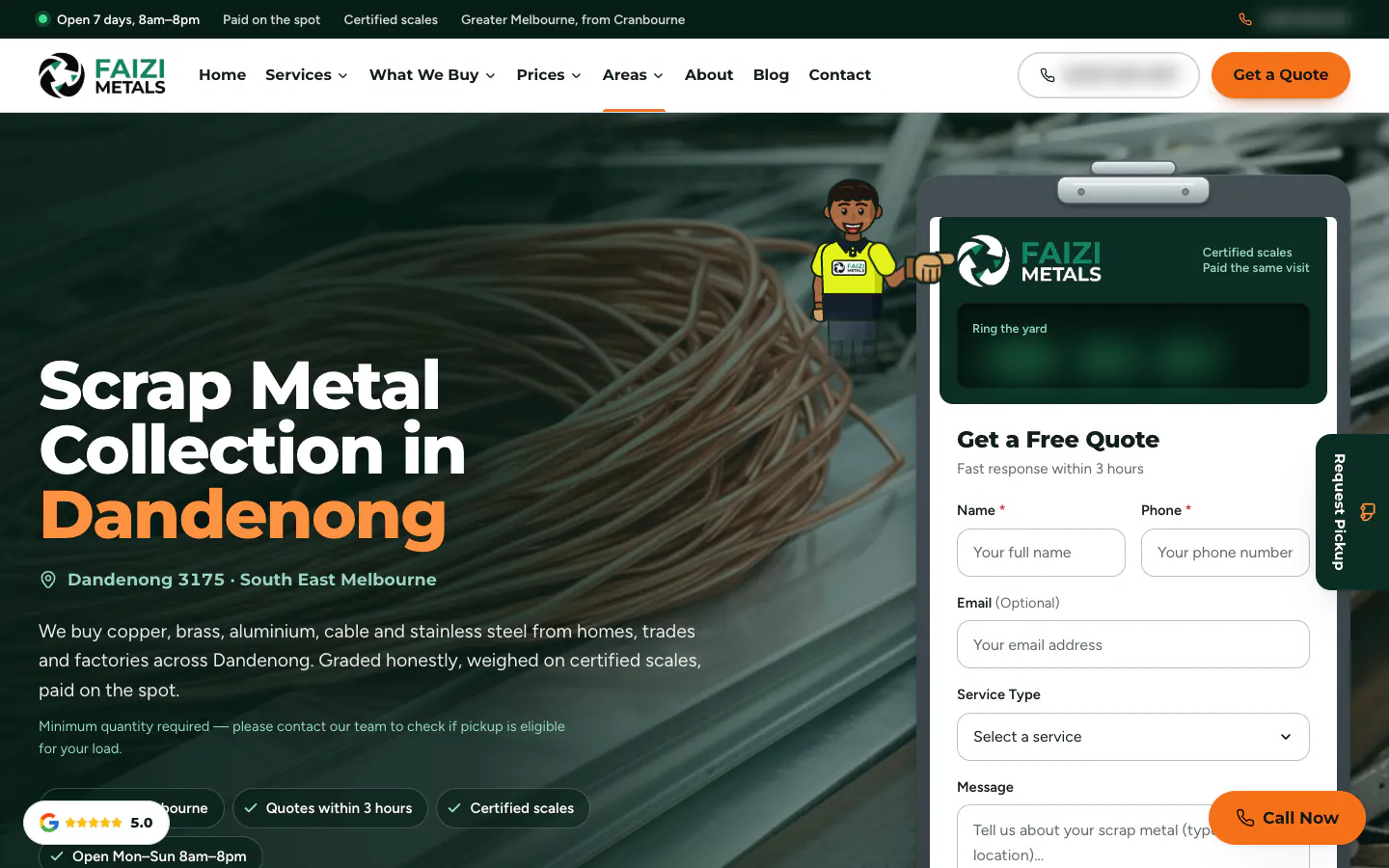
We built four mega menus, led by a What We Buy menu that starts from the metal. We also added a rates board, a prices page and a quote form drawn as a scale ticket.
The business
FAIZI Metals is a scrap metal buyer and collector based in Cranbourne, in Melbourne's south east. It buys non-ferrous metal first, copper, brass, aluminium, cable and stainless steel, along with motors, air conditioners, batteries and old cars. Loads are graded in front of the seller, weighed on certified scales and paid for on the same visit, at the yard or on site when the load qualifies for pickup. The crew also takes on factory and commercial strip-outs.
The brief
People selling scrap rarely search for a scrap yard in general. They search for the metal they have, the job they need done or a buyer near their suburb. A plumber with a bin of copper offcuts, a homeowner with a dead hot water system and a site manager clearing a factory floor all need different answers.
The brief was to give each of those searches a page about exactly that metal, job or place, to explain how grading, weighing and payment work before anyone rings, and to make pickup rules clear up front. The site also had to carry FAIZI's Google Ads, so the pages the ads point to had to match the search behind them.
Menus that start from what the seller has
Four mega menus sit under a strip of the yard's promises. What We Buy opens on eight metal groups, from copper and brass to electric motors and air conditioners, each with a photo and the number of pages beneath it. Choosing a group shows its grade pages and its price guides, beside a list of things people actually bring, such as old copper pipe or a stainless sink, and a card for anyone unsure of the grade. The Services menu works the same way for collections, on-site weighing, scrap cars and strip-outs. Prices lists the grades for each metal, and Areas lists six regions with the number of suburbs in each.
A page for every metal and item
Eight metal buyer pages and 22 item pages cover what the yard takes, from brass fittings to extruded aluminium, insulated cable, lead-acid batteries and commercial refrigeration, and further service pages go down to single grades and jobs, such as bare bright copper or a commercial kitchen's stainless. A metal page opens with the grades it buys, then sets out what is included, the grades in detail, common questions, related metals and a four-step process. Metal, service and suburb pages carry the rates board, which lists per-kilo ranges by grade and says plainly that the rate on the day depends on the grade and the market.
119 suburbs in six regions
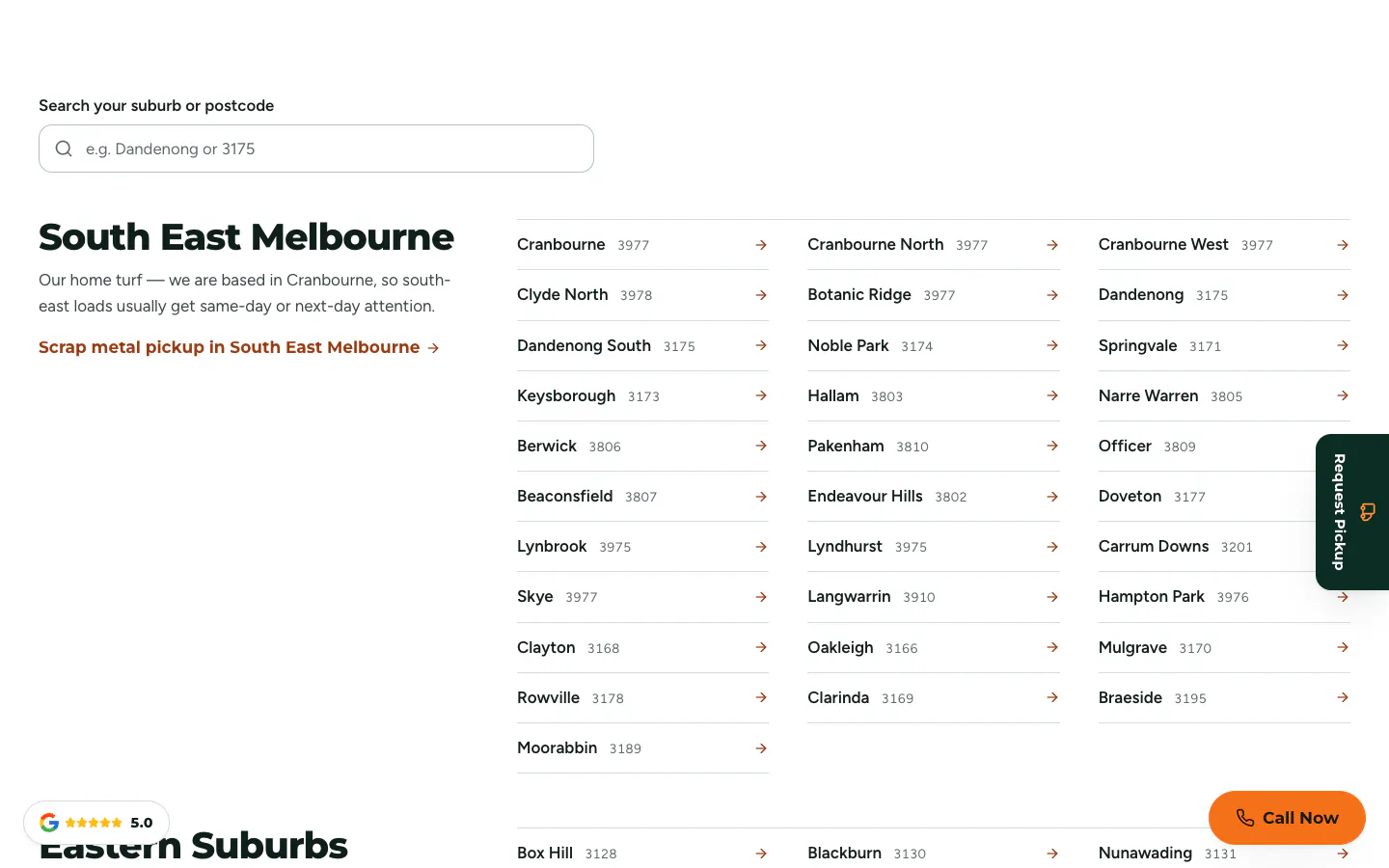
The areas page sorts 119 suburbs into six regions, from the south east, where the yard is, to the western suburbs and the inner city, with a search by suburb or postcode. Each suburb page names the suburb, its postcode and region, what the yard buys there and the services available, then explains how a local job works in four steps. A strip of crew photos, local questions answered and links to the suburbs around it close the page.
The sale explained before the call
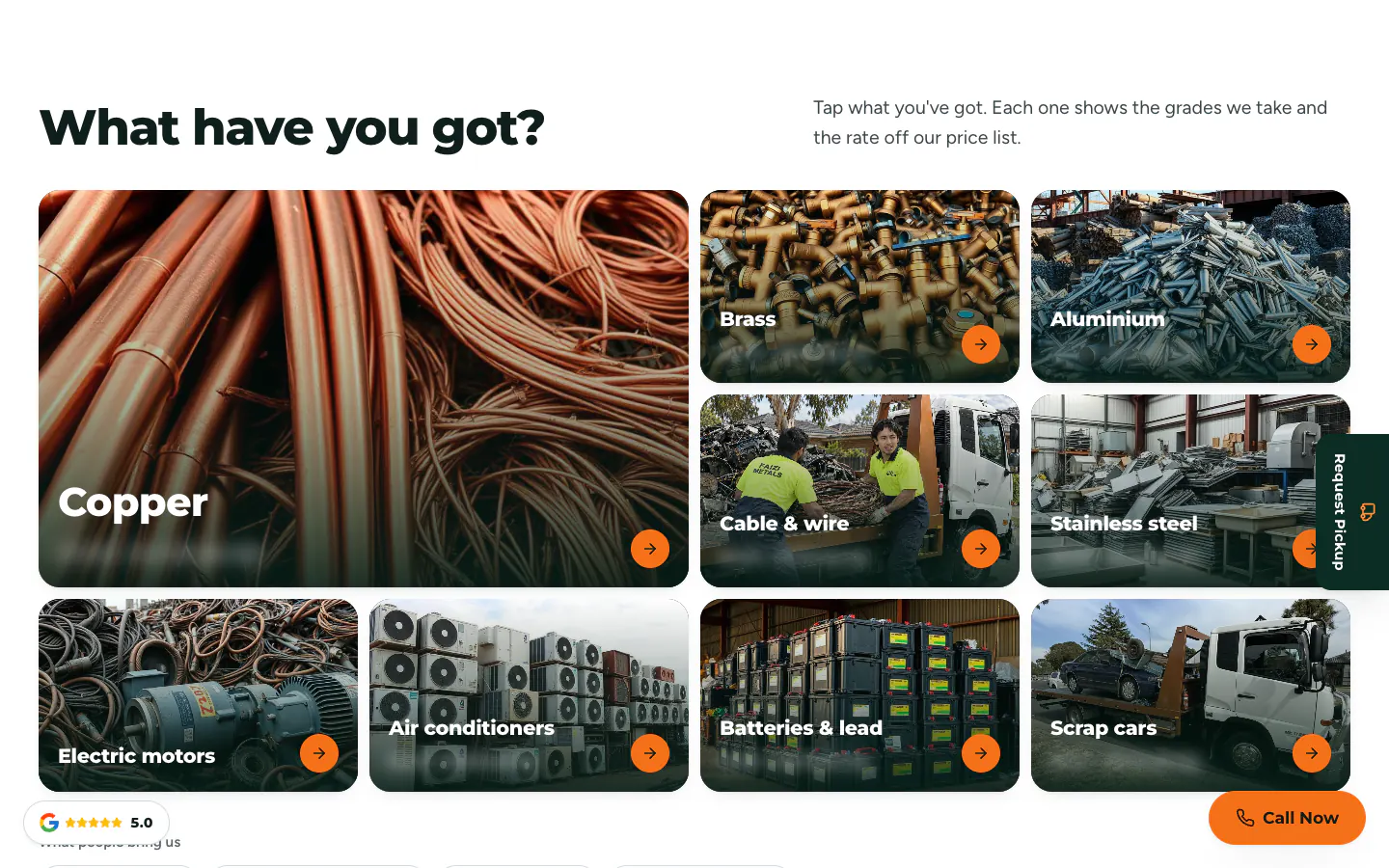
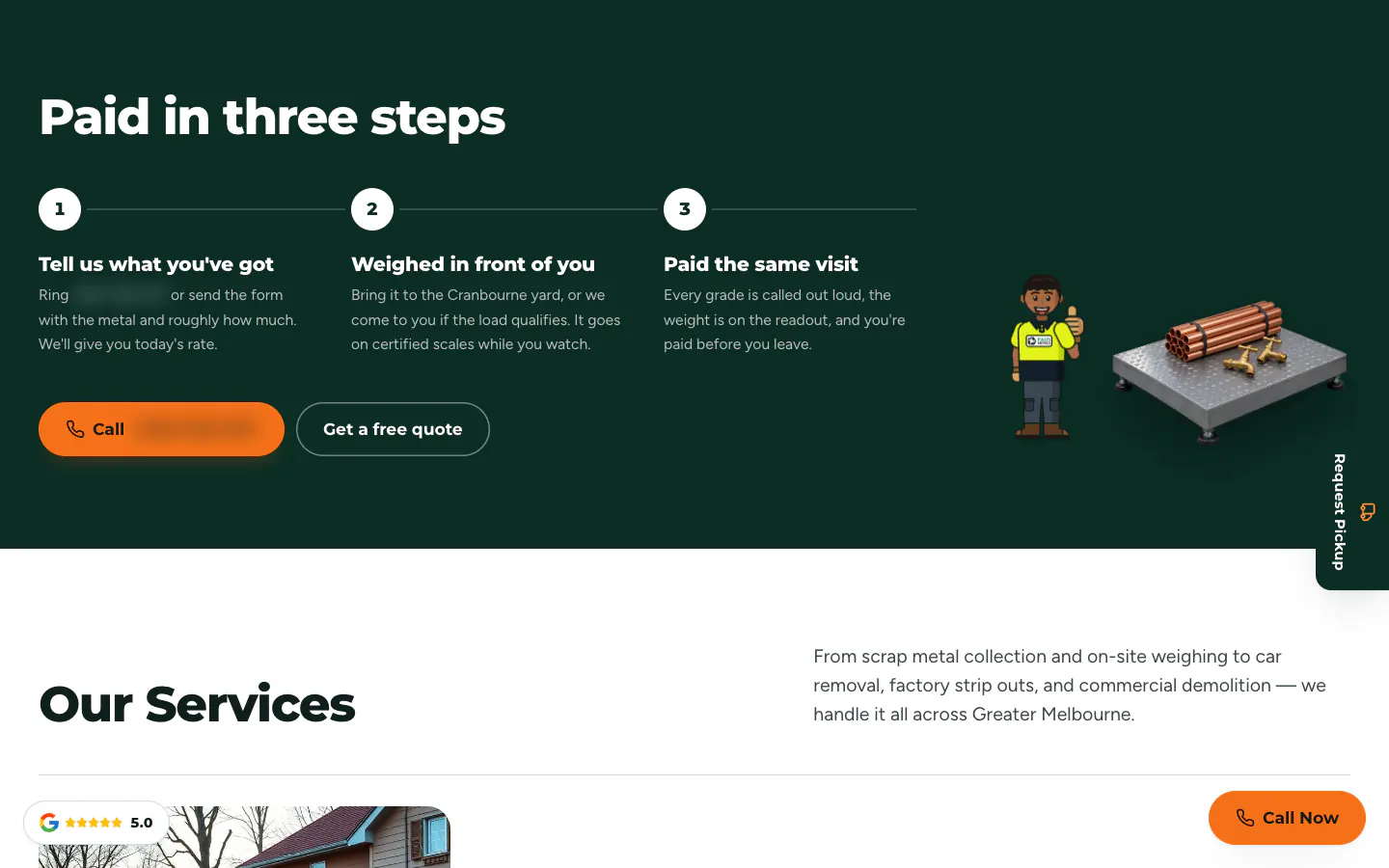
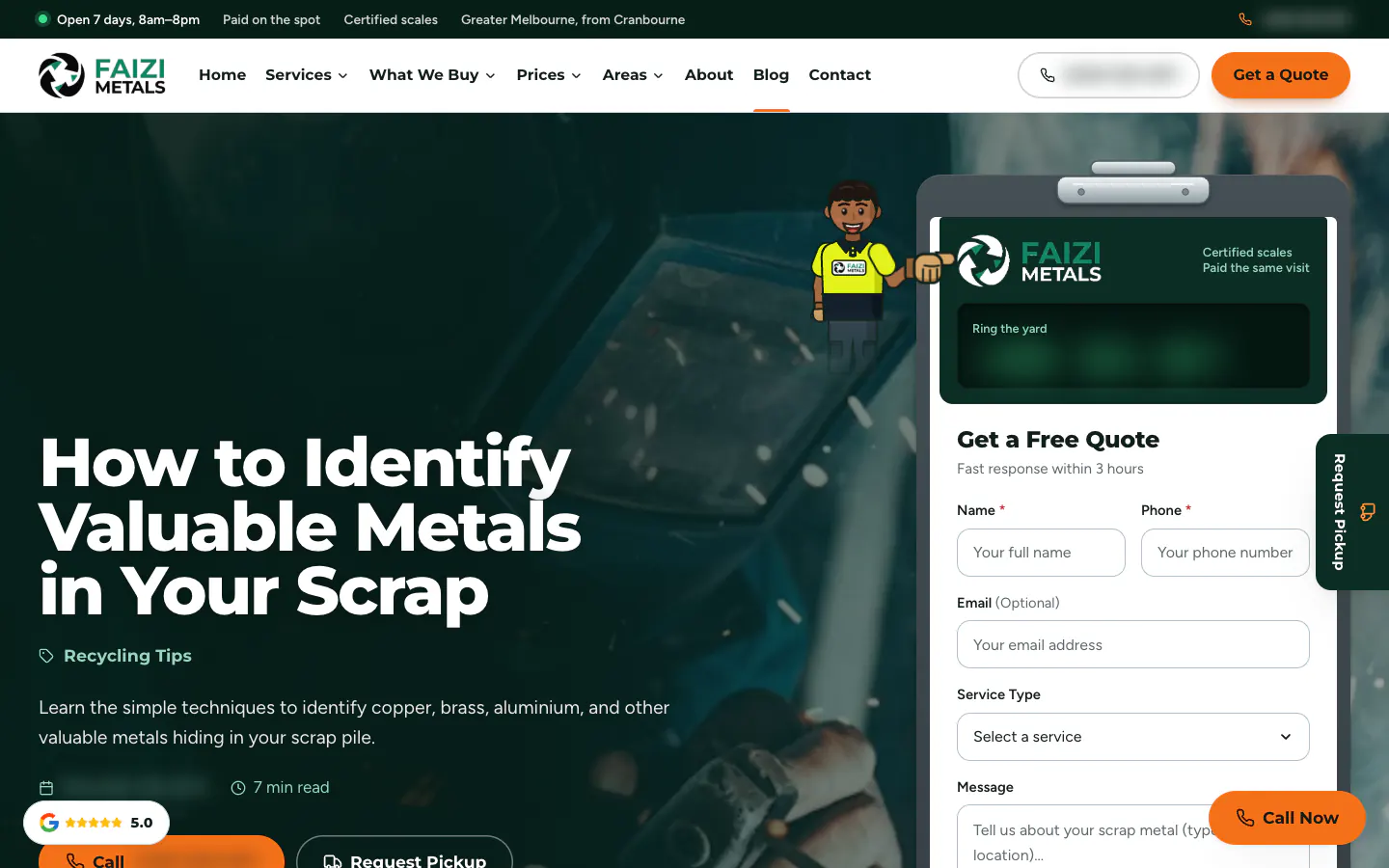
The quote form is drawn as a weighbridge ticket: a header with the logo and the promise of certified scales and same-visit payment, and the yard's number shown on a digital scale readout, beside an illustrated yard hand pointing to it. The form asks whether the seller wants a collection or on-site weighing and notes that pickup needs a minimum load. Further down the home page, a tile for each kind of scrap leads to its grades and rate, three steps explain how a seller is paid, and a strip of crew photos shows the truck and the scales on real jobs.
Guides from the yard
Forty-four guides answer the questions sellers ask before they load the ute, from copper and brass grades and telling 304 and 316 stainless apart to strip-out checklists and when to scrap a car. Guides can be filtered by topic, and each one opens with its category and reading time beside the same quote form.
Built for phones
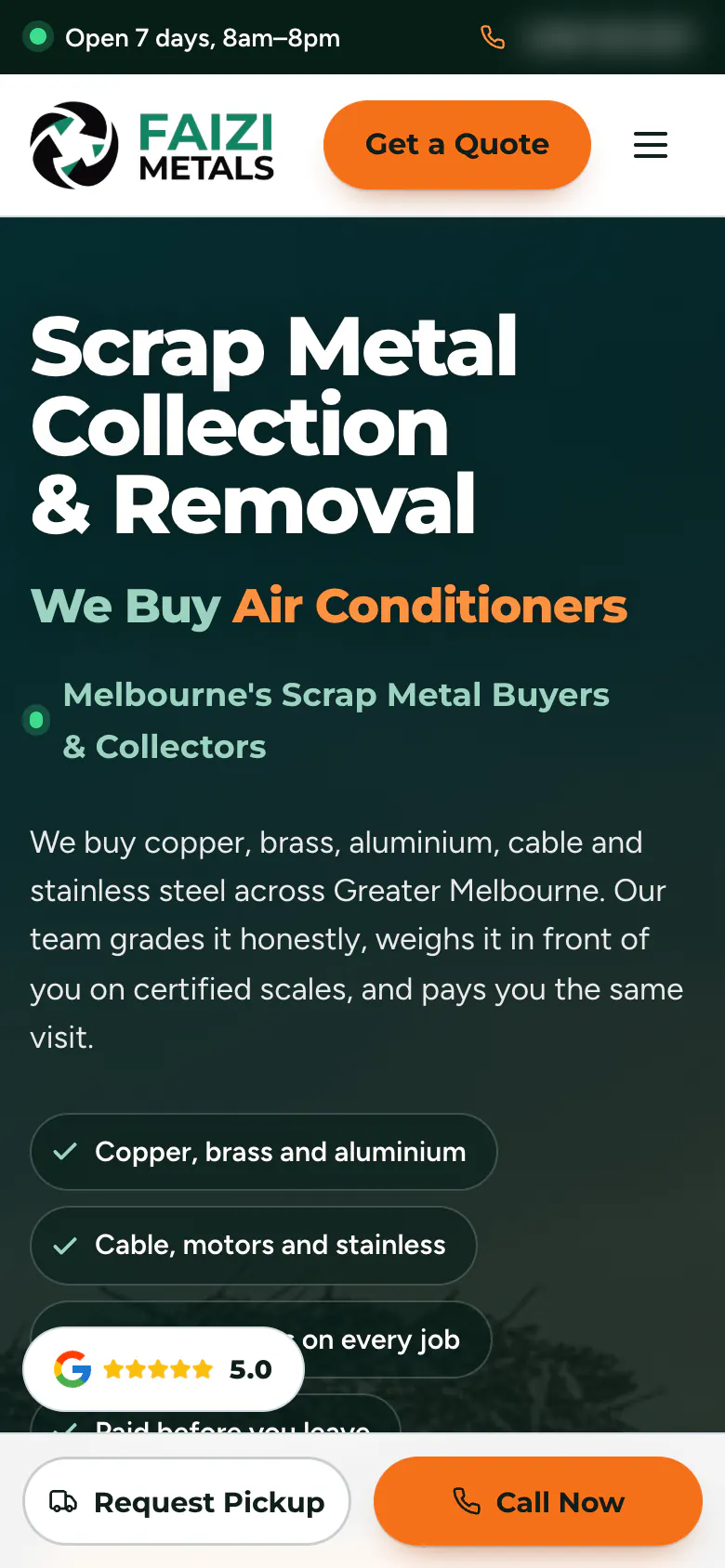
On a phone, the header shrinks to the logo, Get a Quote and the menu, under a strip with the opening hours and a call icon. A bar fixed to the bottom of every page keeps Request Pickup and Call Now in reach of a thumb. Metal and suburb pages keep the same order as on desktop, so the grade chips, the minimum-load note and the call button come before the longer copy.
What it connects to
The site is where FAIZI's Google Ads land. Searches for a metal point to the matching metal page and local searches point to suburb pages. Calls and forms from the ads are tracked, and over the last 60 days nearly 1 in 5 Google Ads clicks became a tracked call or quote form. Nine in ten ad clicks since the ads began came from phones, and on a phone the pickup and call buttons never leave the screen. The FAIZI Metals campaign case study sets out how those figures were measured.
For a trade business that needs a page for every product, service and suburb, see our website design services.