Proof
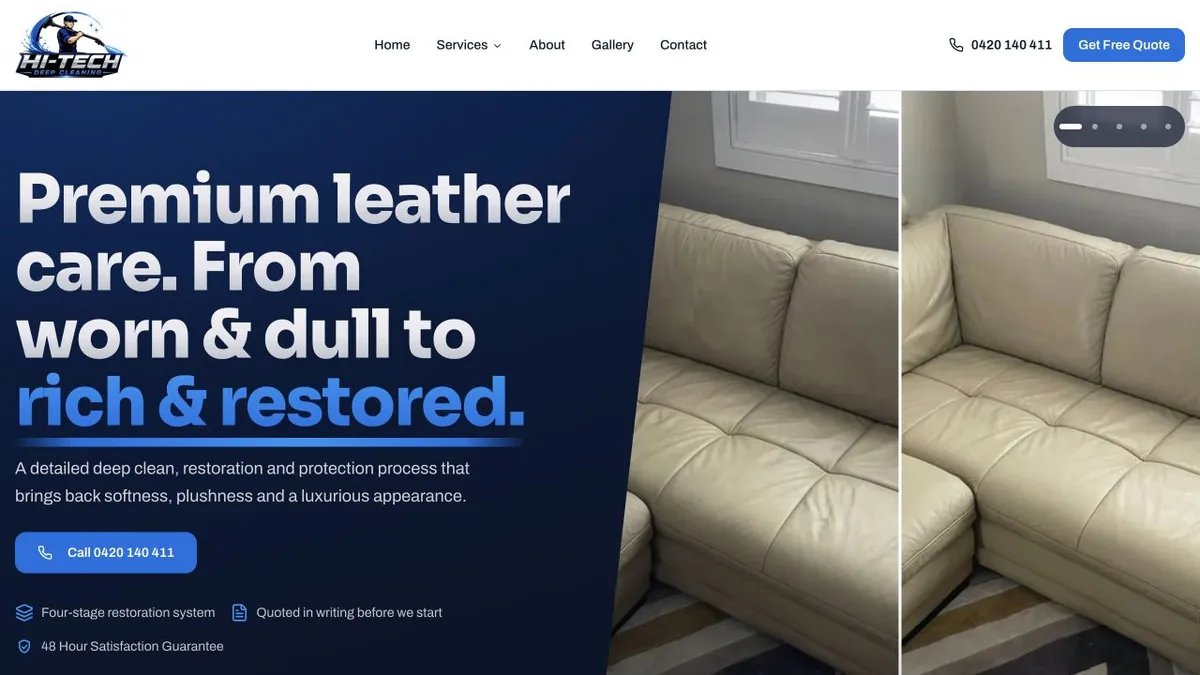
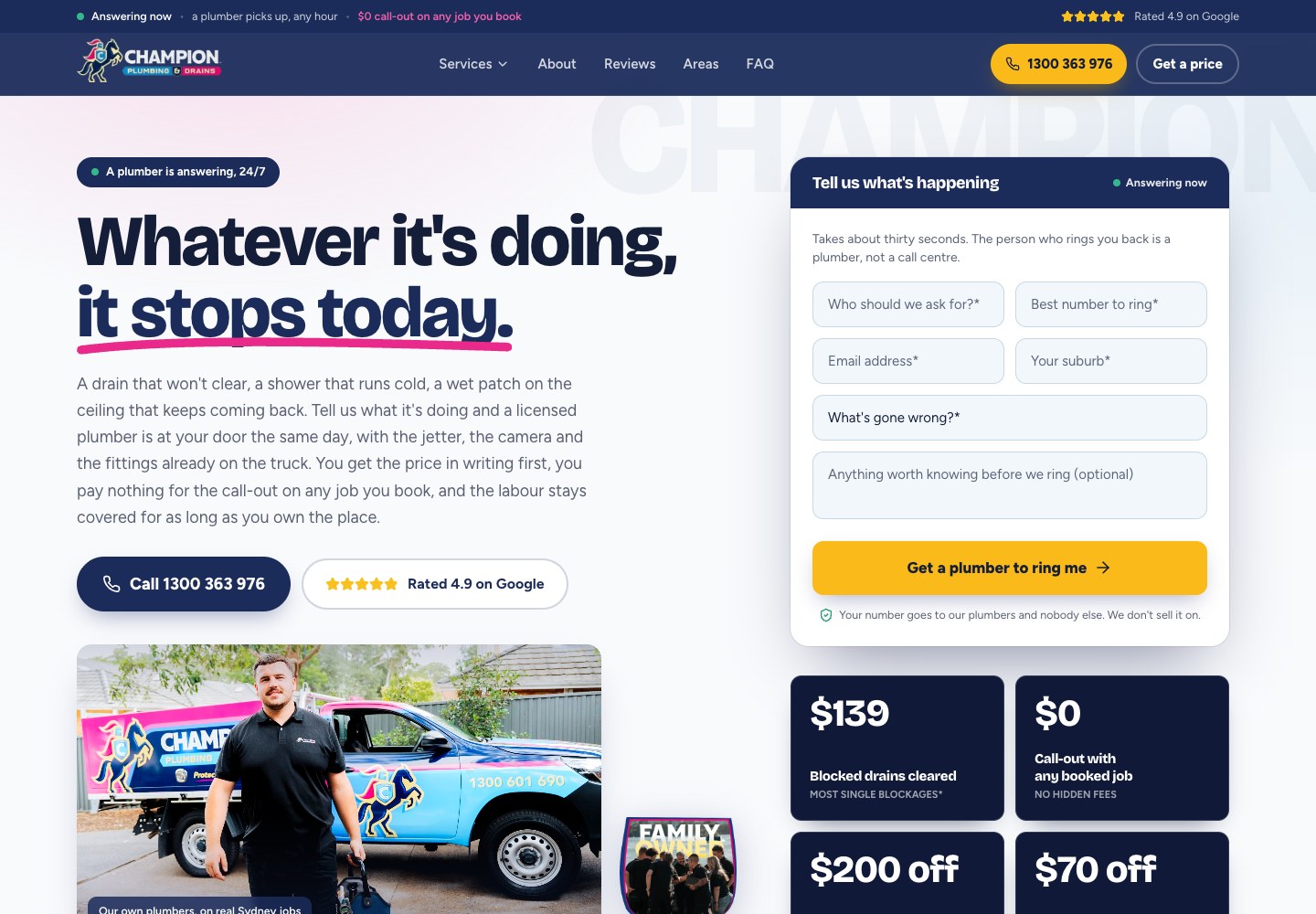
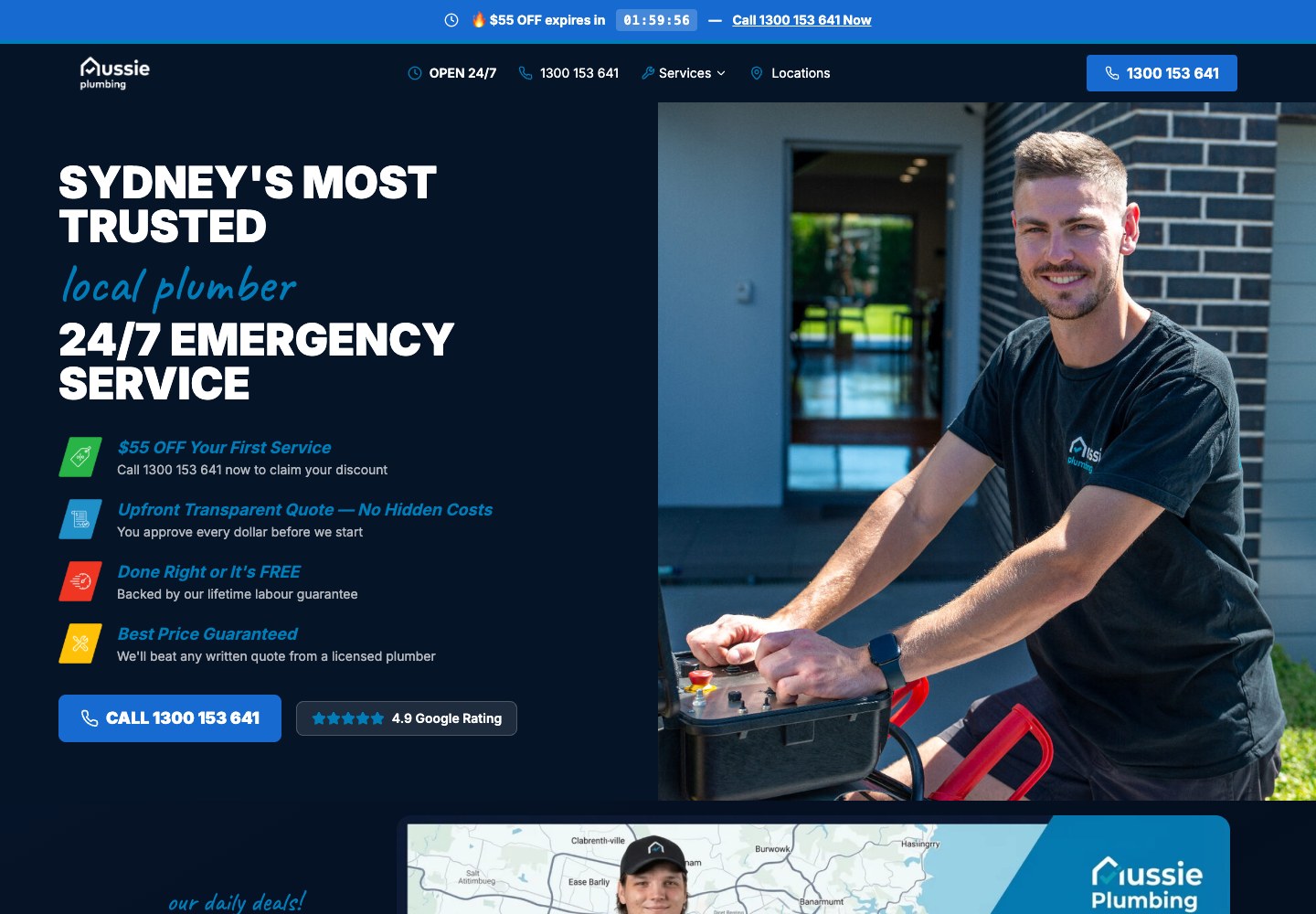
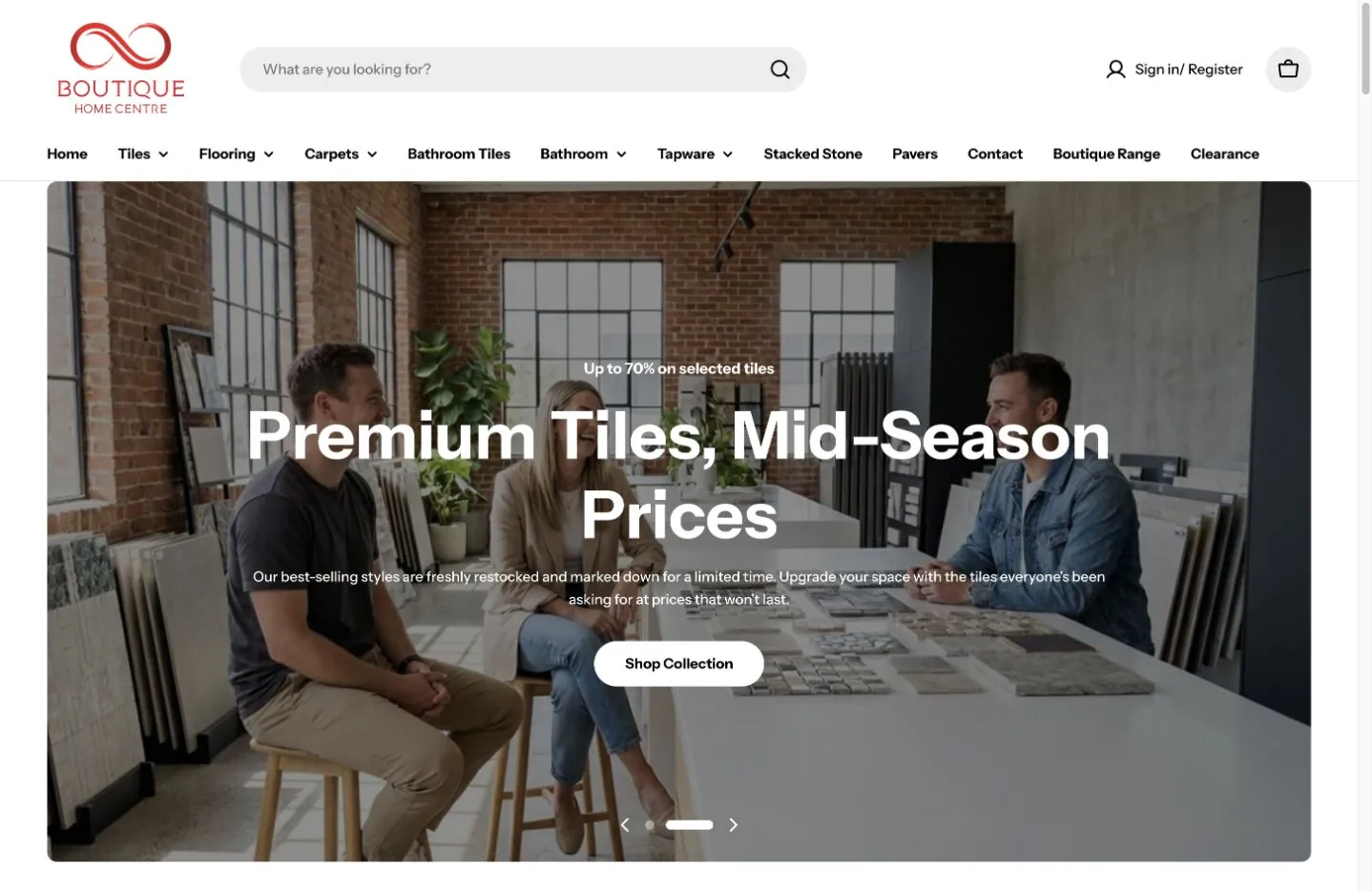
    Impress Blinds — cost per enquiry down 62.63%, $23.6 to $8.82SLS Solicitors — cost per enquiry down 58.48%, $84.64 to $35.14FixCare Property — cost per enquiry down 56.36%, $35.24 to $15.38Rubbish Removal WA — cost per enquiry down 53.18%, $71.02 to $33.25Floral Cakery — cost per enquiry down 49.82%, $13.83 to $6.94ILLUMINATE Laser Emporium — cost per enquiry down 48.54%, $138.65 to $71.35Aussie Plumbing — cost per enquiry down 41.96%, $117.75 to $68.34Sydney Fence Painting — cost per enquiry down 33.68%, $136.62 to $90.61Alliance Plumbing — cost per enquiry down 29.6%, $81.26 to $57.21Gridless Build Solutions — cost per enquiry down 29.16%, $78.16 to $55.37FacilityWorx — cost per enquiry down 23.62%, $157.13 to $120.01Cornerstone Roofing — cost per enquiry down 20.47%, $41.71 to $33.17A council finance platform — 194 of 194 requirements metA council finance build — 14 weeks to UAT, −34% 10-yr costA cultural institution — $634K of $750K kept workingA council platform — $470,106 built vs $503,262 SaaSA federal agency — n=5,000 prevalence survey at ±1.4%A civic mural — 36 concepts for a 71m × 9m wallA regional shire — 32-page visitor guide, 3 weeks earlyA shire council — one platform retiring 8 of 9 vendorsA pressure washing business — 138 jobs at A$20.43 eachA pressure washing business — 21.20% conversion rateA carpet cleaner — 53 jobs in 15 days at A$24.92 eachA roofing company — 68 quote requests in 35 daysA CCTV installer — 39 qualified leads in 15 daysA fence painter — 36 jobs in 24 days, quotes by day 3A maintenance business — live in 8 weeks, 3 stacks gone41 numbered clauses, published in full5.0 across every Google review$120M+ in media under management250+ active engagements across five countries

    Social media management Posting is the easy part. Answering is the job.

    We run the accounts a business actually has to keep running: material captured on real jobs, messages answered inside business hours, ownership held by the company, and a report that leads with enquiries rather than reach.

    Accounts owned by your company, not by a staff member · Every message answered to a written standard · Reported on enquiries, with the platform numbers underneath

    Inside a typical account

    Why does the account
    never produce anything?

    Almost never because the posting stopped. Seven things go wrong on business accounts, and six of them are decisions nobody remembers making.

    • The account is a noticeboard rather than a channel

      Almost every underperforming business page is publishing announcements. We are open, we are hiring, here is a photo of a van. None of it answers a question anybody was asking, so nobody answers back and the platform stops showing it.

      • Nothing in the post that a customer was already wondering about
      • No reason for a single person to save it, send it on or reply
      • So the next post starts from an even smaller audience
    • Nobody can say what it produced

      Ask most businesses what their social account earned last quarter and the honest answer is a shrug and a follower count. The enquiries it caused are sitting in a phone as unread messages, uncounted and unattributed, which is why the budget for it is always the first to go.

      • Enquiries arriving as direct messages that never reach the CRM
      • People who saw a post, searched the business by name and phoned
      • None of it recorded, so none of it defensible at review time
    • The calendar is filled with whatever was easiest to make

      Filler is what happens when a schedule has to be met and no material was captured. It is not that quote graphics and staff birthdays are wrong; it is that they are what gets published when nobody planned to film the job that would have been worth watching.

      • Stock imagery in a trade where the proof is the finished work
      • Recycled captions that could belong to any competitor
      • The genuinely interesting jobs done, finished and never recorded
    • Messages and comments go unanswered for days

      For a large share of buyers under forty the direct message has replaced the contact form. Leaving it unattended is not a social media problem, it is an unanswered-phone problem, and it costs the same.

      • Message requests sitting in a folder nobody knows exists
      • A question in the comments that three other buyers were also asking
      • A complaint left in public with no reply beneath it
    • One person's personal login holds all the access

      The staff member who set the accounts up left, or used their own profile as the administrator, and now nobody can add a new manager, verify the business or recover the page. This is dull and it is the single most common way a business loses an audience it spent years building.

      • Business assets attached to a personal profile rather than a business account
      • No second administrator, so one lost login is terminal
      • Recovery routes that depend on documents nobody has kept
    • Everything is cross-posted at the wrong shape

      One asset made once, pushed to five destinations by a scheduler, arriving square where the format is vertical, cropped through the subject's head, or carrying a watermark from the platform it was downloaded off. Readers notice immediately, and so does the ranking.

      • A landscape frame in a full-screen vertical placement
      • Captions burned in where they collide with the interface
      • Downloaded and re-uploaded rather than exported clean
    • Nobody decided what the account is for

      An account trying to recruit staff, reassure existing customers, impress suppliers and win new work at the same time does none of them. The absence of a decision shows up as a feed with no through-line, and it is the cheapest thing on this list to fix.

      • Recruitment posts sitting between sales posts
      • Two audiences who want opposite things from the same feed
      • No way to judge a post, because there is no agreed job for it to do
    The one idea

    Judge it on names, not on numbers.

    Every argument about whether social is worth it ends the same way: one side quotes reach and the other side asks what it sold. The argument disappears the moment the account is judged on the enquiry record instead of the dashboard.

    • What it counts as a result

      Reach, impressions, followers and a percentage engagement rate.

      A named person who asked about work, however they arrived.

    • Where the number comes from

      The platform's own dashboard, on definitions that change without notice.

      Your enquiry record, which also knows whether the job was won.

    • What it can prove

      That the content was shown, and roughly to how many devices.

      That the content caused somebody to make contact.

    • How it treats a quiet week

      As a decline, because the graph only has one axis.

      As context, read against the enquiries and the season around it.

    • What it is genuinely good for

      Direction — which formats travel, which subjects hold attention.

      Deciding whether to keep spending time and money on any of it.

    • Who can argue with it

      Anybody, because nobody in the business trusts it.

      Nobody, because it is the same list the sales conversation runs on.

    So why keep the platform numbers at all?

    Because they answer a question your enquiry record cannot. They are the only place that shows what people watched and where they stopped watching, which is the fastest way to learn which subjects and formats are worth capturing again. Read as direction, they are useful every week.

    What they cannot do is tell you whether any of it earned money. That answer only exists in your own records, which is why it leads the report and the dashboard sits underneath it. A report that opens with reach is usually opening with reach because the other number was disappointing.

    Three real accounts

    Pink Flamingo · 41-day period

    A$20.43

    Cost per job booked

    138 jobs — counted on work booked, not on people reached

    Cleanetic Perth · 15-day period

    53

    Jobs booked

    A$24.92 each, on a brand-new account with no history to learn from

    Cornerstone Roofing · 35-day period

    68

    Quote requests

    Every request carrying a source, recorded when it arrived

    These are lead-generation accounts, dated in each case study, and they are here because they show the standard this page argues for: outcomes counted rather than assumed, and checked back against the business they came from. They are not social media results. SoudCoh publishes no organic-social engagement, and no follower, reach or engagement-rate figure appears anywhere on this site.

    Eleven things happen on a social engagement. Only two of them are posting.

    The other nine are the ones that decide whether the posting was worth doing — and they are the ones an account left to whoever has a spare hour never gets around to.

    1. Read the accounts before touching them

      Every profile, every administrator, every post from the last year and every unanswered message. The first deliverable is a written picture of what exists, and it is worth having whether or not you go further with us.

      • Who holds administrator access and on which kind of profile
      • What was published, and which of it people actually responded to
      • Messages and comments still sitting without a reply
    2. Decide the two or three jobs the account is for

      Written down in one paragraph, agreed by the person who owns the outcome. Everything afterwards points at that paragraph, and a post that serves none of it does not get made — which is how a calendar stops filling itself with filler.

      • Winning new work, reassuring existing customers, or hiring — pick
      • The audience named as a person, not as a demographic band
      • The action you want at the end of a post, in plain words
    3. Build the spine out of real questions

      The best-performing content a service business can publish is an honest answer to something buyers ask before they commit. Those questions already exist in your inbox, your quotes and the calls your team takes; they do not have to be invented.

      • The questions your team answers on the phone every week
      • The objections that show up between quote and acceptance
      • The jobs customers were surprised you could do at all
    4. Produce rather than curate

      Somebody has to be on site with a camera. Reposting other people's content and buying stock is what an account does when nobody has committed to capture, and it is visible from the first frame. The material that works is your own work, filmed while it happens.

      • Before, during and after on the jobs worth watching
      • Your own staff speaking, because a real voice outperforms a polished one
      • Written permission from the customer before a property appears
    5. Capture in batches, publish across weeks

      Filming once a month and publishing weekly is the only version of this that survives a busy season. The alternative — capturing on the day it is needed — fails the first time the crew is short-handed, and the calendar quietly reverts to filler.

      • One capture session feeding several weeks of publishing
      • A standing shot list so nothing depends on inspiration
      • A small buffer held back for the week everything goes wrong
    6. Write for the platform, not for the brand guideline

      Each surface has its own shape, its own reading distance and its own tolerance for polish. The same idea is worth publishing in three places; the same file rarely is. Exported clean at the right ratio, captioned for sound-off, and cut where that platform's readers actually stop watching.

      • Vertical where the placement is vertical, and framed for it
      • Captions on everything, because most of it is watched silently
      • Exported from the source, never downloaded and re-uploaded
    7. Answer everything, inside business hours

      Comments, direct messages, message requests and reviews left on the social profile, all handled to a written standard so five different people sound like one business. An unanswered question in public is read by everyone who comes after it.

      • A named owner and an agreed response window
      • Standard answers written down for the questions that repeat
      • Anything contentious moved to a private channel, politely and in public view
    8. Fix the ownership properly

      Business assets moved onto business accounts, at least two administrators, personal profiles removed from roles they should never have held, and the recovery route documented. Dull, unglamorous, and the reason a business still has its audience in five years.

      • Ownership held by the company, not by a staff member
      • Roles set to the least access each person actually needs
      • The recovery path written down where a director can find it
    9. Connect the account to the enquiry record

      A message that arrives on social is an enquiry and belongs in the same place as every other one. Until that happens, social will keep losing the argument at budget time to channels that can produce a list of names.

      • Direct-message enquiries logged like any other lead
      • The source recorded at the point of contact, not guessed later
      • The same outcome fields as every other channel, so they compare
    10. Report on enquiries, with the reach underneath

      One agreed figure for what the account produced, with the platform numbers below it as context rather than as the headline. Where a month was quiet it is explained rather than skipped, and where the honest answer is that this channel is not earning its time, we say so.

      • Enquiries first, reach second, follower count last
      • The posts that caused contact named, so the pattern is repeatable
      • A recommendation to stop, when stopping is the right answer
    11. Keep the obligations true as you grow

      Testimonials, staff appearing in content, customer properties on camera, competitions and anything a supplier paid for all carry rules in Australia. They are simple to satisfy in advance and expensive to satisfy retrospectively.

      • Commercial relationships disclosed where content is sponsored
      • Permission on file before a customer's property or face is published
      • Competition rules checked before the post, because they differ by state
    Audit to the first report

    Access first. Cameras second. Calendar last.

    1. Week one

      Audit and access

      Every profile read, every administrator listed, and the ownership problems fixed first. If a page is attached to somebody who left, that is dealt with before a single post is planned.

    2. Week one

      Agree what the account is for

      One paragraph, signed off by the person who owns the outcome, naming the audience and the action. Everything after this points at it, which is what stops the calendar drifting back into filler.

    3. Week two

      The first capture

      On site, on a real job, with a shot list agreed beforehand. This is the session that decides whether the whole thing works, so it is planned rather than squeezed into a gap.

    4. Weeks two to four

      Publish, answer, and watch what travels

      The first cycle goes out with the response standard already written, so messages are answered from day one rather than after the first complaint about a slow reply.

    5. First report

      Enquiries, not applause

      What arrived, from which posts, and what it turned into — read against where you started rather than against an industry average. Early figures are small by nature and are presented that way.

    6. Ongoing

      A standing rhythm, reviewed quarterly

      Capture, publish, answer, report. Every quarter the whole thing is read again and something is dropped, because an account that only ever adds obligations eventually collapses under them.

    This is a slow channel and we will not pretend otherwise. The first two months usually produce a handful of enquiries and a much clearer picture of what your buyers want to know, and the compounding starts after that. Anybody promising a transformation in a fortnight is describing an audience they intend to buy.

    SoudCoh Compound™

    Anything published under your name is published for good.

    Compound is how our team works on any engagement — six stages every change passes through. Publishing to an audience leans hardest on these two, because a post cannot be quietly rolled back.

    • Countersign

      Nothing reaches a live account with one name on it.

      A post is published to an audience and cannot be quietly withdrawn — screenshots outlive deletions. So anything going out under your name is read by a second person first, and anything touching a complaint, a price or a person's face is read by a third.

    • Ledger

      Every executed change becomes a record you can open.

      What was published, when, who approved it and what it produced, kept in a dated record rather than in the memory of whoever was running the account that month. It is also the only honest way to answer the question of whether this channel is worth continuing.

    Four accounts. Four counted numbers.

    Every figure here counts a real job or a real quote request that was checked back against the business it came from. They are lead-generation accounts rather than social ones — we publish no social engagement — and each tile links to the full breakdown including the spend behind it.

    Before you ask us anything

    Here is what everybody asks first.

    FAQ

    Social media management, answered.

    How often to post, which platforms are worth keeping, who answers the messages, what happens to the accounts if we part ways, and how you will know whether any of it worked.

    The first call is free and there is no deck.

    Book a free strategy call

    Often enough that the account looks alive, and never more often than you can sustain through a busy month. For most service businesses that lands at one or two substantial pieces a week plus whatever the day throws up, and the honest constraint is capture rather than publishing: nobody runs out of ideas, they run out of footage. We would rather agree a rhythm you can hold for a year than a schedule that looks impressive for six weeks and then stops, because a feed that visibly died is worse than a quiet one.

    Fewer than you have been told. The test is where your buyers already are and where your material naturally fits — a trade with strong visual before-and-after work belongs somewhere visual, a professional services firm usually does not. One account maintained properly beats four maintained badly, and the second platform is only worth opening once the first one is producing something. Part of the first audit is telling you which existing profiles to close or quietly park, which is usually the least popular recommendation we make.

    Much less than the number implies. Reach on the major platforms is now driven mainly by whether a piece of content holds attention, not by how many people already subscribed, so a small account publishing genuinely useful work regularly reaches strangers. Followers matter in one specific way: they are the audience you can reach again without paying, which is why we treat them as an asset to be earned rather than a score. If somebody offers to sell you followers, the number will go up and nothing else will.

    We write, you approve, and the words come out of your business rather than out of a template. The material that performs is specific — the job you did last week, the thing customers always get wrong, the question your team answers on the phone every day — and none of that can be invented from the outside. In practice that means a short standing conversation with somebody who actually does the work, and a written voice guide so five different hands sound like one business.

    With permission, and permission is collected before the camera comes out rather than after. Staff give consent for their likeness to be used and are told where it will appear. Customers give permission before their home, business or job appears, and for residential work that conversation happens at booking rather than on the doorstep. It is a two-minute step that prevents an expensive one, and we will not publish a person or a property without it.

    Either us, or your team to a standard we write with you — and the choice matters less than the fact that somebody is named. What does not work is leaving it unassigned, because message requests are effectively a second phone line and an unanswered question in public gets read by every buyer who arrives after it. Where we handle it, anything about a specific job, a price or a complaint is escalated to you rather than answered by an agency, and there is a written line about what we will and will not say on your behalf.

    Sometimes not, and we would rather say that on the way in. Organic social earns its place when your buyers research you before they call — they will look, and an abandoned account answers a question you did not want answered — and when your work is visually convincing enough to be worth watching. It does not earn its place when the sales cycle is immediate, the category is invisible, and nobody has the appetite to capture material. If that is your situation the money belongs in the advertising and the enquiry handling instead.

    They are the fastest way to grow an audience that will never buy anything, so we use them rarely and only where the prize is your own service. There is also a legal dimension people forget: trade promotion rules in Australia differ between states and some run-of-the-mill mechanics require a permit, so the terms are checked before the post goes up rather than after somebody complains. If the goal is enquiries rather than followers, the same effort spent on a genuinely useful piece of content almost always outperforms it.

    You do, and this is one of the first things we fix rather than one of the last. Business assets get moved onto business accounts owned by the company, we take a manager-level role rather than ownership, and at least two people on your side hold administrator access. When an engagement ends we are removed and nothing else changes — the profiles, the audience, the published work and the written voice guide are all yours, because they always were.

    There is a written plan before it happens, which is the only useful time to write one. Most negative reactions are a customer with a real problem and are answered in public, briefly and without argument, then moved to a private channel. A small number are not customers at all and are best left alone. Deleting a legitimate complaint reliably makes it larger. The line between those cases is agreed with you in advance and the decision to escalate sits with your side, not with ours.

    Because enquiries are counted, not reach. A direct message asking about work is logged the same way a phone call is, with the source recorded at the moment it arrives instead of guessed at the end of the quarter, and the report leads with that figure and keeps the platform numbers underneath as context. Expect the first two months to look thin — this is a channel that compounds — and expect us to tell you if the pattern after six months says the time would be better spent elsewhere.

    Our own, which you can read at any time, and that is deliberately the only claim on this page. SoudCoh has no published organic-social engagement with a client, so there is no follower figure, no reach number and no engagement rate anywhere on this site — including here. The dated results we do publish are lead-generation accounts, counted on booked jobs and quote requests and reconciled against the client's own records. If a published social engagement is the reference you need before committing, that is a fair thing to require and you should hold us to it.

    Social rarely fixes anything on its own.

    Most engagements that start here end up touching two or three of the following. If you are not sure which order to do them in, that is exactly what the first call is for.

    Further reading

    For the paid-social question this page keeps deferring, what actually works on paid social for a trade right now. And before you judge any channel on a dashboard, how to tell whether your enquiries are being counted at all.

    Let us read the accounts

    Send us your handles and we will come back with who holds the keys, what the last year actually produced, and the three things worth changing first. Yours to keep either way.

    No pitch deck. No upsell. A real conversation and a number you can check.