Boutique Home Centre: Shopify, AI imagery and a connected product catalogue
Boutique Home Centre · Retail & e-commerce — tiles, flooring and bathware · Melbourne, Australia
The short version · Public sitemap review · 22 September 2026
A large Shopify commerce build connecting product discovery, AI-assisted imagery and descriptions, a room visualiser, supplier and pricing workflows, and delivery planning.
The live catalogue contained 3,592 product pages and 86 collections when reviewed on 22 September 2026.
Explore Boutique Home Centre's website, from the first impression to the details.
Use the left and right arrow keys to browse screenshots. Home goes to the first screenshot and End goes to the last.
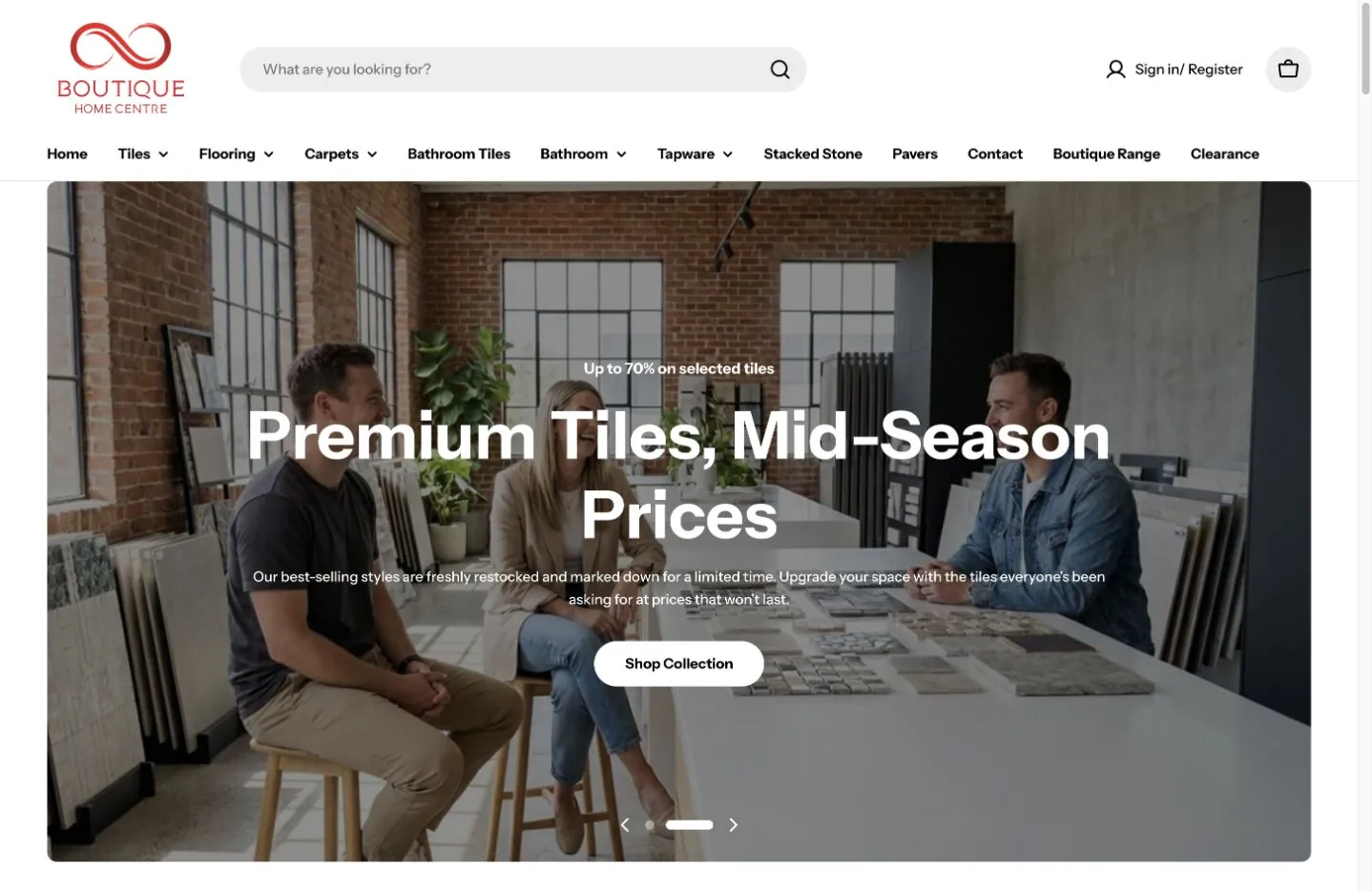
A storefront organised around the renovation — Room-led imagery connects tiles, flooring, bathroom products and tapware with clear collection routes. The search field stays prominent for buyers who already know what they need.
01 / 09 · A storefront organised around the renovation — Room-led imagery connects tiles, flooring, bathroom products and tapware with clear collection routes. The search field stays prominent for buyers who already know what they need.
Inside the website
The thinking behind the pages.
01 · Website detail
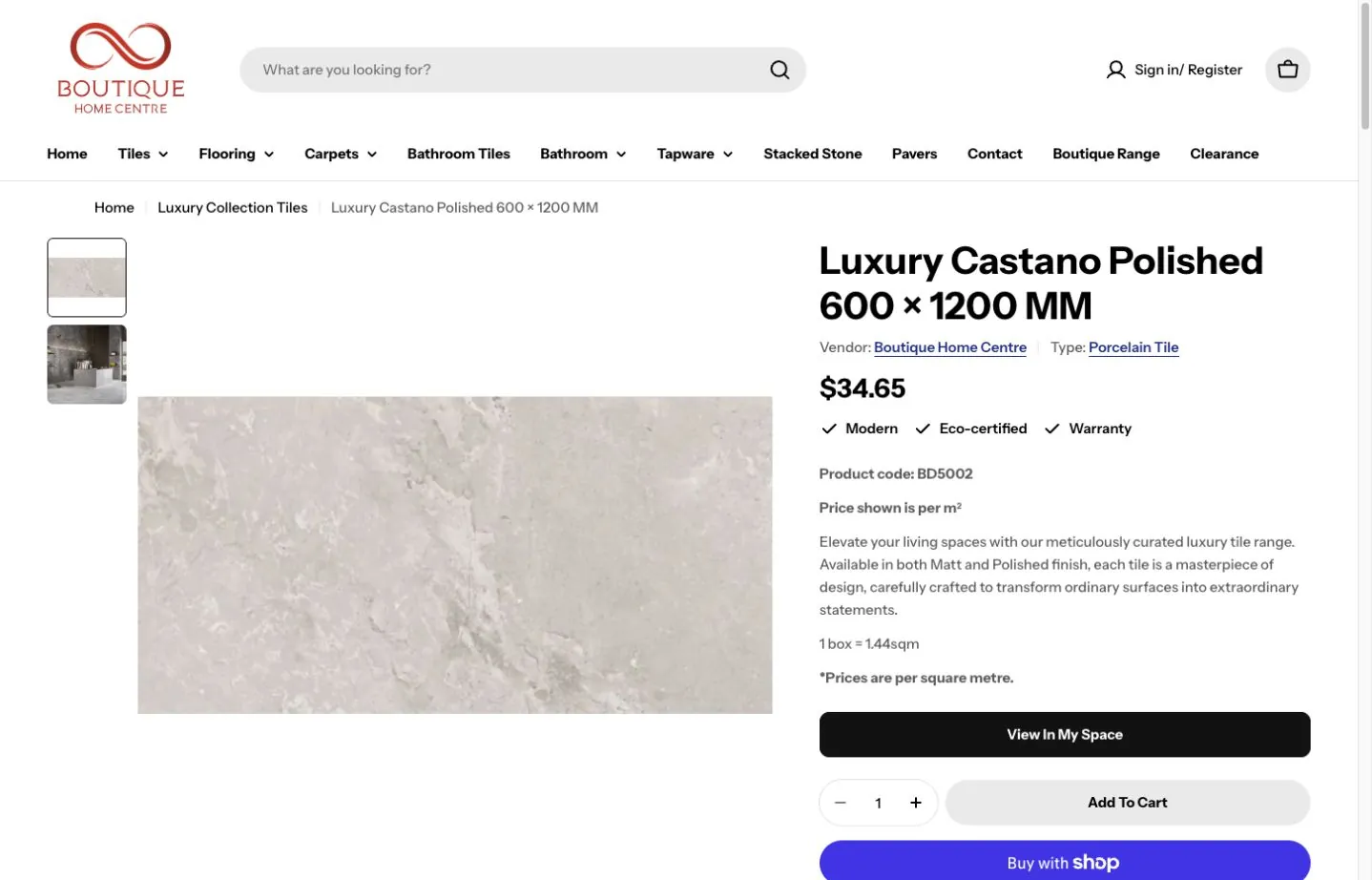
Product detail that helps customers calculate an order
Per-square-metre pricing sits beside the product code, tile size and 1.44 m² box coverage on this sampled product. The purchase, quote and room-preview choices remain close to those details.
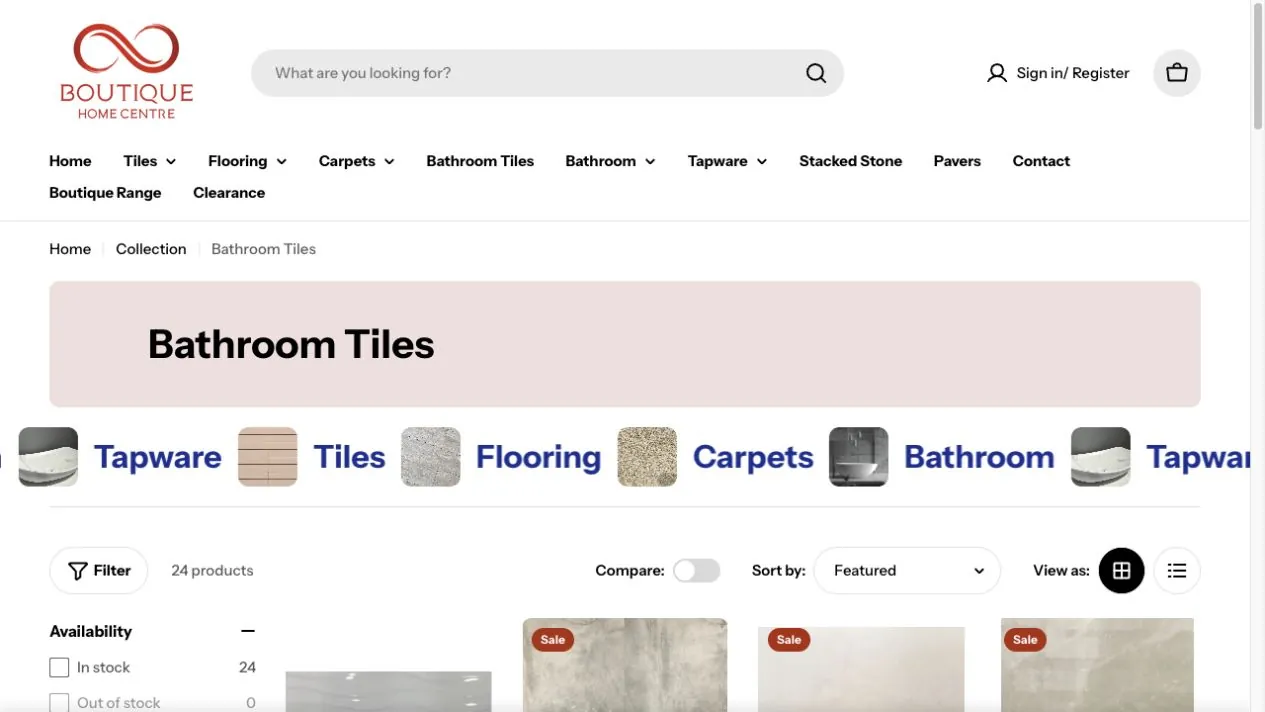
Dedicated collections organise the range by product and application. This bathroom-tile page combines filtering, sorting, a comparison option and product cards.
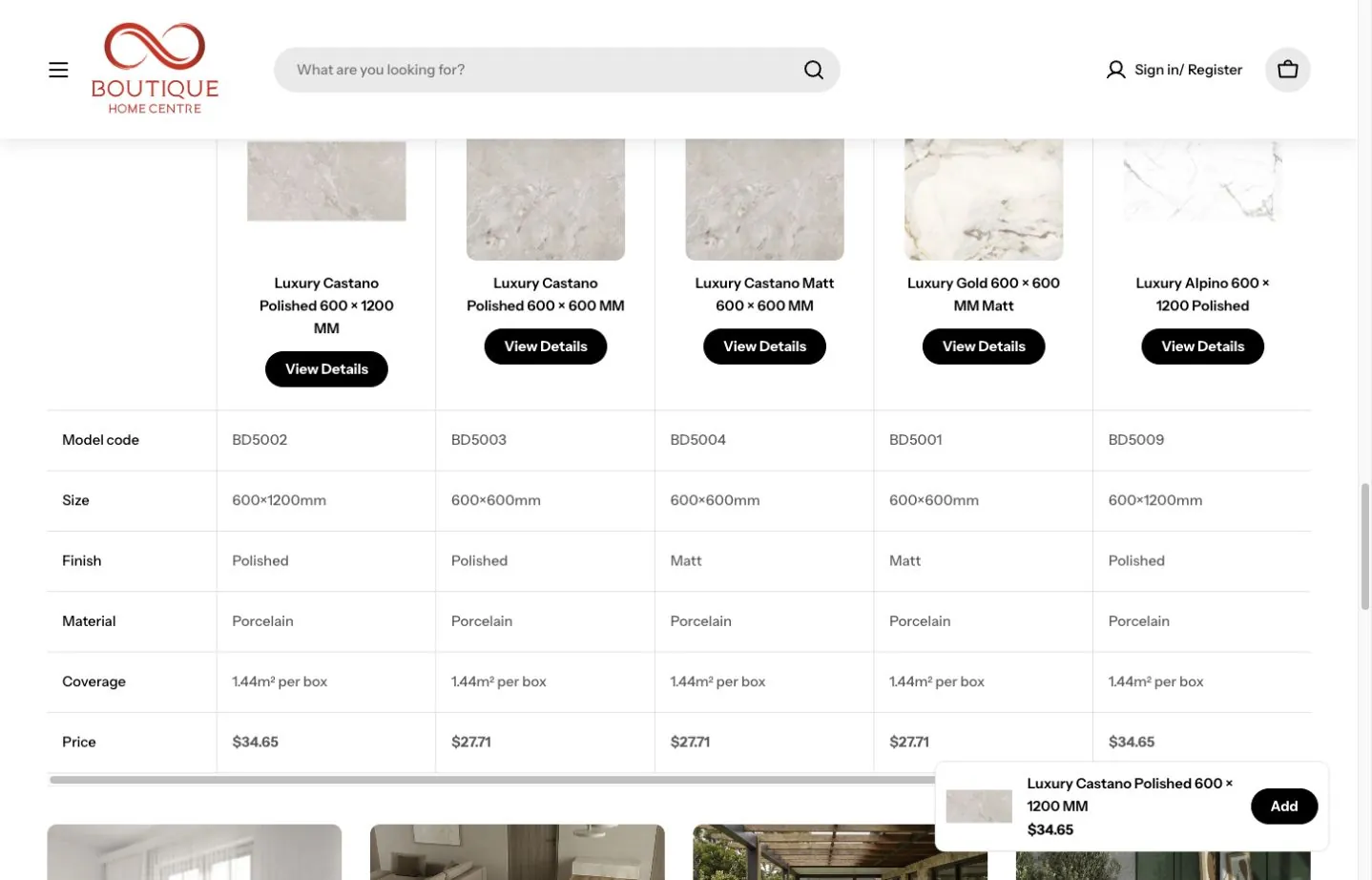
The product comparison table brings model codes, dimensions, finishes, material, coverage and price into a shared layout. Customers can compare alternatives without remembering information across separate tabs.
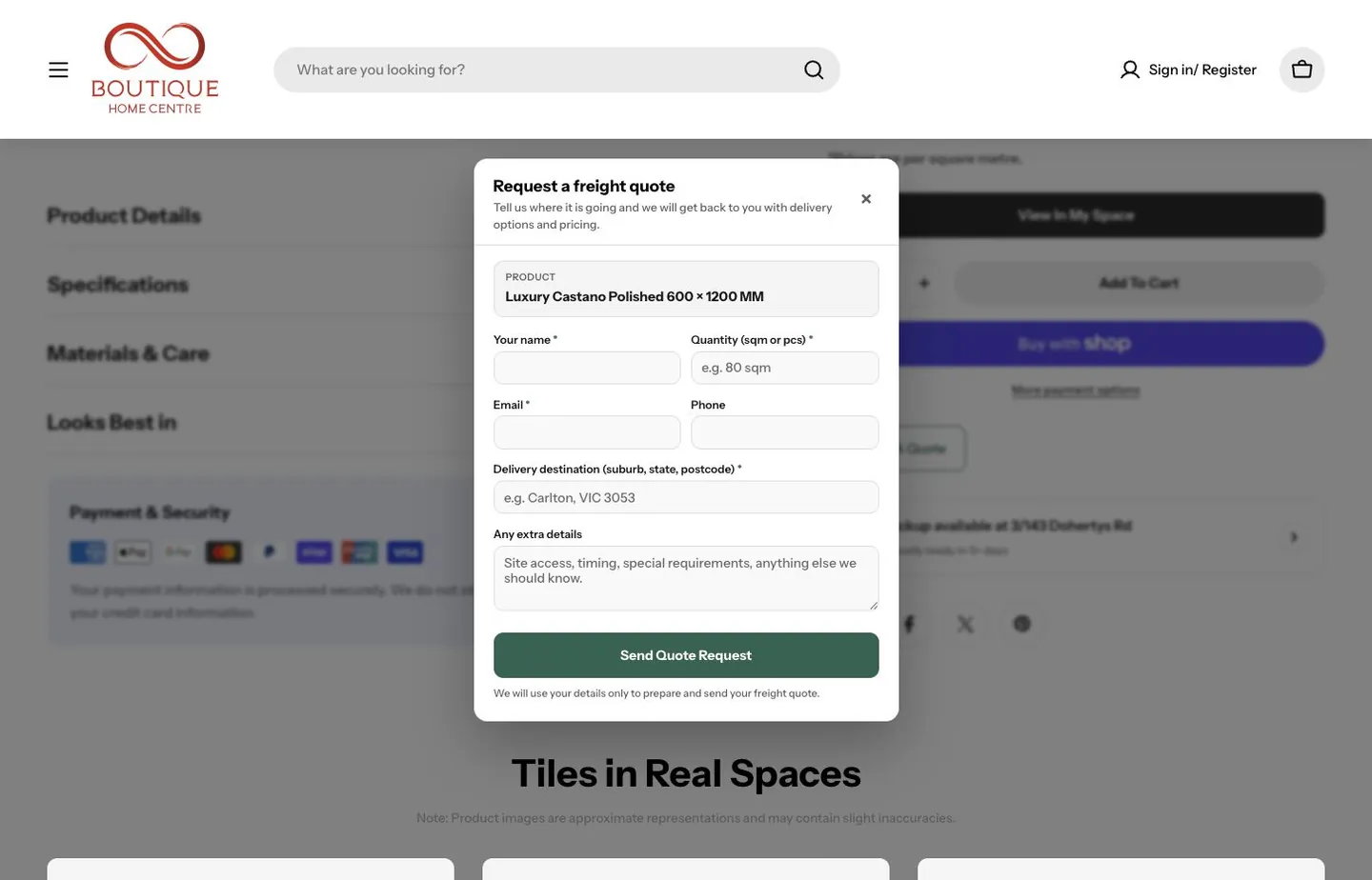
Freight enquiries with the product already attached
Heavy and bulky orders need context. The quote form keeps the selected product in view and asks for quantity, destination and delivery details, helping the team assess the practical order.
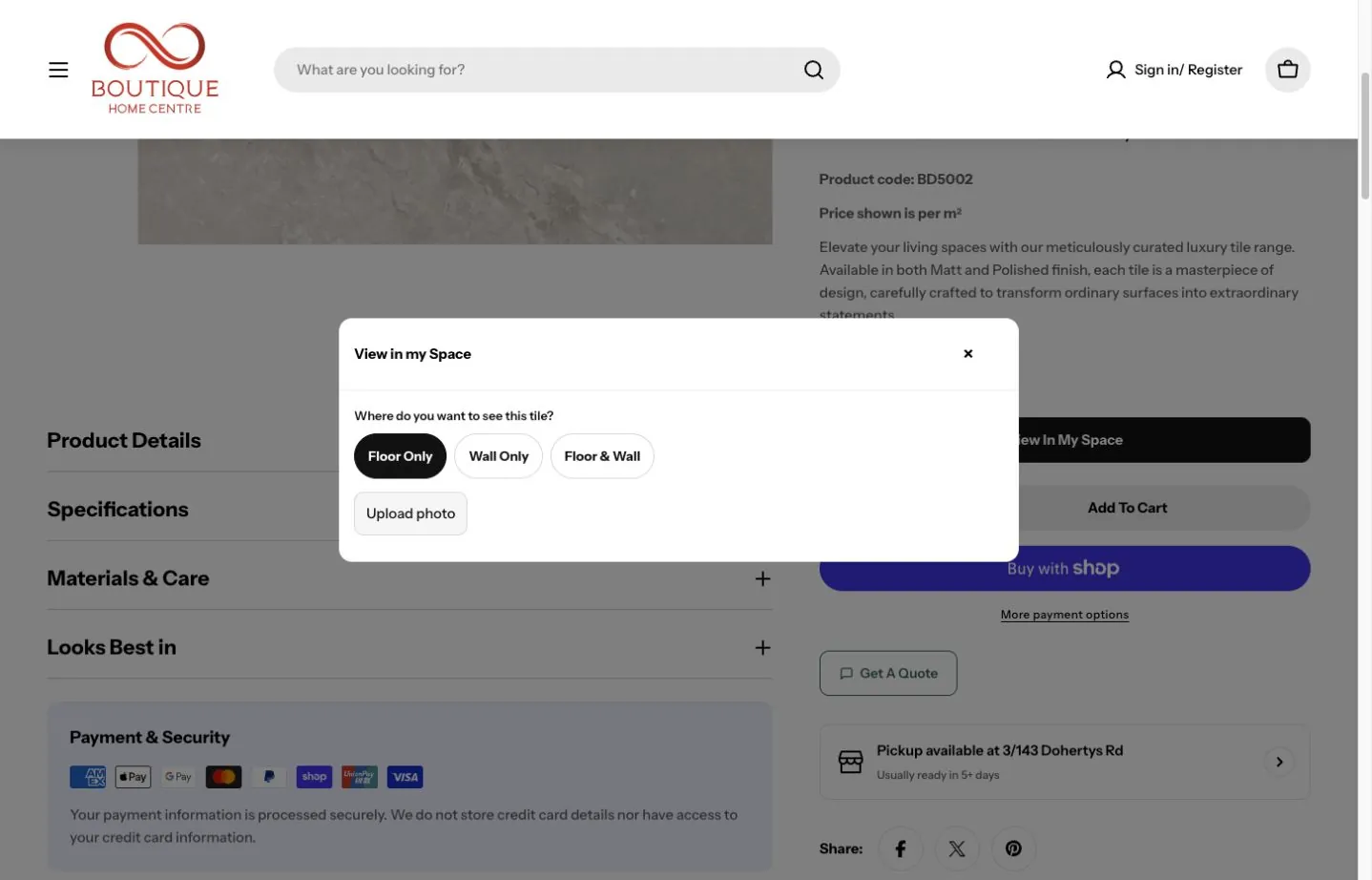
The product-page tool offers floor, wall, or combined placement before accepting a room photo. It keeps the experiment connected to the tile the customer is considering.
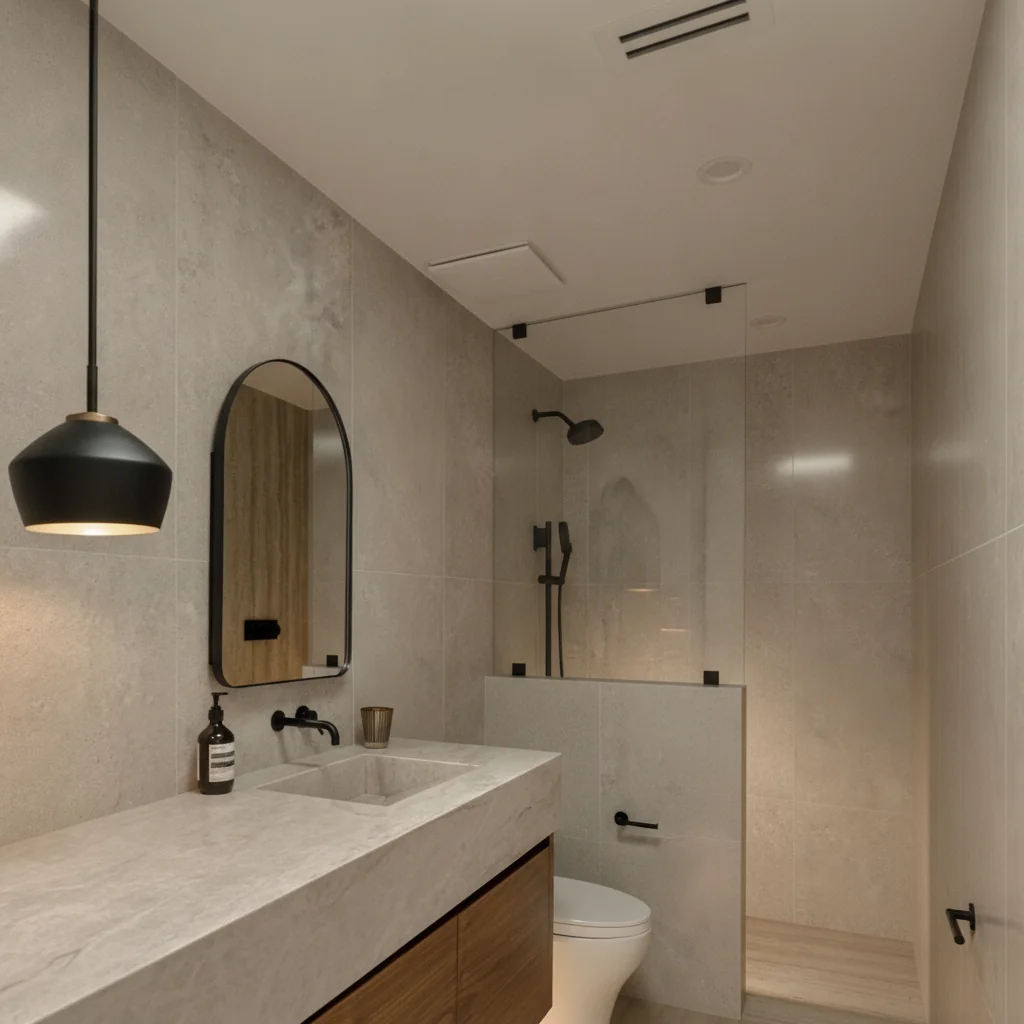
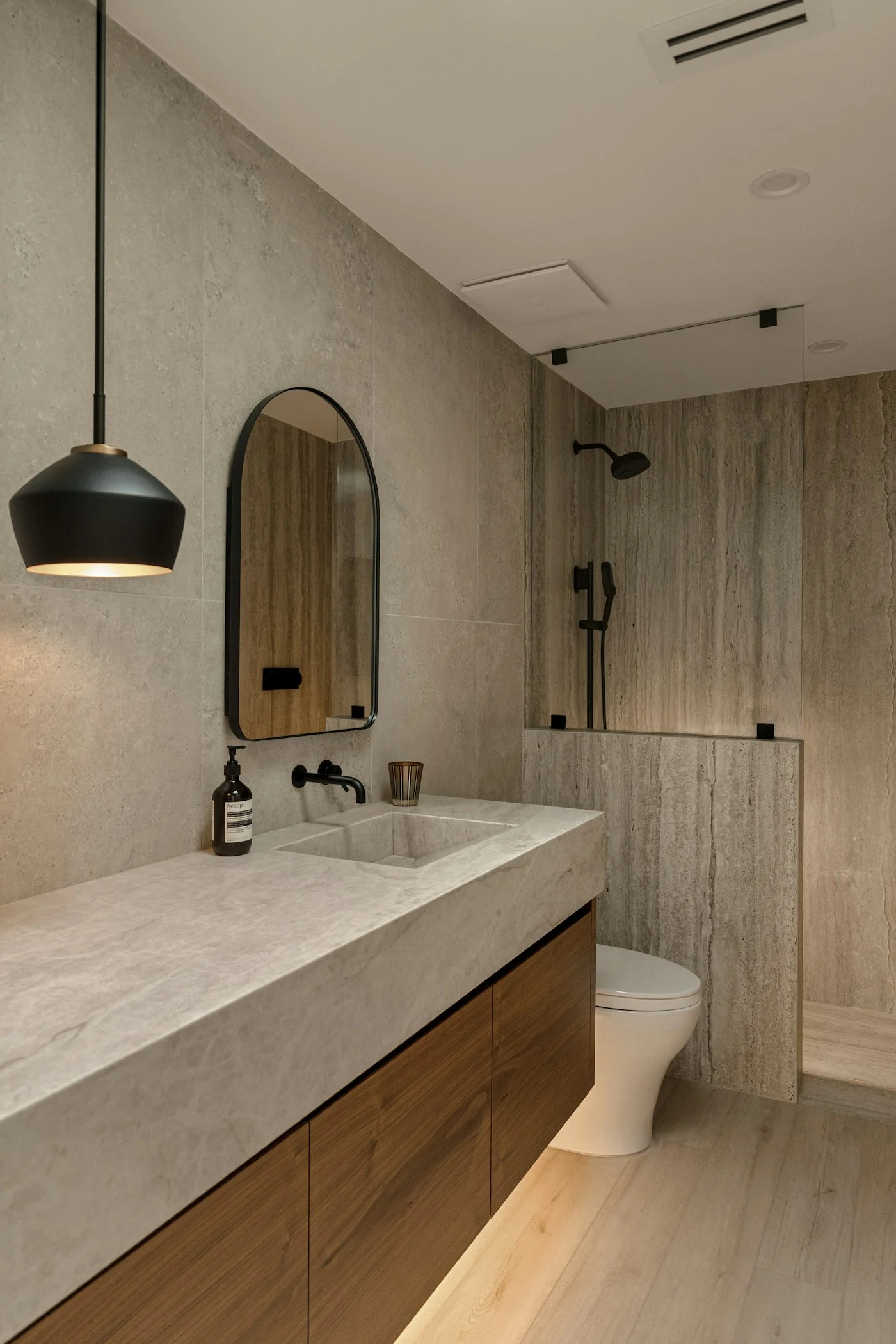
We sent the licensed sample bathroom photo through Boutique Home Centre’s live visualiser on 22 September 2026, selecting Luxury Castano 600 × 1200 mm tiles for the walls. This is the actual returned image. The square result changes the framing and some room details, so it is presented as an illustrative AI preview.
01A broad catalogue organised into 86 collections, with practical product detail and comparison.
02AI-assisted product imagery and descriptions supported a repeatable content workflow across the range.
03Room-preview tools, freight enquiries and delivery logic connect product interest with the practical details of an order.
04Supplier, pricing and search work extended the project beyond the storefront design.
The design choices and customer journey behind this website.
Boutique Home Centre sells the materials people use to change their homes: tiles, flooring, bathware, tapware and more. The website has to make those products easy to discover, show how they might look in a room and carry the practical information needed to buy the right quantity. Behind that experience sits the work of maintaining a large catalogue, preparing imagery, keeping product information useful and handling the realities of delivering heavy, bulky goods.
SoudCoh brought those jobs together in a Shopify commerce project spanning storefront design, AI-assisted product content, a room visualiser, supplier and pricing workflows, delivery logic and search preparation. A public sitemap review on 22 September 2026 confirmed 3,592 product pages and 86 collection pages. That scale shaped the work: each improvement needed to support a broad range of products and remain useful as the catalogue changed.
From an existing store to a connected Shopify experience
Boutique Home Centre already had an online presence. A genuine January 2025 archive records the earlier WordPress and WooCommerce website, providing a dated reference for the rebuild. Some image assets are missing from today’s archive replay, so the archive should not be used to infer the original store’s image availability. The Shopify project gave the business a new way to present its range, with storefront assets served through Shopify’s CDN and connected the customer-facing experience with the information and workflows behind it.
We organised the work around the decisions a customer makes. First, find the relevant category or style. Then understand the product, compare suitable alternatives and imagine it in a space. Finally, work out quantity, delivery and the next step. This sequence informed the navigation, collection pages, product detail and supporting tools. It also gave the larger technical programme a clear commercial purpose: make the catalogue easier to use and the business easier to buy from.
A broad range with clear routes into it
The storefront gives tiles, flooring, carpets, bathroom products and tapware distinct starting points. More specific collections help visitors move towards a material, format, finish or application without needing to know an exact product code. That matters for a renovation purchase, where a customer may begin with a room or a look in mind rather than a precise item.
The design combines room imagery with product browsing so that inspiration leads somewhere useful. Collection links, product cards and individual detail pages form a continuous journey. A visitor can explore the range, narrow their options and return to a product with its specifications close at hand. This is the same principle behind our website design and development work: the presentation should help a person make their next decision.
Product detail that answers practical buying questions
The product template makes purchasing information visible beside the imagery. On the sampled Luxury Castano tile page, the store identifies the product code, size, finish and material, distinguishes the price per square metre and states the coverage per box. A comparison table places related products alongside each other, making the differences easier to assess.
Those details matter when the order depends on measurements. A customer needs to understand both the unit being priced and the quantity being purchased. The page also provides cart, quote and pickup routes. Someone ready to order has a purchase path; someone with a larger project or a delivery question has a way to ask for help without losing the product context.
AI imagery that gives products a setting
Product photography is a substantial task across a catalogue of this size. SoudCoh used AI-assisted production to create thousands of product and lifestyle images, using product reference photographs. The aim was to give an isolated product more context: how a surface might sit in a bathroom, kitchen or living space, and how it could contribute to the overall design.
That workflow makes a product reference reusable across several relevant scenes. It gives the business more material for product pages, collection presentation and marketing without requiring a separate physical room installation for every image. The visual still has to remain faithful to the item being sold. Product colour, finish, proportions and identifying details need review against the reference.
These images are illustrative product presentations. They should help someone imagine a possibility and should not be mistaken for photographs of completed customer projects. The store carries an approximation notice alongside its product imagery. Keeping that distinction clear supports a more useful buying experience and sets the right expectations before a customer orders a sample or makes a purchase.
A room visualiser built into the product journey
The product experience includes “View In My Space.” Its interface accepts a room photo and lets the customer choose a floor, wall, or combined placement. The implementation combines that photograph with the current product image and product information to request a preview. The customer stays in the context of the item they were already considering.
The interface includes preparation and rendering states, retry controls and a way to save a returned image. These details make the tool part of the shopping journey: a person can explore an idea and continue comparing products. The preview is a visual aid, with physical samples and the published specifications still important to the final choice.
On 22 September 2026, we tested the live Boutique Home Centre visualisation service with a licensed sample bathroom photograph and the Luxury Castano 600 × 1200 mm tile selected for the walls. The service returned the actual AI preview shown in this case study. The original photograph and returned image let you compare the starting room with the system’s interpretation of the requested wall finish.
A room reference, tested through the live visualiser
Room reference uploaded to the live visualiserThe original portrait photograph used for the test. Select the image to open it at full size.AI-generated wall preview using BD5002The actual square image returned by the store's visualiser. Select the image to open it at full size.
The live AI preview reinterprets the room to illustrate a design option. Compare it with the original reference above, then use physical samples and product specifications for the final selection. Reference photograph: Peter Muniz on Unsplash.
Descriptions and catalogue information at scale
The content work extended to AI-assisted product descriptions. A large catalogue needs a repeatable way to turn source information into useful customer-facing copy while preserving the facts that distinguish one item from another. Size, material, finish, intended application and supplier details are more valuable to a buyer than interchangeable promotional language.
The commercial benefit comes from making those details easier to maintain and reuse. A consistent content workflow helps new products enter the same browsing and comparison experience as the existing range. Human review remains necessary where a statement could affect a purchasing decision. AI should help organise and explain the supplied information; specifications, certifications, warranties and compatibility claims still need a reliable source.
Supplier and pricing workflows behind the catalogue
The project also addressed the operational work of keeping supplier information and product pricing connected to the store. With thousands of products, a change cannot depend on someone remembering every place that information appears. Supplier updates, product records and pricing need a repeatable process so the catalogue can continue to evolve after the initial build.
Our data integration and web automation work turns these repeated catalogue tasks into a practical operating process. The same product information supports what a customer reads, how an item is presented and the commercial details used to sell it. Connecting those tasks gives the team a more manageable basis for maintaining the range and checking exceptions. It also makes the website an ongoing operating tool for the business.
Delivery logic for heavy and bulky products
Tiles and bathware bring delivery questions that a simple item count cannot answer. The project included shipping work around product weight, dimensions and crate quantities, alongside the pricing and supplier workflows. These factors matter because the physical order determines how it can be handled and transported.
The visible freight enquiry carries that practical context into the customer experience. It asks for quantity, delivery suburb, state and postcode, contact details and additional instructions, with the product attached to the request. A customer can explain the order they have in mind, and the team has a more useful starting point for a delivery conversation. The objective is to support an informed quote and a workable order, with the details gathered before a promise is made.
Search foundations for a substantial catalogue
The search work connected product and collection content with a structure that can be discovered and assessed. The published Shopify sitemaps expose the catalogue’s product, collection and supporting pages, while Search Console formed part of the project’s work on search visibility and coverage. Product pages answer item-specific needs; collections give broader searches a useful destination.
Page volume alone is not a performance result. The useful questions are whether the right pages can be found, whether their information is distinct and accurate, and whether they help the visitor continue towards a purchase or enquiry. Our ecommerce SEO approach and technical SEO work address that relationship between catalogue structure, crawlability and useful content.
Where the business value comes from
The practical value of this work spans several parts of the operation. Customers get more ways to understand a product and plan an order. The business gets reusable imagery, a repeatable content process and workflows that connect product information with pricing and delivery. The website gives that work a consistent place to meet the customer.
That is the case for treating storefront design, AI production and operational automation as one programme. Each contributes to a specific decision or task, from discovering a tile to understanding its coverage and requesting delivery. Revenue, conversion rate and the time spent maintaining the catalogue provide useful measures for the work as the business continues to develop the store.
The project combined the Shopify storefront with AI-assisted imagery and descriptions, product browsing and comparison, a room visualiser, supplier and pricing workflows, delivery logic and search preparation.
How large is the published catalogue?
The public Shopify sitemaps contained 3,592 product pages and 86 collection pages on 22 September 2026. These figures describe the published catalogue, not traffic, sales or the number of pages indexed by Google.
How is AI imagery used in the product experience?
Reference product photos support illustrative room scenes and other product visuals. The images help customers consider a product in context, while the real specifications and physical samples remain important to a purchase decision.
How does the website handle freight enquiries?
The product quote form captures the item, required quantity, delivery destination, contact information and extra instructions so the business can assess the order and discuss delivery.
Can I see the Boutique Home Centre store?
Yes. The live store is linked in this case study, alongside screenshots of the pages and explanations of the features.
— 09 · Read next
More work in this industry.
Explore the campaigns, websites and customer journeys we have built for more businesses in this industry.
Impress Blinds’ UK website: room photography, blinds and shutters navigation, home-appointment prompts and a mobile booking bar. View the actual design.