
Start with what a shopper needs to decide
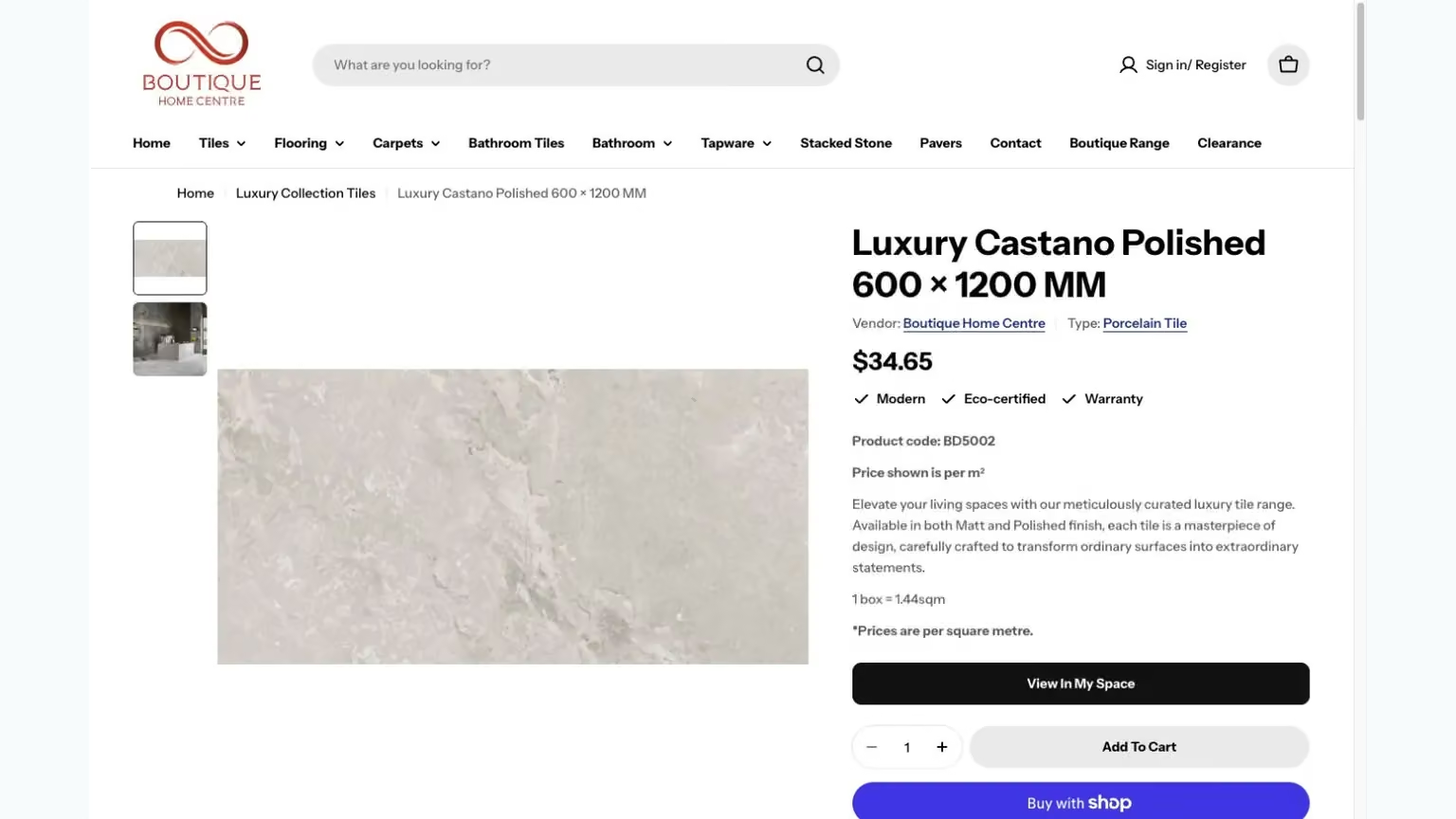
The Boutique Home Centre case study documents product pages, collections, comparison tools, freight enquiries and a room visualiser. The product content includes specifications and coverage details that help a shopper interpret the item being sold.
For another retailer, begin with a sample of real purchase decisions. Ask which details customers need before selecting a product and which questions repeatedly reach the team. A store can transfer names and images successfully while still leaving those decisions unsupported. The migration brief should therefore include the information needed to compare and order, not only the number of records being moved.
Define the details that must stay consistent
Products in the same category should use consistent labels and units where appropriate. Dimensions, material, finish, model codes and relevant coverage information become easier to compare when the shopper is not translating between different descriptions. Preserve distinctions that genuinely affect the choice.
Avoid filling gaps with confident-looking invented specifications. Missing information should be verified from an appropriate product source or clearly left for confirmation. A complete-looking page with an incorrect dimension can be worse than an honest gap. Content review needs someone who understands the products, not only a check that every field contains text.
Organise collections around useful shopping tasks
Boutique Home Centre’s captured collection page includes filtering, sorting and comparison options. These features are useful when they correspond to the attributes shoppers actually use to narrow a range. A long catalogue needs more than a single menu listing every item.
Plan the collection structure before treating filters as decoration. Confirm that the underlying product information is consistent enough for a filter to work. If a shopper selects a finish or size, the resulting products should match that description. A navigation feature cannot compensate for contradictory or incomplete product data, and a migration is a useful point to address those gaps deliberately.
Keep order context attached to enquiries
The BHC freight form retains the selected product and asks for quantity, destination and delivery information. This is valuable for heavy or bulky products where a purchase may require a separate freight conversation. The customer does not have to begin again with an unexplained general message.
A retailer planning similar work should identify which purchases require additional context. Do not assume every category follows the same checkout journey. Some shoppers can order directly; others need to clarify supply, delivery or suitability. Explain which action begins an enquiry and which confirms an order so the customer knows what commitment they are making.
Distinguish product browsing from appointment browsing
The Impress Blinds website offers a useful comparison: product information and room imagery lead to sample or appointment choices. It is a different journey from buying a boxed product directly, but both require clear information about the item and the next step.
This comparison can help an owner avoid copying a checkout pattern that does not fit the business. The right store journey depends on what the customer can decide independently and what requires advice, measurement or a quote. Migration planning should preserve that commercial reality rather than force every enquiry into the same button or form.
Review the migrated store with actual tasks
Test finding a product, comparing alternatives, understanding quantity and asking about delivery. Include a shopper who does not already know the category names. Check the information and the route through the page, not just whether the page loads.
Choose a representative sample for content review, including a simple product, a product with several variants and an item that needs delivery discussion. Check names, units, specifications, imagery and the action available to the shopper. If the sample reveals a repeated content problem, address the underlying category rule before duplicating it across the catalogue. A migration gives the business a useful opportunity to define those rules, but the existence of a new platform does not automatically make the product information consistent.
A website development brief and ecommerce search plan should share those product facts. BHC’s work shows the practical connection between catalogue content and shopping tools. The result to aim for is a store where customers can make a better-informed choice and the team can answer the remaining questions with the relevant product already identified.