
Five divisions. One standard.
SoudCoh started as a Melbourne marketing agency. We built the other four divisions because clients asked us to keep going — into their software, their public-sector procurement, their research and their civic creative. Same studio, same checks before anything goes live, same Australian posture.
$120M+ in media under management · 250+ active engagements across Australia, the United Kingdom, Saudi Arabia, the United Arab Emirates and New Zealand
Six ways five suppliers
cost you more.
We did not build four more divisions to look bigger. We built them because these six things kept happening to clients we could only help with one part of the problem.
Five suppliers, five versions of the truth
The media agency, the web developer, the research house, the design studio and the platform vendor each report on their own slice. Nobody is accountable for the number that actually matters to the board.
The handover is where the work dies
Research findings that never reach the media plan. A brand system the developer cannot implement. Every gap between suppliers is a place where good work quietly stops being used.
Governance stops at the contract edge
One supplier has a security posture, another has none, and the weakest one holds your customer data. A group standard is only worth something if it applies to everybody touching the work.
A different answer depending on who you ask
Ask five suppliers whether a problem is a media problem, a website problem or a product problem, and you will get five answers — each of them, remarkably, matching what that supplier sells.
Procurement done five times over
Five tenders, five insurance certificates, five sets of terms, five onboarding cycles. For a council or an agency that is not admin overhead, it is months.
Nobody owns the whole calendar
A launch, an exhibition, a budget exhibition period and a fieldwork window all colliding in the same fortnight, because the five people planning them were never in the same conversation.
One studio. Five kinds of work.
Each division is deep enough to be hired on its own, and close enough to the others that the handovers happen inside one team rather than between two suppliers.
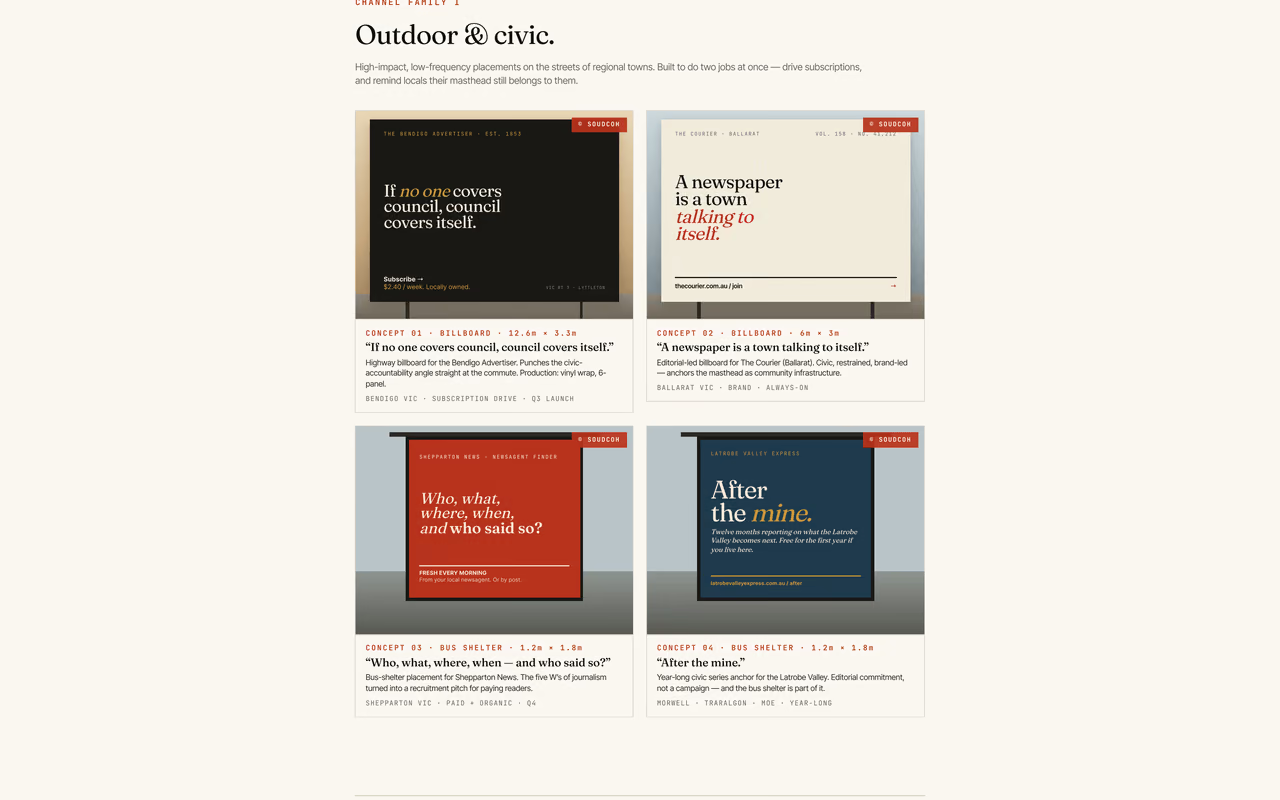
- MarketingMedia, measured.Performance media, brand and growth for organisations that count what they spend. Always-on for the audiences you need permanently, campaign-led for the launches that matter. Our work includes service-focused cleaning campaigns in Melbourne and a new carpet-cleaning account in Perth, supported by enquiry tracking.$120M+Media under management250+Active client engagementsNational cultural institution · Federal innovation grant cohort · Regional Victorian shire · Cleanetic · Pink Flamingo
- TechnologySoftware, owned.Custom enterprise platforms designed, built and run on Australian soil — yours from day one. Source-code escrow from sprint one. Data exit on 30 days' notice. Every form and workflow shaped to how you already operate, rather than to how a product thinks you should.AWS SydneySole-tenant + Melbourne DR30 daysData-exit termMajor Victorian council · Regional Victorian shire council · Metropolitan Victorian council · Msaha · FixCare
- Public SectorBuilt for how government actually buys.Civic infrastructure for councils, Commonwealth agencies and cultural institutions. Local Government Act 2020, the Australian Privacy Principles, IRAP, Essential Eight and PROV. We answer the Response Schedule in its own order and we hit the criteria.5 of 5IAP2 levels supportedWCAG 2.2AA accessibility baselineMetropolitan Victorian council · Major Victorian council · Regional Victorian shire · Capital city public art commission · National cultural institution
- ResearchResearch that holds up.Population-scale, trauma-informed and statistically defensible, built for audiences where a badly-worded question does real harm. Validated instruments, lived-experience co-design, a sovereign survey platform, and an 1800 line that somebody actually answers.PCL-5K10 · C-SSRS · validatedAWS SydneySole-tenant survey platformFederal statutory agency · Federal innovation grant cohort
- CreativeBuilt to still be right in ten years.Place branding, public art and civic publishing, designed for real weather and a whole community. Cultural protocols from the first sketch. A paint specification written with the artwork. Source files and a ten-year conservation plan at handover.10 yearsConservation handover36Concepts on one commissionCapital city public art commission · Regional Victorian shire · Federal innovation grant cohort
SoudCoh Marketing
$120M+
Media under management
Across paid search, social, video, programmatic and out-of-home
Five countries
250+
Active client engagements
Australia, the UK, Saudi Arabia, the UAE and New Zealand
SoudCoh Compound
1,093
Ad-account changes pushed through approval
Each one queued, approved, pushed and written to the client's change history
Media under management and engagement count are owner-attested figures carried from this site's published record; the approval count comes from SoudCoh platform records for the Google Ads accounts we manage. Client figures elsewhere on the site are written up in each case study.
Ten things are true in every division. Here they are.
A client who hires Marketing in one quarter and Technology in the next gets the same posture, the same governance and the same security baseline. That is the whole point of the group, so it is written down rather than implied.
Australian by default
AWS Sydney as primary with Melbourne disaster recovery, sole-tenant where the work warrants it, and no offshore sub-processing of client data. Support is Australian-staffed, in Australian hours.
Source-code escrow and a written exit
Source held with an Australian escrow agent, customer-controlled encryption keys, and full data export in readable formats on 30 days' notice. A clause in the contract, not a favour at the end of one.
A written history of every change
On ad accounts, changes wait in an approval queue and every one is written to your change history. In the other divisions the record goes with the handover: source code and runbook, dataset and codebook, editable artwork files.
A fixed reporting rhythm, good news or bad
Reports arrive on the same cadence in a bad month as in a good one, written in the language you use about your own organisation. A quiet month should never produce a quiet inbox.
Accessibility audited, not declared
WCAG 2.2 AA as the baseline on public-facing work, built in from the first component and then checked independently. A supplier self-declaration against an accessibility standard is not an audit.
Cultural protocols from concept stage
Traditional Owner, RAP and Cultural Heritage Plan protocols open at the first sketch on any project that draws on Country, with an Indigenous reference pathway for content review rather than an internal opinion.
Anonymity where a client asks for it
Our public-sector and cultural clients appear by sector and jurisdiction only. Screenshots whose filenames named a client were deleted rather than cropped, because a filename is published too.
Nothing goes live before you have read it
New campaigns are built paused, and a real test enquiry goes through every tracking path before anything is published. Platforms get a user acceptance window. Artwork gets a proof or a sample. You approve the thing itself, not a description of it.
Published rules, not a values page
These ten are written here in full, and how we run ad accounts is published as SoudCoh Compound, including the list of things we refuse to do. You can read what we hold ourselves to before you engage us, and hold us to it afterwards.
One conversation, not five
A client who hires Marketing in one quarter and Technology in the next gets the same governance, the same checks before anything goes live and the same hosting posture. That is the entire point of running as a group.
One lead, one calendar, one report.
- First call
One conversation, not a discovery phase
Thirty to forty-five minutes on what you are trying to change and what it is worth. If the honest answer is that one division can do it alone, we say so — a bigger scope is not a better one.
- Week 1
One brief, one lead
A single named lead owns the whole engagement regardless of how many divisions are in it. You are never the person coordinating between two of our teams.
- Week 2
One calendar
Research fieldwork, media flighting, build sprints and production runs are planned against each other from the start, so nothing lands in the same fortnight by accident.
- Delivery
Divisions hand across, not over
Audience research feeds the media strategy while the study is still running. Brand systems reach the developers as components, not as a PDF. The handovers happen inside one team.
- Reporting
One report, all of it
A single cadence covering every division in the engagement, with what moved, what did not, and what needs a decision from you. Not four reports arriving on four different Fridays.
- From there
Scale down as easily as up
A division can come out of an engagement without unpicking the rest of it, and the assets that division produced stay yours. Growing the scope is a decision, never a default.
If one division can solve it on its own, that is what we will tell you. A bigger scope is not automatically a better one, and we would rather be asked back than be everywhere at once.
How the Marketing division runs every ad account.
SoudCoh Compound is a footing, six rungs and one engine, from the search you pay for to the job you win. It belongs to Marketing, and these two are where the rest of the group meets it.
Footing
Real-Enquiry Signal
The number it moves: True cost per lead
When Technology builds the site behind the ads, every form and call path gets a real test enquiry before launch.
Engine
The Carry
The number it moves: Waste blocked before the first click
A lesson paid for on one client's account becomes a written rule on the next, while their figures stay theirs.
One number from each.
Six results from across the group. Public-sector and cultural clients appear by sector and jurisdiction only; every figure is dated in the division page or the case study behind it.
- Marketing · MelbourneSearchCleaning campaignsService-focused Google Ads, local targeting and a short mobile enquiry form.Read more
- Marketing · PerthLaunchCarpet cleaning in PerthNew Google Ads account, landing page and enquiry tracking.Read more
- Technology · NSW8weeks greenfield to liveReplaced Excel, WhatsApp and paper job sheets across a maintenance businessRead more
- Public Sector · Victoria100%compliance · 194 requirementsMajor Victorian council finance platform · 14 weeks build to user acceptanceRead more
- Research · Commonwealth±1.4%margin of error by designA national prevalence study on an n=5,000 stratified frameRead more
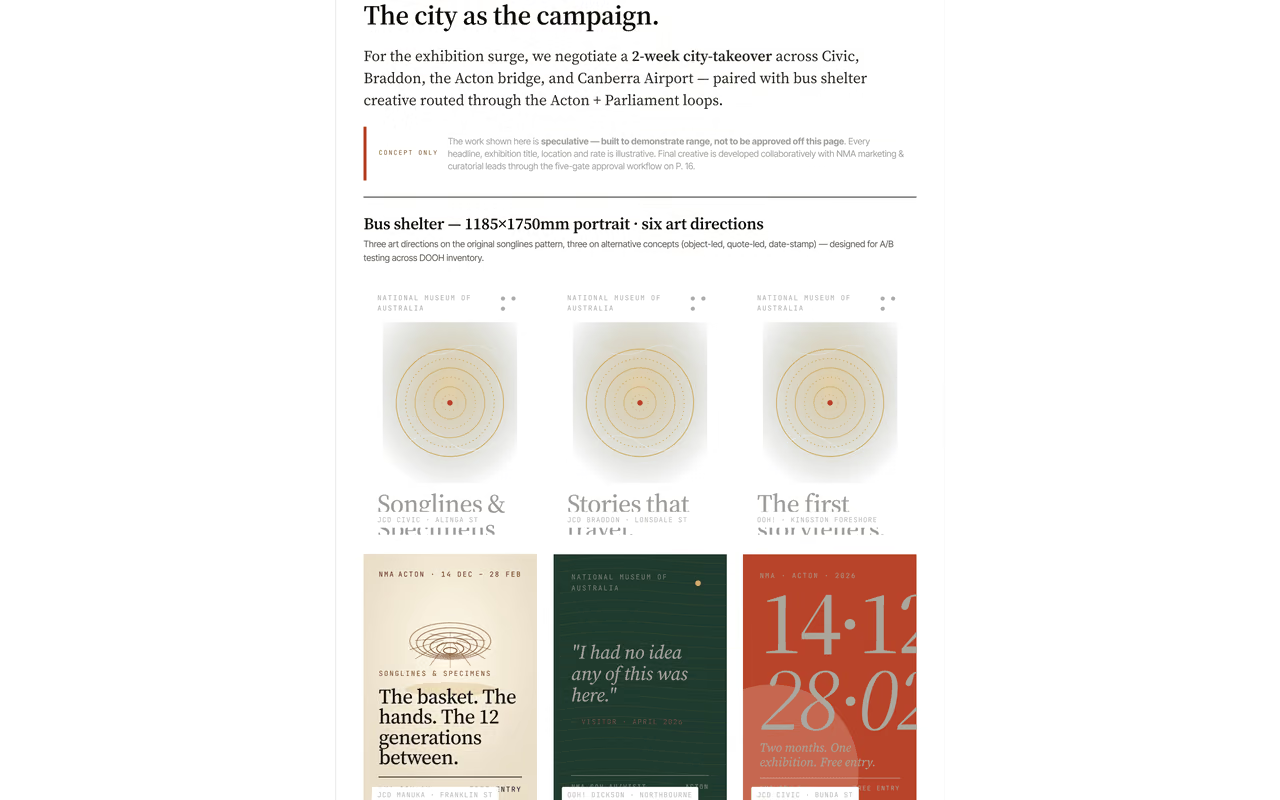
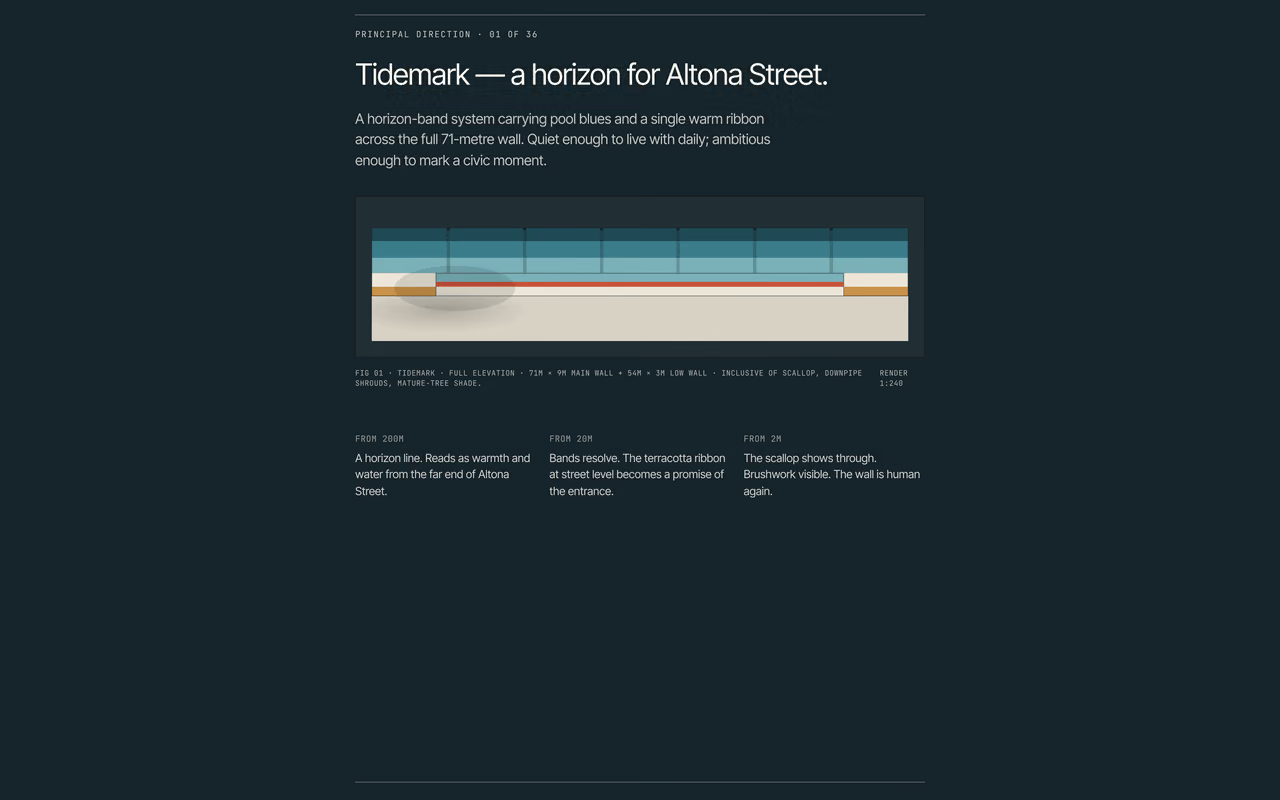
- Creative · public art36developed mural conceptsEight thematic families for a 71m × 9m wall · 10-year conservation handoverRead more
Before you pick a door
Here is what everybody asks first.
The group, answered.
Which division you need, whether you can use more than one, what it costs, who owns the output, and why our government clients are not named.
The first conversation is free and there is no deck.
Start a conversationStart with the problem rather than the discipline. If you are buying attention, it is Marketing. If a system is holding you back, it is Technology. If there is a published specification and an evaluation panel, it is Public Sector. If you need a defensible number, it is Research. If something has to be printed, painted or installed, it is Creative. Most engagements begin in one and pull in a second — and the first conversation is the same conversation whichever door you come through.
Yes, and it is common. A single named lead owns the whole engagement regardless of how many divisions are in it, there is one calendar and one reporting cadence, and the divisions hand across to each other rather than over a wall. You are never the person coordinating between two of our teams — that is the reason the group exists in this shape.
One company, one studio, five doors. SoudCoh started as a Melbourne marketing agency and built the other four divisions because clients asked us to keep going — into their software, their public-sector procurement, their research and their civic creative. Same people, same checks before anything goes live, same Australian sovereignty posture across all five.
It depends on the division and the scope, and every division prices the same way: a real number for your situation before you commit to anything. On media, we recommend a minimum of A$5,000 a month for most businesses, while the largest companies we work with currently invest up to A$30,000 a day in advertising. Platform and research programmes are scoped and fixed, with the ten-year whole-of-life figure shown next to the build cost. Creative commissions are fixed-fee against a defined scope.
No long-term lock-in anywhere in the group. What we ask for is enough runway to be fair to the work — a campaign judged on its first ten days is being judged during the part where we are still cutting waste out of it. On platforms the exit is written in: 30 days' notice, full data export in readable formats, and source-code escrow with an Australian agent.
On platforms, you do: source in escrow, customer-controlled encryption keys, and a runbook written for somebody who has never met us. On research, the dataset, codebook and analysis scripts are yours. On creative, the editable source files and fonts are handed over. On media, we own and run the ad accounts because the build is proprietary methodology, with full-visibility reporting at all times and handover options available to discuss on long-term agreements.
You hear it from us in the reporting rhythm, in plain English, with what we are changing. Campaigns get restructured, repointed or stopped. Delivery phases get re-scoped or re-sequenced. If the honest answer is that a channel or a module is not right for you at this point, we would rather say so than keep invoicing for it.
Because that is their preference and ours. Those clients appear by sector and jurisdiction only — a major Victorian council, a national cultural institution, a capital city public art commission. We went as far as deleting nineteen platform screenshots whose filenames named a client, rather than cropping them, because a filename ships publicly too. Referees are supplied through the proper channel at response stage.
Melbourne is home. We run engagements across Australia and in the United Kingdom, the United Arab Emirates, Saudi Arabia and New Zealand. Hosting and data handling stay Australian by default — AWS Sydney primary with Melbourne disaster recovery — and support is Australian-staffed regardless of which market the work is running in.
Yes, across two divisions. Marketing runs Shopping campaigns, product feeds, e-commerce SEO and paid social for retail. Technology builds the storefronts, checkout flows, subscription and member management, and the back-office consoles behind them. Where the constraint is the store rather than the media, that is one conversation here instead of two suppliers arguing about whose problem it is.
The ten commitments set out on this page, written down rather than implied: how work is hosted, checked, recorded, reported and handed over. They apply to all five divisions, and they are the reason a client who hires two of them gets the same governance from both. On ad accounts they sit alongside SoudCoh Compound, the ladder our Marketing division runs every account on, from the search you pay for to the job you win.
Within one business day, with a person rather than an automated reply. Public-sector enquiries with a published specification attached get read the same day, and we will tell you honestly whether we are a credible respondent before either of us spends a week on it.
Not sure which door? Start with the problem.
Pick the line that sounds most like this month. If two of them do, that is normal — and it is one conversation either way.
- MarketingStart here if you are buying media, chasing leads, or cannot tell which channel produced last month's work.
- TechnologyStart here if a renewal is coming up, a spreadsheet is running something important, or nine systems are quietly charging you an integration tax.
- Public SectorStart here if you have a published specification, a probity officer, and a weighted evaluation matrix to satisfy.
- ResearchStart here if you need a number that will survive scrutiny, from people it costs something to ask.
- CreativeStart here if something has to be printed, painted, fabricated or installed — and then live outdoors for a decade.
One conversation
Tell us what you are trying to change. We will tell you which division should take it, whether that is one of ours or somebody else's — and there is no cost to finding out.
We answer every enquiry within one business day, with a person.