Proof
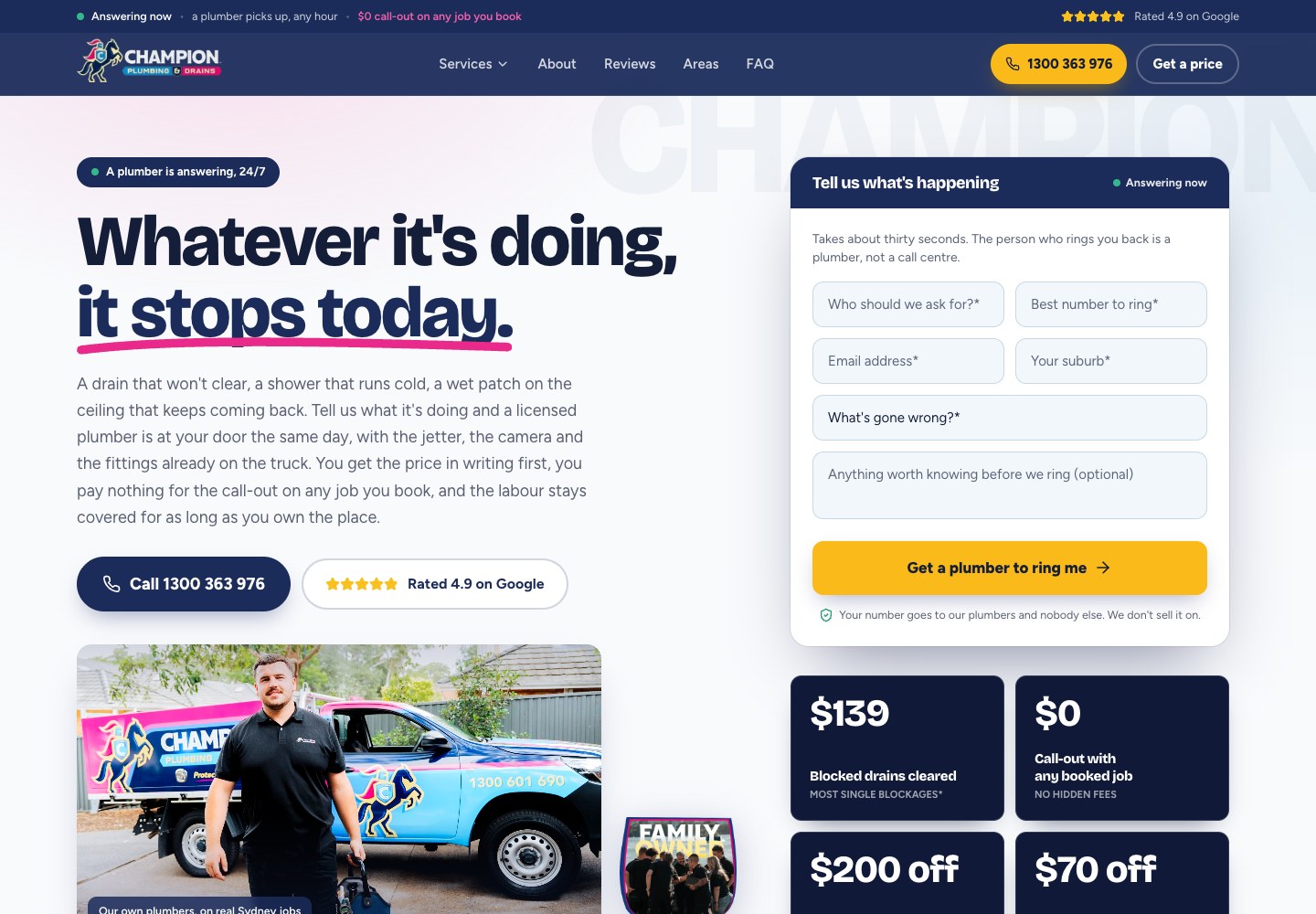
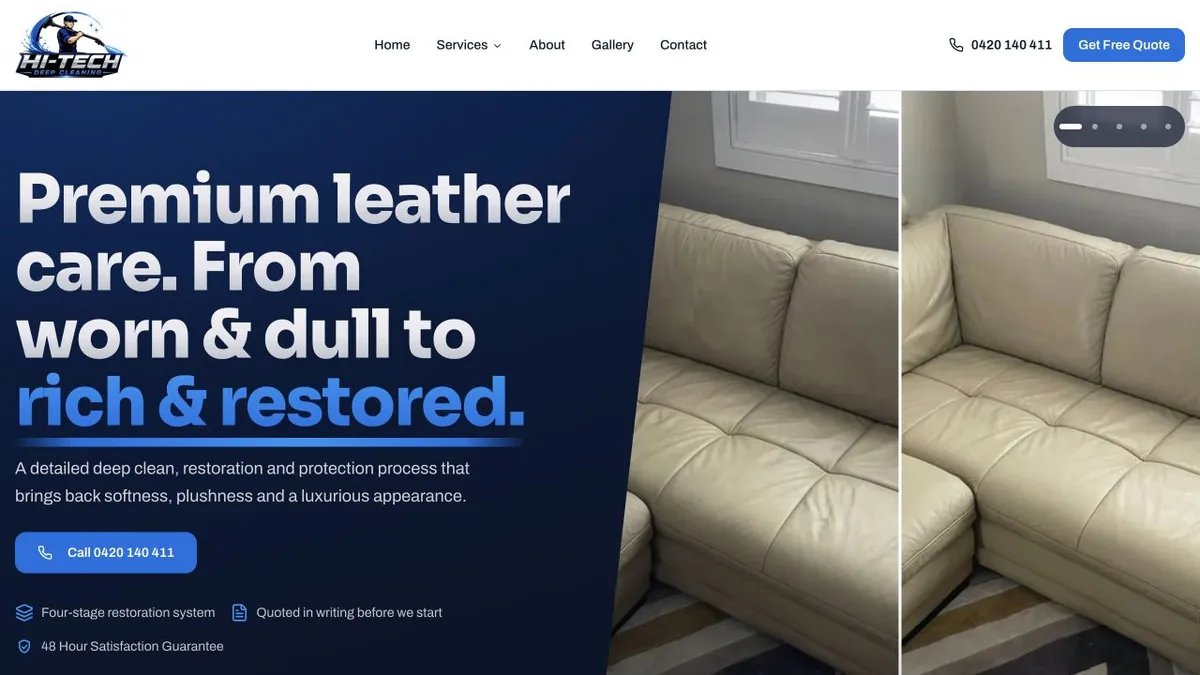
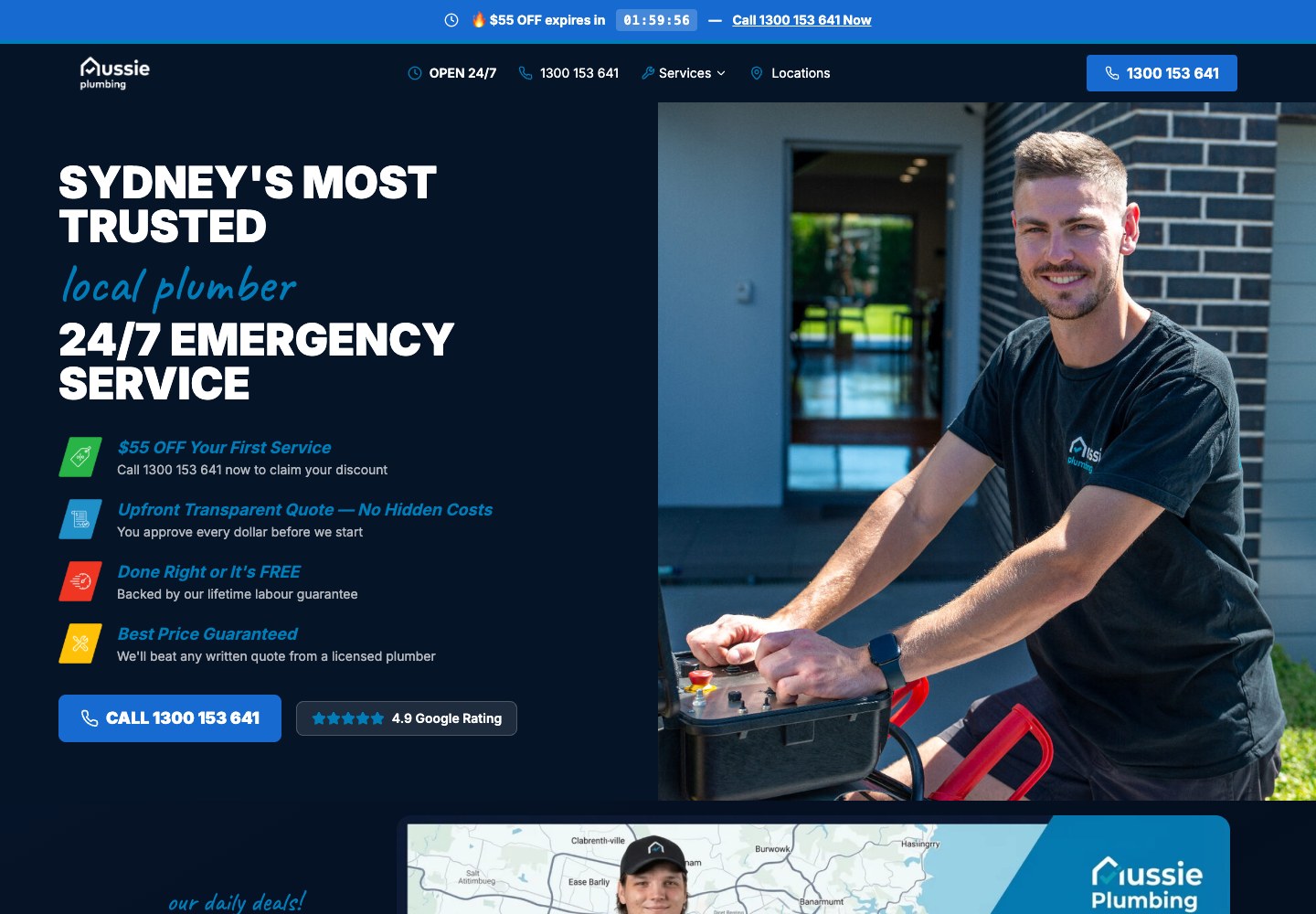
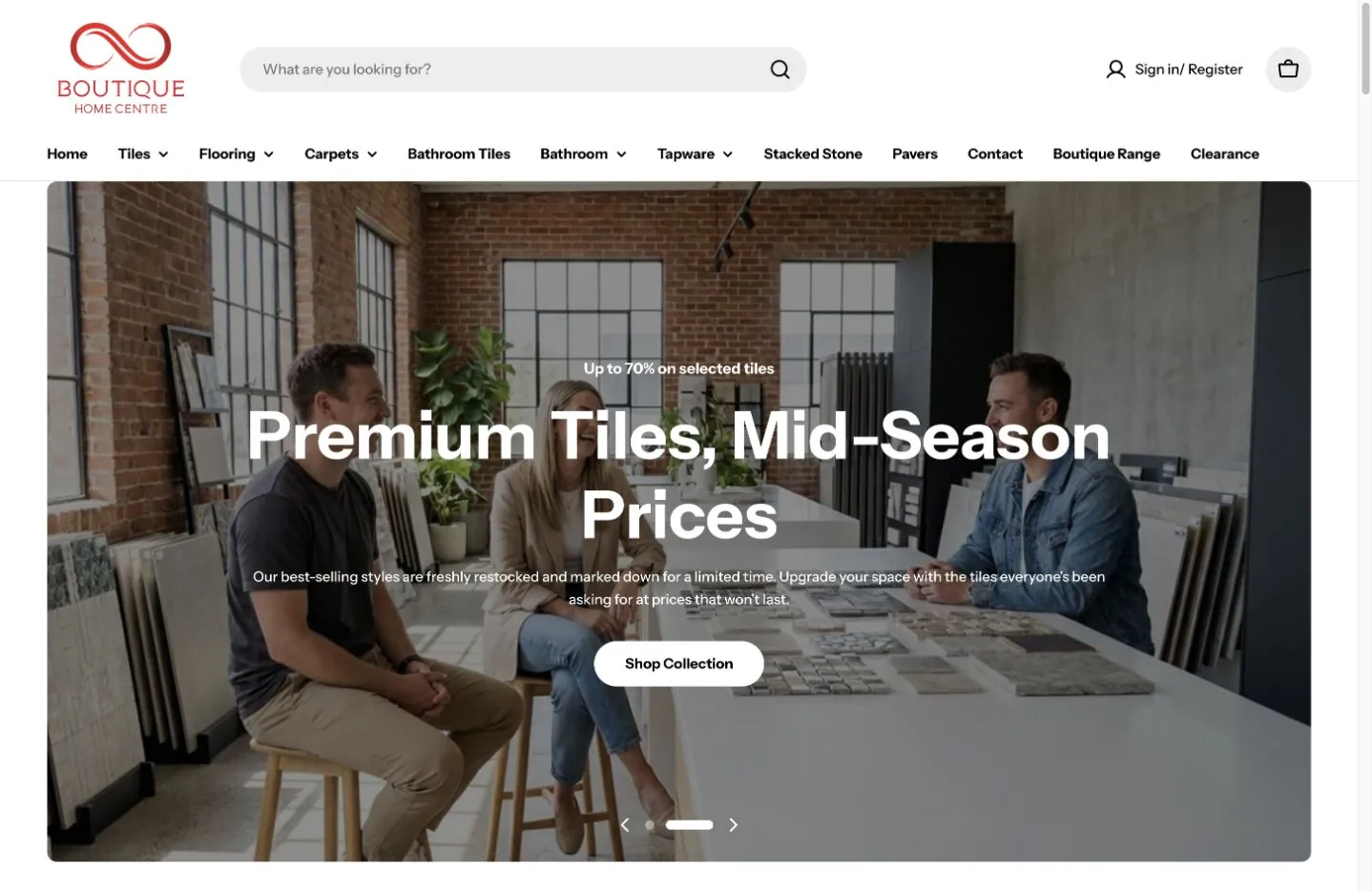
    Impress Blinds — cost per enquiry down 62.63%, $23.6 to $8.82SLS Solicitors — cost per enquiry down 58.48%, $84.64 to $35.14FixCare Property — cost per enquiry down 56.36%, $35.24 to $15.38Rubbish Removal WA — cost per enquiry down 53.18%, $71.02 to $33.25Floral Cakery — cost per enquiry down 49.82%, $13.83 to $6.94ILLUMINATE Laser Emporium — cost per enquiry down 48.54%, $138.65 to $71.35Aussie Plumbing — cost per enquiry down 41.96%, $117.75 to $68.34Sydney Fence Painting — cost per enquiry down 33.68%, $136.62 to $90.61Alliance Plumbing — cost per enquiry down 29.6%, $81.26 to $57.21Gridless Build Solutions — cost per enquiry down 29.16%, $78.16 to $55.37FacilityWorx — cost per enquiry down 23.62%, $157.13 to $120.01Cornerstone Roofing — cost per enquiry down 20.47%, $41.71 to $33.17A council finance platform — 194 of 194 requirements metA council finance build — 14 weeks to UAT, −34% 10-yr costA cultural institution — $634K of $750K kept workingA council platform — $470,106 built vs $503,262 SaaSA federal agency — n=5,000 prevalence survey at ±1.4%A civic mural — 36 concepts for a 71m × 9m wallA regional shire — 32-page visitor guide, 3 weeks earlyA shire council — one platform retiring 8 of 9 vendorsA pressure washing business — 138 jobs at A$20.43 eachA pressure washing business — 21.20% conversion rateA carpet cleaner — 53 jobs in 15 days at A$24.92 eachA roofing company — 68 quote requests in 35 daysA CCTV installer — 39 qualified leads in 15 daysA fence painter — 36 jobs in 24 days, quotes by day 3A maintenance business — live in 8 weeks, 3 stacks gone41 numbered clauses, published in full5.0 across every Google review$120M+ in media under management250+ active engagements across five countries

    Snapchat ads A fifth channel has to earn its place.

    Full-screen vertical advertising, run the way we run every channel: measured before it is bought, judged against your own records, and stopped in writing if a fair test does not produce counted work.

    No published Snapchat engagement, and we say so on this page · Measurement built before any spend · A written recommendation to stop where it does not earn

    Inside a typical test

    Seven reasons a test
    on this platform fails.

    Only two of them are about the platform. The rest are decisions made before launch, and the first one on this list accounts for more written-off tests than everything below it combined.

    • It was treated as one more placement for the same file

      The single most common reason a test reads as a failure. Snapchat is a full-screen, sound-on, camera-shaped environment, and an asset made for a scrolling feed arrives in it looking borrowed. The channel gets blamed for a decision made in the edit.

      • Landscape or square creative pushed into a full-screen vertical slot
      • An opening built for a muted feed, in a place where sound is normal
      • Text and logos sitting where the interface covers them
    • The audience was assumed rather than checked

      Two opposite mistakes, both expensive. One assumes the platform is only teenagers and dismisses it. The other assumes it is simply another Instagram and expects the same buyer to behave the same way. Neither is a read of your own category.

      • A category written off without a single test
      • Buying patterns assumed to transfer from another platform
      • No check on whether your customers are actually present at all
    • Measurement never left the browser

      Where the only signal is the one collected in the page, a meaningful share of what happened is invisible before anybody argues about the results. The account then gets judged on a count that was structurally incomplete from the first day.

      • No server-side reporting alongside the browser signal
      • Enquiries arriving with no source recorded at all
      • A report that is confidently wrong rather than visibly incomplete
    • Two systems counted the same result over different windows

      Every advertising platform decides for itself how long after an ad it will still claim credit, and those periods differ between platforms. Comparing what one platform reports against what your own records say, without reconciling the window, produces an argument nobody can win.

      • The platform's claimed results read against a different period
      • Figures still moving days after the report was taken as final
      • Two channels compared on numbers that were never comparable
    • The offer needed a long, considered decision

      Full-screen social advertising interrupts rather than answers. Where the purchase is expensive, slow and researched, the interruption can still start a relationship — but expecting it to close one is a category error, and it is usually why a test looks like a waste.

      • A months-long purchase judged on a fortnight of results
      • Nothing in place to capture the people who were interested but not ready
      • Search demand ignored while an interruption channel was blamed
    • One creative, run until it stopped working

      Novelty is the currency of a full-screen feed. A single asset, however good, decays — and where nothing was in production behind it, the account looks like it failed when what actually happened is that it ran out.

      • Nothing cut and waiting when the first piece faded
      • Decay read as a platform problem rather than a supply problem
      • The next production round briefed only after performance dropped
    • Nobody checked whether the category was allowed

      Advertising policy differs by platform and by market, and some categories that run comfortably elsewhere are restricted or prohibited here. Finding that out after the creative is produced is an avoidable and entirely self-inflicted cost.

      • A restricted category discovered after production, not before
      • Age and market restrictions ignored in the planning
      • Claims permitted on one platform and refused on another
    The one idea

    It is a format, not a placement.

    Every decision on this page follows from that one. A placement takes what you already have; a format needs its own creative, its own read and its own honest answer about whether to keep going.

    • What is being bought

      Another set of impressions beside the ones you already buy.

      A different format, with its own creative and its own read.

    • What the creative is

      The existing asset, re-cropped by whatever tool was to hand.

      Made for full screen and for sound, and cut for this placement.

    • How the decision to continue is made

      By comparing the platform's own claim against another platform's.

      By reading both against your own records, over the same period.

    • What counts as a fair test

      Whatever budget was left at the end of the quarter.

      Enough volume to read, agreed before anything is switched on.

    • What happens if it does not work

      It runs quietly at a low level for another year.

      It is stopped, and we say so in writing.

    • Who the honest answer serves

      The agency, which now bills for a fifth channel.

      You, because a channel that is not earning is a cost.

    Four things we will tell you before you spend anything.

    The first of these is uncomfortable to publish on a page selling a service, and it is the reason you can trust the other three.

    • We have not published a Snapchat engagement

      There is no Snapchat case study, no cost per result and no account screenshot for this channel anywhere on this site, and we would rather write that here than let a page imply otherwise. Our published, dated work is search and lead generation. If proof on this specific platform is what you need before committing, that is a fair requirement and you should hold us to it.

    • We will tell you when your category does not belong here

      A good share of the businesses that ask about this channel should not run on it, and that read is part of the first conversation rather than something discovered after a quarter of spend. The recommendation to put the money into search, into the enquiry handling or into creative production instead is one we make often.

    • We will not run it as a fifth channel for the sake of coverage

      Adding a platform because it is available multiplies the creative bill, the measurement surface and the reporting without necessarily adding customers. A channel earns its place by producing counted results against your own records, and where it does not, stopping is the correct recommendation and we will make it.

    • We will not promise a figure we have not produced

      No cost per lead, no return multiple, no benchmark borrowed from a category study. The numbers on this page belong to published engagements on other channels and are labelled as such. Anybody quoting you a confident Snapchat result before running one is quoting somebody else's account.

    Three real accounts

    Pink Flamingo · 41-day period

    A$20.43

    Cost per job booked

    138 jobs — a figure that only means anything once the count is complete

    Cleanetic Perth · 15-day period

    53

    Jobs booked

    A$24.92 each, on a brand-new account with no history to learn from

    Sydney Fence Painting · 24-day period

    36

    Jobs booked

    First quotes inside three days, with the job type attached to each

    These are search and lead-generation accounts, dated in each case study, and they are here because they show the discipline this page describes: outcomes counted rather than assumed, and checked back against the business they came from. They are not Snapchat results. SoudCoh has no published Snapchat engagement, and no Snapchat spend, cost per result or return figure appears anywhere on this site.

    Ten things happen on a Snapchat engagement. The first is deciding not to.

    A channel page that cannot describe the case against itself is a brochure. Here is the whole sequence, including the two steps where the correct answer is to stop.

    1. Decide whether to run it at all

      Before any account work, an honest read on whether your buyers are present, whether the purchase can survive an interruption, and whether there is creative capacity to keep a full-screen format supplied. A fair number of these conversations end here.

      • Whether the category has an audience on this platform
      • Whether the purchase is quick enough for an interruption to land
      • Whether anybody can keep producing vertical video after month one
    2. Check the policy position first

      Category restrictions, age restrictions and claim rules read for your market before anything is produced. Discovering a restriction after the shoot is an entirely avoidable cost and it happens constantly.

      • Restricted and prohibited categories checked for your market
      • The claims you want to make read against the platform's rules
      • Age and market limits factored into the plan, not discovered by it
    3. Fix the measurement before the spend

      Browser-side and server-side reporting both in place, outcomes defined as things that happen in your business rather than as page loads, and consent handled properly. A channel measured only in the browser starts the argument already losing it.

      • Both the page signal and a server-side path in place
      • Outcomes defined as booked work, not as a thank-you page view
      • Consent carried with the events rather than assumed
    4. Agree the window every platform will be read on

      Each platform sets its own period for claiming credit, and the periods differ. Agreeing one window and one source of truth before launch is what prevents a quarter of arguing about whose number is right.

      • One reporting period applied to every channel
      • Your own records named as the source of truth up front
      • The platform's claim kept beside it as an input, not as the answer
    5. Produce for full screen and for sound

      Vertical, shot for a screen that is entirely yours for a few seconds, with the opening carrying the whole burden. This is not a re-crop of an existing asset and treating it as one is the failure at the top of this page.

      • Filmed vertically rather than cropped into it
      • An opening written for a viewer who can hear it
      • Captions and subject kept clear of the interface
    6. Build a batch, not an asset

      Several distinct pieces before launch, so the first fade has an answer waiting. Full-screen formats decay quickly and a plan that produces one piece at a time produces one good month followed by a slow decline.

      • Several openings for the same idea, filmed together
      • The next round briefed before the current one fades
      • A small reserve held back for the week production slips
    7. Launch small, and read it properly

      A test sized so the result can actually be read, run long enough for delayed reporting to settle, and judged against your own records rather than against the platform's first-day claim. Early figures are treated as incomplete because they are.

      • A test sized for a readable answer, agreed beforehand
      • The first days read as incomplete rather than as a verdict
      • Booked work counted, not clicks
    8. Reconcile monthly against your own records

      What the platform claims, set beside what actually happened in the business, with the difference named rather than smoothed away. Reconciliation is what turns a dashboard into a number you can spend against.

      • Reported outcomes against real ones, for the same period
      • The gap explained rather than averaged out
      • Signed off by somebody on your side, not only ours
    9. Report one number, and show the working

      A single agreed figure for what the channel produced, with the platform's own claim underneath and a plain sentence explaining where the two differ. Anyone in the business should be able to read it without a glossary.

      • One headline figure everyone has agreed to
      • The disagreement between sources shown, not hidden
      • Written for the person who has to decide whether to continue
    10. Recommend stopping when stopping is right

      If the channel is not producing against your own records after a fair test, the recommendation is to stop and put the money where it is working. That recommendation is written down, because a verbal one tends not to survive the next planning meeting.

      • A written recommendation, not a quiet reallocation
      • The budget named and moved to where the counted results are
      • The account left in a state you could restart from later
    Read to recommendation

    A month before anyone should believe a number.

    1. Week one

      The honest read

      Whether your category, your purchase cycle and your creative capacity suit a full-screen interruption channel. Several of these conversations end with a recommendation not to run it, and that costs you nothing.

    2. Week one

      Policy and measurement

      Category and claim rules checked for your market, then the measurement built — browser and server-side both — with outcomes defined as things that happen in your business.

    3. Weeks two to three

      Produce a batch

      Vertical, sound-on creative filmed for this format rather than cropped into it, with several distinct pieces so the first fade has an answer already cut.

    4. Week four

      Launch small

      A test sized so the answer can be read, with one reporting window agreed across every channel before anything is switched on.

    5. First month

      Let it settle, then reconcile

      Delayed reporting means the first fortnight understates the result. At the end of the month the platform's claim is checked against your own records and the gap is written down.

    6. After a fair test

      Keep it, or stop it in writing

      Either it produced counted work against your own records and earns a place, or it did not and we recommend stopping. Both outcomes are reported the same way.

    For most Australian service businesses the recommendation after week one is to put the money into search, into creative production or into the enquiry handling instead. That is not modesty about the platform — it is where the counted results on our published work have come from.

    SoudCoh Compound™

    On a channel with no published history, the process is the assurance.

    Compound is how our team works on any engagement — six stages every change passes through. A test channel leans hardest on these two, and we would rather point at them than imply a track record we do not publish.

    • Countersign

      Nothing reaches a live account with one name on it.

      Every claim in a piece of creative and every measurement change is checked by a second person before it runs. On a channel where we have no published history, that internal control is doing more work than usual and we would rather say so than imply a track record.

    • Ledger

      Every executed change becomes a record you can open.

      What ran, when, what changed and what it produced against your own records — kept in a dated record rather than in a monthly slide. On a test channel it is also the evidence base for the decision to keep going or to stop.

    Four accounts. None of them Snapchat.

    Every figure here counts a real job or a real call that was checked back against the business it came from. They are search and lead-generation accounts — we have no Snapchat engagement to publish — and each tile links to the full breakdown including the spend behind it.

    Before you ask us anything

    Here is what everybody asks first.

    FAQ

    Snapchat advertising, answered.

    Who is actually on it, whether to add it at all, whether your existing creative travels, how it gets measured, and whether we will tell you to stop.

    The first call is free and there is no deck.

    Book a free strategy call

    That belief is out of date, and it is also not the question worth asking. The platform skews younger than the other large social networks, but it has aged with its original users and its audience in Australia is wider than the stereotype suggests. What actually decides whether it is worth your money is not the average age of the platform — it is whether the specific people who buy your service are there, and whether your purchase can survive being interrupted. Those are answerable questions about your category and we answer them before recommending a test.

    Usually not yet, and this is the most common honest answer we give about this channel. Adding a platform adds a creative bill, a measurement surface and a reporting line, and it takes attention away from the channels already producing counted work. The case for adding it strengthens when the existing channels are saturated at your target cost, when your buyers genuinely are present here, and when you have the creative capacity to keep a full-screen format supplied. If any of those three is missing, the money is better spent deepening what already works.

    As a starting point, not as a plan. This is a full-screen, sound-on, vertical environment, and an asset cropped out of a feed placement arrives looking exactly like an asset cropped out of a feed placement. The parts that transfer are the idea, the claim and the offer; the parts that do not are the framing, the opening and the sound design. Re-cropping is the single most common reason a test on this platform reads as a failure — the channel gets blamed for a decision made in the edit.

    The same way we insist everything is measured: a browser-side signal and a server-side path together, outcomes defined as things that happen in your business rather than as page views, and one reporting window agreed across every channel before anything runs. That last point matters more here than people expect, because every platform sets its own period for claiming credit and those periods differ. Without one agreed window and one agreed source of truth, you get a quarter of arguing about whose number is right.

    Because they are counting different things over different periods, and both can be correct at once. A platform reports outcomes it believes it caused, within a window it sets, and revises that figure for days as delayed reporting arrives. Your own records only know about people who identified themselves — they made contact, booked, or paid. The work is not to make the two agree, because they will not. It is to decide which one the business runs on, name the size of the gap and explain the reason for it in writing.

    Anything expensive, slow and heavily researched, and anything with no visual dimension at all. A full-screen social ad interrupts; it does not answer a question somebody was already asking. Where the purchase takes months and involves several people, the interruption can start a relationship but will not close one, and judging it on a fortnight of enquiries will produce a wrong answer. For those businesses the first money belongs in demand that already exists — search — and in the follow-up that catches the people who were interested but not ready.

    They are genuinely native to this platform and they are also the part most often bought for the wrong reason. A branded camera experience is a brand instrument: it earns its cost when there is an occasion, an audience already inclined toward you, and a reason for somebody to want to use it. It is not a lead-generation mechanism and we will not sell it as one. For a service business testing this channel for the first time, straightforward vertical video is the sensible starting point.

    Yes, and the list is not identical to the other platforms', which is exactly why it gets missed. Advertising policy differs by platform and by market, some categories are restricted or prohibited outright, and claim rules vary too — wording that clears one platform's review can be refused by another. We read the policy position for your category and your market before anything is produced, because discovering a restriction after a shoot is an entirely avoidable cost that businesses pay all the time.

    Enough that the result can be read, which is a question about your own numbers rather than a figure we can put on a page. It depends on what a customer is worth to you, how often they buy, and how large a difference you would need to see before you would act on it — and we work that out with you before anything is switched on rather than after. What we will not do is quote a confident minimum, because a number invented for a web page is exactly the sort of thing this site does not publish.

    Expect the first fortnight to understate the result and to be read that way — delayed reporting means a period that ends before the delay expires is always incomplete. A month is the earliest point at which the first reconciliation against your own records is meaningful, and a fair test usually needs longer than that plus enough creative variety that you are testing the channel rather than one video. Anybody quoting a confident cost per result in week one is quoting a number that is still moving.

    Yes, in writing, and this is the part of the arrangement worth checking with any agency. If after a fair test the channel is not producing counted work against your own records, the recommendation is to stop and move the money to where it is. A channel that keeps running quietly at a low level because nobody wanted to have the conversation is a cost with no owner, and it is one of the most common things we find when we take over an account.

    Not one we publish, and we would rather write that here than let a page imply otherwise. There is no Snapchat case study, no cost per result and no account screenshot for this channel anywhere on this site. What we can show is the same discipline applied in depth on other channels, with the figures dated: outcomes counted rather than assumed, reconciled monthly against the client's own records, and reported as one number with its working shown. If proof on this specific platform is what you need before you commit, that is a fair requirement and you should hold us to it.

    Usually one of these deserves the money first.

    Most engagements that start here end up touching two or three of the following. If you are not sure which order to do them in, that is exactly what the first call is for.

    Further reading

    Before adding any social channel at all, whether the first dollar belongs in search or in social. And for how long to give a new channel before judging it, the honest answer on how long a test actually needs.

    Ask us whether to bother

    Tell us your category, what a customer is worth and how long they take to decide, and we will tell you whether this channel is worth a test or whether the money belongs somewhere else. Yours to keep either way.

    No pitch deck. No upsell. A real conversation and a number you can check.