Lead quality More leads is the wrong target.
Google and Meta get very good at finding whatever you told them to find. Tell them a form submission is the goal and they will bring you form submissions. We change what they are told — by sending your closed jobs, and their values, back to the platforms that bought the click.
21.20% click-to-job conversion rate, measured on booked jobs rather than form loads · Pink Flamingo, an end-of-lease cleaning business in Melbourne · Full breakdown in the case study
Seven ways a good
budget buys bad leads.
None of these are advertising problems. Every one of them is a measurement problem wearing an advertising problem's clothes, which is why more budget never fixes any of them.
A hundred enquiries and three customers
The advertising is producing volume. The sales team is working through wrong numbers, price shoppers and people who filled in a form on the way to somewhere else. Nobody is short of leads; everybody is short of jobs.
The ones who never pick up
Called back inside five minutes and still no answer. They submitted a form with no real intent behind it, and your team spends its morning chasing people who were never going to buy.
A beautiful cost per lead and an unknown cost per customer
A$15 a lead reads well in a report. If two in a hundred become customers, the real number is A$750 and nobody has written it down. The metric that pays wages is revenue, not enquiries.
The platforms are being trained to find more of the worst ones
Google and Meta optimise toward whatever you told them counts. Tell them a form submission is the goal and they will get very good at finding people who submit forms and do not buy.
A newsletter signup and a A$4,000 job in the same column
Somebody counted every conversion the same and never put a value on any of them. Smart bidding then chases whichever is cheapest to produce, which is never the job you wanted.
The CRM knows who bought and never tells anyone
Your CRM already holds the outcome of every enquiry — won, lost, junk, and for how much. Nobody sends any of it back to the platforms that bought the click, so the most valuable data in the business never leaves the building.
Nobody is reading the search terms
The actual words people typed sit on the single most useful screen in a paid account. In most accounts we take over, nobody has opened it in months, and the waste has been compounding quietly the whole time.
The algorithm only knows what you tell it.
Right now you are telling Google and Meta that a form submission is a win. They believe you, and they go and find more people who submit forms. Tell them instead that this person became a A$10,000 customer and this one was junk, and they target somebody completely different.
- Counting volume
What a lead-count report can tell you
- How many enquiries arrived
- What each enquiry cost
- How many clicks it took
- Which campaign produced the most of them
- Whether the number went up or down this month
- Counting revenue
What a report with revenue in it tells you
- Which keywords produced paying customers
- Which ad brought in buyers, not just clickers
- Which audience is worth more per enquiry
- Which campaign is profitable at a higher cost per lead
- Which landing page closes, not just which one converts
- Revenue by channel, which is the only number that settles a budget argument
Both columns are true. Only one of them settles a budget argument.
A lead-count report is not wrong, it is just incomplete — and it is incomplete in the direction that flatters the agency. Cost per lead goes down when you buy cheaper leads, which is the easiest thing in advertising to do and the least useful.
The right-hand column costs more to build, because it needs the measurement wired properly and your CRM kept honest. It is also the only version where a channel with a higher cost per lead can win the budget, which is exactly the decision most businesses are getting wrong.
Pink Flamingo · Melbourne
21.20%
Click-to-job conversion rate
Measured on booked jobs, not form loads
Pink Flamingo · 41-day period
A$20.43
Cost per job booked
138 jobs from A$2,819.92 of ad spend
Cleanetic Perth · 15-day period
A$24.92
Cost per job, brand-new account
53 jobs · no conversion history at launch
Figures are from live client accounts and are dated in each case study. They are what those campaigns did, in those markets, at those budgets — not a forecast for yours.
Ten things change the signal. Here they are, in order.
The first eight are plumbing — what gets counted, at what value, and who gets told. The last two are the part almost nobody else does, and they are the reason the plumbing keeps working after month one.
Agree what a good lead actually is
Before we wire anything, we sit down with you and write out what separates a customer from a time-waster in your business — the job types, the suburbs, the budgets, the questions a real buyer asks. Everything below is only as good as that definition, and it comes from you, not from us.
Count each conversion as itself
We count calls over sixty seconds, form submissions, bookings, live chats and purchases separately, and put a value on each. Until somebody gets that right, the bidding chases whatever is cheapest to produce, and cheap is rarely the job you wanted.
Send conversions from the server, not just the browser
Meta's Conversion API and server-side tagging report events that never reach the browser-side pixel, because ad blockers, tracking prevention and lost sessions take a share of them. We give both copies a shared reference so the platform merges them rather than counting twice.
Upload the customers, not the enquiries
We send your actual paying customer list to Meta and Google as hashed emails and phone numbers. That is how the platforms learn the difference between somebody who filled in a form and somebody who paid an invoice.
Build lookalikes from buyers
An audience modelled on five hundred paying customers behaves very differently to one modelled on five thousand form fills. Quality in, quality out — and the second list is the one most accounts are quietly using.
Connect the CRM so the outcome travels back
When a lead changes status in your CRM — qualified, quoted, won, lost, junk — that outcome fires back to the platforms. Won goes back as a high-value event, junk goes back as a negative signal, and the targeting corrects itself without anybody exporting a spreadsheet.
Import closed deals back into Google Ads
We match your CRM outcomes back to the original click ID, so Google can put the revenue against the exact keyword, ad and campaign that produced it — not against the last form load before it.
Move the bidding from conversions to conversion value
Once the values are flowing we change the target: from “get me the most enquiries” to “get me the most revenue”. Enhanced conversions and first-party data keep the matching accurate as third-party cookies disappear. It only works after the data is real, which is why we put it at step eight and not step one.
Sweep the waste every working day
We read every search term and placement that spent your money and sort them the same way: cut it, question it, or back it. We cut the terms with no business being there on any spend. The ones that match what you sell but are not converting go to a person, because that is usually a bid or a page problem and cutting it would hide the real one.
Two names on every change, and a guard that refuses
Changes queue as files — pending, approved, pushed — and a person moves them once somebody has made the case. Nothing pushes itself. A guard sits in front of the live account and blocks pushes that point at the wrong page or contradict the ad group's intent; when it refuses, it logs the reason and tells us rather than skipping quietly.
One enquiry, all the way round.
- Minute 0
The enquiry arrives
A form, a call or a booking. The browser-side pixel and the server-side event both fire, sharing a reference so the platform merges them into one conversion rather than two.
- Minute 1
It lands in your CRM
It syncs straight from the form or the landing page, carrying the click ID that says which keyword, ad and campaign brought it. That ID is what makes everything after this possible.
- Days 1–30
Your team works it
Qualified, quoted, won or lost — and your people update the status in the CRM as it happens. This is the one step that sits on your side of the fence, and everything after it depends on it.
- On status change
The outcome goes back to the platforms
Won returns as a high-value event with the job value attached. Lost returns as a low one. Junk returns as a negative signal. A qualified lead that did not buy is still worth more than spam, so it goes back with a partial value rather than nothing.
- Continuously
The targeting recalibrates
The platforms start finding more people who look like the ones who paid and fewer who look like the ones who wasted your morning. It is not a one-off migration — every closed job makes the next month's targeting a little better informed.
And the plumbing it runs on.
Tag managerAnalytics, Pixel, Insight Tag
One container fires every tag. Someone checks it by hand, tag by tag, and watches each one fire before the account goes live.
Browser pixelConversion API
We send the same event twice, once from the browser and once from the server, on a shared event ID so the platform merges them into one.
AnalyticsGoogle Ads
Conversions and their values flow into the bidding, which is what turns Maximise Conversions into Maximise Conversion Value.
Conversion APIMeta
Server-side events reach Meta whether or not the browser one did, which is the point of running both.
Your CRMGoogle and Meta
We send the won, lost and junk outcomes back with values on them. This is the connection almost no account has, and it is the one that changes who the platforms go after.
This page is three of the six stages, doing their job.
Compound is how our team works on any account — six stages we put every change through. Lead quality is where three of them live, and where the difference between us and a dashboard is easiest to see.
Meter
If it can't be measured, it doesn't get bought.
Someone goes through your tag manager container by hand, wires up analytics and the server-side conversion feeds, puts call attribution on every phone enquiry, then fires each one and shows you it landed. We do this before the first campaign switches on. Everything on this page stands on it.
Sweep
Waste is found daily, named, and priced.
The daily clean is this stage, on your account. We cut the terms with no business being there on any spend; the ones that match what you sell but are not converting go to a person rather than getting quietly killed. Both land in a dated record, so “we optimised the campaign” is a list you can open.
Countersign
Nothing reaches a live account with one name on it.
A second person reads every change before anyone pushes it, and a guard refuses the ones that would point an ad at the wrong page or contradict its ad group. Lead quality is the work where one careless negative switches off your best-performing ad group, which is exactly why we put two names on it.
Counted on jobs, not forms.
Every figure below is a booked job or a qualified enquiry, not a page load or a form open. Each tile links to the full breakdown, including the spend behind it.
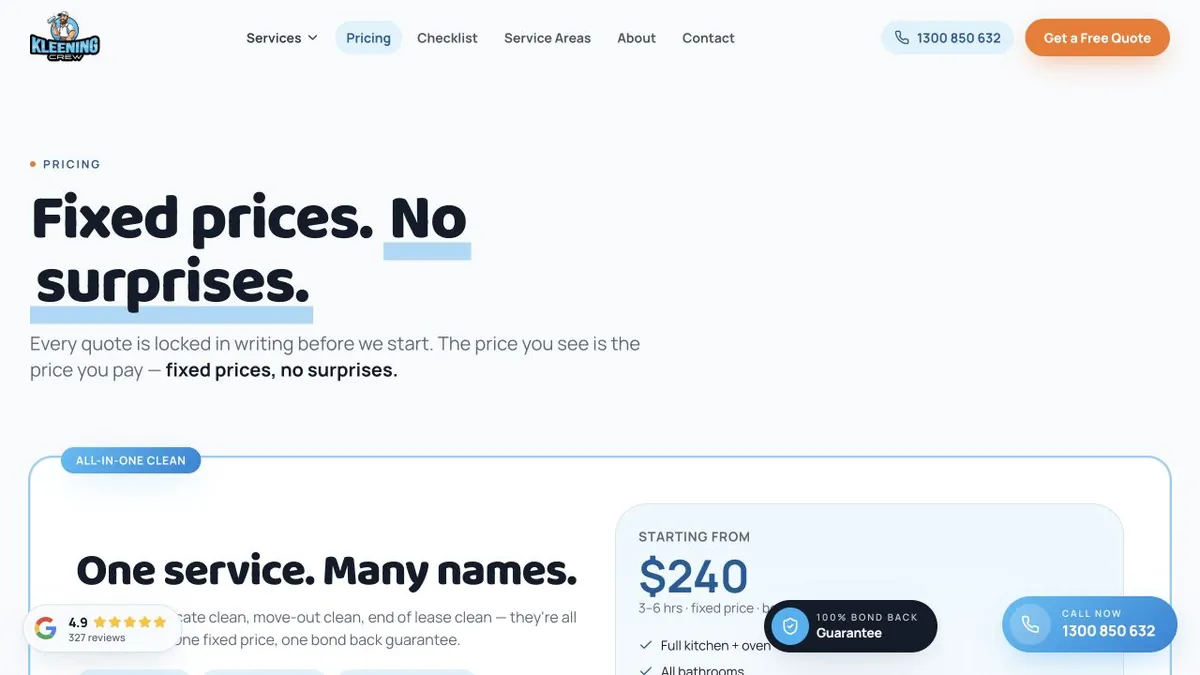
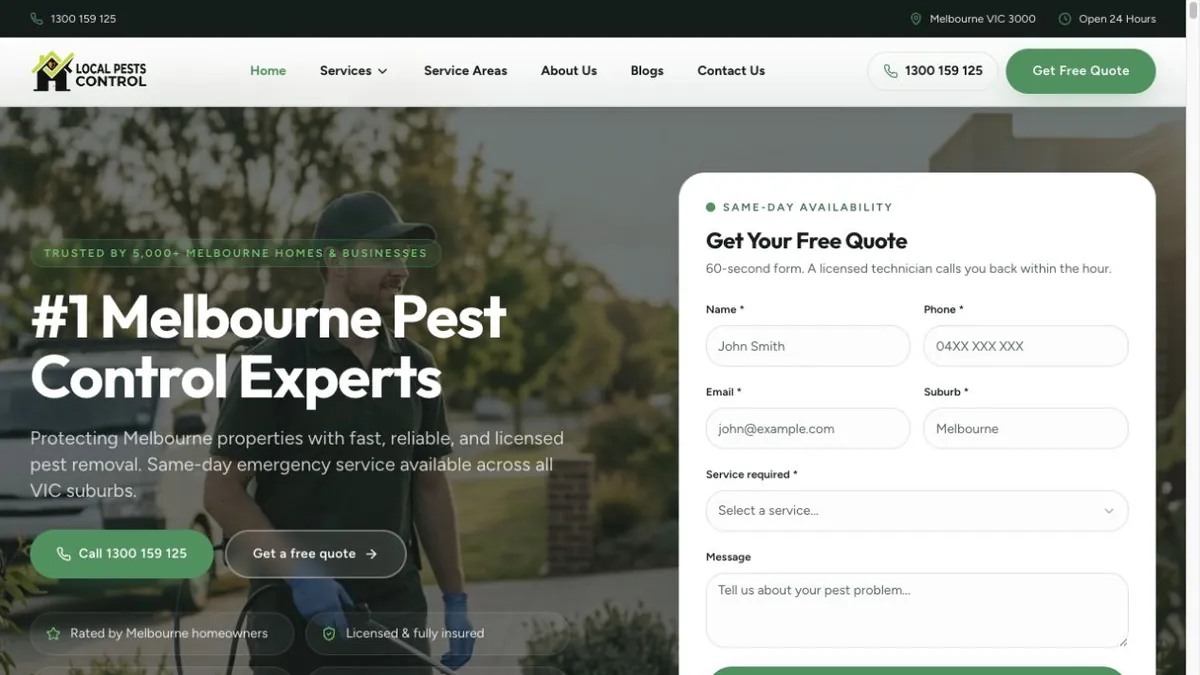
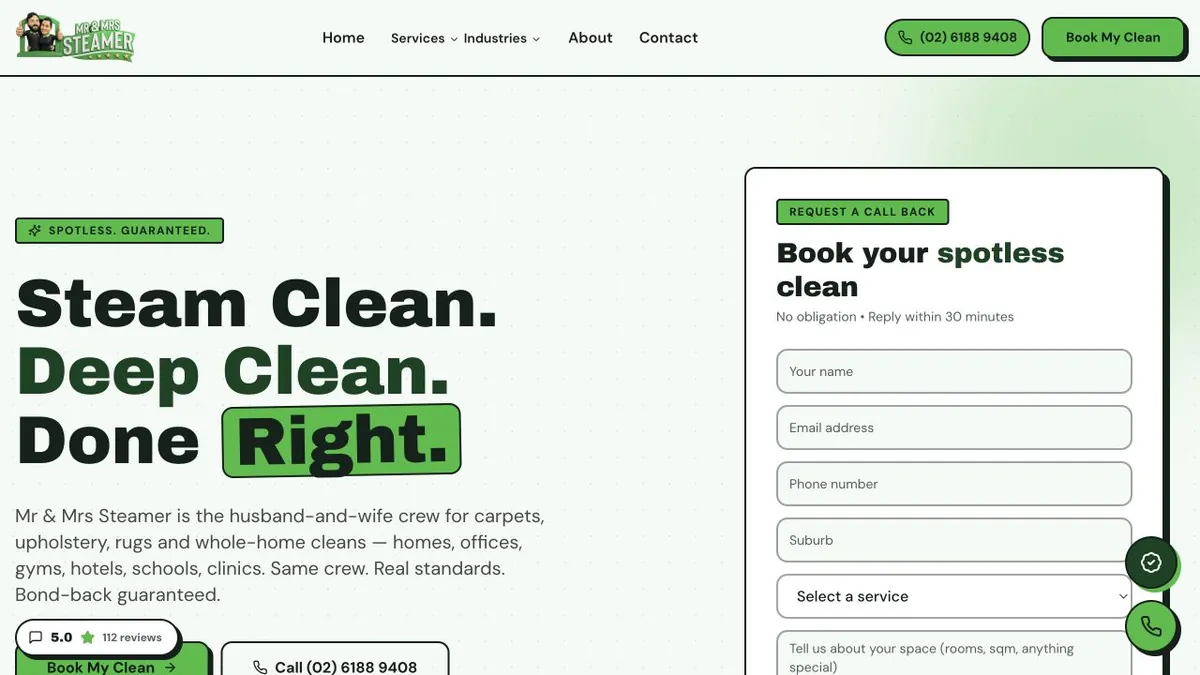
- End-of-lease cleaning · Melbourne21.20% click-to-job conversion rate138 jobs from A$2,819.92 of spend · measured on booked jobs, not form loadsPink Flamingo
- Carpet cleaning · Perth53jobs in the first 15 daysA$24.92 cost per job · the second, iterated campaign ran at A$23.88Cleanetic
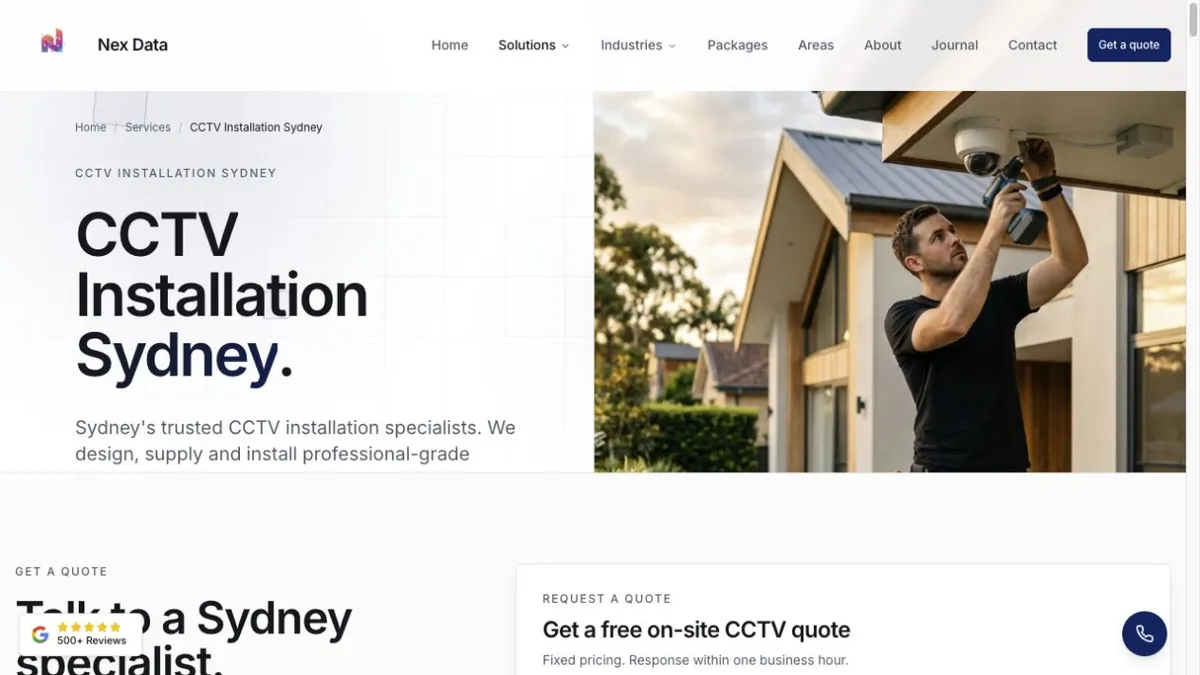
- Security and CCTV install · NSW39qualified leads in 15 daysCommercial and residential split · same-day lead alerts to the sales teamNexData
- Trades · Sydney36jobs booked in 24 daysJob-type campaign split · first quotes by day 3Sydney Fence Painting
- Mortgage broking · New Zealand85%call pickup rate after remindersFour times the 20% baseline · 70% of budget moved onto refinance intentInnovest
- Antenna installation · Australia38%drop in cost per acquisition57% more qualified leads on the same account · 4.6x return on ad spendAADT Antennas
Lead quality sounds subjective until you measure it, and the measure is simple: your own lead-to-job rate is the number to judge any channel on, including ours.
The clearest version of that argument we have published is a Gold Coast cleaner selling at the premium end, where a cheap enquiry from the wrong buyer cost more than no enquiry at all and the cost per lead only came down 23.62% once the wrong ones stopped arriving. What a right enquiry is worth is the other half of the sum: what a customer is worth beyond the first job changes which leads you should be chasing, and if you sell maintenance contracts or cleaning runs, how many of them leave in a year and what they were worth is usually a larger number than anything at the top of the funnel.
Before you ask us anything
Here is what everybody asks first.
Lead quality, answered.
Cost, timing, contracts, who owns the data, reporting, privacy, and what happens when the quality does not move.
The first call is free and there is no deck.
Talk to us about your leadsIt is scoped from what you already have. An account with a working tag manager, a CRM with an API and clean conversion definitions is a few days of work. An account with none of those is a rebuild, and we will say so before you commit rather than after. Our management fee is separate from your media budget and scales with the work — the smallest companies we work with invest a minimum of A$3,000 a month in media, and our largest clients run multiple eight figures a month. The first call is free and you get a real number for your situation on it.
The plumbing takes days. The learning takes longer, because the platforms need volume before a signal means anything to them — for most accounts that is somewhere between thirty and ninety days of closed outcomes flowing back. Businesses with long sales cycles wait longer, because a deal that closes in four months cannot teach the bidding anything in week two. What you will see immediately is a report that finally names the difference between an enquiry and a customer.
No long-term lock-in. We would rather keep the work because it is producing than because a contract says you have to stay. What we do ask for is enough runway to be fair to the account — this work is judged on outcomes that have not happened yet at week two, so judging it then is judging the plumbing rather than the result. The terms are put in front of you in plain English before anything is signed.
The customer data is yours, always, and it stays in your CRM. We own and run the ad accounts, because the build is proprietary methodology refined across 250+ engagements — bidding architecture, negative-keyword libraries, audience stacks and conversion tracking. You get full-visibility reporting on performance and spend at all times, and on long-term marketing agreements ownership and handover options are available to discuss.
We say so in the report, in plain English, and we change what we are doing. Usually one of three things is true: the definition of a good lead was wrong, the CRM statuses are not being kept up to date, or the volume is too low for the platforms to learn anything from. All three are findable, and we go looking for them rather than waiting for you to ask. If the honest answer is that the channel is wrong for your business, we would rather tell you than keep billing for it.
We work to a three-day cycle, good news or bad: we pull the data, we read it, we write the recommendations, and we send you a Word document and a PDF carrying the same numbers and the same date. Once the outcomes are coming back we change what we report — revenue by channel instead of leads by channel, cost per customer instead of cost per lead. Then we sit down with you and go through it, and what you say in that room is what we build the next quarter from.
You need somewhere the outcome of every enquiry is recorded and kept up to date. That is usually a CRM, and we work with the common ones through their APIs. It can also be a spreadsheet your team genuinely maintains, which is a slower round trip but a real one. What does not work is outcomes living in somebody's head or in a mailbox, because there is nothing there to send back.
Customer lists are hashed before they leave your systems — the platforms receive a one-way fingerprint of an email or phone number, matched against their own hashes, and never the raw value. We configure consent so the signals respect what your visitors actually agreed to, and we do not send data you have no basis to send. If you operate under a privacy regime with specific requirements, bring it to the first call and we will build to it.
It usually means the same revenue from less work, and often more. The budget stops buying enquiries that were never going to close and starts buying the ones that do, so the enquiry count can fall while the job count holds or rises. That is why the reporting has to change at the same time — a lead-count report will make a successful quarter of this work look like a bad one.
Yes, and it is often easier there, because the purchase and its value happen on your own site and can be sent back within seconds instead of weeks. Value-based bidding on real order values, audiences built from repeat purchasers rather than all buyers, and returns fed back so the platforms stop chasing customers who send everything back. Same round trip, shorter cycle.
Browser-side tracking runs in your visitor's browser, where ad blockers, tracking prevention and abandoned sessions all take a share of the events before they arrive. Server-side sends the same event from your own server instead, and the two are deduplicated on a shared event ID so nothing is counted twice. If you are running Meta ads at any meaningful budget, yes — the bidding is only as good as the events it can see.
Often, yes. The measurement layer, the CRM connection and the value signals can all be added to a live account without touching its structure, and that is usually where we start because it is the fastest thing to prove. Whether the campaigns then need restructuring is a question the new data answers within a month or two — and if it says no, we will tell you that too.
Lead quality is a tracking problem before it is a media problem.
These are the pieces this page assumes are in place, and the pages where each of them is built.
- Seeing which leads were realThe hub for everything above. Nothing on this page means anything until somebody builds the measurement, and this is where we describe that work.
- Meta Conversion APIThe server-side feed itself — how we install it, how we stop it double-counting against the pixel, and what it recovers.
- Meta PixelThe browser-side half of the pair. Still necessary, no longer sufficient on its own.
- Google Analytics 4Where we define the conversion values, and where the reporting that settles budget arguments comes from.
- Google Tag ManagerThe container every tag on this page fires from, checked by hand rather than assumed.
- LinkedIn Insight TagThe same round trip for B2B, where a single qualified enquiry can be worth more than a hundred consumer ones.
- Where value-based bidding gets builtOffline conversion import and value-based bidding are Google-side features. This is where we build the campaigns they steer.
- Excluding the people who were never going to buyOnce the platforms know who your buyers are, the follow-up lists get much better at excluding the people who were never going to buy.
- The parent page: every channel a lead comes fromThe parent page — every channel a lead can come from, and how we decide which two or three fit your business.
- The trades this problem is worst inCleaning, plumbing, roofing and removals all generate volume easily and qualify it badly. Each page names the specific leak.
- Accounts where we fixed exactly thisWritten up with the before figure and the after figure, so you can see what a qualification change is actually worth.
Most of what goes wrong after the enquiry arrives is a data problem first: the six contact fields worth fixing before you spend anything is where we start, and what a messy database actually costs in booked work explains why. After that it is follow-up: sequences written to close a job rather than to fill an inbox and re-booking the customers you already have.
Get the tracking audit
We check every conversion you are counting, tell you which ones are wrong, duplicated or missing, and show you what it would take to send your closed jobs back to the platforms. Yours to keep either way.
No pitch deck. No upsell. A real conversation and a written list of leaks.