
Ask what prompted the enquiry
Begin with the customer's reason for contacting the business. Are they planning other work, responding to advice already received, or asking for an assessment? A short description can tell the team more than a long list of technical choices the visitor may not understand.
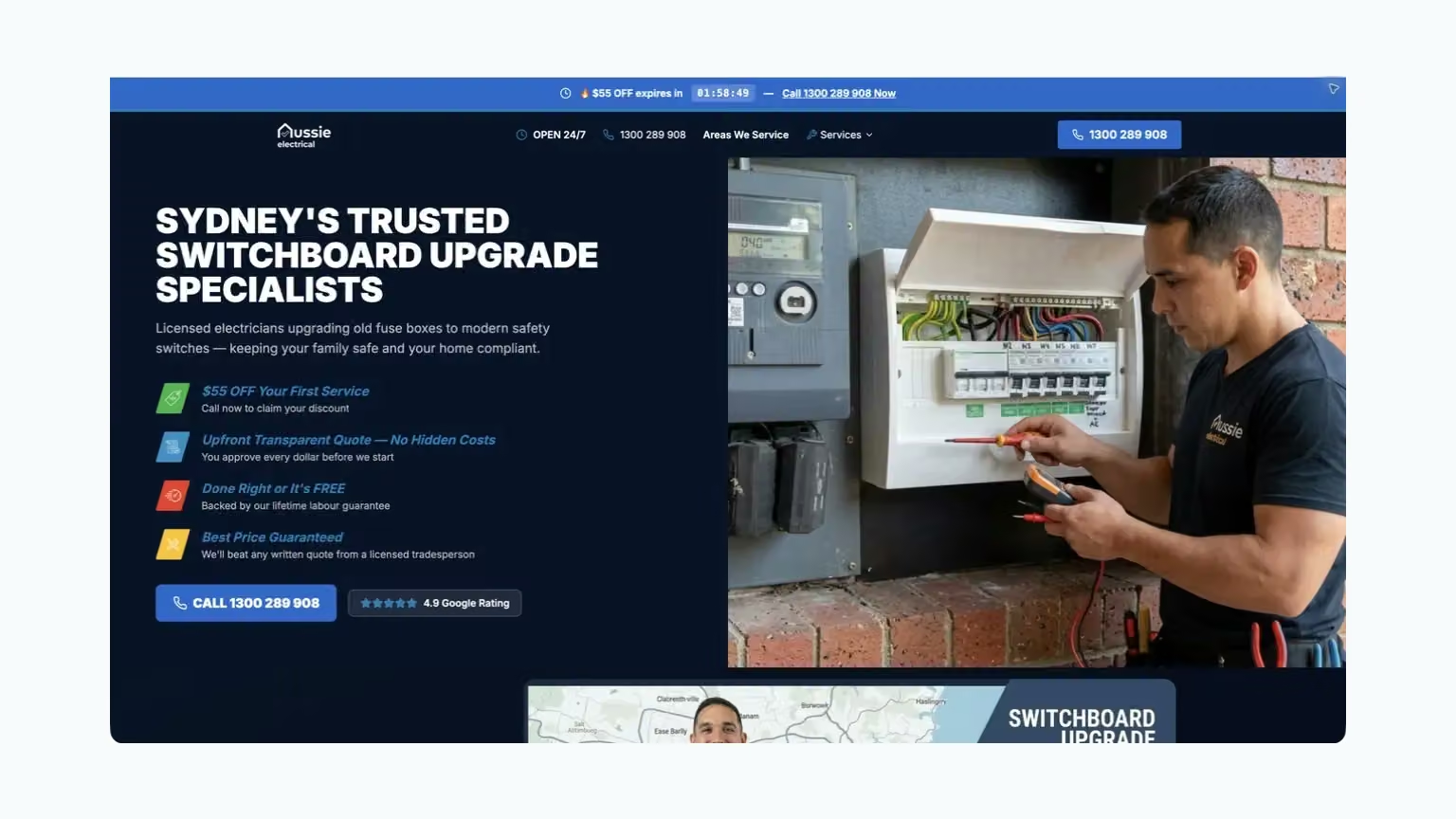
The Aussie Electrical website case provides a relevant example of separating service information from the immediate phone route. The page can help planned-work customers explain their situation while leaving urgent callers an obvious way to make contact. It is a communication task before it is a form-design task.
Collect details the customer can safely provide
Suburb, property type, intended work and preferred timing can support the first conversation. Where photographs are useful, make them optional and avoid asking a customer to open equipment or expose anything to obtain one. A quote request should work with information the person can provide without undertaking electrical work.
Do not make the customer determine whether a specific component or solution is required. That judgement belongs with the qualified professional. Offer a straightforward way to say they are unsure. A form that allows an honest uncertainty can produce a more useful request than one that forces every visitor to select a technical answer.
Explain what can be decided before assessment
Some enquiries can begin with an initial discussion, but the final scope may depend on assessment. State that clearly. A customer should understand whether the next step is a callback, a quote discussion or an appointment, rather than assume a form submission has confirmed a particular installation.
This is also important when presenting a starting offer or package. Keep its inclusions and conditions near the amount, and avoid suggesting that one advertised arrangement applies to every property. The website should prepare a realistic conversation, not leave the team to undo an expectation created by the first screen.
Use service pages to separate the surrounding work
Switchboards may be discussed alongside lighting, new installations or other electrical services. Give each subject enough context that the visitor can identify the work they are considering. Links to related services can help, but they should not make the page read like an unrelated list.
The AUS Electrical & Data Services website demonstrates a service-specific page within a broader electrical offer. When reviewing another site, check that the heading, imagery and form refer to the same subject. If the first screen promises one service and the next step asks about something else, the journey needs clarification.
Review whether the extra questions are useful
Ask the receiving team which details help them respond and which are rarely used. Remove questions that add effort without changing the next step. Where requests consistently arrive without an important piece of context, consider a clearer question or a short explanation of why it matters.
The right form is not necessarily the shortest possible form. It is a manageable request that gives the customer confidence and gives the team enough information to proceed. Test it on a phone with an ordinary property example, including a visitor who is unsure about the technical terms. Check error messages and confirmation wording as well as the fields themselves.
Connect enquiry quality with the work accepted
Review whether requests concern the intended service, whether the business could assess them and which became suitable work. A customer gathering information for a future renovation should not be confused with a confirmed immediate installation. The distinction helps the owner understand both demand and timing.
Before adding a new form field, write down how the answer will change the next conversation. If nobody can explain its purpose, leave it out or make it optional. This discipline is especially useful for technical services, where the business may be tempted to ask the customer for information they cannot confidently identify. A clear description of the intended work, coupled with an honest option to discuss uncertainty, is often a better starting point than a forced technical selection.
Website design and enquiry-quality work should support that understanding. Clear questions give the team context for the first conversation. Begin with the practical purpose of each field, then judge whether it helps the team and customer take the next appropriate step.