
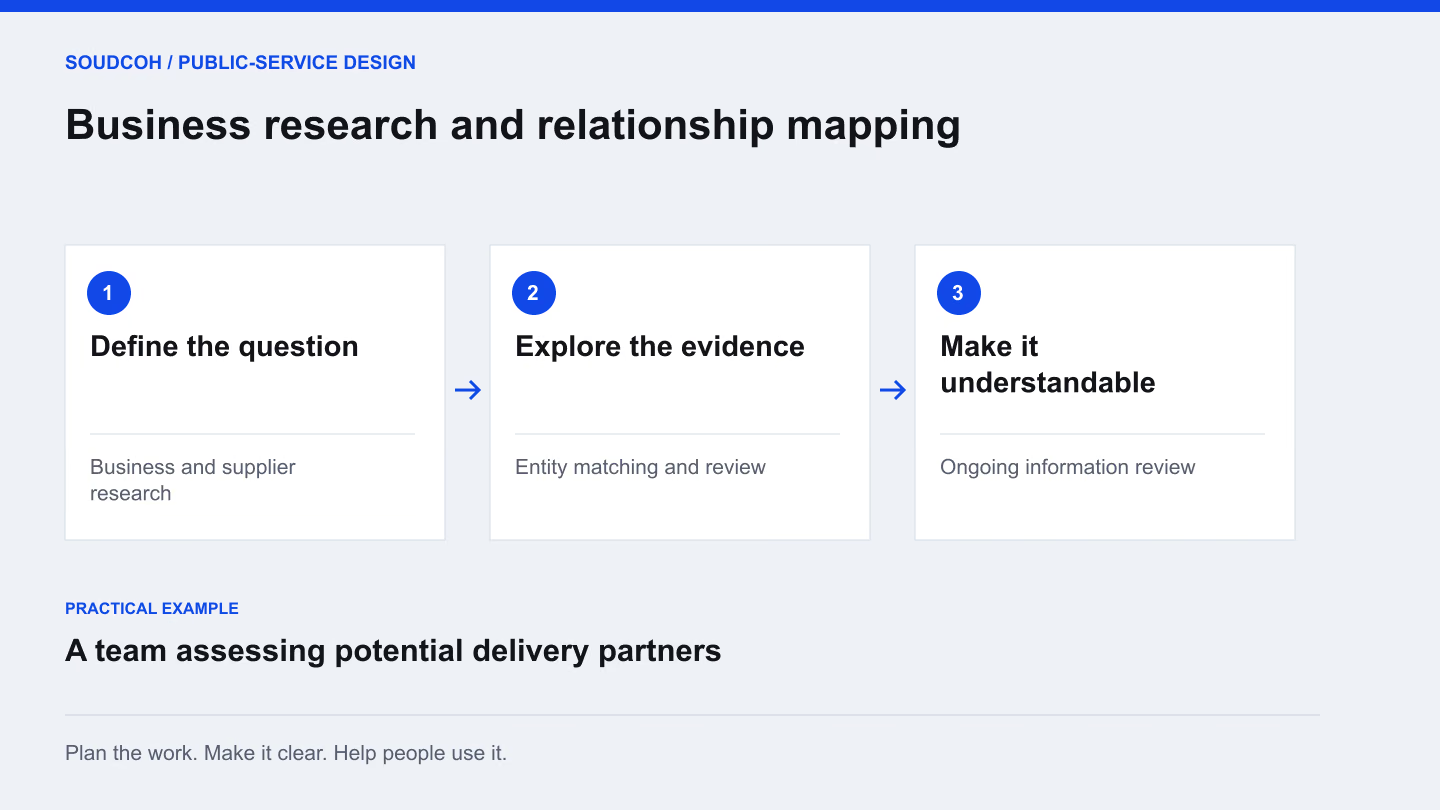
Define the question before collecting material
A broad request to “research this company” can produce a long document with no clear decision. Specify what the team needs to understand: the organisation’s activities, ownership, relevant relationships or the evidence behind a particular statement.
Agree the scope and the intended use of the findings. A preliminary comparison requires different depth from a formal due-diligence exercise. Record where specialist advice or a separate verification process will be needed. This helps the research stay useful without suggesting that a general information review settles every legal or commercial question.
Keep the source attached to the finding
For each important fact, record where it came from and when it was checked. Different sources may describe the same organisation at different times. A change of name or an outdated address can otherwise create an apparent contradiction.
Use an evidence register that a reviewer can navigate. Include the relevant passage or reference, rather than a long list of links with no explanation of their purpose. If a source is incomplete or unavailable, record the gap. An explicit gap is easier to investigate than an unsupported statement in polished prose.
Side by side
Separate a plausible match from a checked finding
An unresolved lead
- Similar business names in different documents
- A possible connection without enough context
- Information whose relevance or currency needs checking
A reviewable finding
- A clearly identified organisation
- Relevant source references beside the claim
- Uncertainty and interpretation distinguished from verified facts
Use qualified partners for legal conclusions, sensitive research or specialist analysis that goes beyond the agreed research brief.
Review identity and relationships carefully
Similar names do not prove that two records describe the same business. Compare the relevant identifiers and context before joining them. Where a match remains uncertain, keep it separate and explain what would resolve the uncertainty.
Relationship maps can help people understand a complex picture, but every connection needs a defined meaning. Ownership, a shared officer and a commercial relationship are different things. Label them clearly and preserve the source behind each link. The visual should make the evidence easier to understand, not make an unverified connection appear more certain.
Use the same discipline in audience research
A survey also needs a clear question and an appropriate method. Explain who the research is intended to represent, how participants will be approached and how the findings will be interpreted. Pilot the questions before collecting a larger set of responses.
Sensitive human research, clinical topics and specialist statistical conclusions require qualified partners and any necessary approvals. Communications, participant information and research tools can support that work, but they do not replace those responsibilities. A useful report states the method and its limits alongside the findings.
Write for the decision-maker
Lead with the findings that answer the original question. Separate verified information from analysis and list the unresolved matters that could change the decision. Put detailed supporting material where a reviewer can find it without interrupting the main explanation.
The deliverables may include a research plan, an evidence register, a relationship map and a concise comparison. Before handing them over, ask whether a colleague unfamiliar with the project can trace an important conclusion back to its source. That is a practical test of whether the research can be checked and reused.
Explore our Business research and relationship mapping, related services and Build a dashboard people can check and use.