Proof
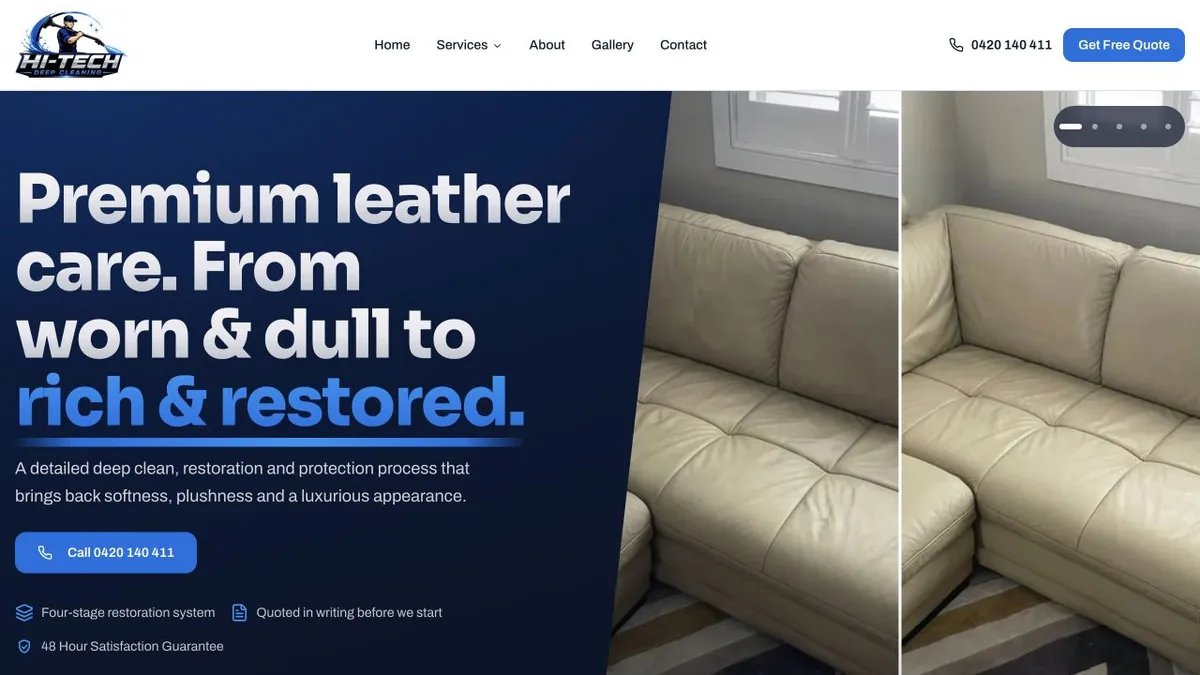
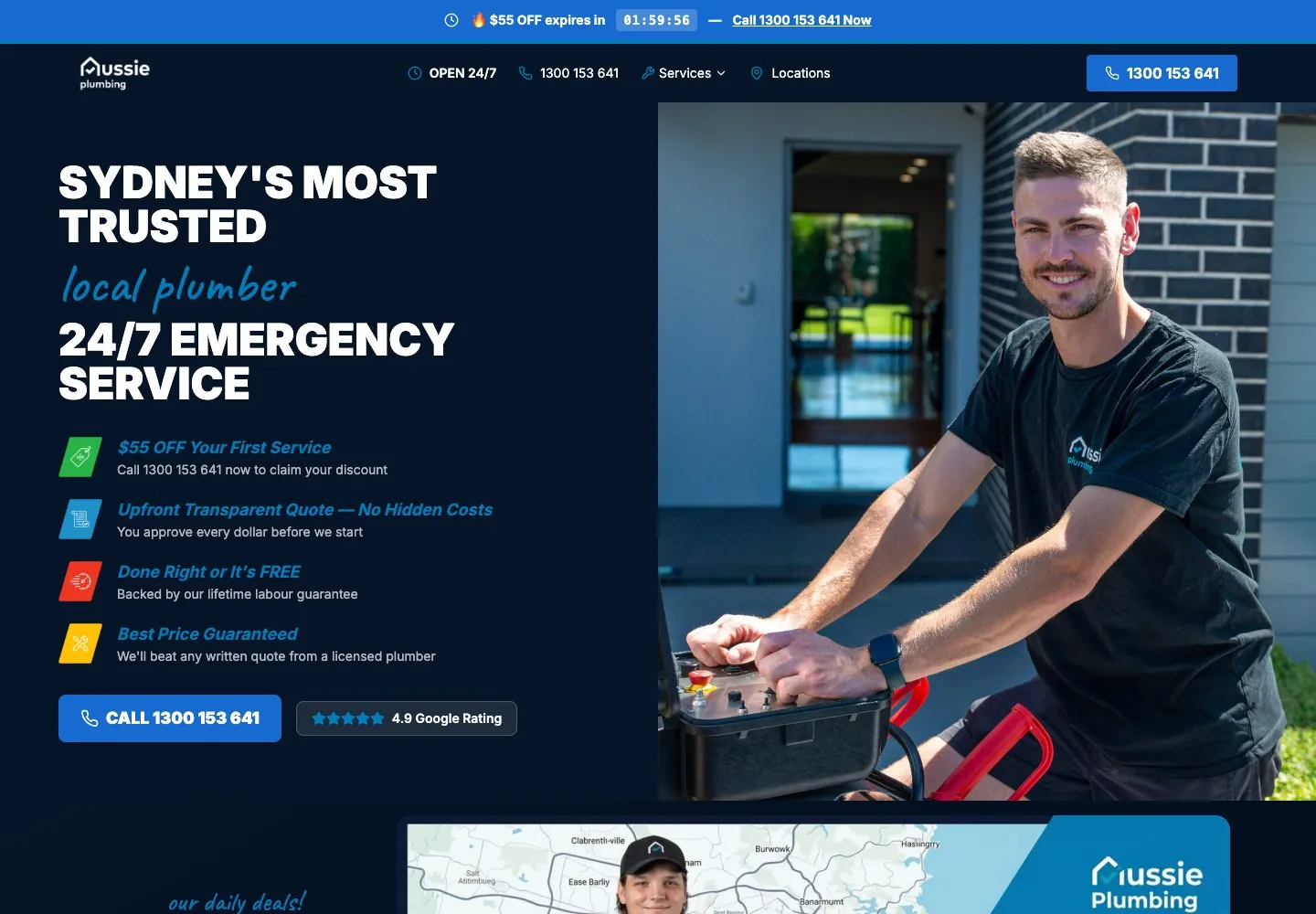
    Impress Blinds — cost per enquiry down 62.63%, $23.6 to $8.82SLS Solicitors — cost per enquiry down 58.48%, $84.64 to $35.14FixCare Property — cost per enquiry down 56.36%, $35.24 to $15.38Rubbish Removal WA — cost per enquiry down 53.18%, $71.02 to $33.25Floral Cakery — cost per enquiry down 49.82%, $13.83 to $6.94ILLUMINATE Laser Emporium — cost per enquiry down 48.54%, $138.65 to $71.35Aussie Plumbing — cost per enquiry down 41.96%, $117.75 to $68.34Sydney Fence Painting — cost per enquiry down 33.68%, $136.62 to $90.61Alliance Plumbing — cost per enquiry down 29.6%, $81.26 to $57.21Gridless Build Solutions — cost per enquiry down 29.16%, $78.16 to $55.37FacilityWorx — cost per enquiry down 23.62%, $157.13 to $120.01Cornerstone Roofing — cost per enquiry down 20.47%, $41.71 to $33.17A council finance platform — 194 of 194 requirements metA council finance build — 14 weeks to UAT, −34% 10-yr costA cultural institution — $634K of $750K kept workingA council platform — $470,106 built vs $503,262 SaaSA federal agency — n=5,000 prevalence survey at ±1.4%A civic mural — 36 concepts for a 71m × 9m wallA regional shire — 32-page visitor guide, 3 weeks earlyA shire council — one platform retiring 8 of 9 vendorsA pressure washing business — 138 jobs at A$20.43 eachA pressure washing business — 21.20% conversion rateA carpet cleaner — 53 jobs in 15 days at A$24.92 eachA roofing company — 68 quote requests in 35 daysA CCTV installer — 39 qualified leads in 15 daysA fence painter — 36 jobs in 24 days, quotes by day 3A maintenance business — live in 8 weeks, 3 stacks gone41 numbered clauses, published in full5.0 across every Google review$120M+ in media under management250+ active engagements across five countries

    YouTube ads Video makes the demand Search catches.

    Nobody searches for a business they have never heard of. Video is how people meet you before they need you — and how a stranger becomes the person who types your name instead of your category. It is read over weeks, not days, and it is the only channel here where the creative is the campaign.

    138 jobs in 41 days for a Melbourne cleaning business · 68 quote requests in 35 days for a roof restorer · Whole-account Google Ads figures, broken down in the case studies

    Inside the account

    Seven ways a
    video budget disappears.

    Most failed YouTube campaigns are not media failures. They are five seconds of the wrong thing, in the wrong shape, read on the wrong number, two weeks too early.

    • The first five seconds are a logo animation

      YouTube gives you five seconds before the skip button appears, and a swooping logo spends every one of them saying nothing. By the time the ad reaches its point, the viewer is already back in the video they came for.

    • It only makes sense with the sound on

      In-feed and Shorts placements start muted. If the offer, the price and the business name only exist in the voiceover, most of the audience sees a silent film about nothing.

    • One landscape master, cropped by a machine

      A 16:9 edit squeezed into a 9:16 slot loses two thirds of the frame. Heads leave the shot, on-screen text runs off the side, and the version most people see is the one nobody approved.

    • Judged on last-click after a fortnight

      Video rarely closes a sale on the spot; it makes the Search ad two weeks later the one that gets clicked. Read it on last-click alone after fourteen days and it will always look like a failure, and it usually gets switched off as one.

    • Audiences built on hobbies

      Interest categories are the easiest thing to pick and the loosest thing to buy. We build the audiences that actually work out of behaviour — your own visitors, your customer list, and the searches your buyers really make.

    • No frequency cap

      The same six-second bumper, thirty times, on the same person, in a week. Awareness turns into irritation somewhere around the fifth viewing, and the brand pays for the rest.

    • Nowhere for the interest to go

      The video runs, people watch it, and nobody builds anything out of that. No viewer list to remarket to, nobody watching branded search, no landing page that answers what the video promised. The interest is created and then dropped.

    The first five seconds

    You are writing for the person about to leave.

    A YouTube ad is not a short film with a budget attached. It is a fixed set of timings and frames, and almost every decision that matters gets made inside the first five seconds of them.

    • 5

      seconds before the skip

      Everything that matters has to be inside them. Not the logo — the problem, the place, the promise.

    • 6

      seconds, no skip button

      The bumper. One idea, said once, at a price per thousand views that makes repetition affordable.

    • 15

      seconds, non-skippable cap

      The in-stream ceiling in most markets. Long enough for a proof point, short enough to be forgiven.

    • 30

      seconds counts as a view

      Or the whole ad, if it runs shorter. On view-based buying that is the moment you are charged.

    • 9:16

      the vertical frame

      What Shorts inventory serves. It is a different edit, not the same edit with the sides chopped off.

    • 3

      orientations, one shoot

      Landscape, square and vertical all get served. Supply all three or Google crops the one you gave it.

    So we cut for the placement, not for the showreel.

    The same idea gets rendered landscape, square and vertical, with captions burned in and the offer on screen — because in-feed and Shorts start muted and most people never turn the sound on. A six-second version is cut from the same footage, so repetition costs an edit rather than a shoot.

    Then we read the drop-off curve, which tells you the exact second people left. That second is nearly always fixable, and fixing it is cheaper than everything else you could do to the campaign.

    Sound off · 9:16-ish · six seconds
    Vertical, silent, and readable in the first second. That is the shape a Shorts or in-feed placement actually serves — not a landscape edit with the sides cut off.
    Accounts we run

    Pink Flamingo · 41-day period

    A$20.43

    Cost per job booked

    138 jobs from A$2,819.92 of ad spend

    Cornerstone Roofing · 35-day period

    68

    Quote requests

    Roof restoration, Melbourne · insurance-literate

    Sydney Fence Painting · 24-day period

    36

    Jobs booked

    Job-type campaign split · first quotes by day three

    Whole-account figures from live client Google Ads accounts, dated in each case study. They are what those accounts did, in those markets, at those budgets — not a forecast for yours, and not attributed to any single campaign type.

    Ten things happen on a YouTube account. Here they are, in order.

    Half of it is media buying and half of it is editing, and the half most agencies hand to somebody else is the half that decides the result. So it is written down.

    1. Decide what the video is for before anything is shot

      Introducing a business nobody has heard of, explaining something that is hard to sell in text, or bringing back people who already visited. Those are three different scripts, three different audiences and three different measures of success.

    2. Write the first five seconds as if they are the whole ad

      Name the problem, name the place, and show the person it is for — before the skip button appears. If the ad still works when the viewer leaves at second six, everything after that is a bonus.

    3. Make it work with the sound off

      Captions burned in, the offer on screen, the business name visible, the phone or the product doing something a viewer can read at a glance. Sound should improve the ad, never carry it.

    4. Cut one shoot into every shape the placements need

      Landscape, square and vertical, plus a six-second version of the same idea. That is an editing job, not a re-shoot, and it is the difference between showing up properly on Shorts and showing up cropped.

    5. Choose the format for the job

      Bumpers for repetition, skippable in-stream when there is something to explain, in-feed when people are already browsing, Shorts when the audience is younger and scrolling. Most accounts need two of them, not all four.

    6. Build the audience from behaviour, not hobbies

      Your own visitor and customer lists first, then custom segments built from the searches your buyers actually make, then in-market segments for people already shopping. Interest categories are the last resort, not the starting point.

    7. Decide where the ad is not allowed to run

      Content suitability tightened rather than left at default, channels and topics you would not want your name beside excluded, and a placement report read weekly the same way we read it on Display.

    8. Cap the frequency

      A ceiling per person per day and per week, set against how long your customers actually take to decide. Repetition is the point of video advertising; wearing people out is not.

    9. Turn viewers into a list you can use

      Everyone who watched, watched to the end, or clicked becomes an audience your Search and remarketing campaigns can bid on. This is where video stops being a brand exercise and starts feeding the rest of the account.

    10. Read it over weeks, in the right columns

      View-through conversions, assisted conversions, and what happened to your branded searches and direct traffic while the video ran. Then the plain question: is Search getting cheaper because people already know who you are?

    How an engagement runs

    The first ninety days, honestly.

    1. Week 0

      The audit and the first call

      What you sell, who buys it, how long they take, and what you already have on film. Plenty of businesses have more usable footage than they think, and plenty have none — both are workable, they are just different plans.

    2. Weeks 1–2

      The cut

      We script it, edit it, caption it, and render the same idea in landscape, square and vertical plus a six-second cut. We build the audiences, the exclusions and the frequency cap alongside it. A second strategist reads all of it.

    3. Day one

      You press go

      We build every campaign paused, so you watch every cut and read every audience before anything spends. You switch it on when you are ready, not when we are.

    4. Days 1–21

      The hook test

      Different openings against the same body, placement and channel exclusions applied as the report fills in, and the drop-off curve read to find the exact second people leave. That second is usually fixable.

    5. Weeks 4–8

      The second cut

      By now we have enough watch data to know which opening earns the next twenty seconds. We give the winner a proper edit, cut the audiences that never held attention, and the viewer lists are big enough for Search to use.

    6. From there

      Rhythm

      New creative before fatigue sets in rather than after, reporting on a fixed cadence whether the news is good or bad, and a proper conversation each quarter about whether the video is making the rest of the account cheaper.

    We build every campaign paused, every time. You watch every cut and read every audience before a dollar moves. That is a rule we hold ourselves to, not a favour.

    SoudCoh Compound™

    Video needs the brief agreed and the rhythm kept.

    Compound is how our team works on any account — six stages every change passes through. A YouTube campaign puts most of its weight on these two.

    • Mandate

      You set the number before we spend the money.

      Video is the easiest channel to spend on without anybody agreeing what it is for. So we write the job down first — who it has to reach, what it has to make them do, and which number will decide whether it worked — before a frame is cut.

    • Statement

      A fixed rhythm, good news or bad.

      YouTube has to be read over weeks, which makes it the channel most often quietly abandoned. We stop that with a fixed reporting cadence: the same columns every time, including the months where the honest answer is that it has not moved yet.

    FAQ

    YouTube ads, answered.

    Cost, timing, contracts, who owns the account and the footage, reporting, and what happens when a campaign is not working.

    The first call is free and there is no deck.

    Talk to us about your account

    Two separate numbers. Your ad spend goes to Google, and video inventory is bought far more cheaply per view than a Search click — a six-second bumper reaches a lot of people for very little. The smallest companies we work with invest a minimum of A$3,000 a month across their paid channels, and our largest clients run multiple eight figures a month. Our management fee is separate and scales with the work, and production is quoted on its own if you need us to make the video. The first call is free and you get a real number for your situation before you commit to anything.

    Less a question of the monthly figure than of whether it can run long enough to be read. Video is judged over weeks, so a budget that funds three weeks and then stops has bought you nothing you can learn from. We would rather run a smaller number for three months than a bigger one for three weeks. In practice that usually means YouTube sits alongside a Search budget rather than replacing part of it — and if the numbers only stretch to one, we will tell you to spend it on Search.

    Views and watch data arrive within days, and they are genuinely useful — the drop-off curve tells you the exact second people leave, which is the fastest creative feedback in advertising. Business results take longer. Expect four to eight weeks before view-through conversions, assisted conversions and branded search movement say anything trustworthy. Judged on last-click after a fortnight, video will always look worse than it is.

    No long-term lock-in. We would rather keep the work because it is producing than because a contract says you have to stay. What we do ask for is enough runway to be fair to the channel — video read at two weeks is being read during the part where we are still finding the right opening. The terms are put in front of you in plain English before anything is signed.

    We own and run the ads account, because the build is proprietary methodology refined across 250+ engagements — audience stacks, exclusion libraries, creative systems and conversion tracking. You get full-visibility reporting on performance and spend at all times, and on long-term marketing agreements ownership and handover options are available to discuss. Video we produce for you is yours to use anywhere — your website, your socials, your sales emails — and we hand over the master files.

    We tell you, in the report, in plain English, and we change what we are doing. With video that usually means the opening, not the offer — a new hook against the same body is cheap and often decisive. If a second and third attempt still do not move anything, we say so and move the budget to the channel that is working. If the honest answer is that video is not the right buy for your business right now, we would rather say that than keep billing you for it.

    We report on a fixed cadence, good news or bad. Every report says what you spent, what it produced, what we changed and why, and what we are doing next — with view-through and assisted conversions kept in their own columns so nothing is flattered by being counted twice. For video we also show the drop-off curve and what your branded search volume did over the same period. You can see live performance and spend for yourself at any time.

    No. Polish helps far less than people expect, and on YouTube it can actively hurt — an ad that looks like an ad gets skipped faster than one that looks like a person talking. We have seen phone-shot footage of an owner explaining what they do outperform a studio edit. What is not optional is clarity in the first five seconds, legibility with the sound off, and captions. We can work with what you have, guide you through shooting it yourself, or produce it properly — all three are real options.

    Either. We script, direct and edit if you want that handled, and we quote it separately from campaign management so you can see exactly what you are paying for. If you would rather shoot it yourself, we give you the shot list, the script and the framing rules, then handle the edit and the three orientations. And if you already have footage — a testimonial, a job in progress, a walkthrough — that is often the fastest path to a first campaign.

    Both, in a specific order. Video action formats put a call-to-action, sitelinks and a lead form directly in the ad, and remarketing video to people who already visited your site does produce enquiries on the spot. Cold prospecting rarely does — what it produces is the recognition that makes your Search ad the one they click a fortnight later. That is why we build viewer lists and watch branded search: the value shows up in the rest of the account before it shows up in the video campaign's own column.

    Four things, kept apart. Direct conversions from the ad, which are usually the smallest number. View-through conversions, from people who watched and came back later. Assisted conversions, where the video was one step in a path that ended on Search. And the plain sanity check — what happened to branded search volume, direct traffic and your Search cost per job while the video was running. Watch time and the drop-off curve tell us how to fix the creative; they are not the business result.

    For an online store, start with short product video against your own site visitors and past customers rather than a cold audience — people who already looked at the item, shown the item doing what it does. Video campaigns can be linked to your product feed so the listings appear beside the film, which puts the price and the buy button next to the explanation. It runs alongside Shopping and Search rather than instead of them, and the viewer lists it builds make both of those cheaper to run.

    Get the video plan

    We watch what your competitors are running, work out what you can shoot with what you already have, and write the first five seconds. Yours to keep either way.

    No pitch deck. No upsell. A real conversation and a script you can shoot.