
Start with the customer's setting
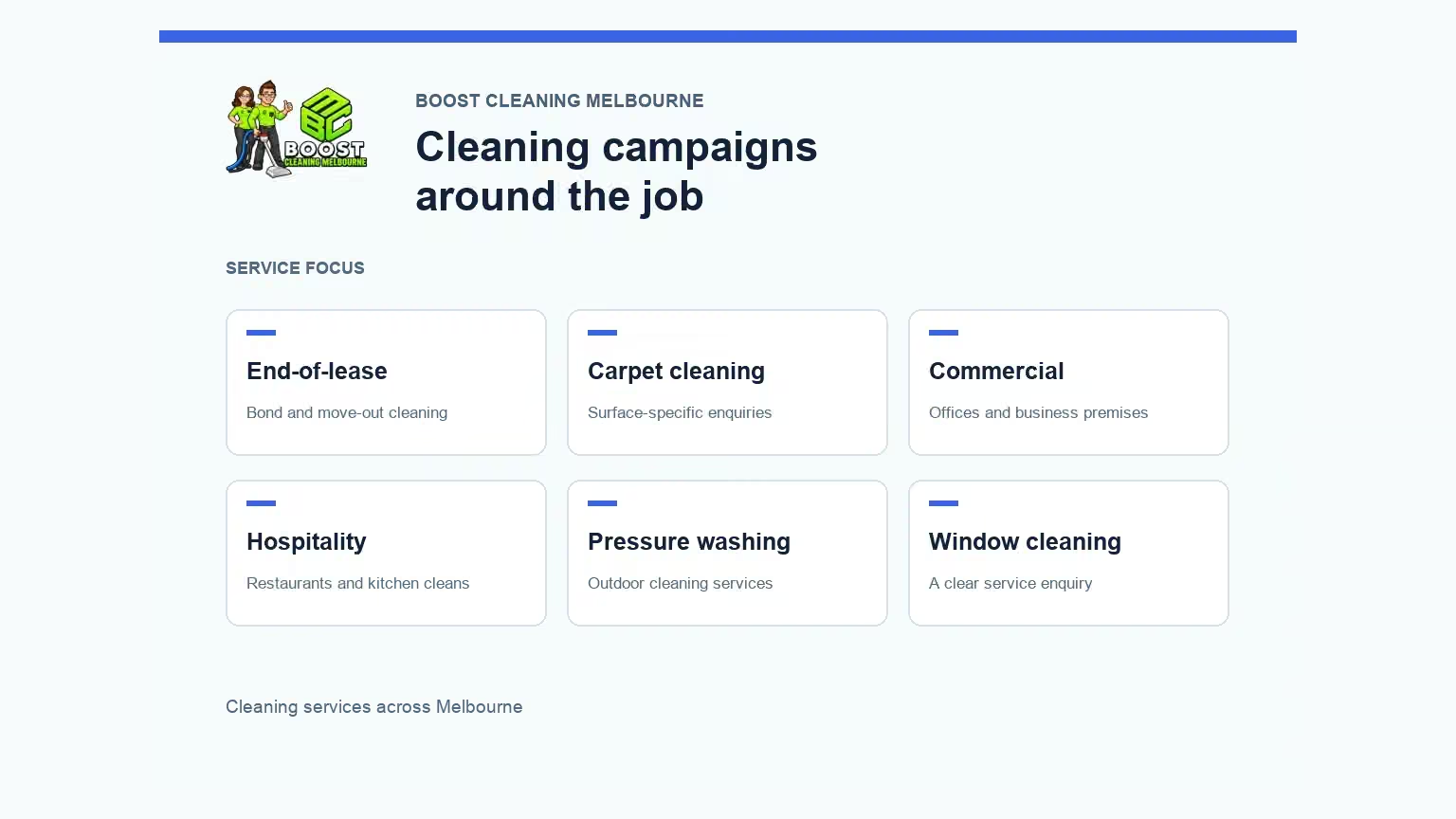
The Boost Cleaning Melbourne campaign case groups services around recognisable jobs: moving out, cleaning an office, caring for carpet, or arranging work in a restaurant or kitchen. Those settings give an owner a practical way to organise the offer around the jobs customers need.
Someone preparing a rental property for handover has a deadline and a list of inclusions to check. A business manager arranging regular office cleaning needs to explain the premises and frequency. A homeowner asking about windows may need to describe access. The service name is useful, but the setting explains why the customer is looking and what information the first conversation needs.
Choose a clear subject for each advertisement
A broad brand message can introduce the company. A service-focused advertisement should make one useful promise about work the business actually provides. Avoid squeezing every service into the same short space. The customer should be able to recognise their need before reaching the website.
For Boost’s range, end-of-lease cleaning and hospitality cleaning are distinct subjects. A practical campaign brief can keep both under the same brand while giving them different explanations. Give tenants information about moving out and hospitality managers information about their premises. Each should reach an explanation that fits their request.
Give related jobs a sensible home
Some services naturally overlap. A move-out customer may also need carpets or windows, while a commercial premises may require periodic deeper work. The website can show these connections after establishing the main service, rather than making every visitor choose from an undifferentiated list.
Describe additional work as an option that needs confirmation. Explain what information affects the scope and whether an assessment is required. This helps prevent a customer from assuming that every service visible on the website is included in one advertised package. The difference between a related service and an included task should be clear before the customer relies on the offer.
Let the form follow the service
A useful end-of-lease request may ask about bedrooms, bathrooms and timing. A commercial request may need premises type, frequency and access. A pressure-washing or window enquiry may need the surface, approximate area and practical access details. The questions should change because the work changes.
Keep the first request manageable. Allow customers to explain what they are unsure about, and leave specialist judgement to the team. A form does not need to settle every operational question to be useful. It should collect enough context for the next conversation and avoid asking irrelevant questions merely because all services share the same website.
Compare services using more than enquiry volume
Different cleaning work can produce different booking patterns. A one-off job, a recurring commercial arrangement and a specialist surface treatment should not be assumed to have the same commercial value. Review the suitability of enquiries and the work accepted, alongside the effort required to quote and deliver it.
An owner making a budget decision should use their own completed-work records. Look for the reasons suitable requests do not proceed: unavailable dates, access, scope, location or an expectation created by the advertisement. Each points to a different improvement.
Decide what deserves more attention next
Choose the next service focus from the intersection of customer demand and delivery capacity. A team may be ready for more of an established job type, or a service page may need clarification before receiving more traffic. Increasing visibility for a poorly explained offer can increase confusion as easily as opportunity.
Before the next campaign review, ask the team to bring three examples of useful enquiries and three that were difficult to quote. Remove identifying customer details, then compare the service requested, information supplied and reason for the difficulty. This small exercise can reveal whether the next improvement belongs in the advertisement, the service explanation or the form. It also gives the people delivering the work a concrete role in deciding which services deserve more visibility.
The useful output of a cleaning marketing review is a concrete choice: which work to promote, who needs it, what the page should explain and what a worthwhile enquiry looks like. Boost’s varied Melbourne service scope makes that discipline especially relevant. A broad business can remain broad while giving each customer a focused, understandable route to the right service.