
Build the service list around the work
The A Plus Carpet Cleaning campaign covers carpet steam cleaning, upholstery, rugs and mats, alongside services such as mattress cleaning and pet-stain removal. Its Central Coast scope is a useful example of a specialist business having several reasons for a customer to make contact.
Start a campaign brief with those actual services. Record which surfaces the team handles, which conditions need assessment and which jobs it does not accept. This gives advertising a factual foundation. It also stops an attractive broad phrase from generating enquiries for work that requires equipment or expertise the business does not provide.
Let the page change with the material
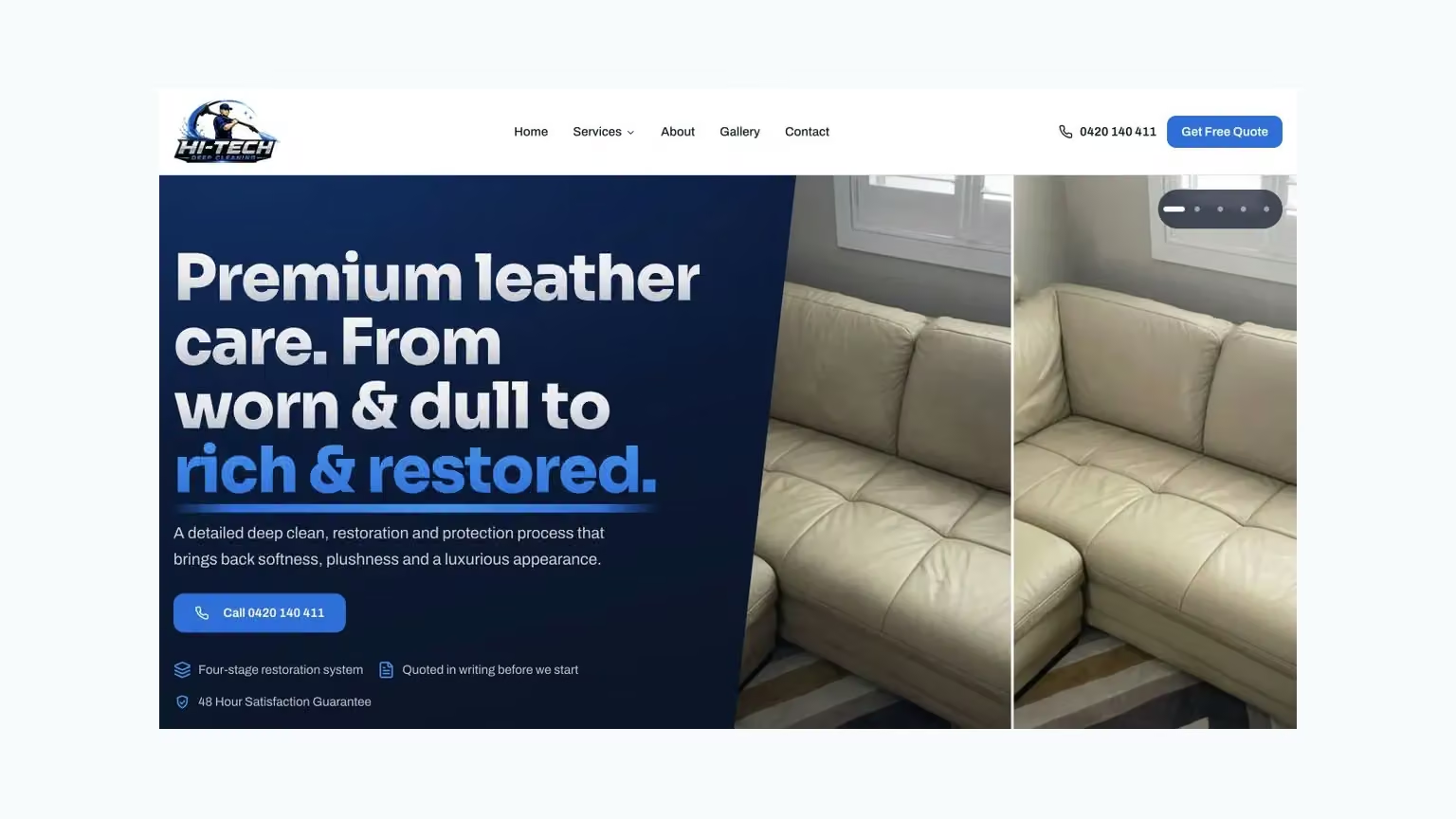
The Hi-Tech Deep Cleaning website gives carpet cleaning and leather restoration separate destinations. The leather page changes the image, headline and explanation to match the material. This is more useful than changing a single keyword above otherwise identical copy.
For a prospective customer, the difference is practical. They can look for the right surface, understand the kind of work being discussed and choose whether to ask for an assessment. For the owner, it creates room to explain limitations honestly. A treatment that suits one material may not suit another; the page should invite the appropriate conversation without encouraging the visitor to make a technical diagnosis themselves.
A practical guide
Let the material change the conversation
A marked carpet
Ask about the affected area and concern
Room size and the customer's description help the team prepare a suitable response.
A leather sofa
Use a leather-specific explanation
The customer needs to find the relevant service, not interpret a carpet-cleaning page.
A commercial floor
Include site access and working hours
The enquiry needs enough context to discuss cleaning around the premises.
Describe the concern in ordinary language
Customers often start with a visible problem: a pet stain, a tired sofa, an odour or carpet that needs attention before moving. Service copy can use those descriptions while keeping the treatment decision with the cleaner. That makes the page accessible to someone who has never booked specialist cleaning before.
Avoid promising complete removal merely because the visitor searches for stain removal. The material, age of the stain and earlier attempts to treat it may affect what can be achieved. Explain what the team needs to assess, and use the enquiry to collect that context. Clear boundaries are part of a persuasive service explanation because they tell the customer what the next conversation is for.
Choose images that answer a question
Hi-Tech’s website includes before-and-after carpet and sofa imagery. Such images work best beside an explanation of the relevant service. They let the reader connect the words with a real surface, rather than interpret a stock photograph of a cleaning tool.
Use images at a size where the difference is readable on a phone. Keep captions factual, and avoid presenting separate jobs as a controlled performance comparison. Where a result depends on the condition of the material, say that in the service explanation. A photograph can show completed work; it cannot establish what will happen in a different customer's home.
Ask for enough detail to choose the next step
Useful questions may include suburb, the surface involved, approximate room or item count and the concern the customer wants addressed. Optional photographs can help a team understand a request, provided the customer has a simple alternative. Contact details alone leave more work for the first call; too many mandatory fields can make that call harder to start.
The Hi-Tech campaign case and its website give a connected example of specialist service presentation. When reviewing a similar campaign, group enquiries by service before making changes. A problem with leather-restoration requests should not automatically cause the business to rewrite a carpet-cleaning page that is attracting suitable work.
Review the mix as well as the total
A busy enquiry list can contain jobs of very different duration, equipment requirements and travel value. Review which requests the team can fulfil and which contribute useful work to the schedule. An increase in calls is only one part of that picture.
A useful content review starts with the cleaning team's own vocabulary and translates it into language a first-time customer understands. Put the familiar problem first, then explain the service term where it helps. Check that photographs, headings and optional form choices use the same surface names. If upholstery appears in one place and an unfamiliar treatment label elsewhere, a visitor may not realise they describe related work. Consistency should reduce interpretation rather than flatten genuinely different services into one label.
For cleaning marketing, this leads to a specific planning question: which service deserves a clearer explanation next? Choose the gap customers repeatedly reveal. A new material-specific page, an honest inclusion list or a better question can be more useful than another broad claim that the business cleans everything.