
Start with the type of capacity available
A spare appointment is not always suitable for every service. A recurring household clean may fit a regular route, while a larger move-out job needs a longer uninterrupted booking. Commercial work may involve access outside the hours used for residential customers. Write down the capacity in terms of work the team can actually deliver.
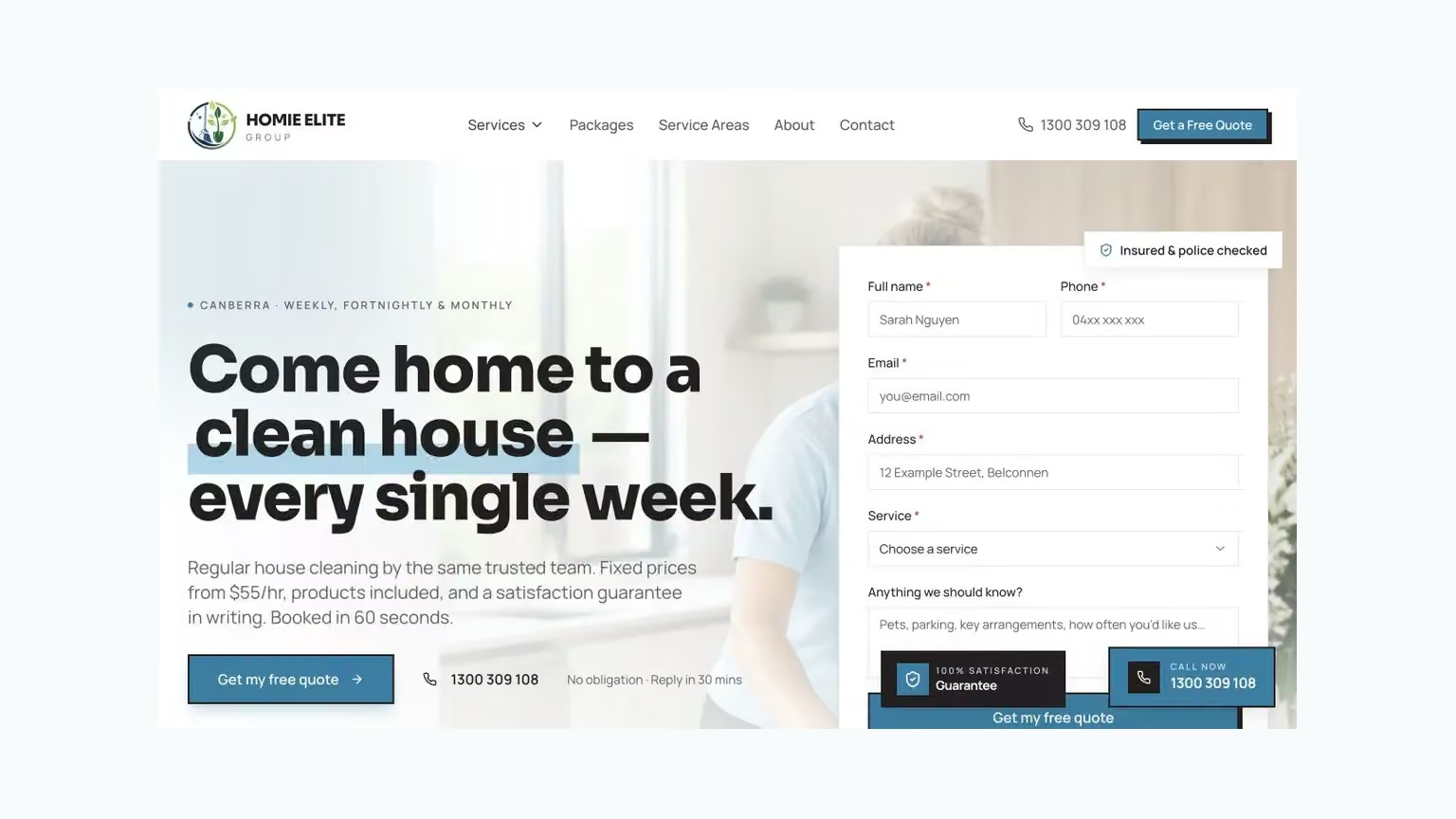
The Homie Elite Cleaning website focuses on regular residential cleaning in Canberra. The EOL Melbourne website presents end-of-lease work. Their different service journeys illustrate why a generic request for more leads is incomplete. The campaign brief needs to say what kind of enquiry would be useful.
Keep the service mix visible
Review incoming requests by service, area and timing. A campaign can become busier while moving away from the work the business wants. If that happens, inspect the promises and pages that are attracting the change before increasing overall spend.
For example, a business seeking repeat residential work should explain the recurring arrangement and give it a clear destination. Homie Elite’s separate regular-cleaning page is a concrete website example. That does not mean every cleaner should prioritise subscriptions or recurring visits. It means the page should reflect the owner's chosen service, rather than leave customers to infer what the business most wants to deliver.
Account for travel as part of the job
The productive day includes more than the time spent inside a property. Travel, parking, equipment preparation and access can determine whether an additional booking fits. Review new areas with the people doing the work before advertising coverage more widely.
A useful exercise is to look at a recent day with awkward travel and identify what made it difficult. Was the problem a distant suburb, an inflexible appointment or a job that took longer than described? These are different causes. The answer might be a coverage change, a better form question or a more realistic booking conversation. Advertising alone cannot resolve a timetable that was already impractical.
Expand one part of the offer at a time
Choose a specific next step: more visibility for an established service, a tested adjacent area or a clearer page for work the team already provides. Changing several parts at once makes the result difficult to interpret. Keep notes on what changed and what the team expected to learn.
The Kleening Crew Brisbane campaign and Hi-Tech Deep Cleaning campaign show distinct cleaning scopes. Your next step should follow your capacity and the demand you can observe.
Review accepted work and the reasons for rejection
An enquiry can be relevant but impossible to book because the requested date is unavailable. That is different from an out-of-area request or a service the business does not offer. Record the reason in ordinary language so the next campaign decision responds to the actual constraint.
If suitable requests repeatedly arrive for a full period, the business can decide whether to adjust availability, promote different dates or change advertising emphasis. If the enquiries concern the wrong work, revisit the message and destination. Treating all unbooked enquiries as the same problem can lead to cutting useful demand while leaving the real mismatch untouched.
Set the next review before making the change
Agree what would count as a worthwhile expansion and when the team will review it. Include the quality of booked work, pressure on the roster and customer experience, alongside advertising results. Keep enough continuity to understand the effect rather than reacting to every quiet or busy day.
Consider who has authority to accept a job outside the normal brief. A customer may request an unusual date or an additional service, and a quick exception can affect the rest of the schedule. Make sure the team knows which requests need confirmation before a booking is accepted. This keeps campaign feedback meaningful: a request declined under the agreed service scope is different from work accepted optimistically and delivered with avoidable difficulty.
Cleaning business marketing works best when its brief includes the operation behind the advertisement. Growth becomes easier to assess when the owner can say which work was wanted, which work arrived and whether the team could fulfil it well. That is a firmer basis for the next increase than enquiry volume on its own.