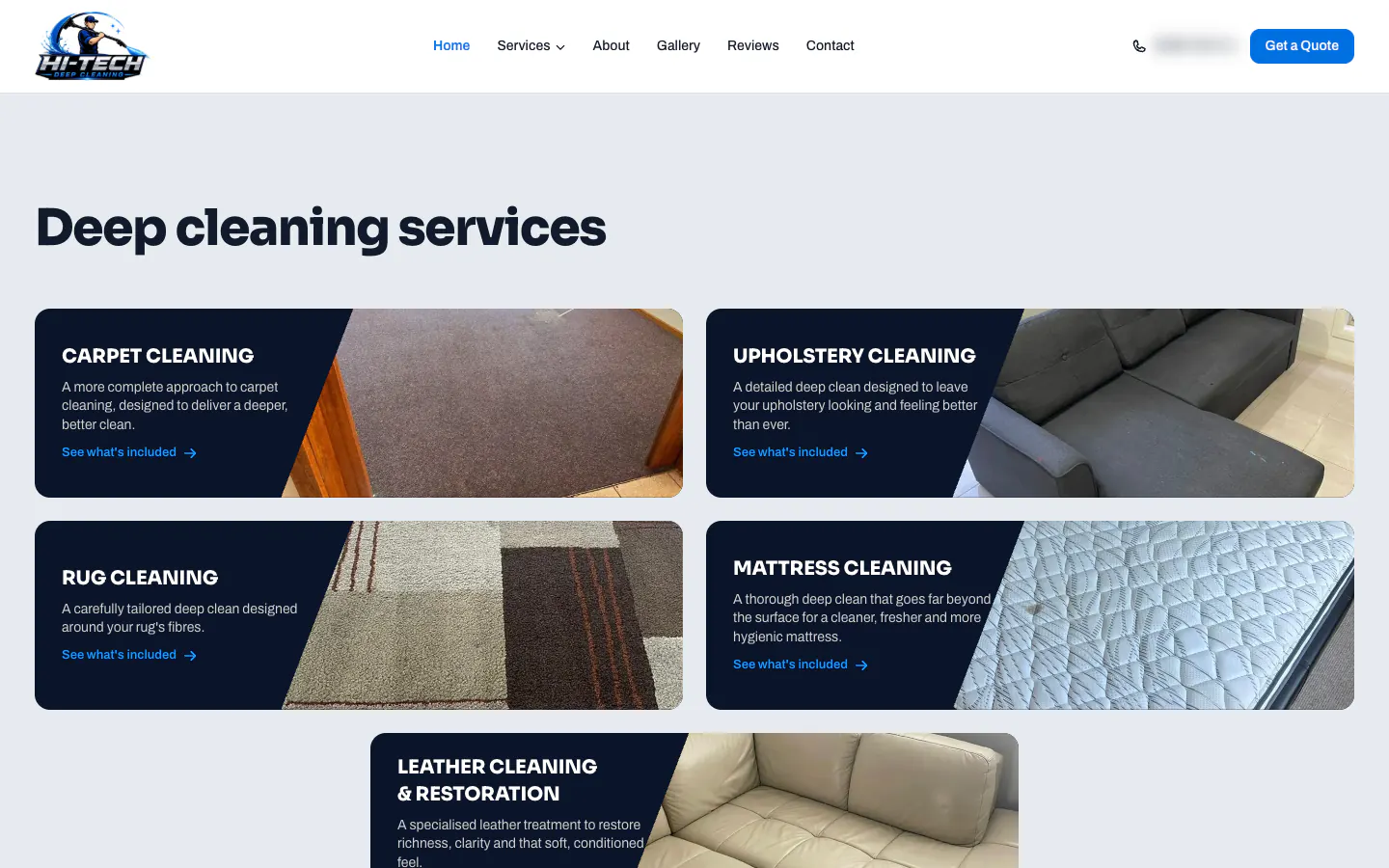
We built 14 sitemap pages, from five services to gallery, reviews, FAQ, about and contact, plus a premium page for the ads. We also added a numbered method on each service page, 27 steps in all.
The business
Hi-Tech Deep Cleaning is an owner-operated cleaning business working across Melbourne, from Brunswick and Coburg to Dandenong, Frankston and Werribee. It cleans carpets, upholstery, rugs and mattresses and restores leather, and its approach is simple: inspect first, clean deeper, protect the surface and dry it quickly. The person who quotes each job is the person who does it.
The brief
Carpet and upholstery cleaning is often bought on price, and most websites in the trade look the same. Hi-Tech charges for a more thorough job, so its site had to explain what the extra steps are, why they matter for each material, and show the results on real jobs before a visitor picks up the phone.
The site also had to carry Hi-Tech's Google Ads, so a search for rug cleaning or leather restoration had to land on a page about exactly that service, with the method, the proof and the call button in the same order every time.
A home page that leads with the result
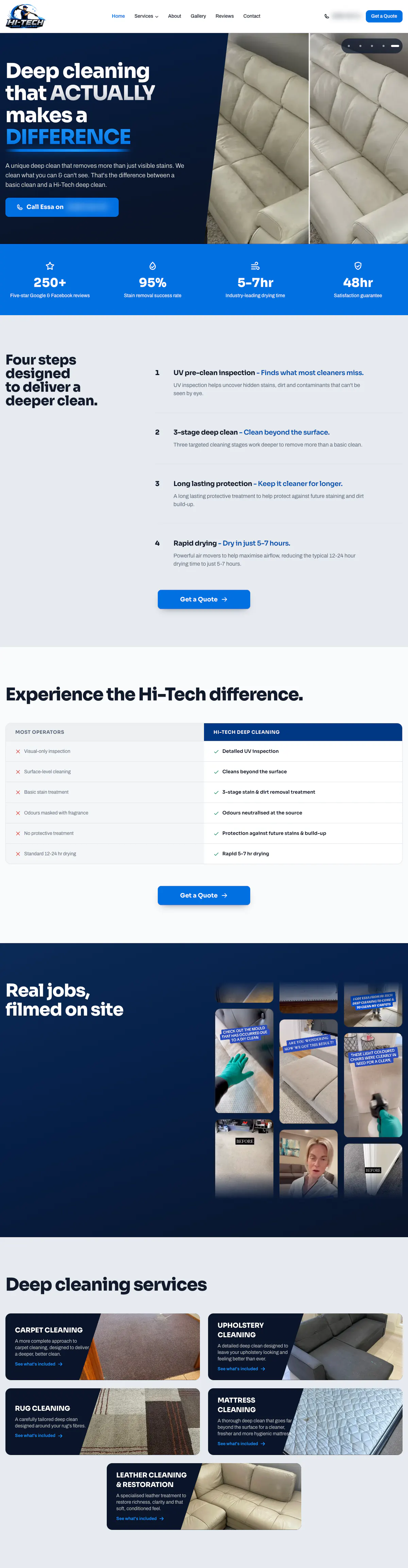
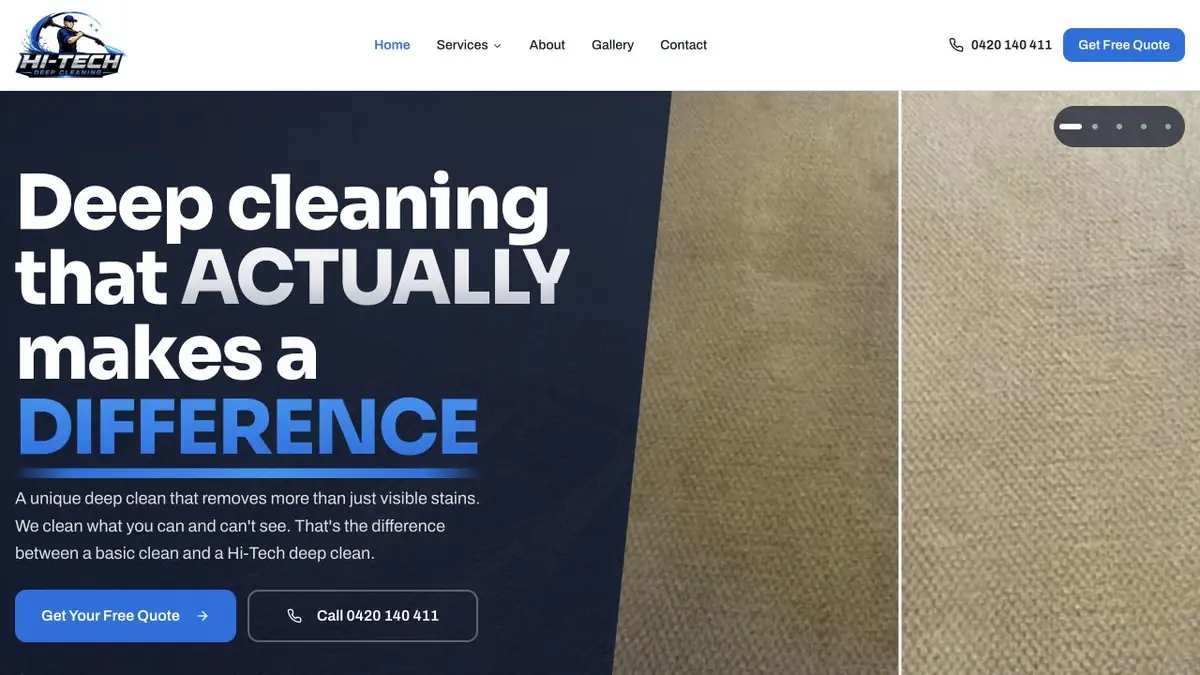
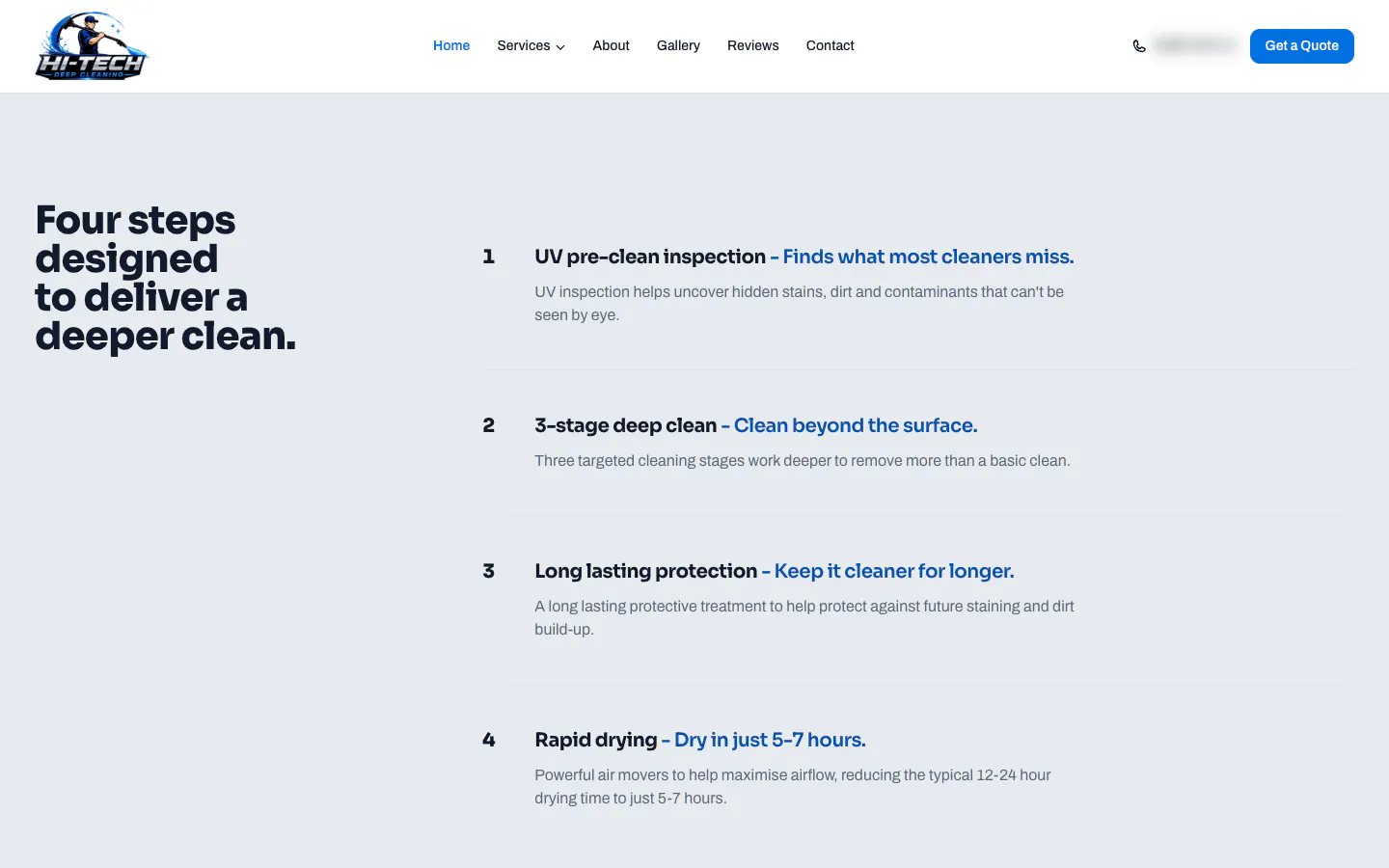
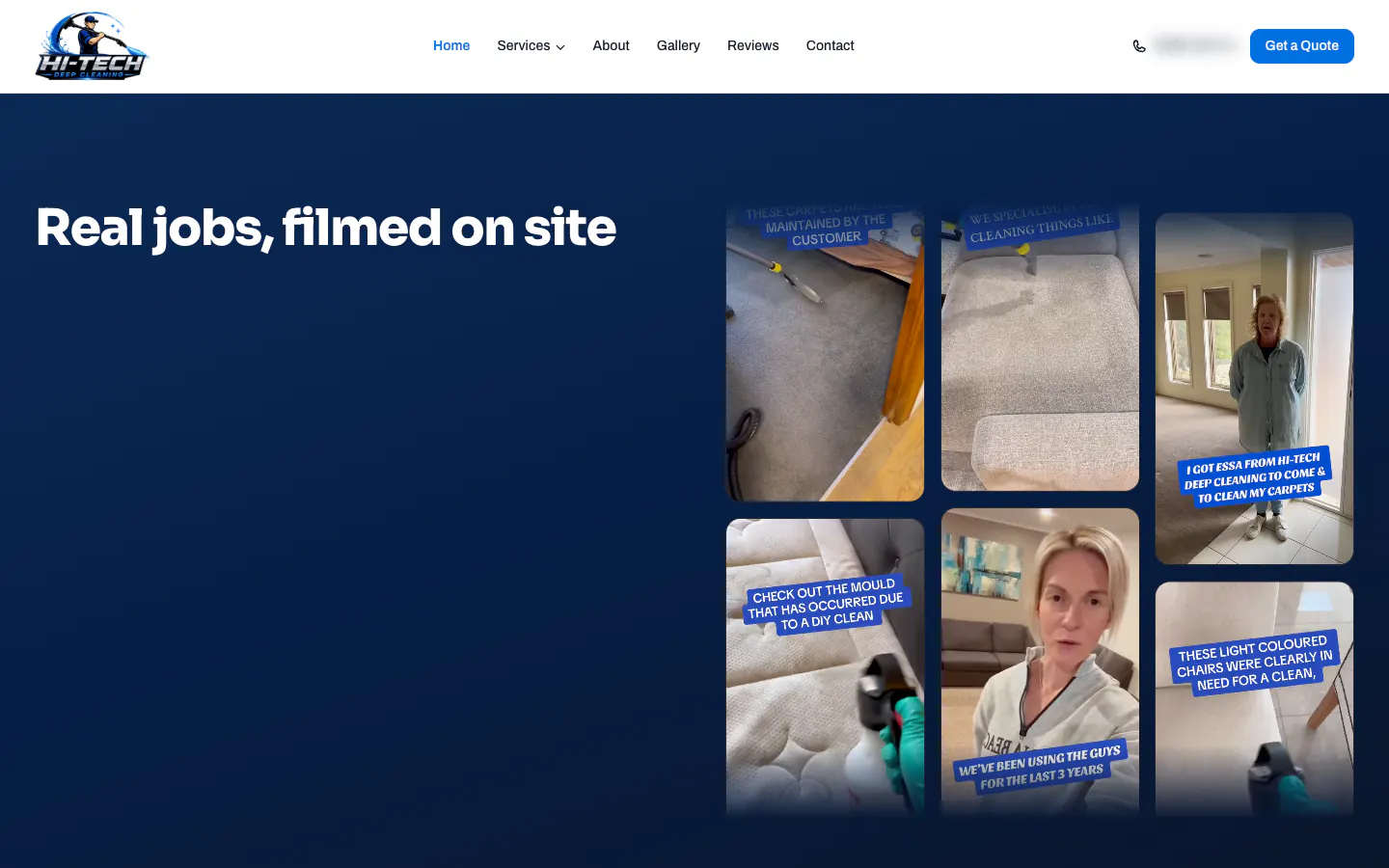
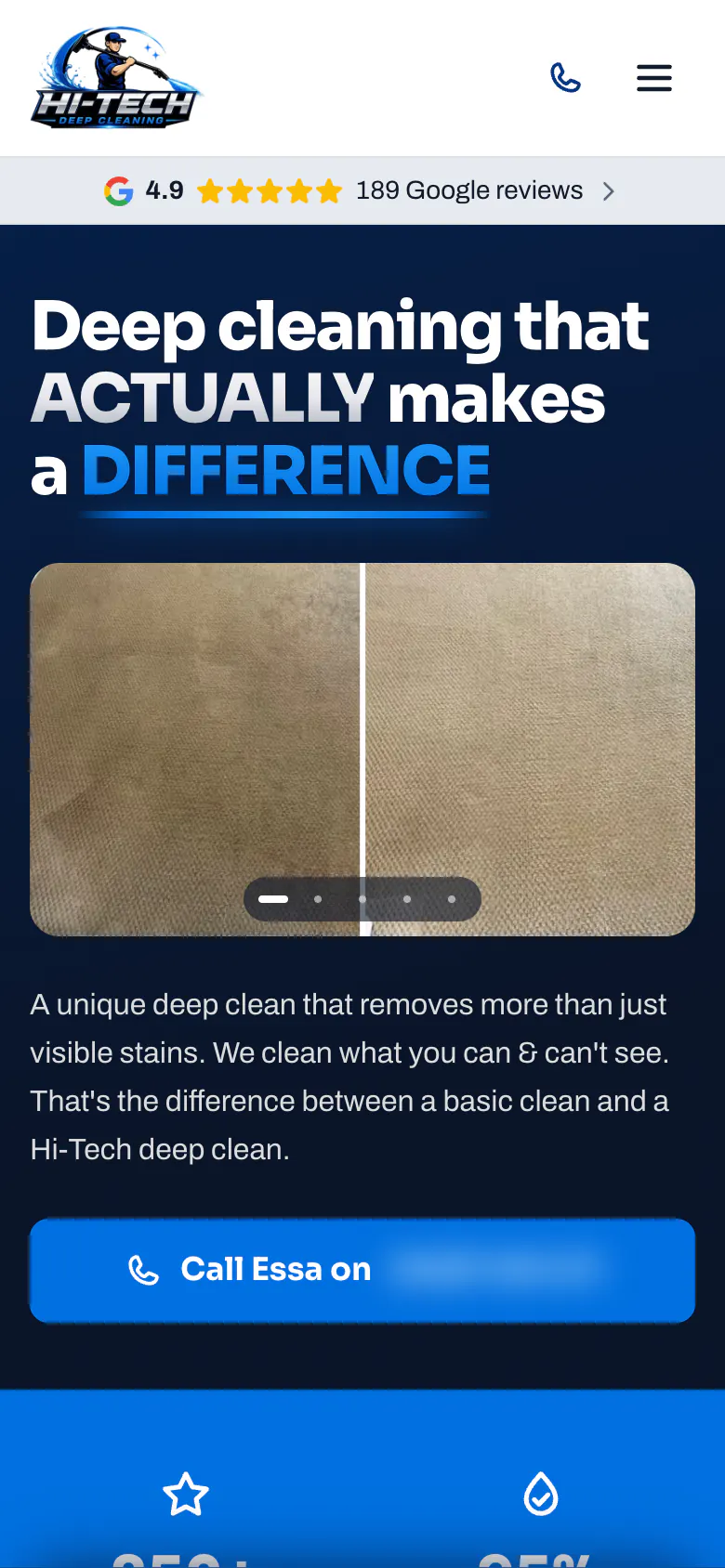
The home page opens on a carousel of before-and-after photos from real jobs, split down the middle, beside a headline about a clean that makes a difference. The main button asks the visitor to call the owner by name. Below it, a band of four figures covers reviews, stain removal, drying time and the satisfaction guarantee, and a four-step summary explains the method: a UV inspection, a three-stage clean, a protective treatment and fast drying.
Five service pages, five methods
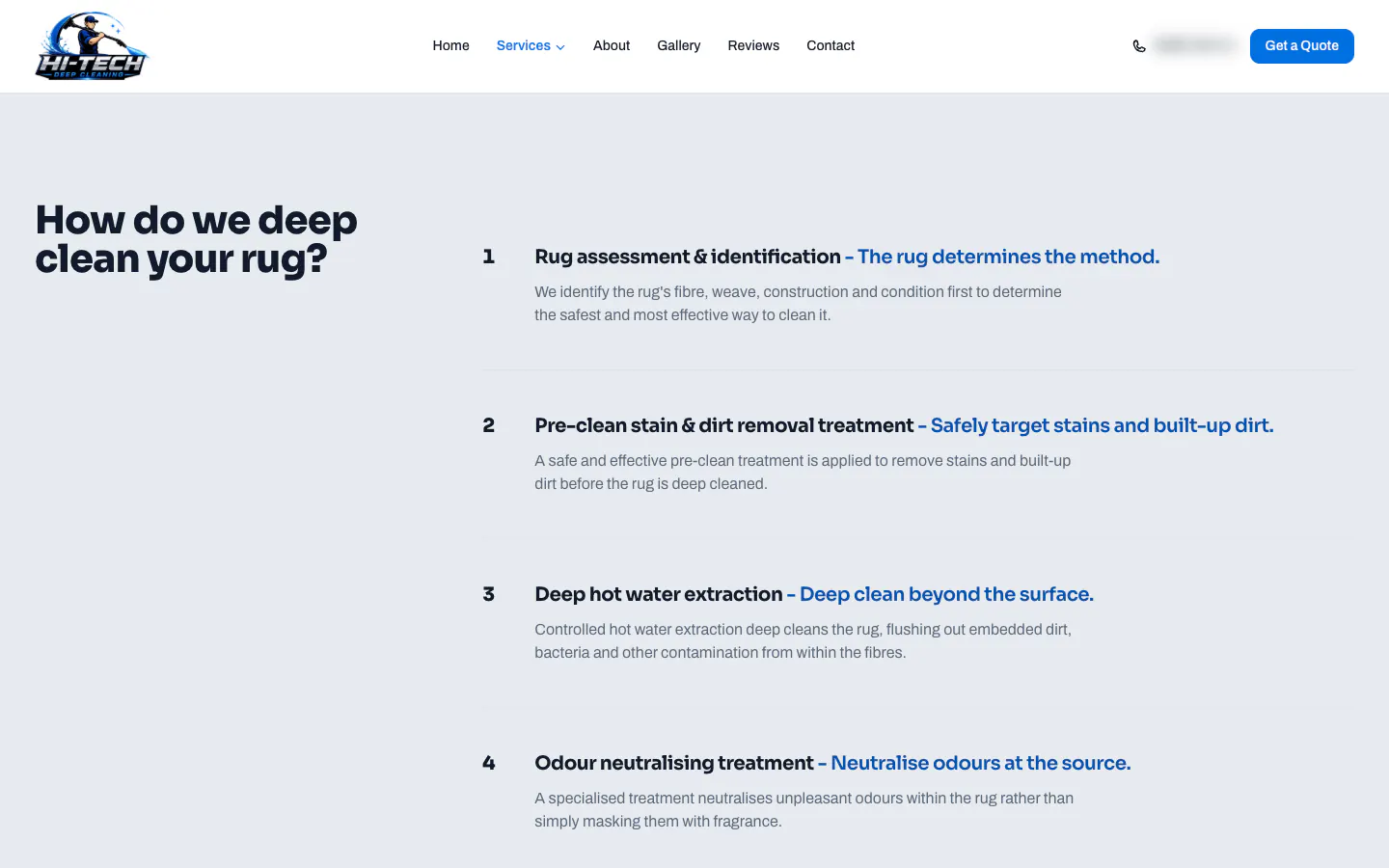
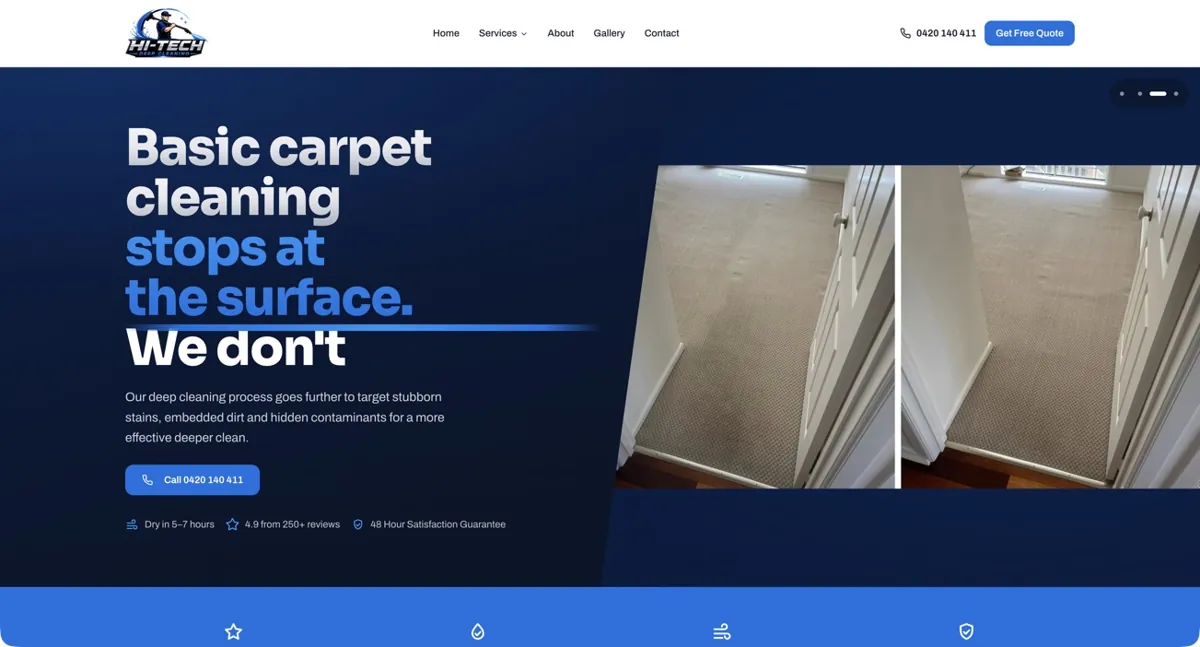
Each service page opens with its own before-and-after carousel and a headline written for that surface, then sets out its method as numbered steps. Carpet has five, upholstery, rugs and mattresses have six, and leather has four, from a condition assessment to a two-stage clean, conditioning and long-term protection. Rugs are identified by fibre and weave before cleaning and get an odour treatment of their own. Each page then shows work captured on site, a gallery of transformations for that surface and five answers to the questions people ask about it.
A comparison and a gallery as proof
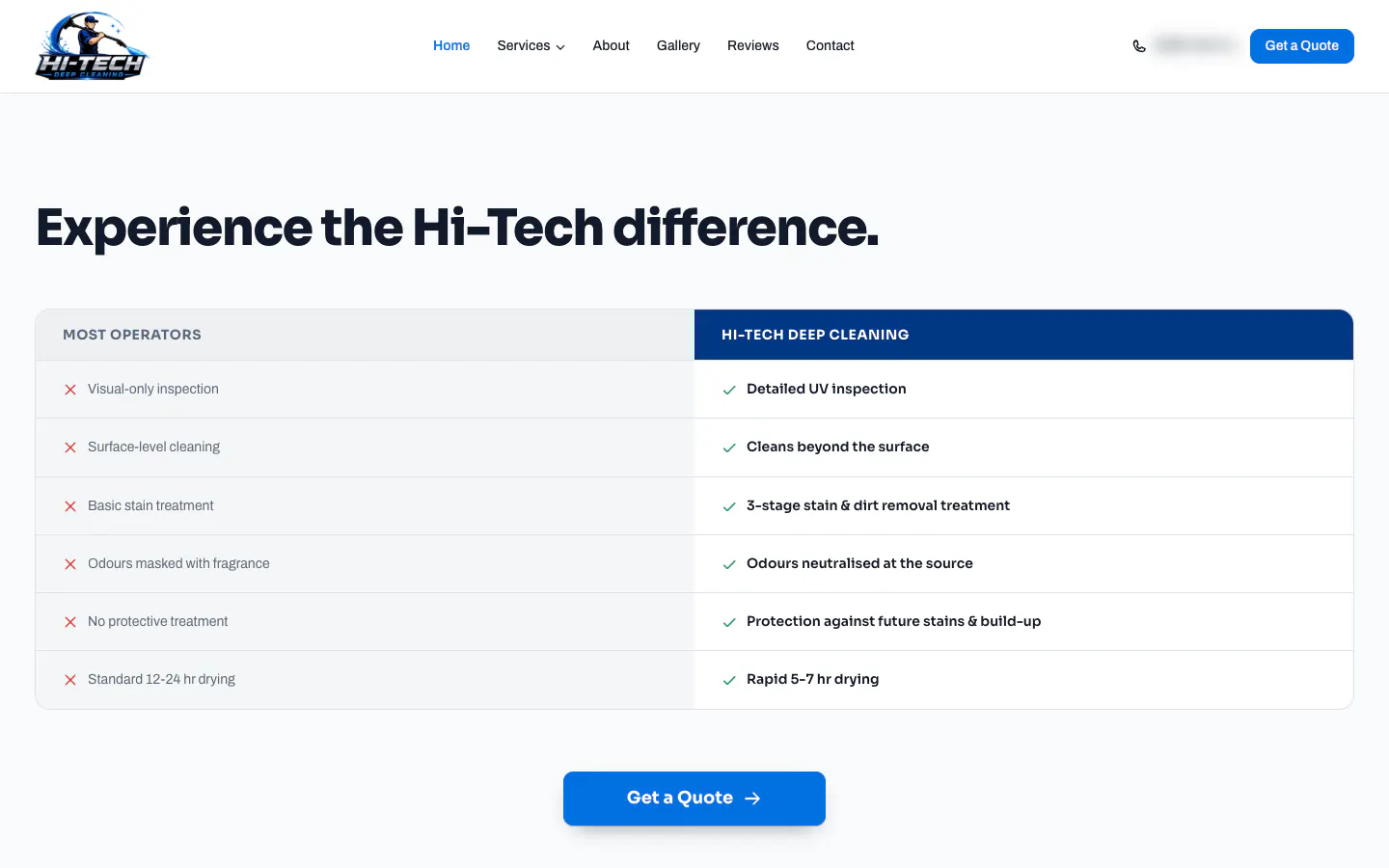
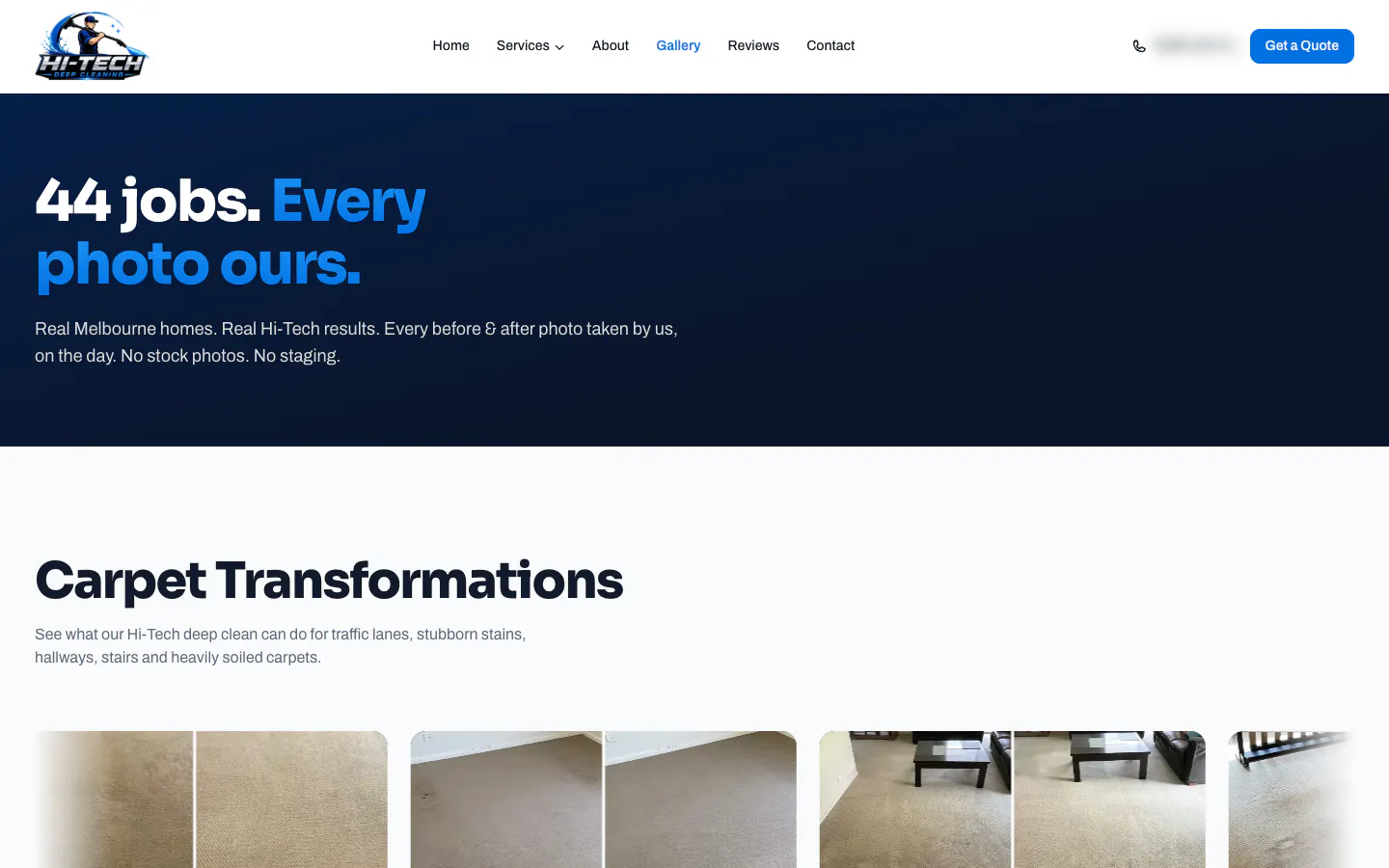
A comparison table sets most operators against a Hi-Tech deep clean across six points, from a visual inspection against a UV one to masked odours against neutralised ones, and appears on the home, service and about pages. Twelve captioned job films sit on the home page. The gallery page sorts before-and-after photos from jobs into carpets, sofas and chairs, leather and mattresses, and a reviews page shows what customers wrote.
Answers and a short quote form
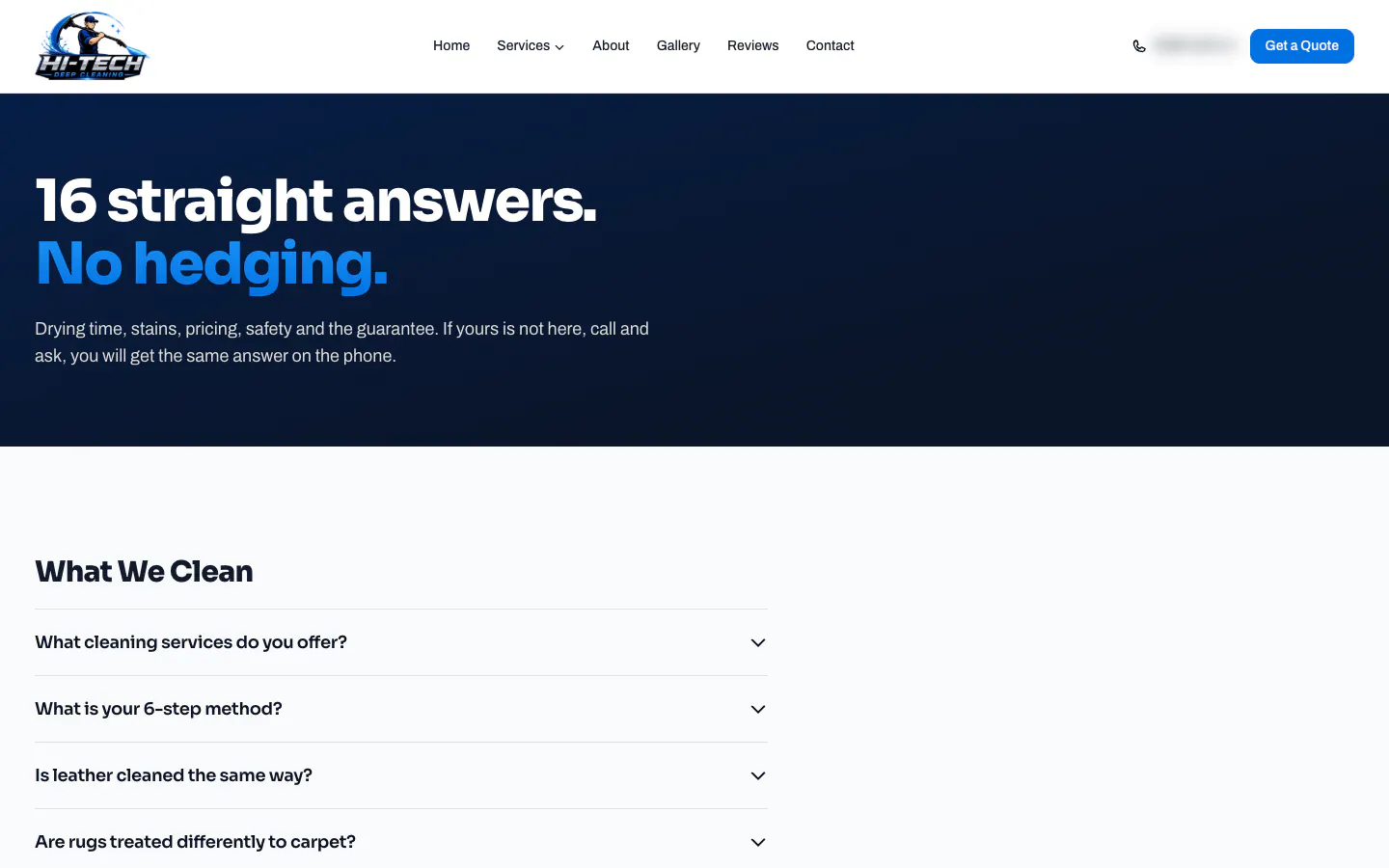
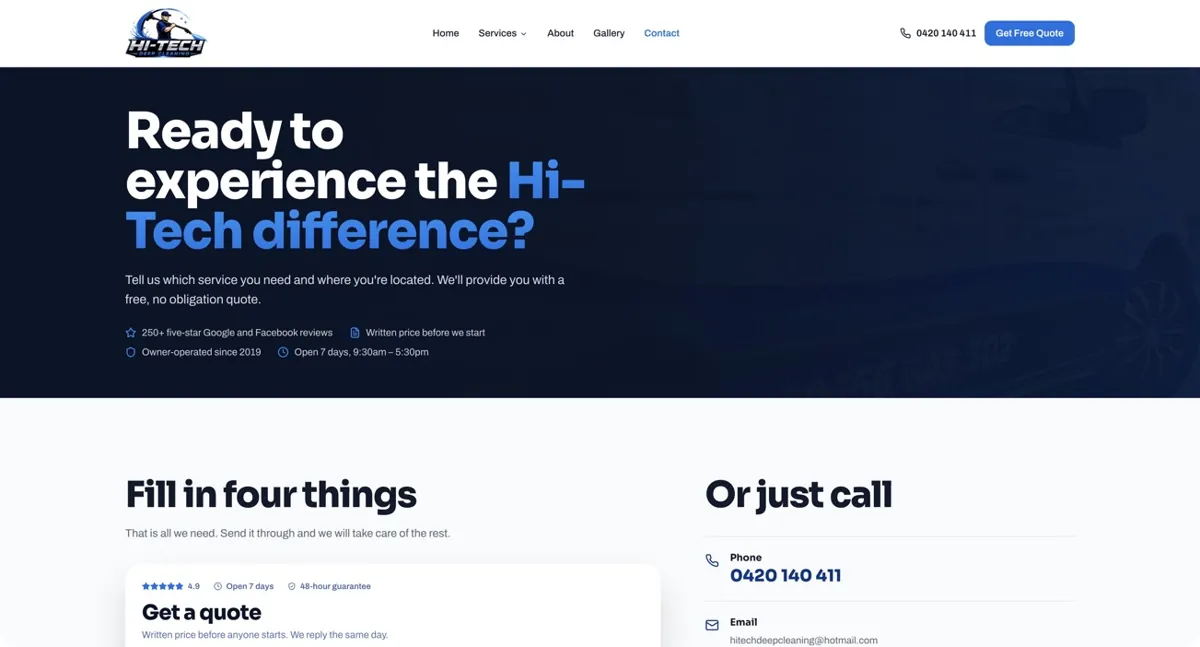
The FAQ page gives 16 answers in four groups: what is cleaned, drying time and stains, pricing and booking, and the day itself. The contact page asks for four things only, a name, a mobile number, the suburb and the service, and promises a written price the same day, with the owner's number beside it. A separate premium page, outside the menus, was built for ads aimed at people who would rather pay once for a proper job.
Built for phones
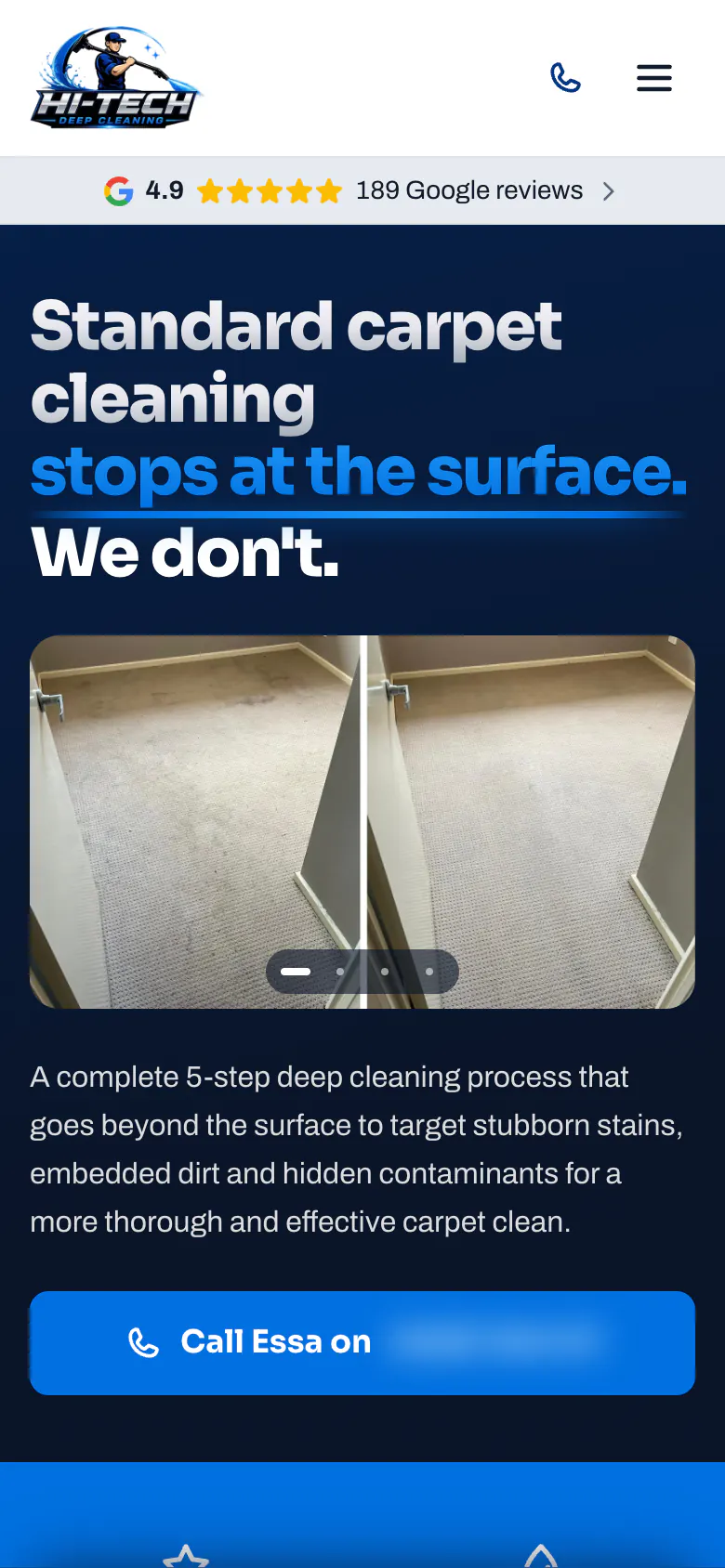
On a phone the header shrinks to the logo, a call icon and the menu, with a strip showing the Google rating beneath it. The hero keeps the before-and-after photo above the copy, and the call button runs the full width of the screen. Service pages follow the same order, so the photo, the headline for that surface and the call button come first.
What it connects to
For a cleaning business that needs its method to sell the job, see our website design services and marketing for cleaning businesses.
Related work: Hi-Tech Deep Cleaning campaign case study.