
Establish what is working before expanding it
Start with a clear description of the current result. Which services are generating suitable enquiries? Which become accepted work? Does the team understand the costs and effort needed to fulfil them? These questions provide a more useful foundation than a broad statement that the campaign is performing well.
The Bayside Plumbing case reports a return from recorded won-job revenue within its reported window. It is a specific result with a defined basis. Another business should establish its own baseline rather than adopt that ratio as a target it expects to receive automatically from a similar campaign.
Choose what the next increase is meant to achieve
An owner might want more of an established service, a clearer residential offer or coverage in an additional area. Those are different growth decisions. Write the intended change in ordinary language before altering several parts of the campaign at once.
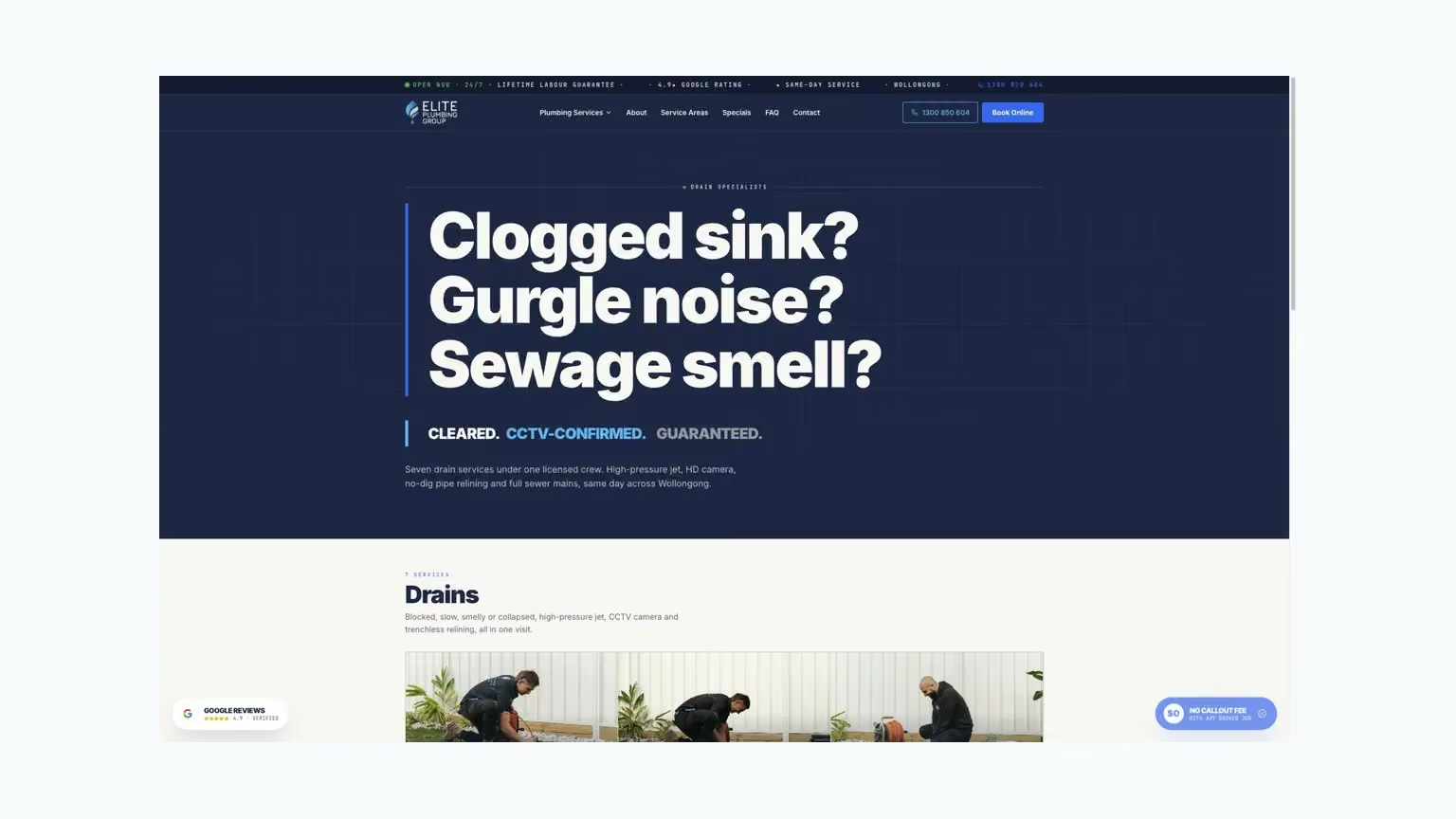
The Elite Plumbing Group case describes a residential focus alongside established builder work. The brief shapes the work: expanding one customer audience requires a clear explanation of the relevant services, rather than simply presenting a larger budget as the entire strategy.
Confirm the business can accept the expected work
Discuss available people, appointment space and quoting capacity with the team. Consider what happens if demand is uneven across days or services. A business may be able to take more planned installations but have little room for additional urgent calls.
Give customers accurate availability and service information. The campaign team needs enough understanding to avoid promoting work the business cannot reasonably accept. That conversation should happen before the increase, rather than after suitable enquiries start being turned away.
Change in stages that can be interpreted
There is no universal percentage increase that suits every account and business. Choose a manageable change based on current results, the risk the business can absorb and the question being tested. Avoid changing the service, geography, offer and website simultaneously unless there is a clear reason.
Where several changes are necessary, record them together and be careful about attributing the result. A stronger period after a new page and wider coverage does not tell you which change caused it. The review can still support a business decision, but its conclusion should be no more precise than the comparison allows.
Look for pressure as well as opportunity
Review missed or delayed responses, unavailable dates and changes in the kind of work accepted. A campaign may continue generating suitable interest while the business becomes less able to handle it. That is a capacity signal worth addressing before assuming the next increase will produce the same result.
Also review whether the additional work is commercially worthwhile. Revenue, delivery cost and workload belong in the same conversation. A greater volume of low-fit work can consume the time needed for the services the owner intended to grow. The right response may be to refine the mix, improve clarity or pause the increase while the operation catches up.
Agree the next decision in advance
Set a review point and define what would support continuing, adjusting or holding the expansion. Allow enough time for relevant enquiries to progress into work. Keep exceptional events and changes in availability visible when comparing the outcome with the earlier period.
Plan what the business will do if the increase produces demand faster than expected. The response might involve adjusting the promoted service, reviewing availability or holding the next stage while accepted work is delivered. Decide who can make that call. This is different from assuming growth will happen; it is preparation for a plausible operational outcome. A clear decision owner makes a staged plan easier to manage when the campaign and the daily workload change at different speeds.
A Google Ads growth plan should connect the next increase with a concrete business objective. Use the current service mix and accepted work as the baseline for the next decision. Growth becomes more deliberate when the owner can explain both the opportunity being pursued and the capacity available to fulfil it.