We built industries and Services menus, with 19 industries and 14 services each on its own page. We also added a scope checklist, a pricing explainer and three region pages naming 61 suburbs.
The business
Commercial Office Cleaning Perth runs structured cleaning programs for offices, healthcare, retail, hospitality and industrial sites across Perth. Its crews and supervisors work in three regions, the Perth CBD and the northern and southern suburbs, and its contracts bundle the daily clean with the periodic work, from carpets and windows to pressure washing and kitchen deep cleans.
The brief
Facility managers rarely start with a service name. A practice manager thinks about clinics, a logistics manager about warehouses and a strata committee about common areas, and each wants to see that the cleaner knows that kind of site before sending a brief.
The brief was to give each of those people a page about their kind of site, to answer the questions they ask before they call, and to keep the same short site brief one step away on every page.
Two menus, two ways in
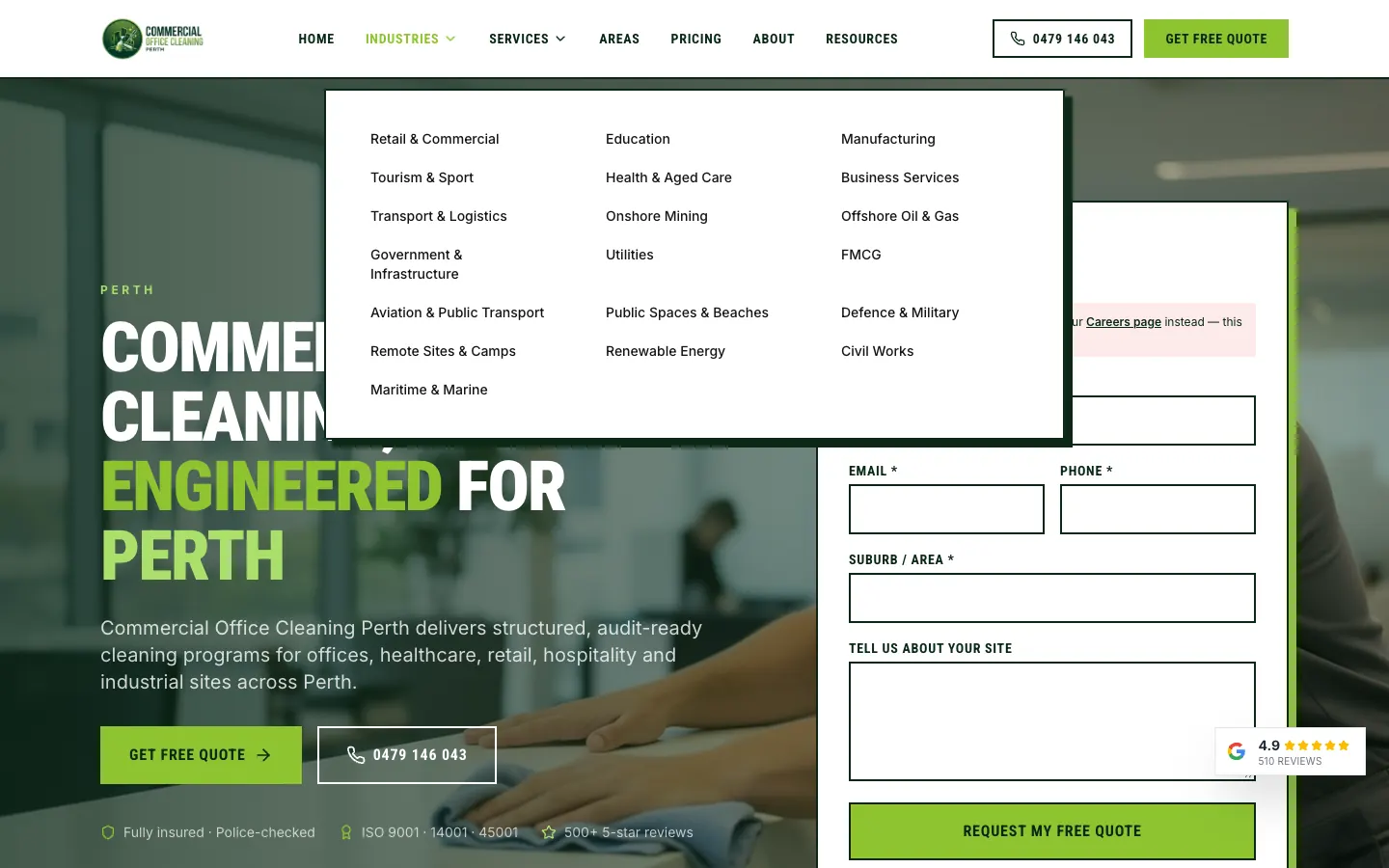
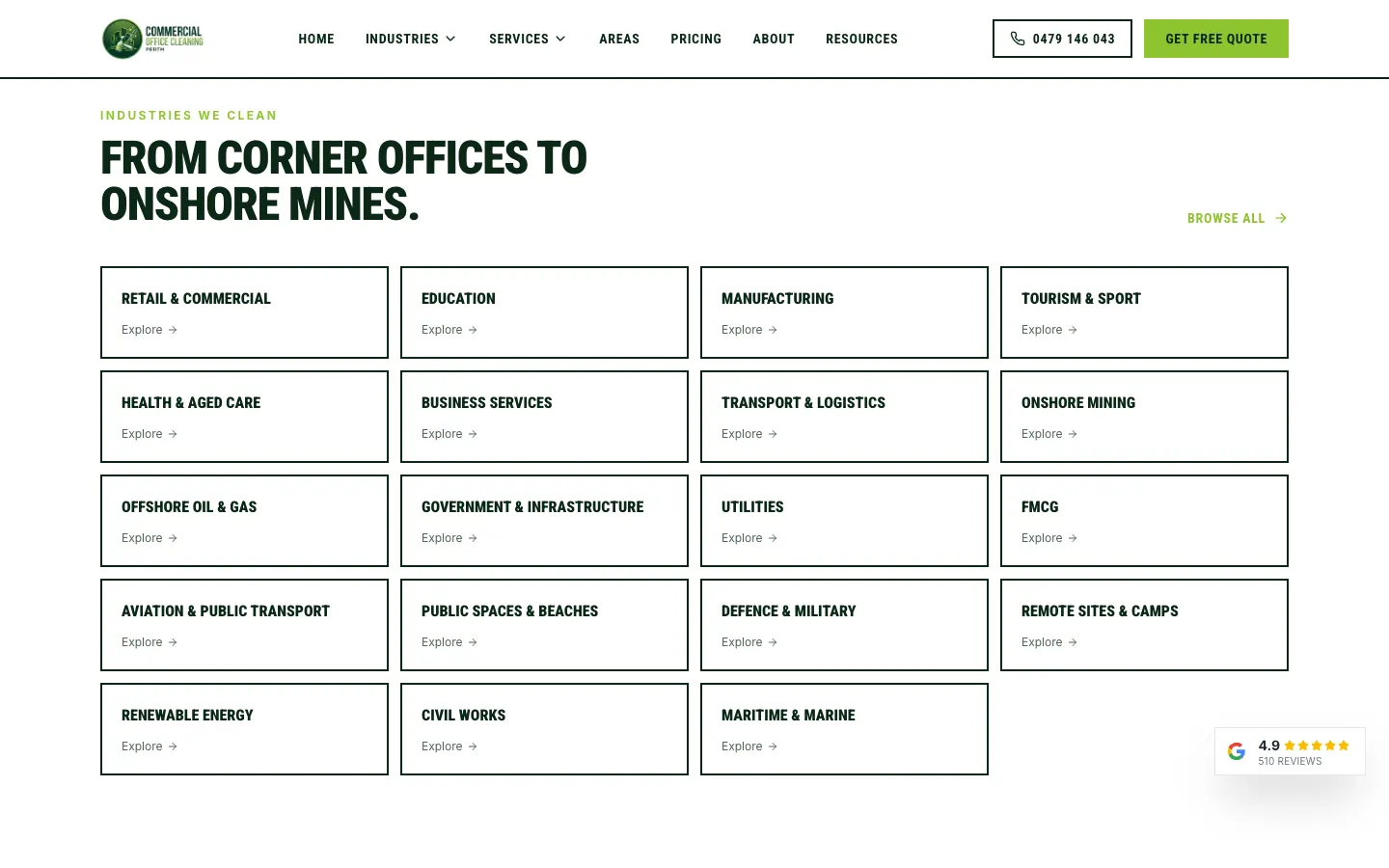
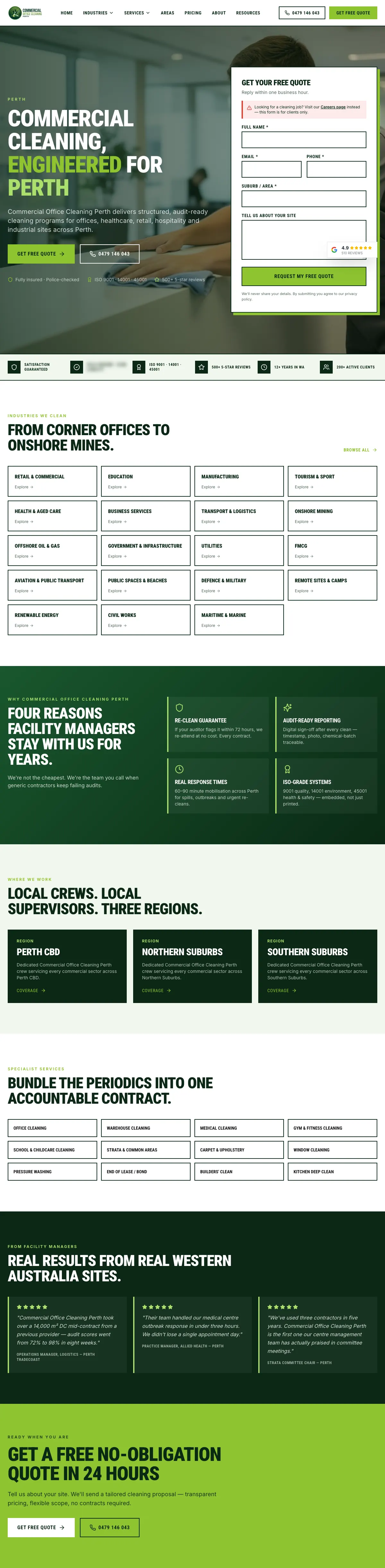
The header carries two menus. Industries lists 19 sectors in three columns, from retail and education to onshore mining, defence and maritime work. Services lists 14 cleans, from office, warehouse and medical cleaning to strata common areas, end of lease and kitchen deep cleans. The home page repeats the industries as a grid of cards headed From corner offices to onshore mines.
Pages written for the site in question
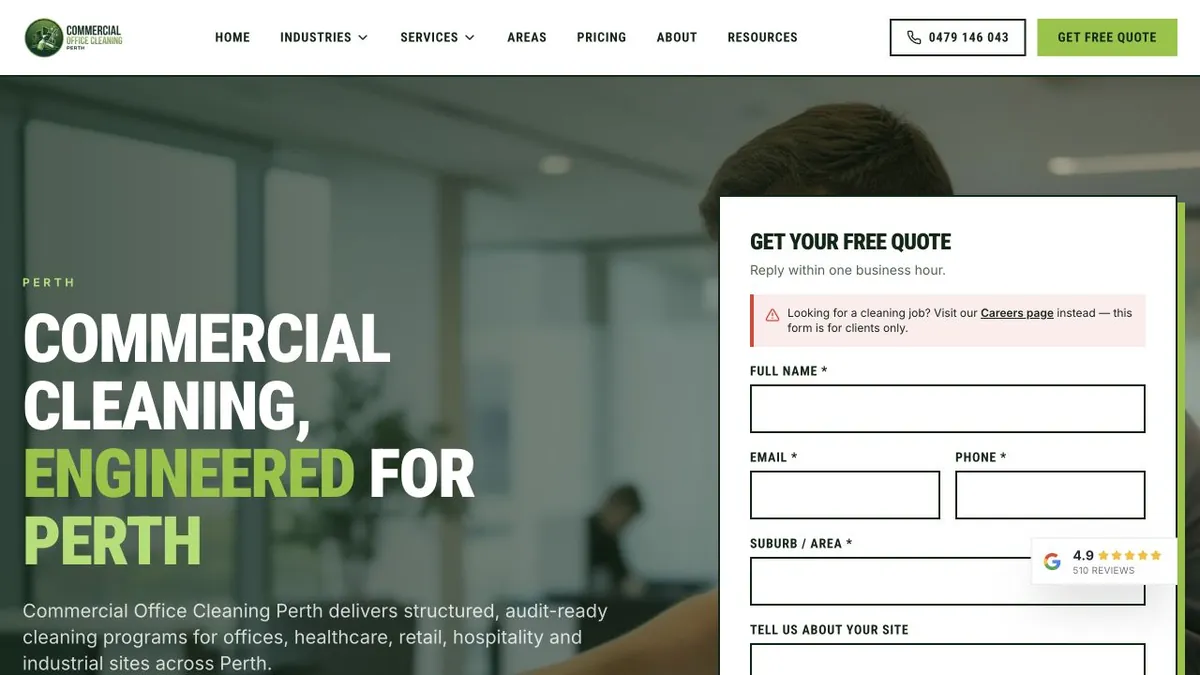
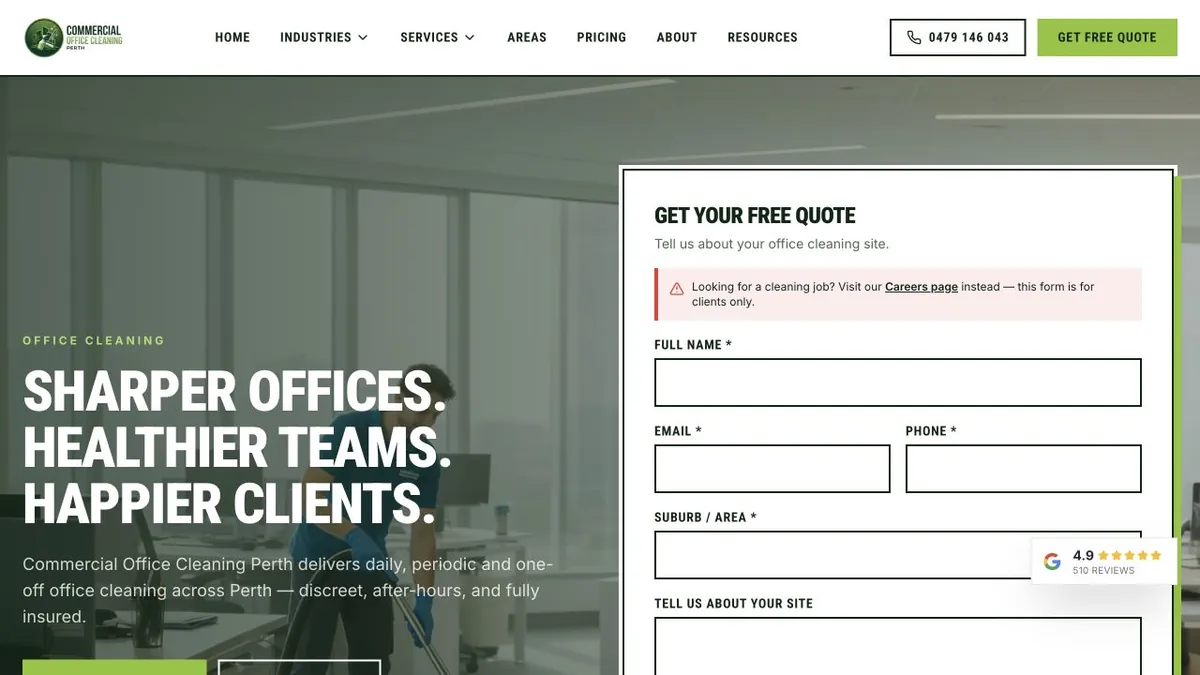
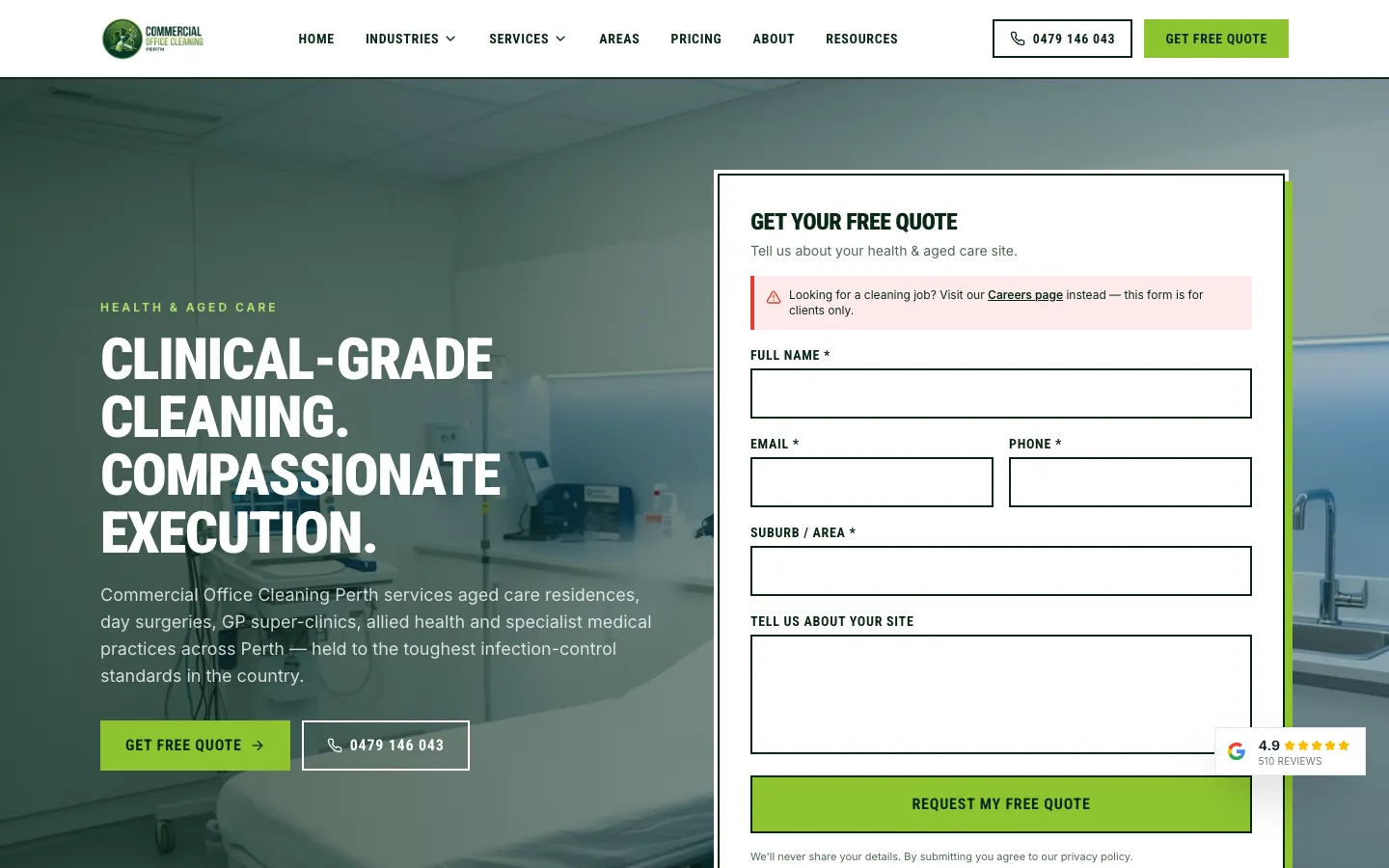
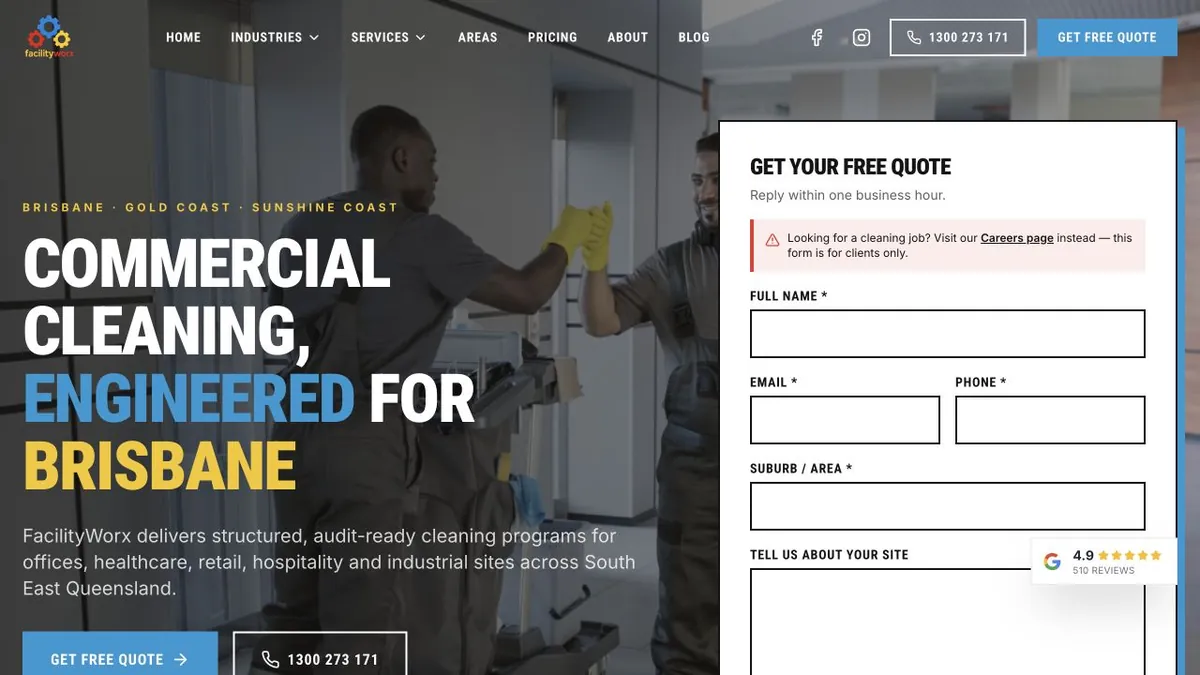
Each service and industry page opens with its own headline and a quote form whose subtitle names the work, such as Tell us about your health and aged care site. The office cleaning page then sets out the scope of work, the reasons teams switch, after-hours service and digital reporting, related services and six common questions, before a second form closes the page.
The answers a facility manager looks for
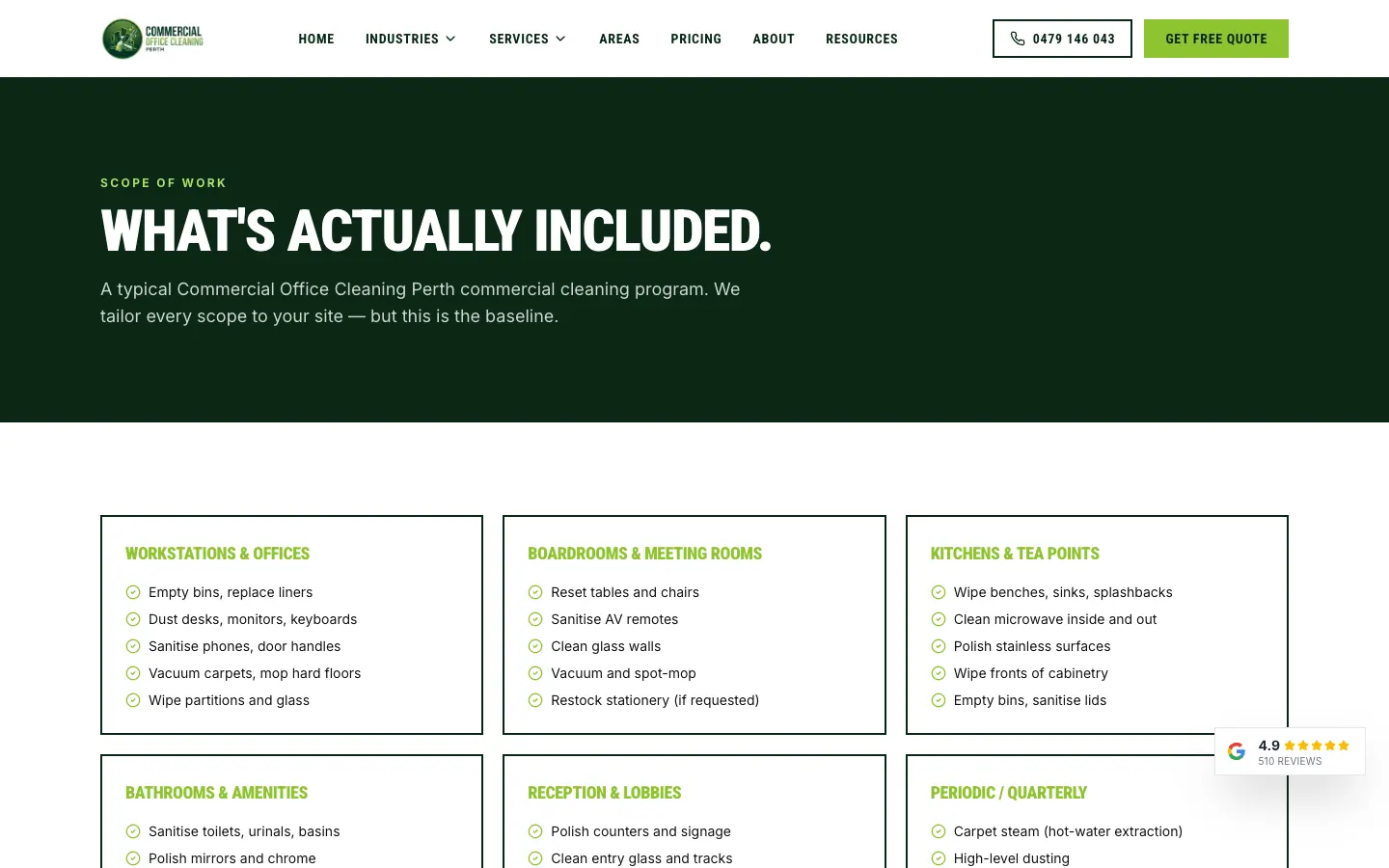
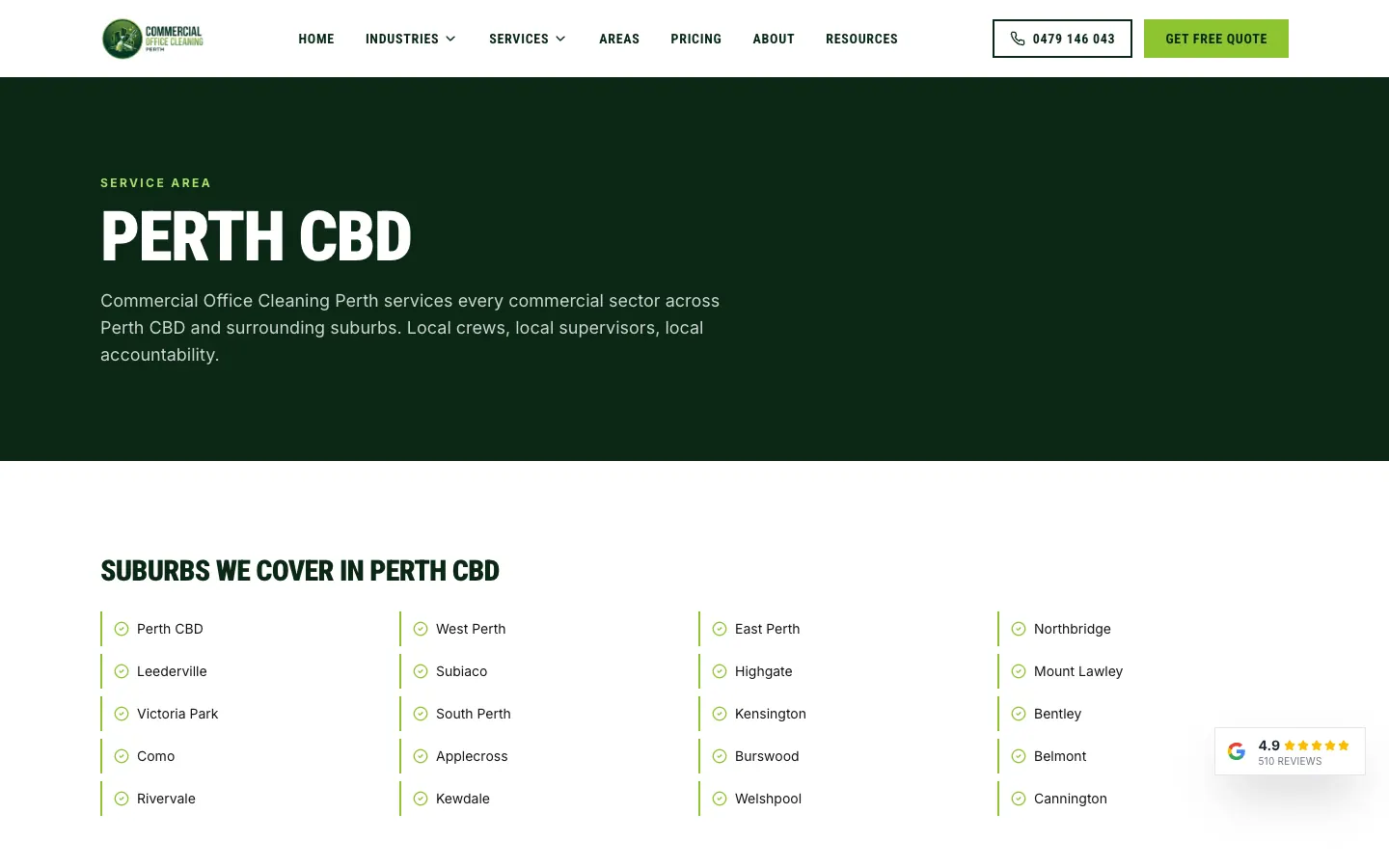
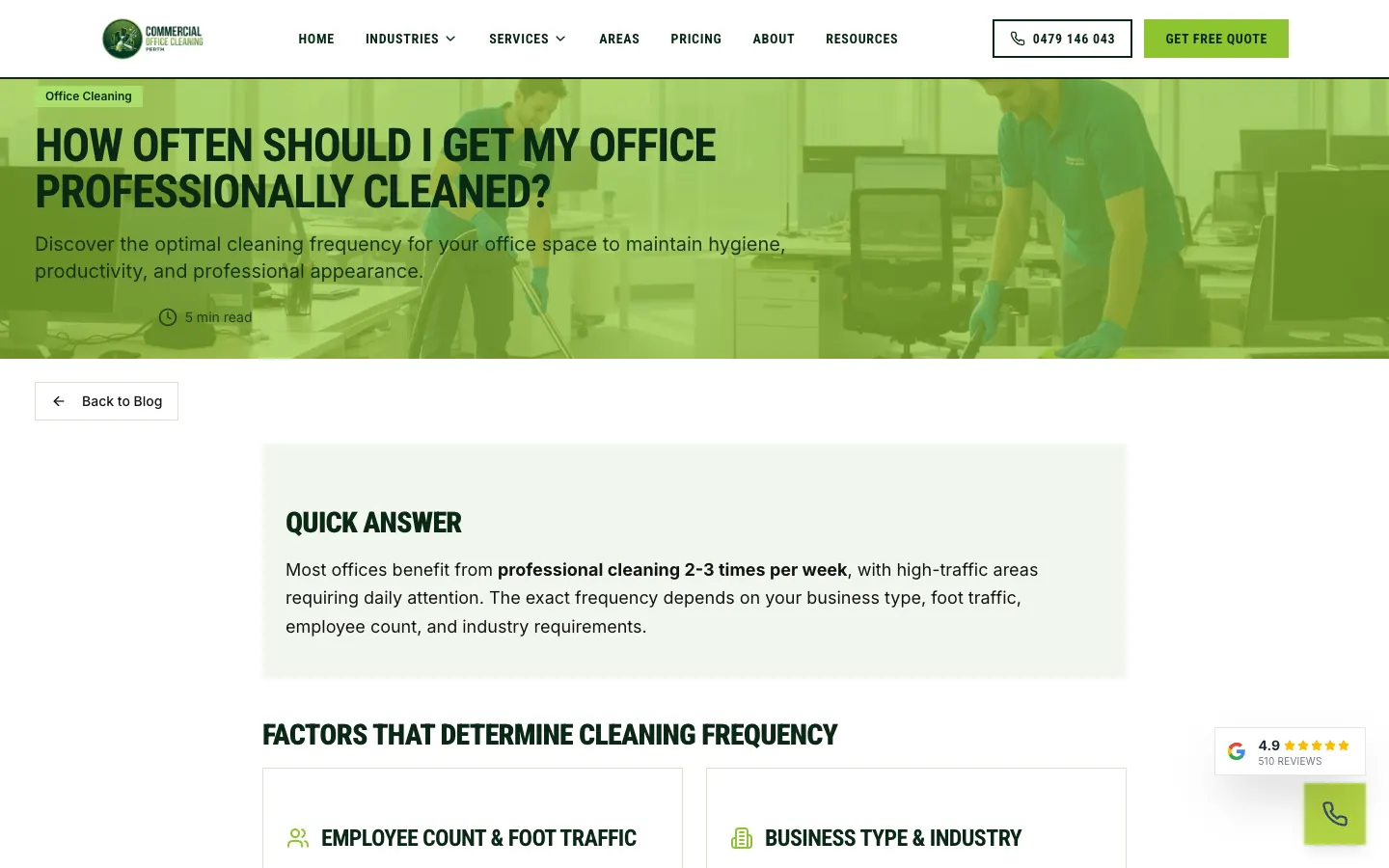
A scope page lists what a typical program includes across six areas, from workstations and boardrooms to bathrooms and periodic deep cleans. A pricing page explains the three ways a contract is costed: per cleaner-hour, per square metre or a fixed monthly contract. Three region pages name 61 suburbs between them, and 20 guides cover questions such as how often an office needs cleaning, what a cleaning program includes and how to choose a cleaner. The guide on cleaning frequency opens with a quick answer before the detail.
Reasons a facility manager can check
The home page sets out four reasons on separate cards: a re-clean guarantee if an auditor flags something within 72 hours, a digital sign-off after every clean, response times for spills and urgent re-cleans, and certified quality, environment and safety systems. A strip under the hero repeats the guarantee, insurance, certifications, reviews and years in WA, and a floating Google rating stays in the corner of every page.
One form, with a note for job seekers
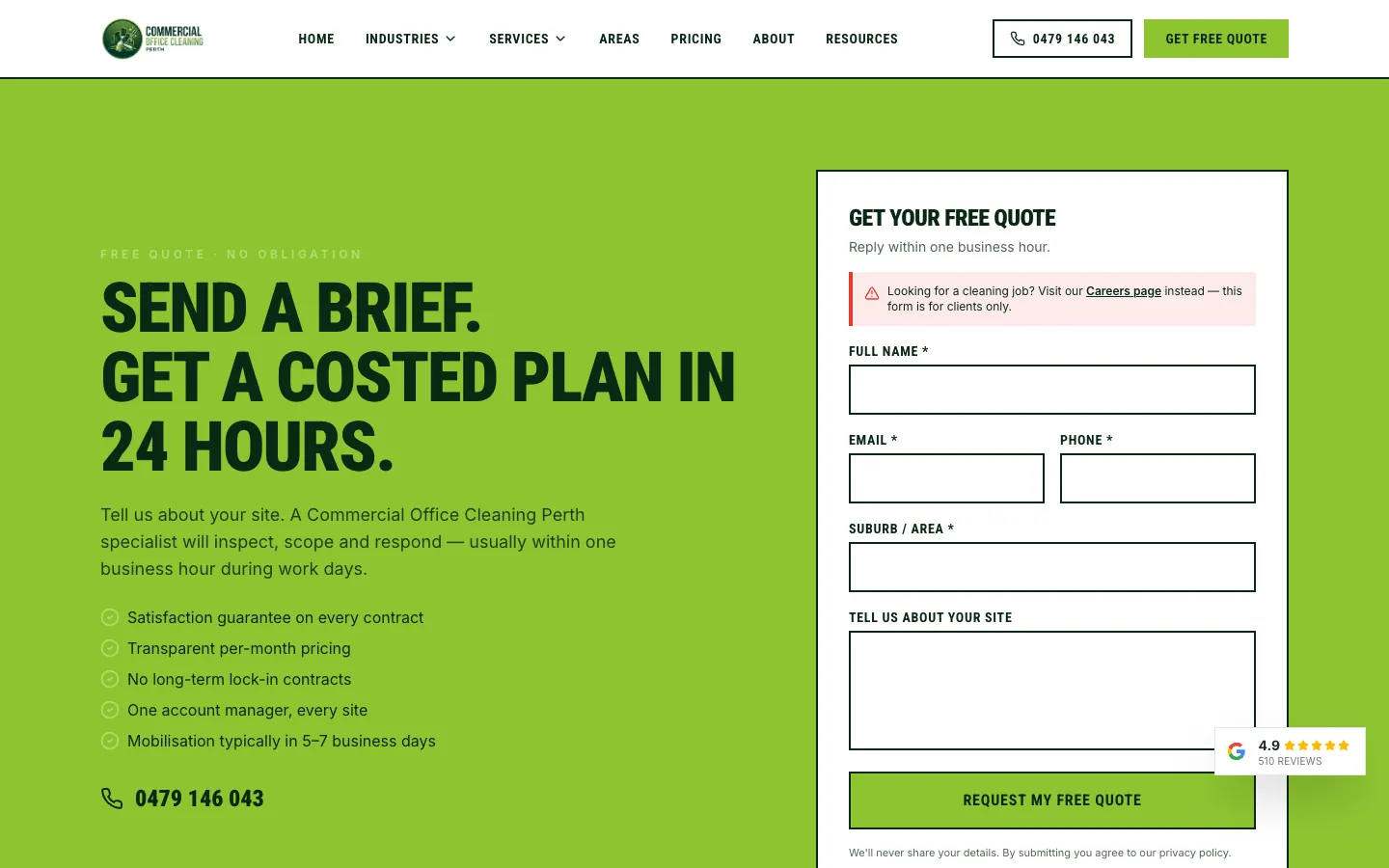
The form asks for a name, email, phone, suburb or area and a description of the site, and promises a reply within one business hour. A note above the fields points anyone looking for a cleaning job to the careers page, which keeps the form for clients.
Built for phones
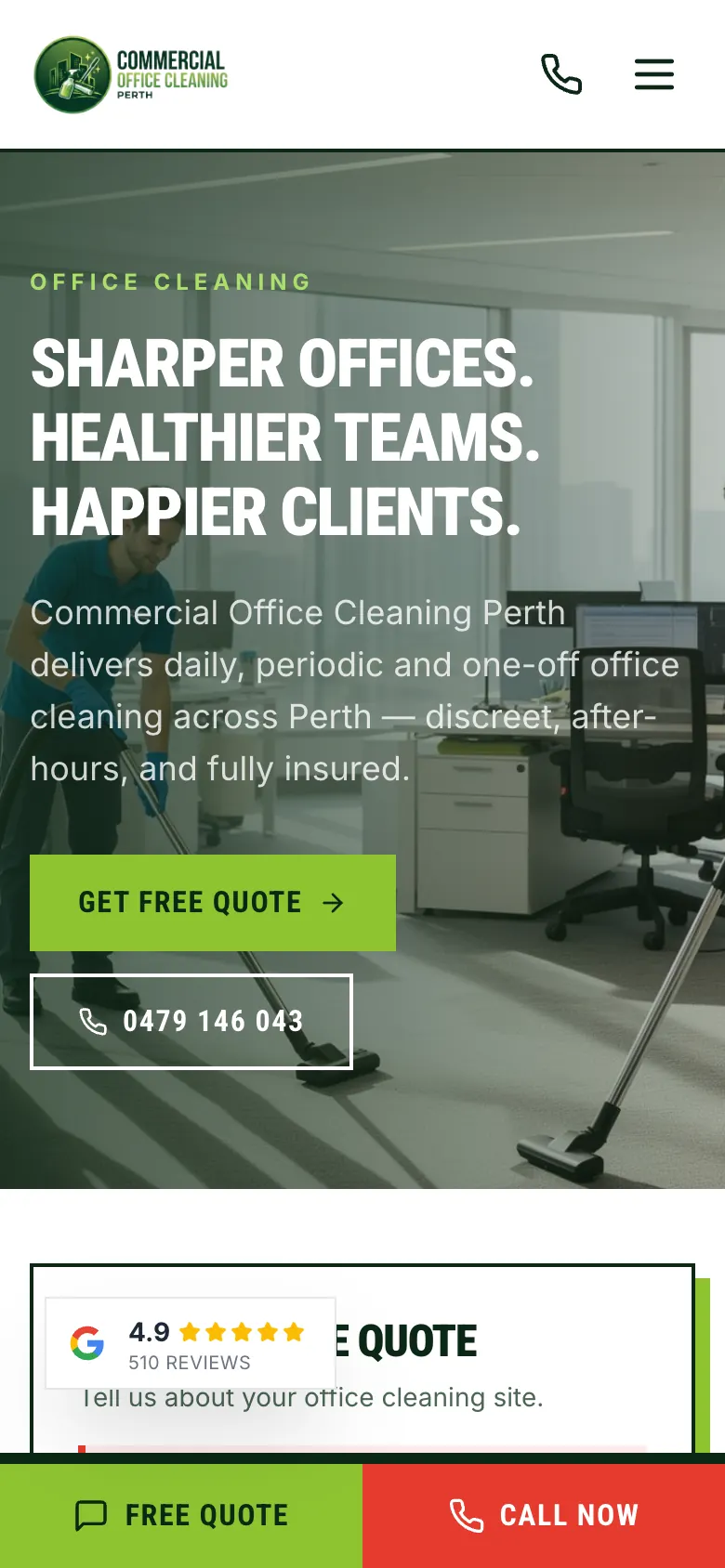
On a phone the header shrinks to the logo, a call icon and the menu. A two-button bar stays fixed to the bottom of every page: Free quote on the left and Call now on the right. Service pages open with the headline, a quote button and a tap-to-call number, with the site brief form directly underneath.
What it connects to
The site is where the client's Google Ads land. The campaign pairs each type of clean with Perth or a named area and sends people to the matching service page, so an ad about office cleaning reaches the office cleaning page and its form. The Commercial Office Cleaning Perth campaign case study sets out how the ads are organised.
For a cleaning business that needs a site organised around its clients' sites, see our website design services and marketing for cleaning businesses.