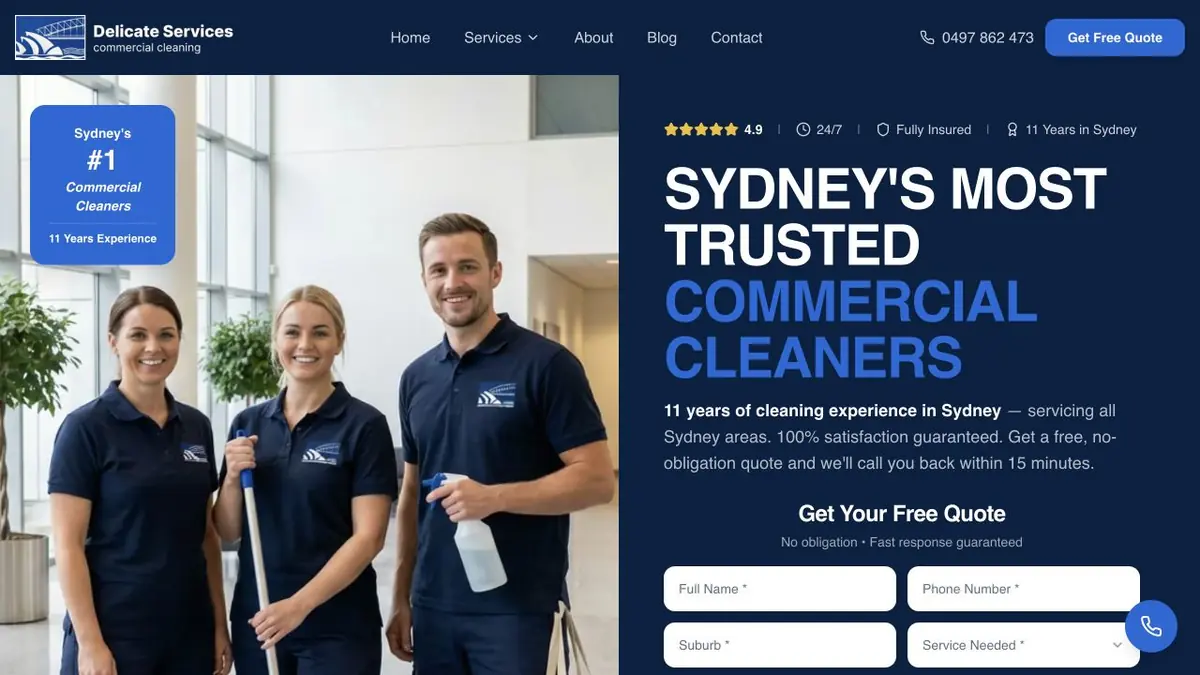
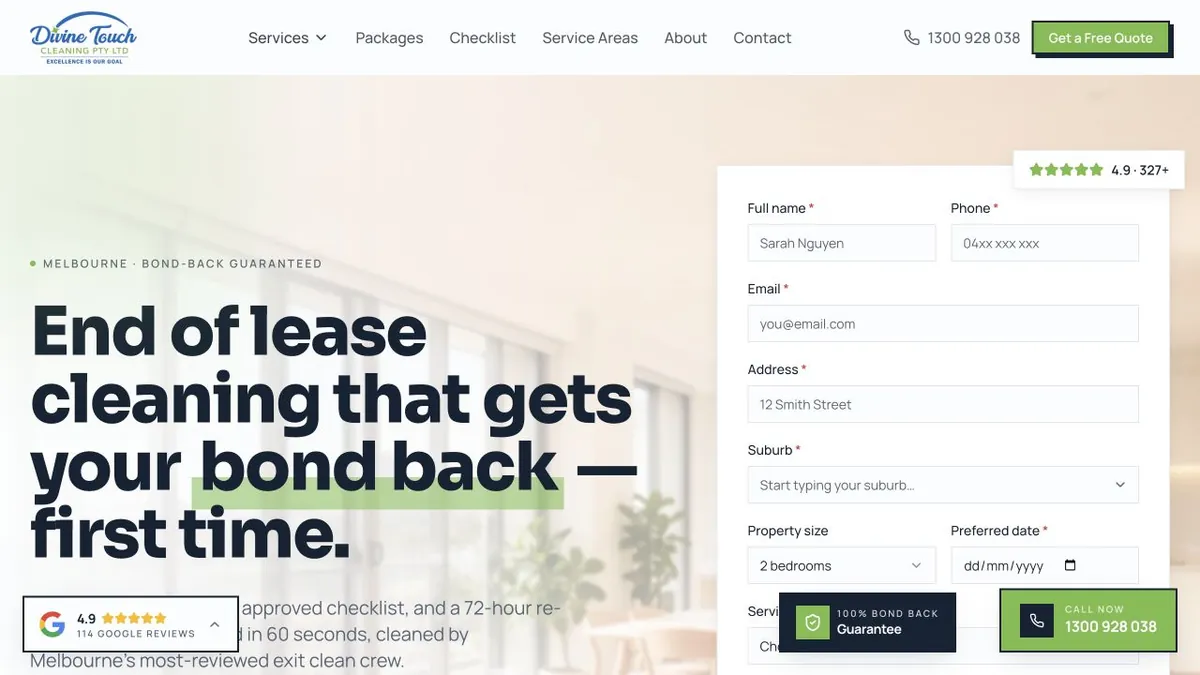
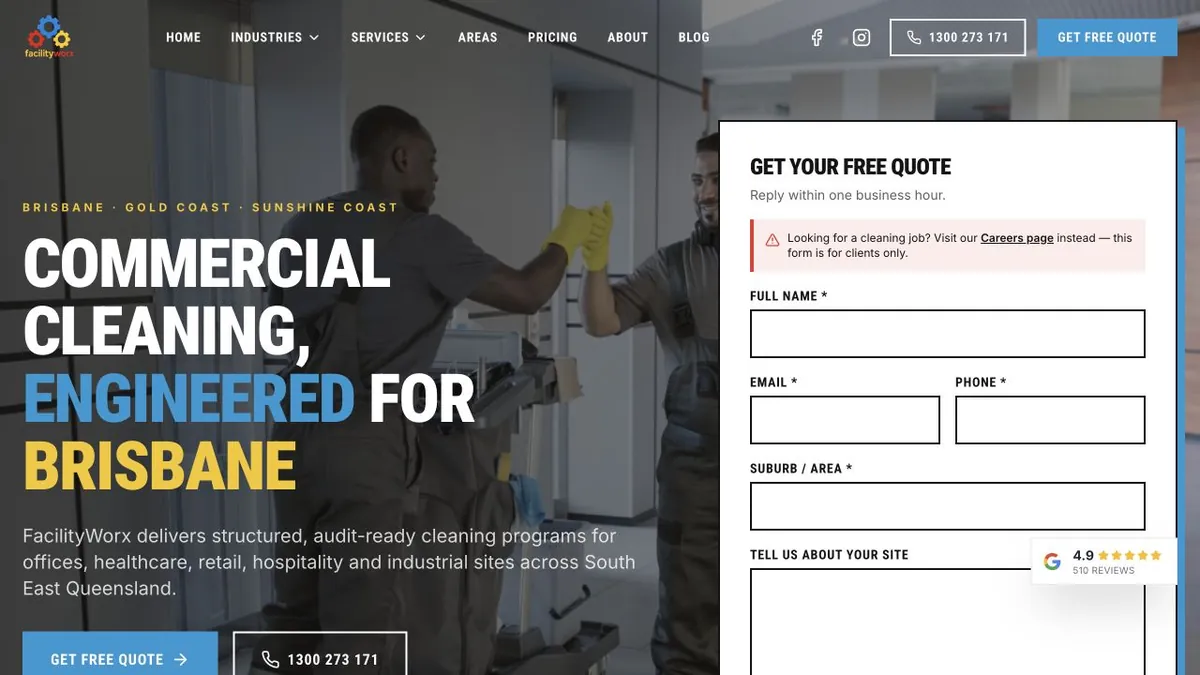
We built service pages written for facility managers, with frequency guidance and planning material to download. We also added suburb pages that answer the questions each area raises.
The business
CLEANEY is a Melbourne commercial cleaning company working across Greater Melbourne and the Mornington Peninsula. Its insured, police-checked teams clean offices, retail and strata buildings, restaurants and commercial kitchens, medical centres, childcare centres, schools, aged care facilities, gyms, pubs and clubs, warehouses and building sites after construction, as well as carpets, windows, canopies and exteriors. Each client gets an assigned team and regular quality checks.
The brief
Commercial cleaning is bought differently from a one-off home clean. The buyer is usually a facility, office or practice manager who compares proposals, checks compliance and has to plan around building access, trading hours and tenants. The brief was a site that gives each service and each suburb its own page, speaks to that buyer, and hands them the material to write a clear brief.
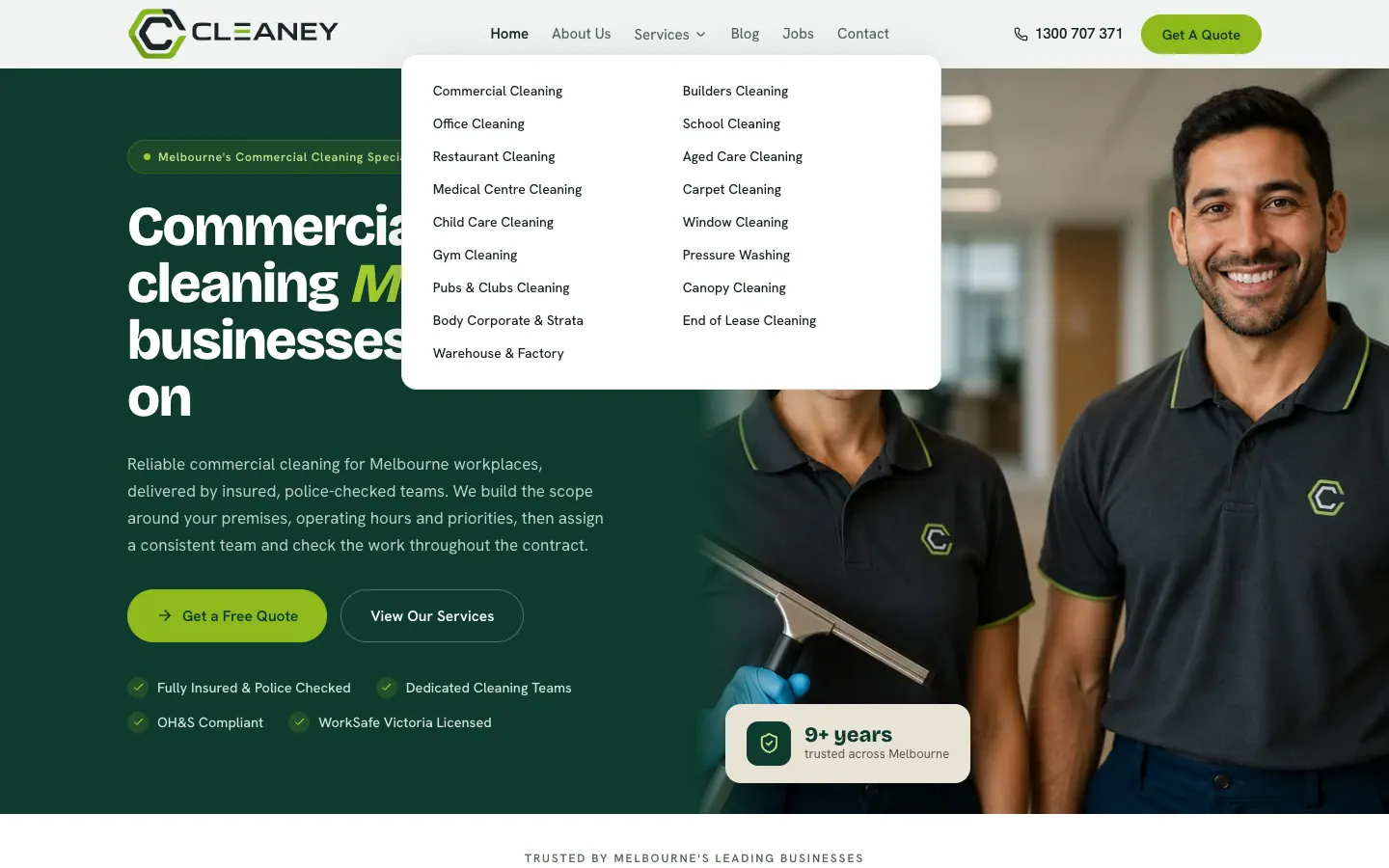
A two-column services menu
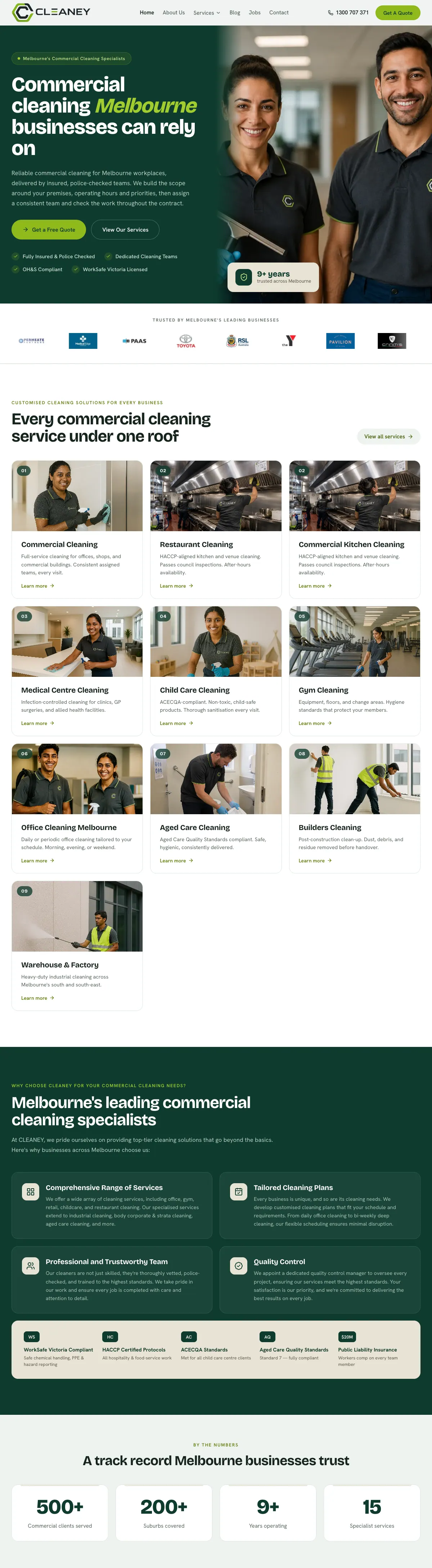
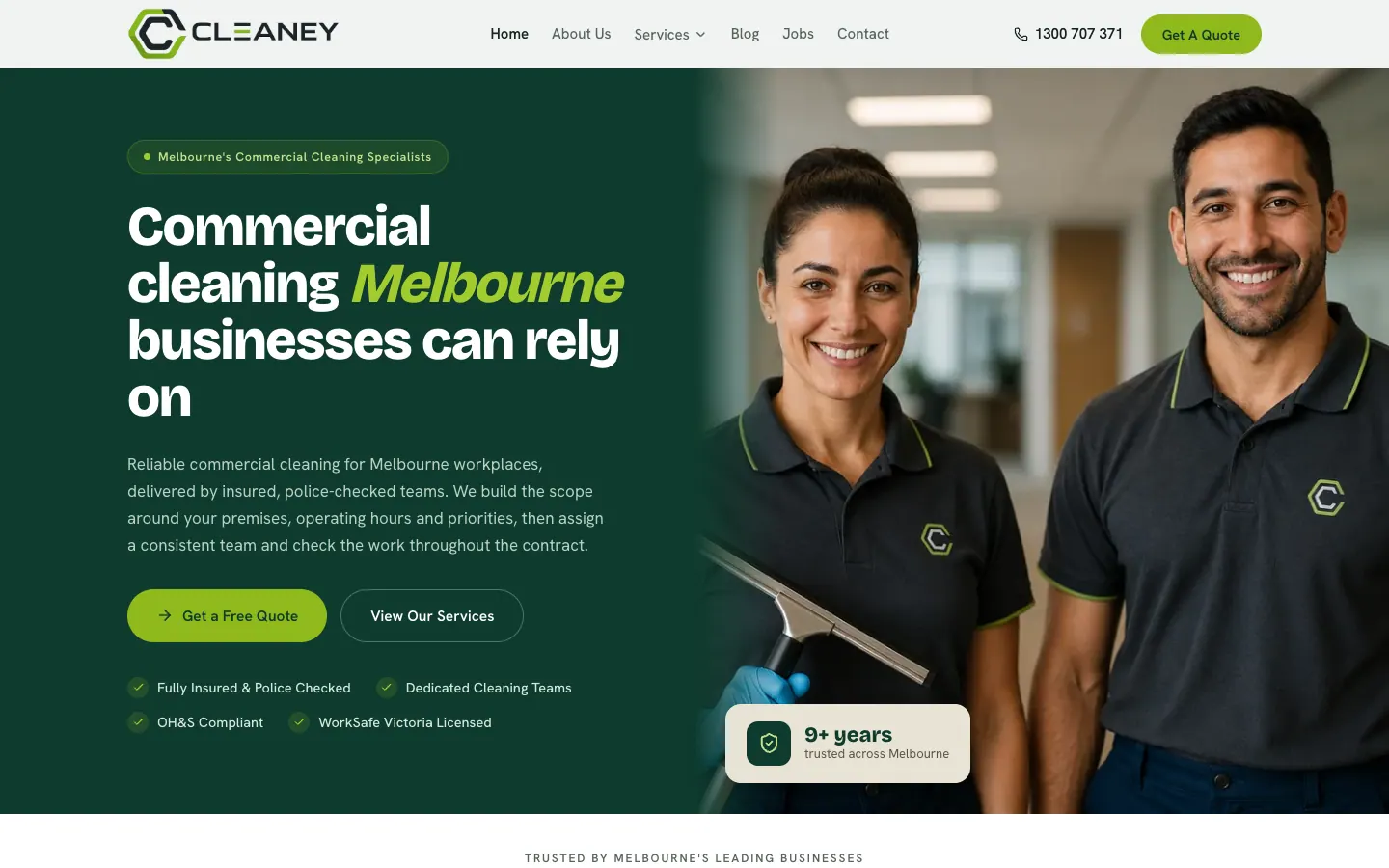
The header carries a Services menu that opens a two-column list of 17 services, beside links to the about page, the blog, jobs and contact, a phone link and a Get A Quote button. The home page opens with a promise about how the work is set up: a scope built around the premises, operating hours and priorities, a consistent team, and checks through the contract. Four compliance ticks sit under the buttons.
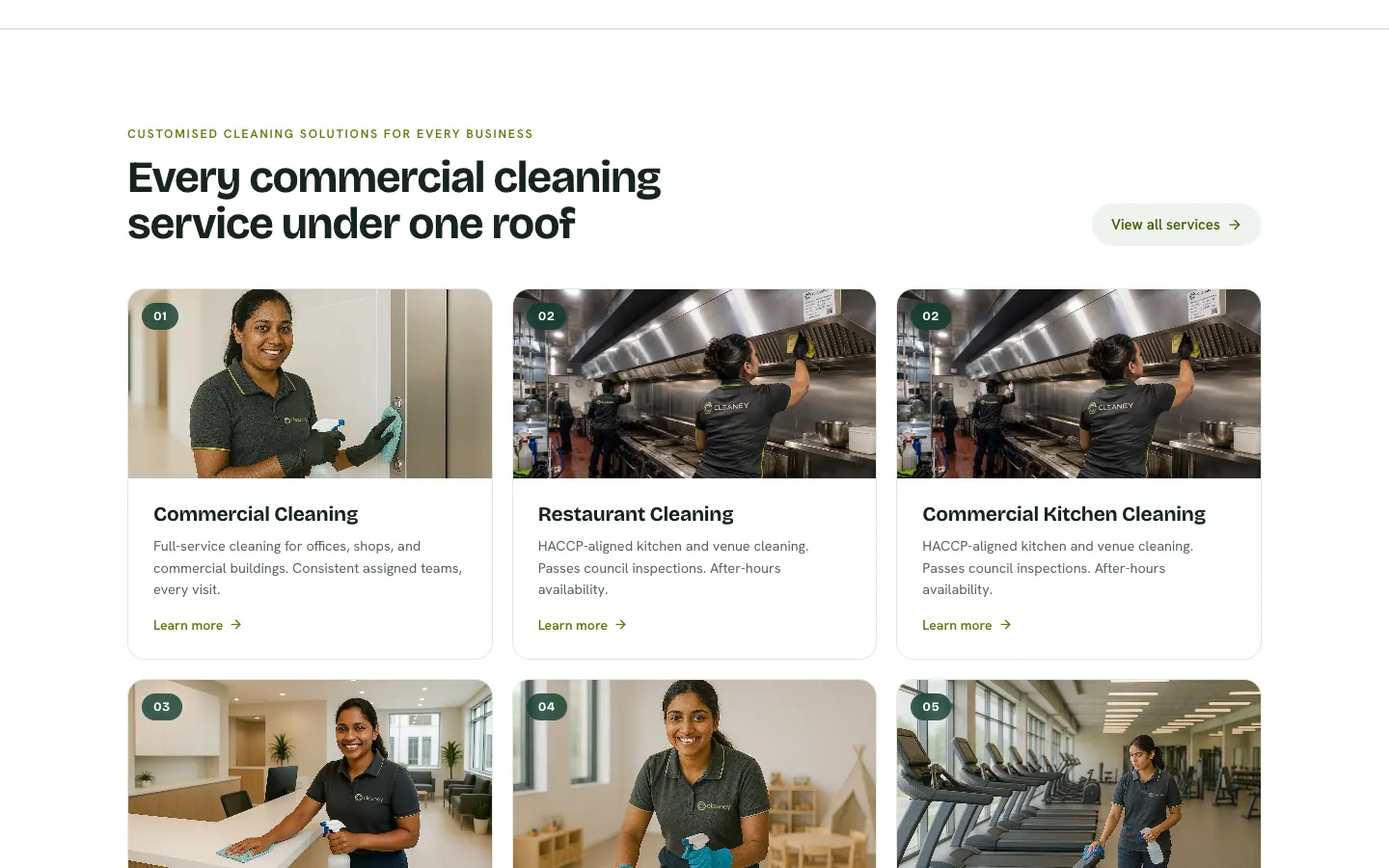
The home page goes on to a services grid with photos, the reasons to choose the business with its compliance badges, and a four-step path from first contact to first clean: a free site assessment, a tailored proposal, team onboarding on site and ongoing quality checks. Common questions follow, from pricing to multi-site contacts.
Service pages written for the workplace
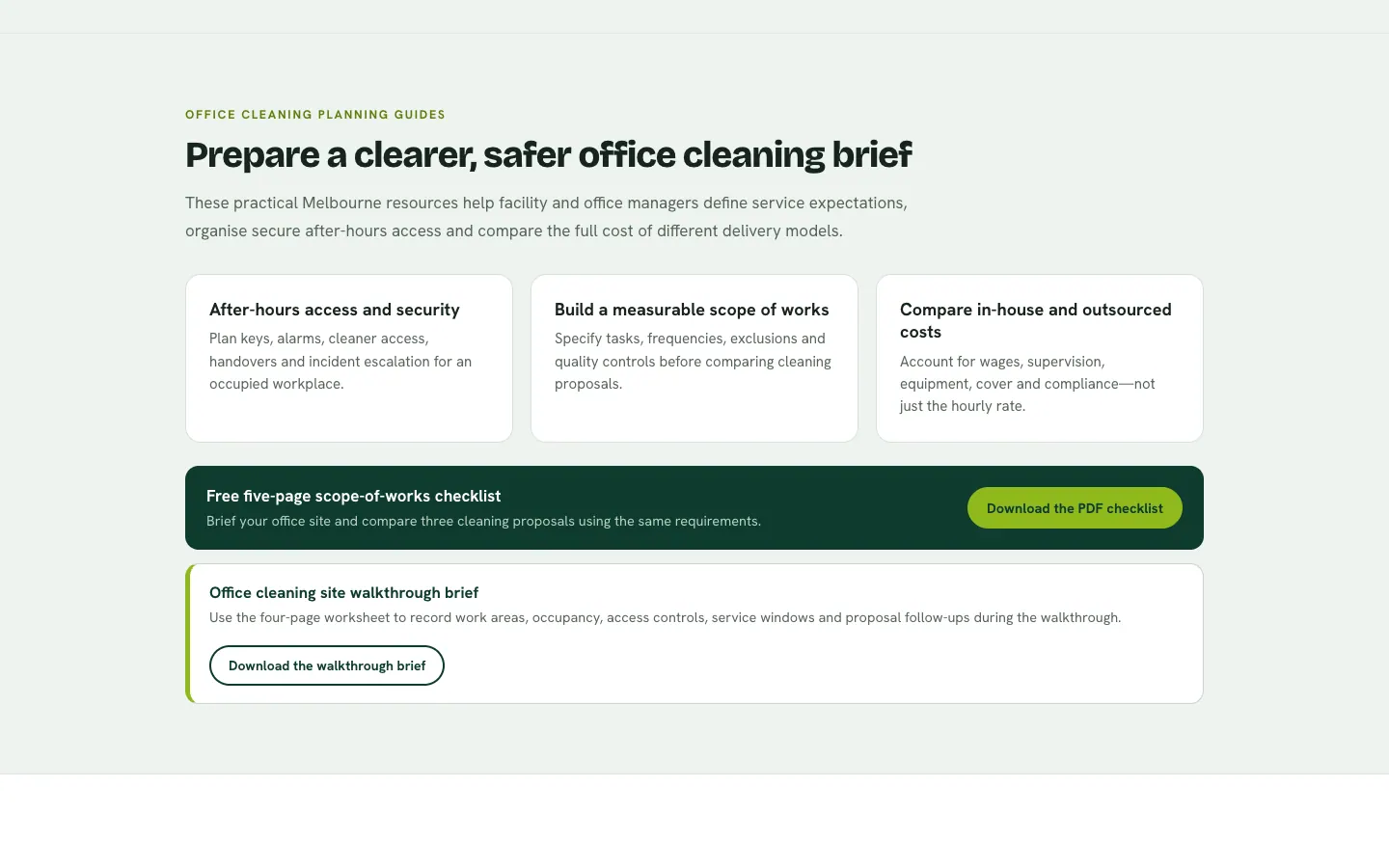
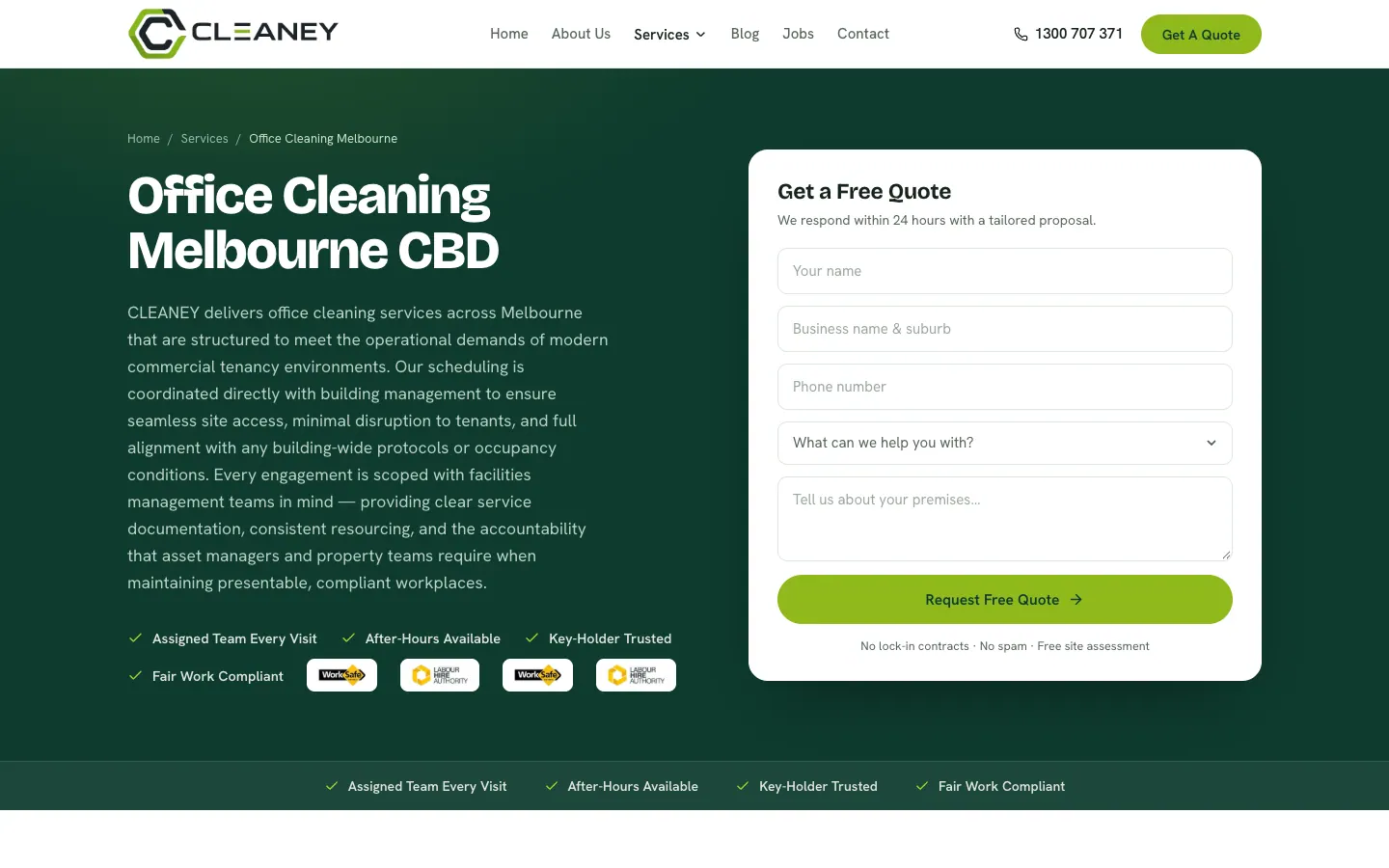
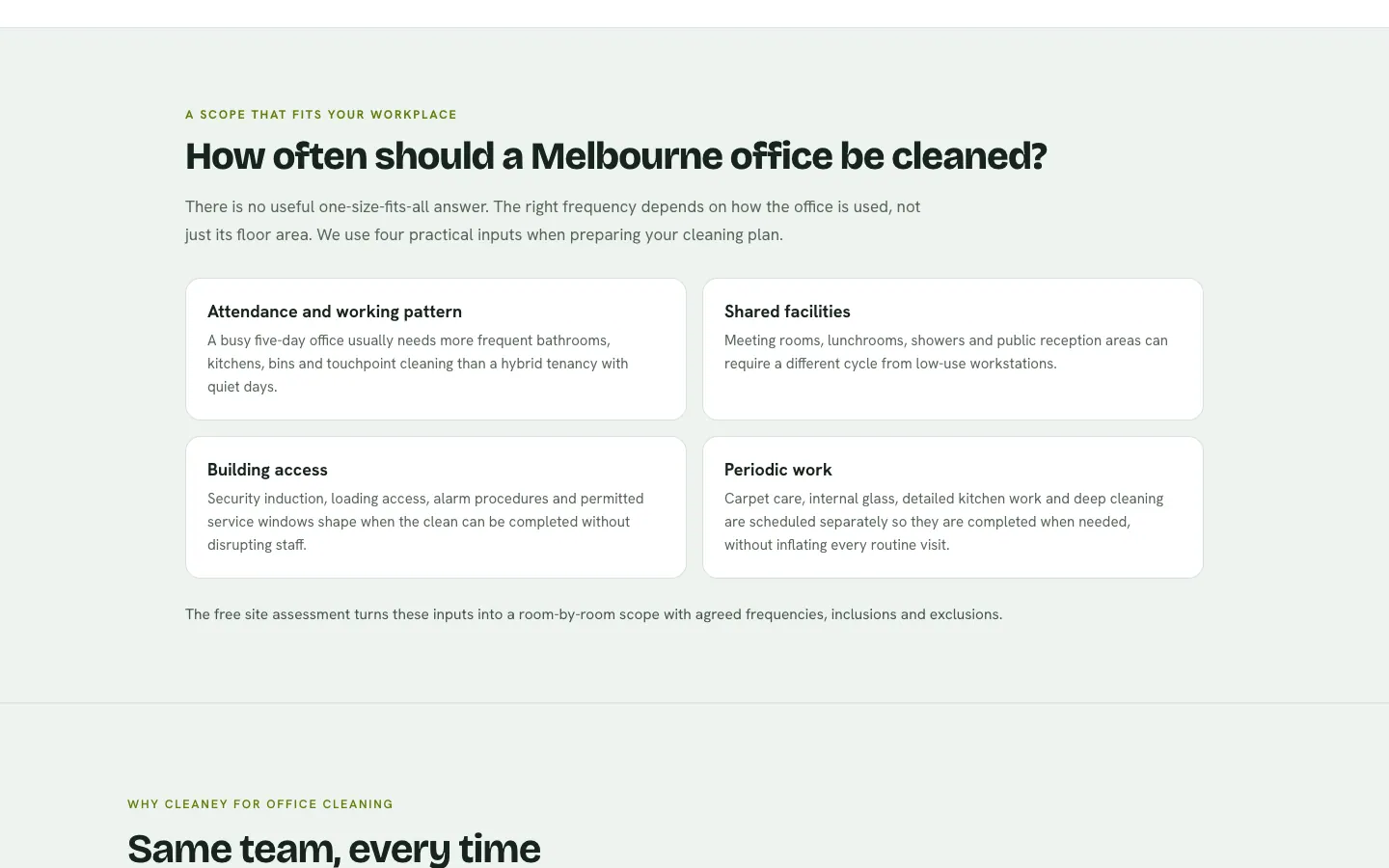
Service pages open with a breadcrumb, the service in the headline and a quote form beside it. The office cleaning page, for example, shows what is cleaned in six photo cards, lists what every visit includes, and answers how often a Melbourne office should be cleaned with four inputs instead of one rule: attendance, shared facilities, building access and periodic work. A planning section links to guides on after-hours access, scopes of work and in-house versus outsourced costs, and offers a scope-of-works checklist and a site walkthrough brief to download.
A page for each service in each area
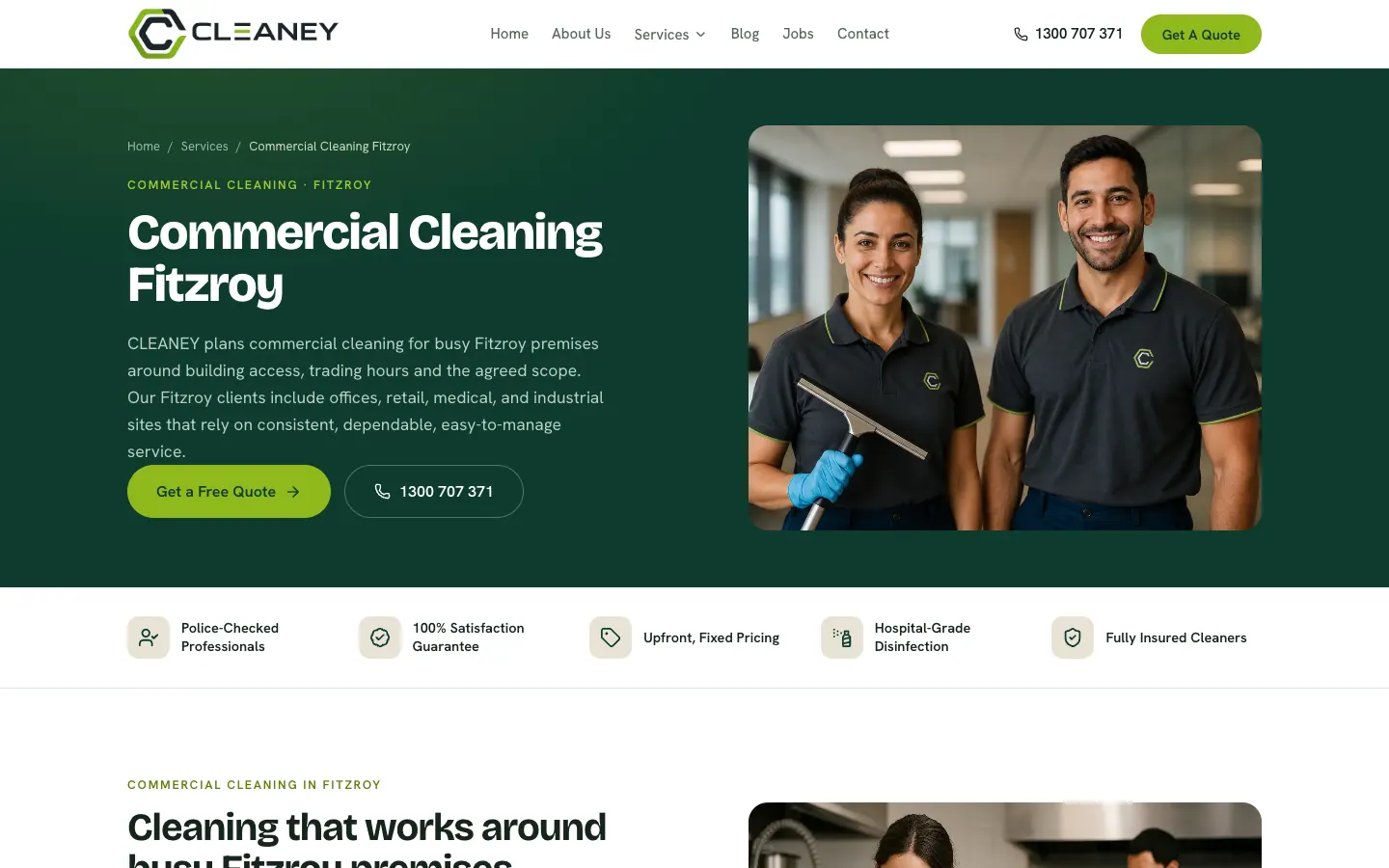
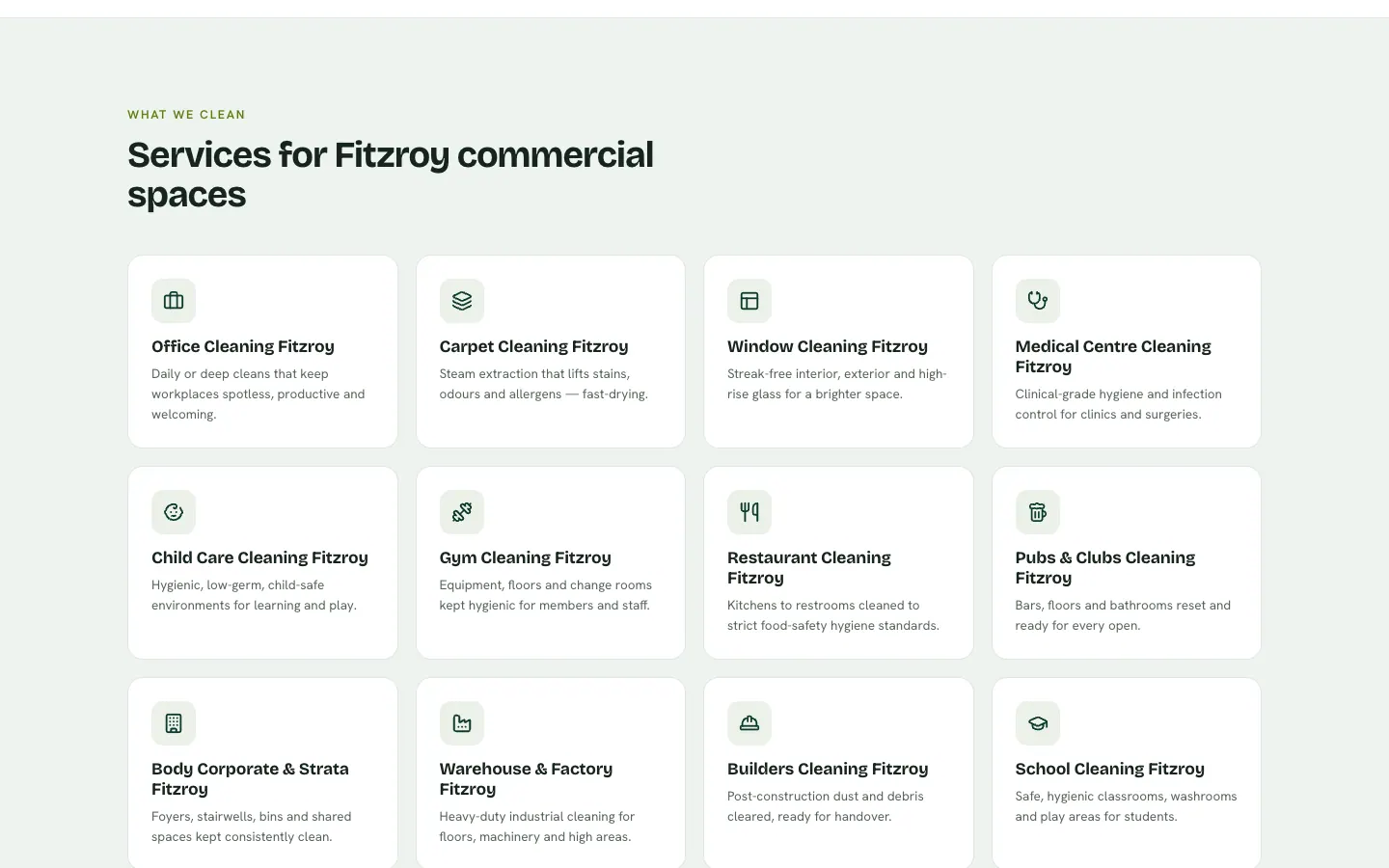
554 pages pair a service with one of 121 suburbs and areas, from the CBD and Fitzroy to Dandenong and the Mornington Peninsula. The Fitzroy page describes the creative studios, independent retailers and late-trading venues that make up its commercial streets, lists 16 services named for the suburb, and answers seven questions Fitzroy businesses ask, from cleaning around late trade to older converted terraces. A service areas page groups the coverage into Melbourne, the Mornington Peninsula, Sydney and Newcastle.
Guides for whoever writes the brief
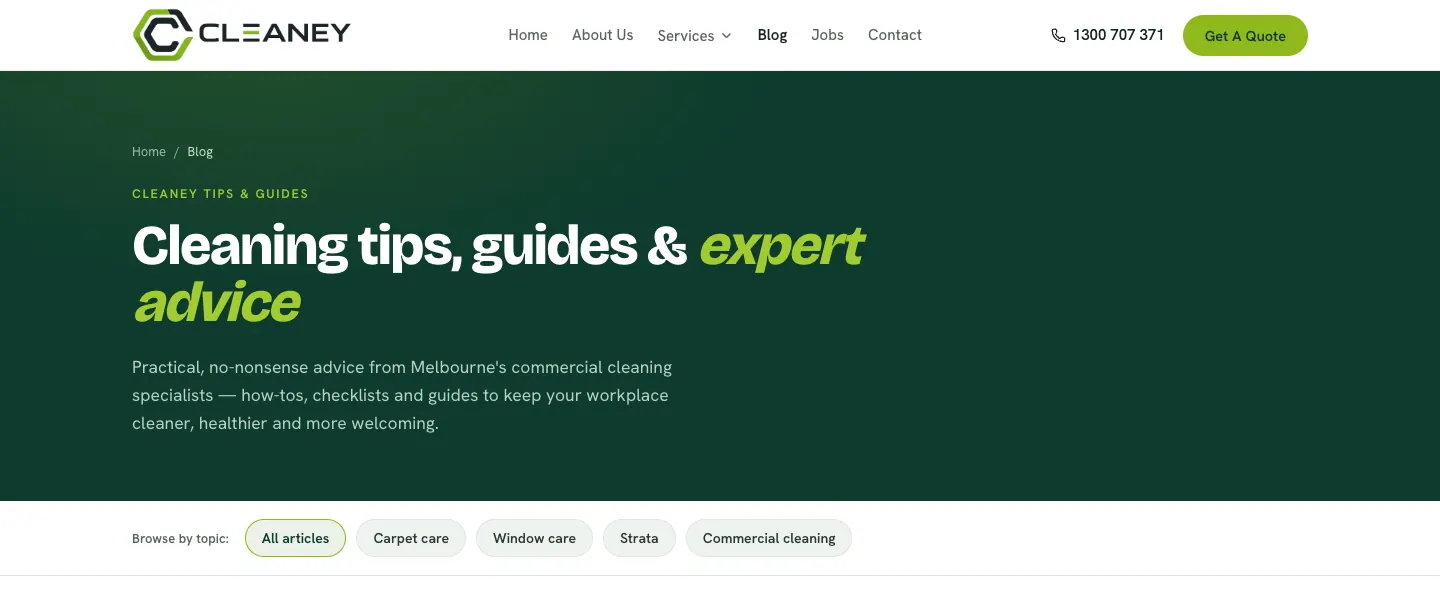
48 guides and articles cover what facility managers ask before they sign: scopes of work, tender checklists, cleaning standards for childcare, medical, aged care and schools, safe work method statements, slip resistance, periodic cleaning calendars and the real cost of in-house cleaning. The blog page sorts them by topic.
Built for phones
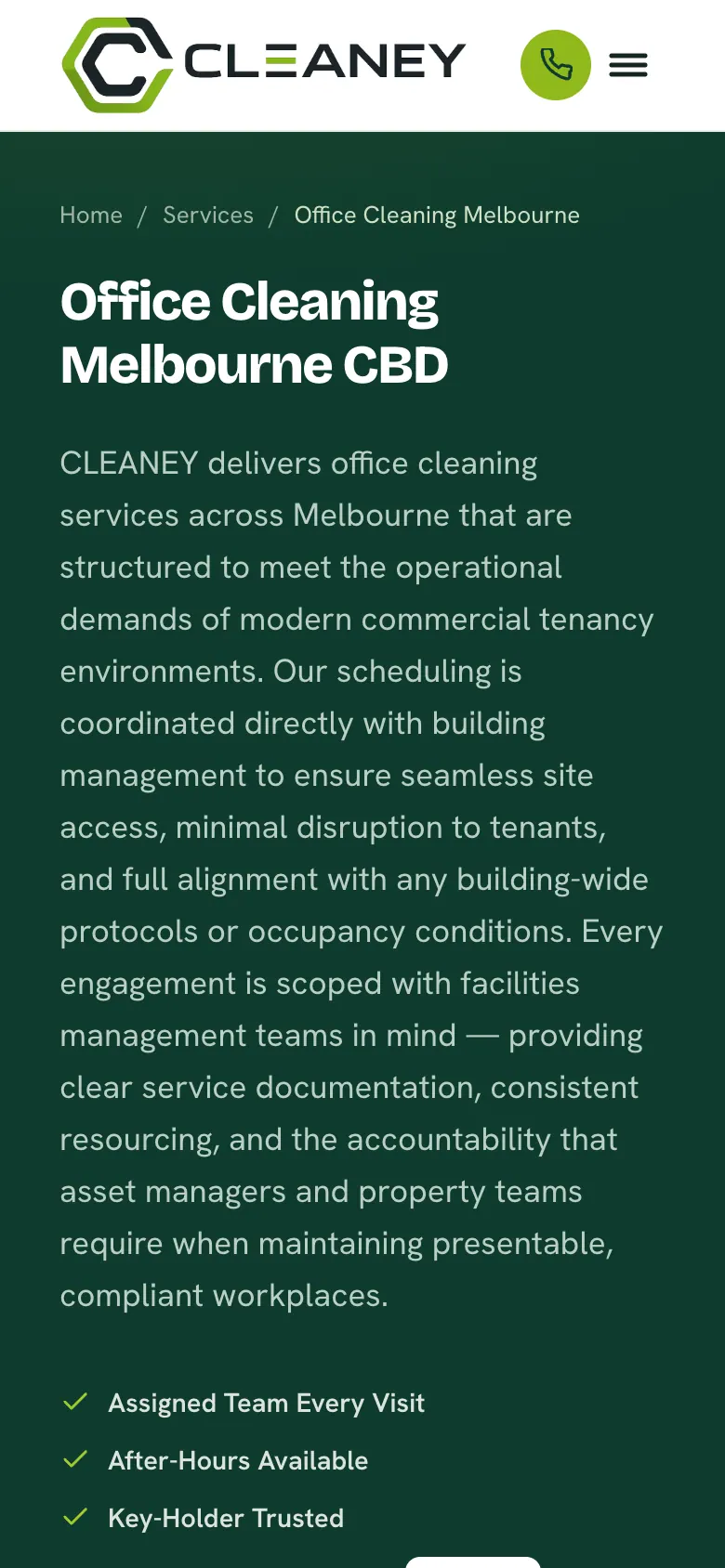
On a phone the header keeps the logo, a call button and the menu. Each page opens on its headline and short introduction, and the service pages carry their quote form a scroll further down.
How enquiries arrive
Service pages carry a short form: a name, the business name and suburb, a phone number, the service and a note about the premises, under a promise of a tailored proposal within 24 hours and a line on no lock-in contracts and a free site assessment. The request arrives with the business, the area and the job already named, which is what the site assessment needs.
For a cleaning business that needs a site at this depth, see our website design services and marketing for cleaning businesses.