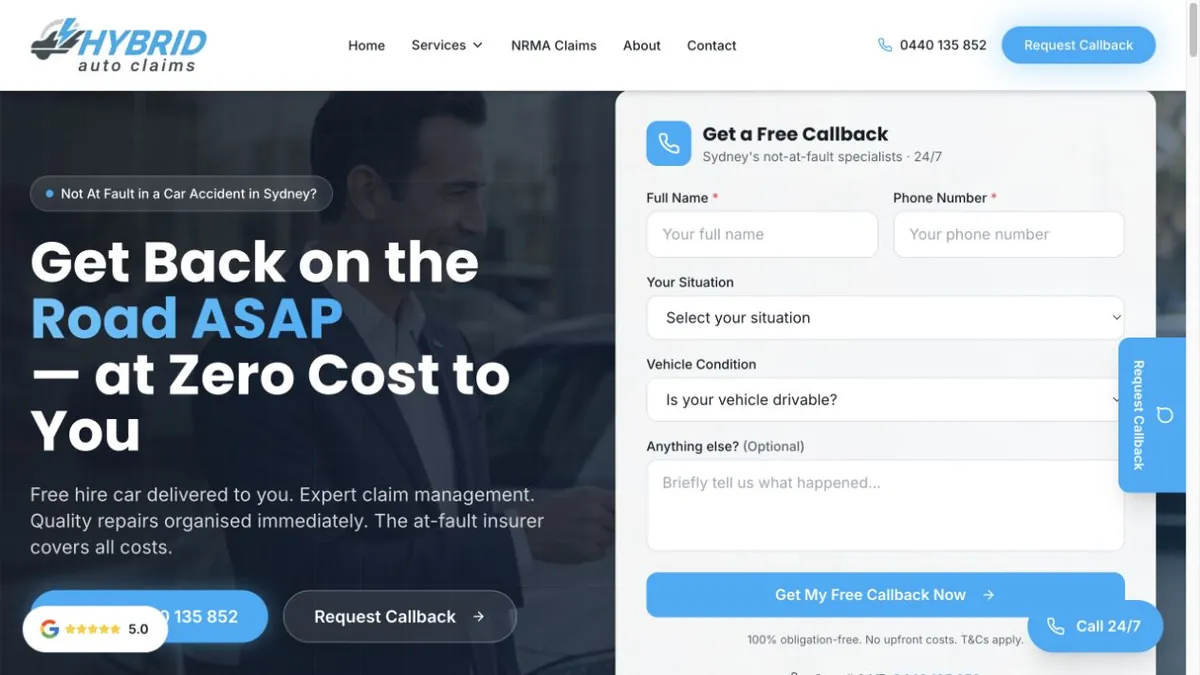
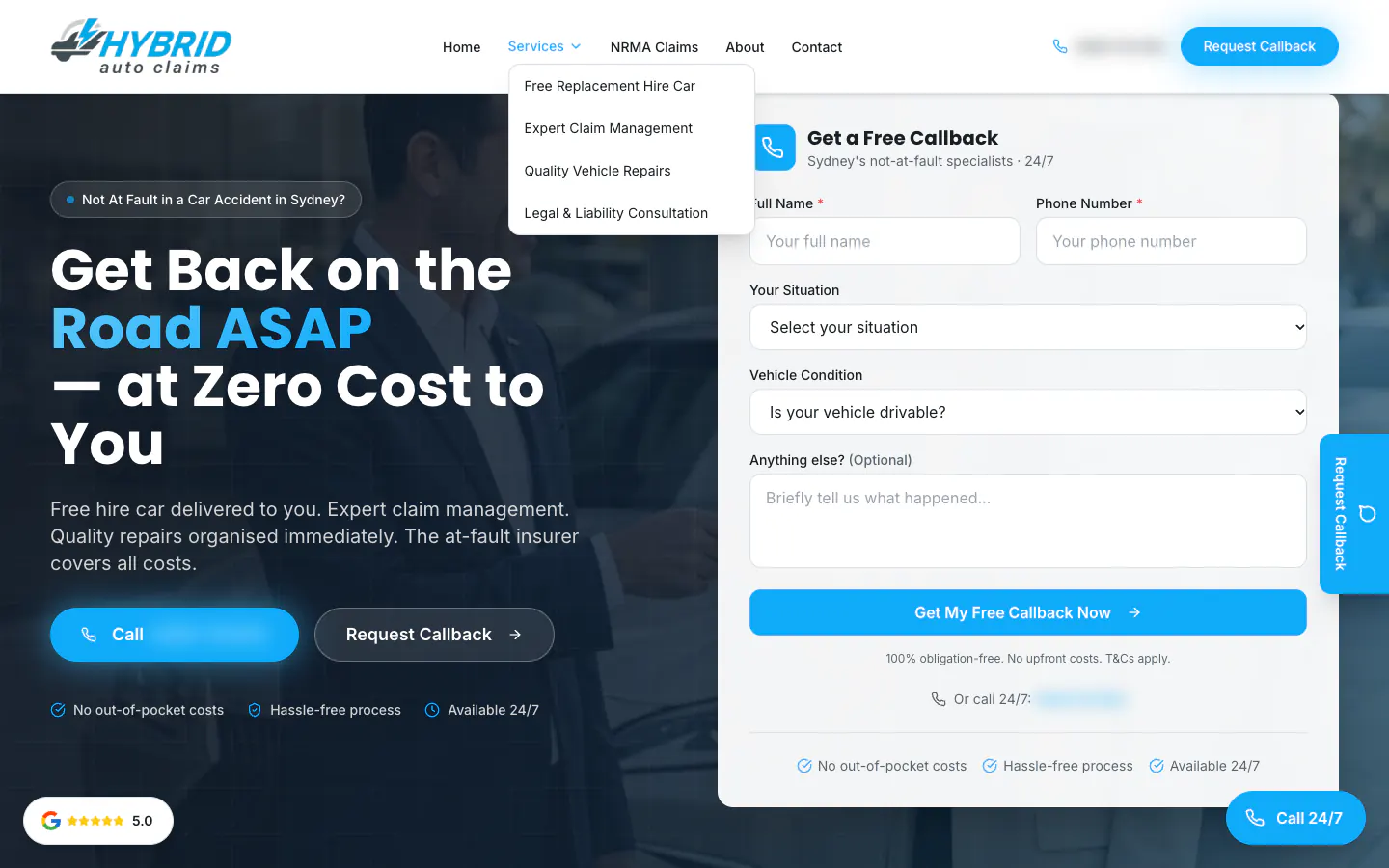
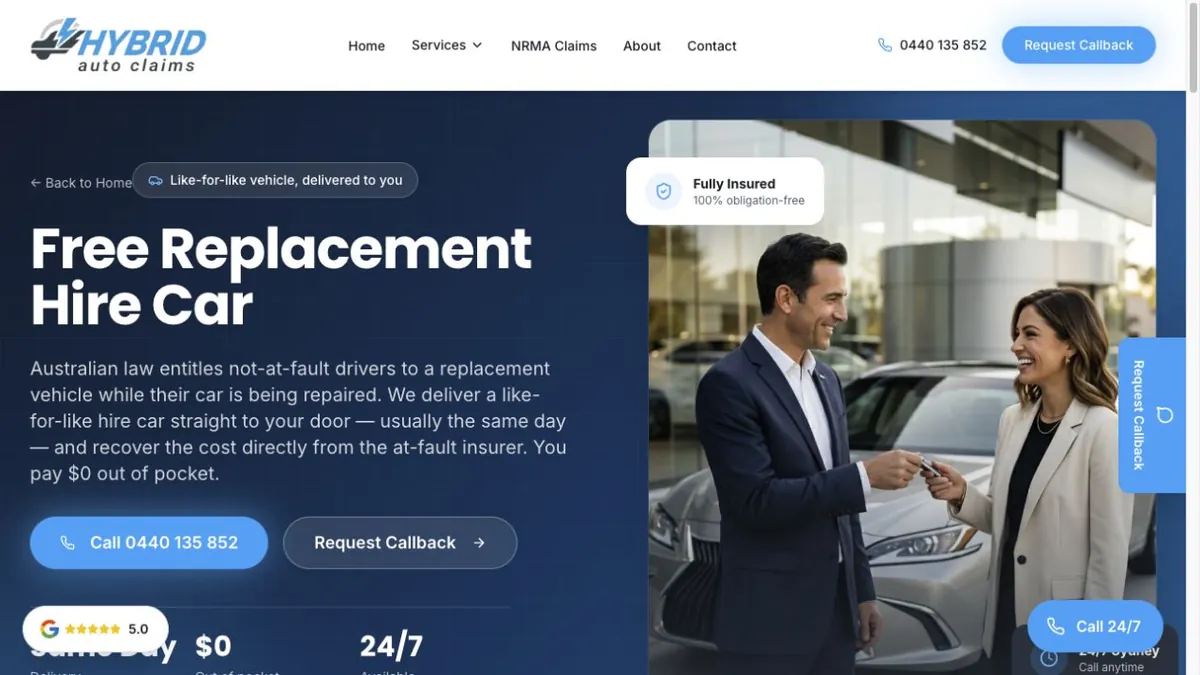
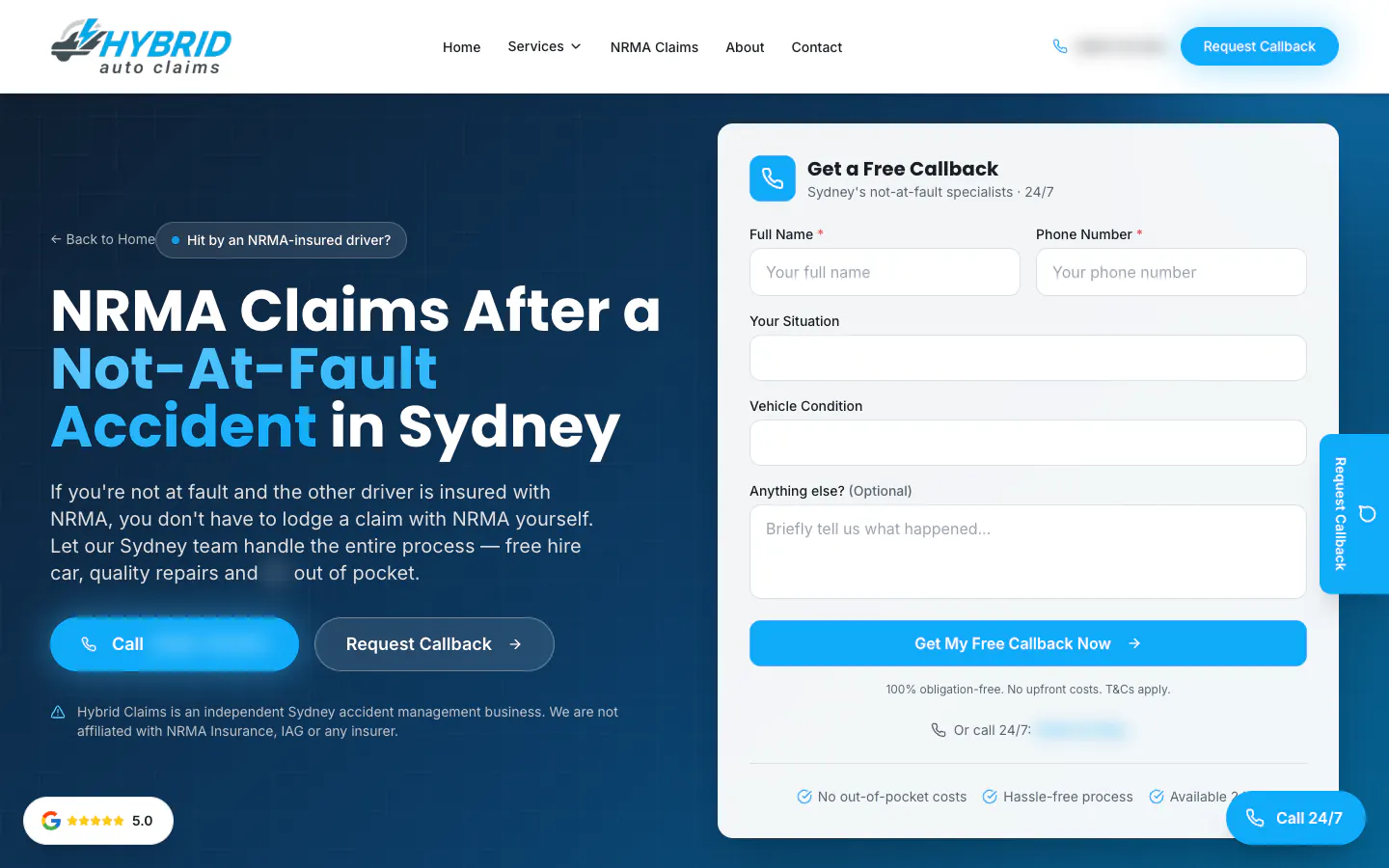
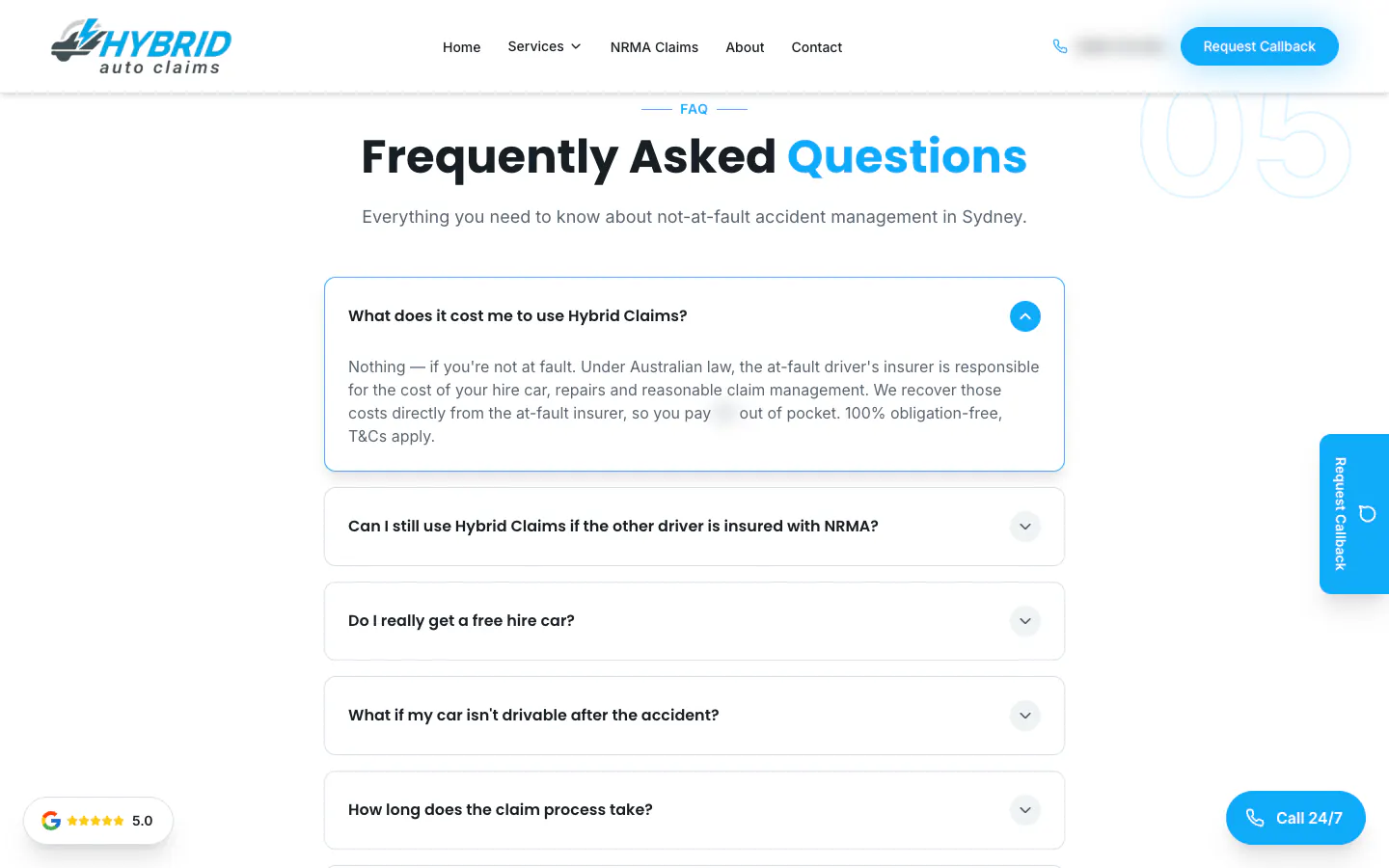
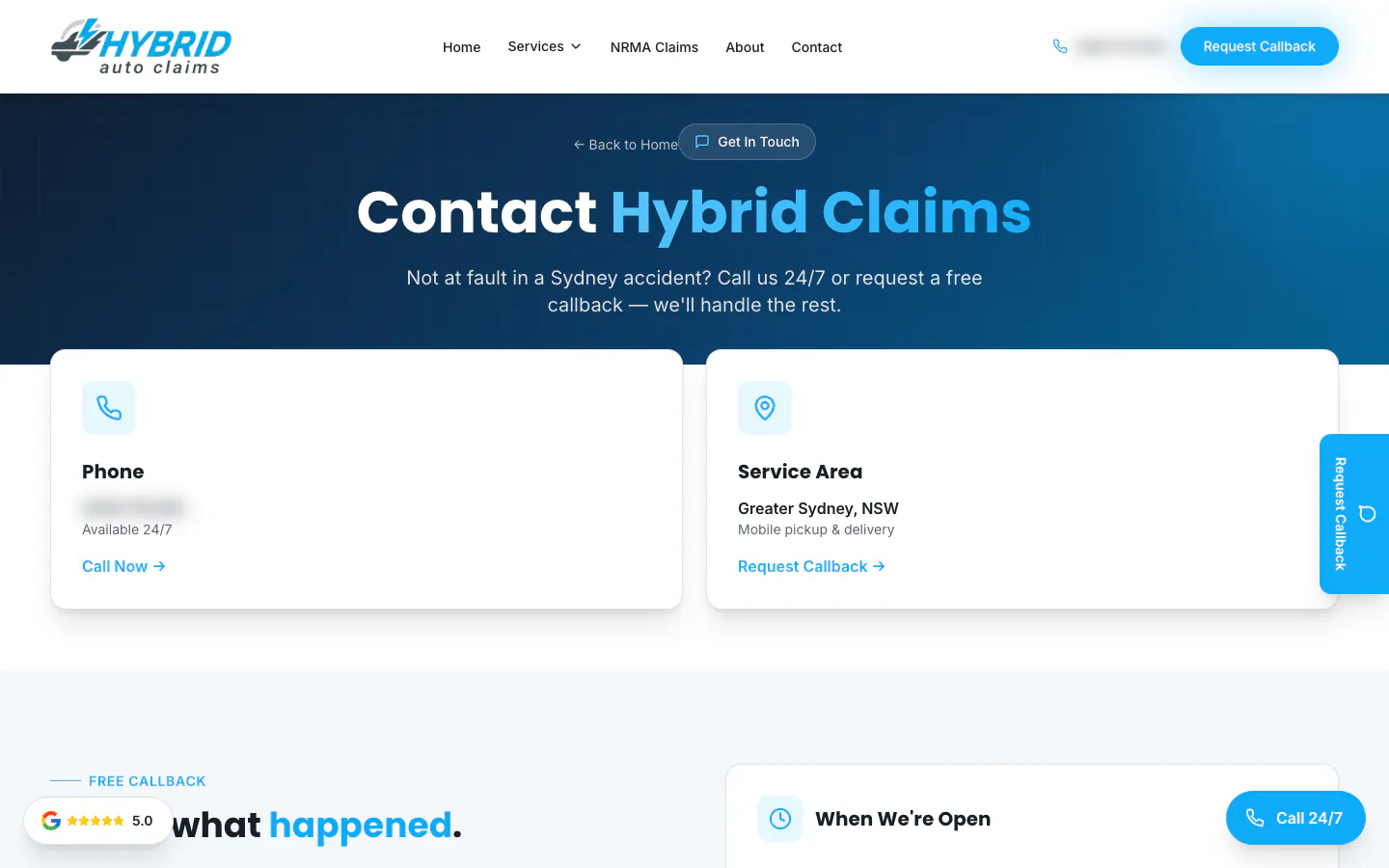
We built eight pages: four services, an insurer page, about and contact. We also added a callback form on seven pages that asks about fault and whether the car can be driven.
The business
Hybrid Claims helps Sydney drivers who were not at fault in a crash. It delivers a like-for-like hire car, manages the claim against the at-fault driver's insurer, organises repairs to manufacturer standards and connects drivers with accident law specialists when they need advice. The team works across Greater Sydney, from the CBD and the Eastern Suburbs to Western Sydney and the Sutherland Shire, around the clock.
The brief
A driver looking for this kind of help has usually just been in an accident. They are often on a phone, often unsure of their rights and often unsure whether they were at fault at all. The brief was a site that explains what is covered in plain words, asks the two questions that decide what happens next, and makes a call or a callback the easiest thing on every screen.
The site also had to carry Hybrid's Google Ads, so a search about a hire car, repairs or a claim against a particular insurer had to land on a page about exactly that.
A callback form that sorts the case
The callback form sits beside the headline on the home page and on six other pages. After a name and a phone number, it asks whether the driver was at fault, with options for not at fault, not sure and at fault, and whether the car can be driven. An optional box takes a line about what happened. The answers tell the team before it rings back whether to arrange a tow, a hire car or both.
Four services on one template
Hire car, claim management, repairs and legal consultation each have a page built the same way. A label sums up the service, the opening copy explains it, and three short facts and the call and callback buttons sit beside a photo of the service in action. The page then lists what is included, explains four steps from the first call to a sorted outcome, compares the business with the standard insurer route and answers four common questions.
A home page that explains the route
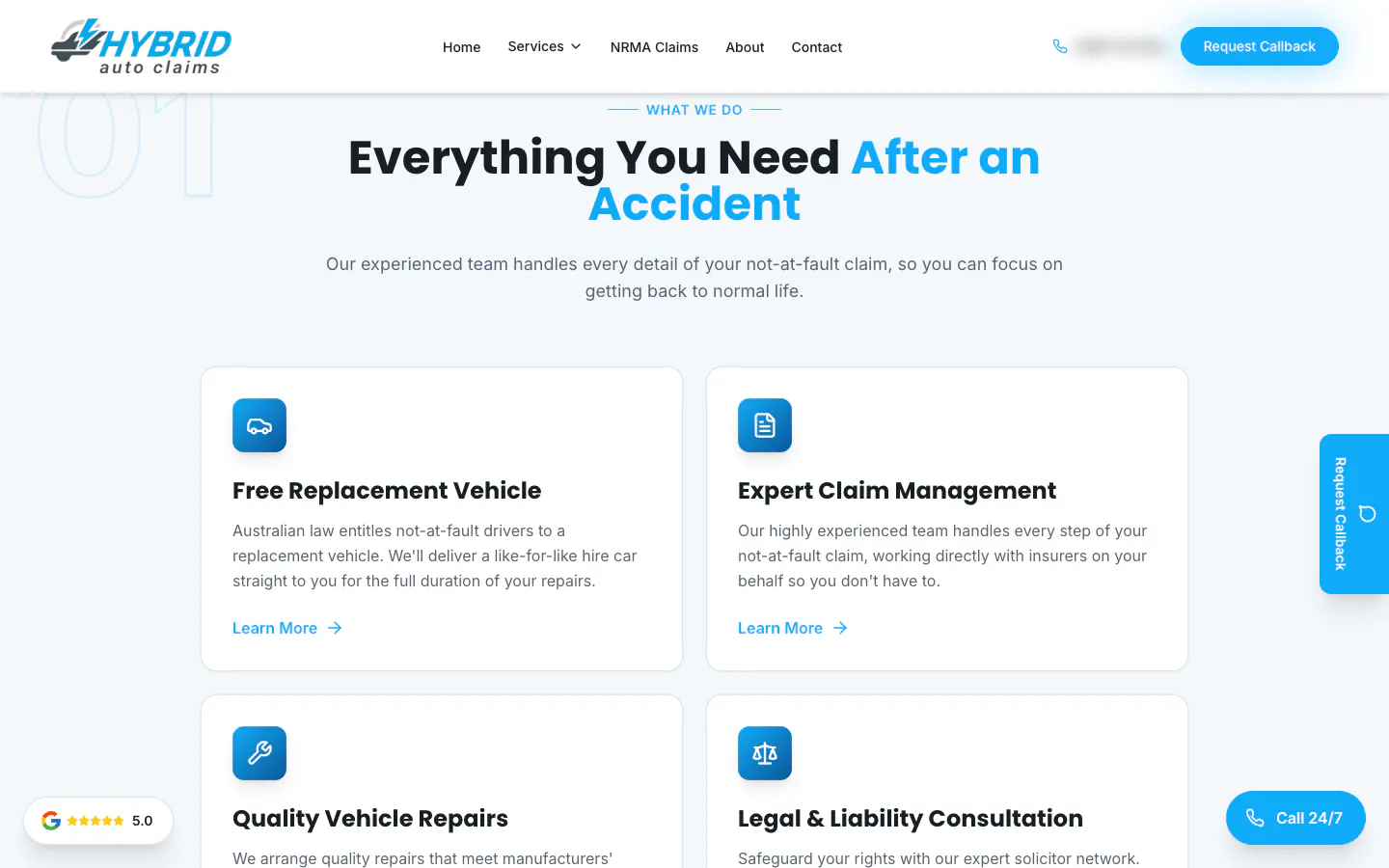
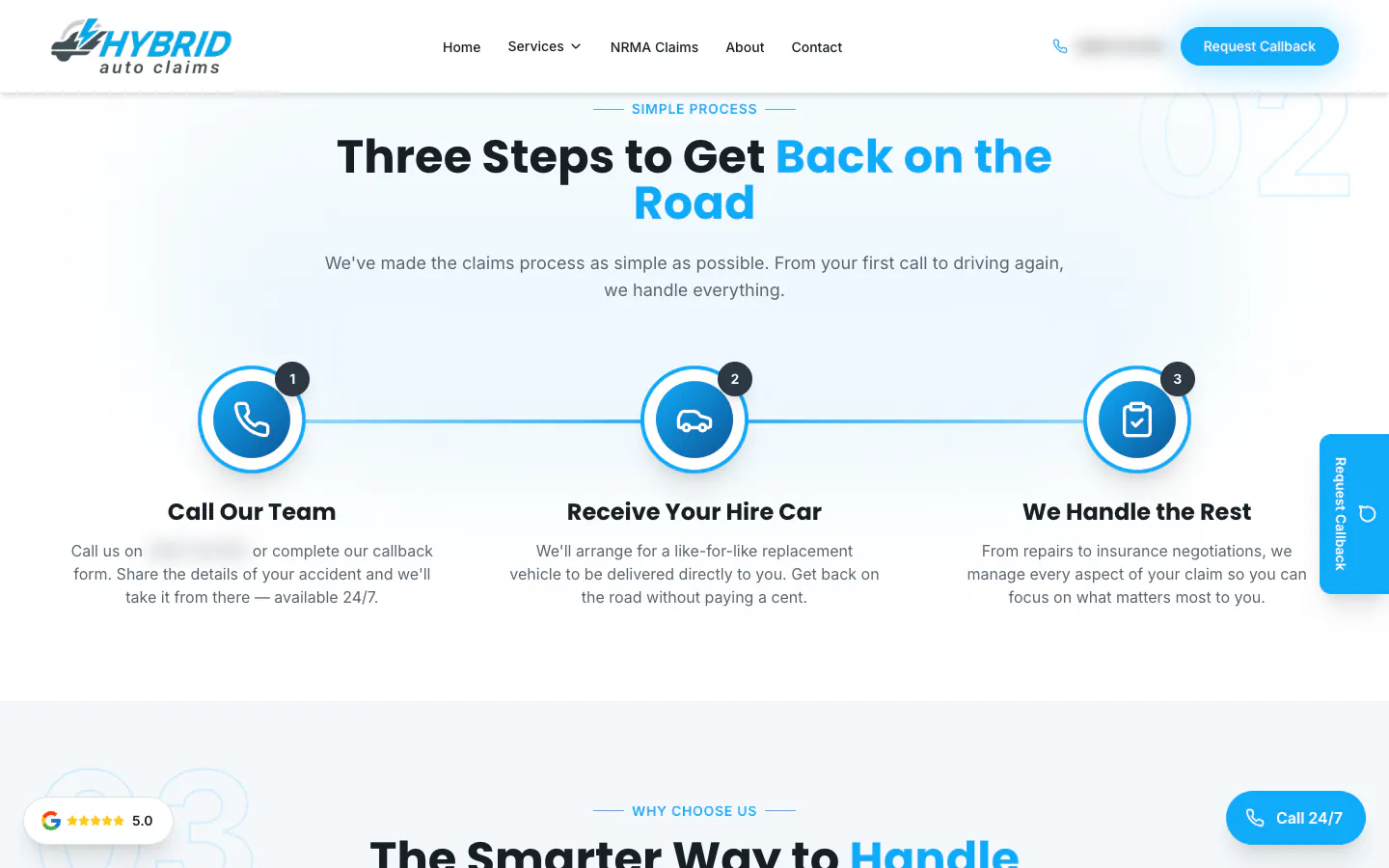
Below the hero, the home page sets out the four services as cards, explains the process in three steps from the first call to the hire car and the rest of the claim, and gives four reasons to choose the team. Seven answers cover what the service costs the driver, whether the hire car is free, what happens if the car cannot be driven, how long a claim takes and which areas are covered. An insurer page speaks to drivers hit by someone insured with one of the large insurers, and states plainly that the business is independent of every insurer.
Built for phones
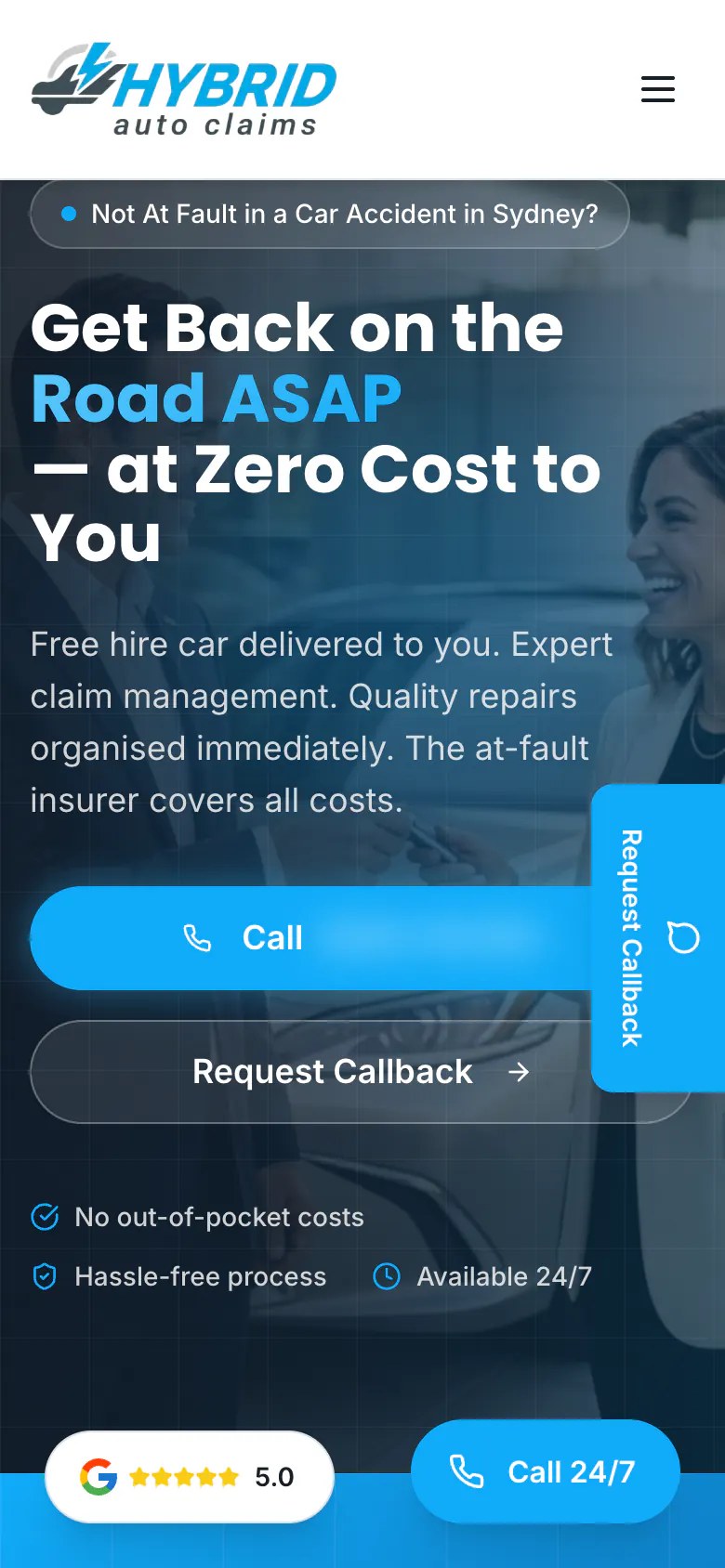
On a phone the first screen holds the label, the headline, a full-width Call button and Request Callback beneath it. Call 24/7 floats in the corner of every page and a Request Callback tab sits on the right edge, so a driver can reach the team from any point in the page without scrolling back to the top.
What it connects to
The site is where Hybrid's Google Ads land. The ads pointed to the home page, the four service pages, the insurer page and contact, and over the first month of ads about 1 in 12 ad clicks became a call or callback request. Most of those enquiries were phone calls, and on a phone the call button leads the first screen. The Hybrid Autos campaign case study sets out how that was measured.
For a service business whose customers need to act quickly, see our website design services.