
Begin with the visitor's question
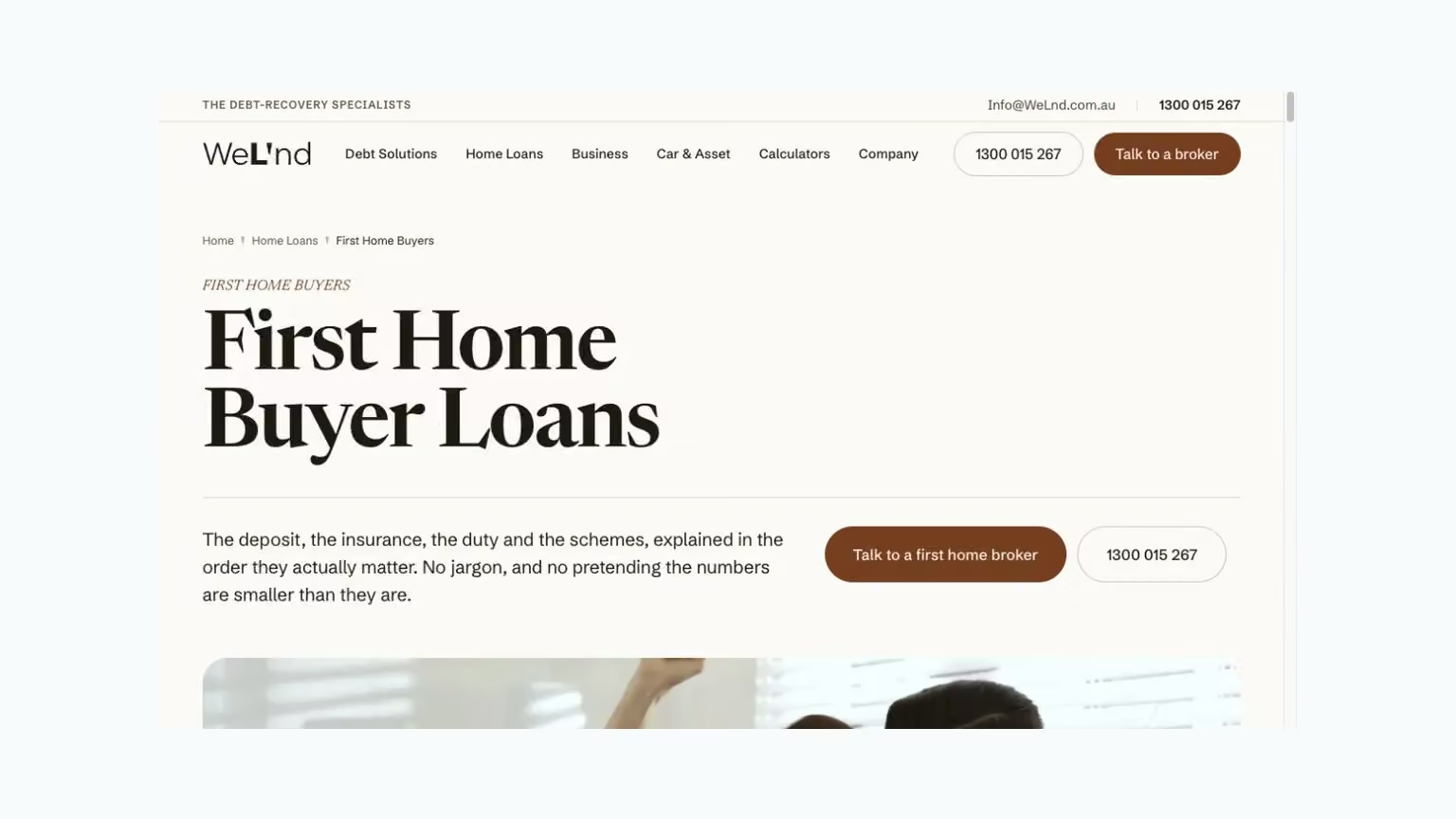
The WELND website case documents a Melbourne-based brokerage serving customers across Australia. Its website includes first-home-buyer content, guided enquiries, a calculator and phone or broker choices. The common thread is breaking a complicated subject into smaller steps.
When planning a finance page, identify the question the visitor is trying to explore. They may want to understand a service, organise information or discuss their circumstances. Do not require them to understand the business’s service names before making contact. A clear introduction can give the tool a purpose and explain what the visitor will be able to do next.
Explain what the calculation represents
A calculator should make its inputs and assumptions understandable. A visitor needs to know how the estimate follows from the information they entered and which further matters require a discussion. Label the result as an estimate and explain which details the broker will need to confirm.
The website can help organise a question, but the broker conversation remains important for understanding individual circumstances and the available options. Keep any explanation close to the result so the customer does not have to search another page to understand its status.
Ask for information in manageable stages
A guided enquiry can make a large topic feel less demanding by presenting related questions together. Explain why a detail is needed and allow the person to correct earlier answers. Avoid asking for information that the next step does not use.
Give each step a short heading and show how it connects to the next one. Visitors should be able to understand a question, check their answer and return to an earlier step. Keep the phone and broker choices available if they would prefer to discuss the situation.
Provide an ordinary conversation route
Not every visitor wants to use a calculator. Some arrive with a specific question; others prefer to discuss the situation before entering details. WELND’s pages include phone and broker options beside the guided journey, giving those visitors a recognisable alternative.
Keep the wording clear about what happens after a request. Explain that the broker will review the customer’s circumstances and discuss the next steps. Use button text that describes the conversation being offered, and tell the visitor how to expect a response.
Use visual design to support comprehension
The WELND design uses large headings, warm backgrounds and a restrained accent colour. Service pages and the first-home-buyer destination keep the next actions easy to identify. A small brand animation illustrates documents coming together, giving the organisation of the paperwork a simple visual explanation.
For another finance website, review reading width, labels and the order of information before adding more decorative elements. A calculator is already an interactive task. The surrounding page should make it easier to concentrate on that task, especially on mobile, where an oversized headline or intrusive control can push useful information out of view.
Review the quality of the resulting conversation
Ask whether people understand what the tool does and whether their enquiries arrive with useful context. Look for repeated confusion about an assumption, result or next step. Those observations can guide a clearer label, a better explanation or a different point at which to offer a conversation.
Test the page with a person who has not seen the calculator before and ask them to describe the result in their own words. Check that they understand which details still need a broker’s assessment. Check the labels and next action before assuming the visitor needs more educational copy. Often the most useful change is a short, precise sentence at the moment a number appears, followed by a clear route to ask questions.
The WELND campaign case provides the related public marketing story. A finance website brief should aim to make the visitor better prepared to ask their questions, with the actual advice and assessment handled in the appropriate professional conversation.