

Impress Blinds · Blinds & Shutters
Impress Blinds: made-to-measure blinds search campaigns in the UK
Impress Blinds sells made-to-measure blinds in the UK; its Google Ads campaign covers vertical blinds, product enquiries and home-appointment bookings.
- Services
- Google Ads management · Website design and landing pages
Impress Blinds · United Kingdom
Services in the campaign
The advertising covers made-to-measure products.
Made-to-measure products
- Vertical blinds
- Roller blinds
- Roman blinds
- Venetian blinds
Show all 6 services
- Wooden blinds
- Made-to-measure blinds
Website development · Impress Blinds
We built their website, too.
Explore the website we designed for Impress Blinds: the pages, the mobile experience and the path to an enquiry.
Read full website case study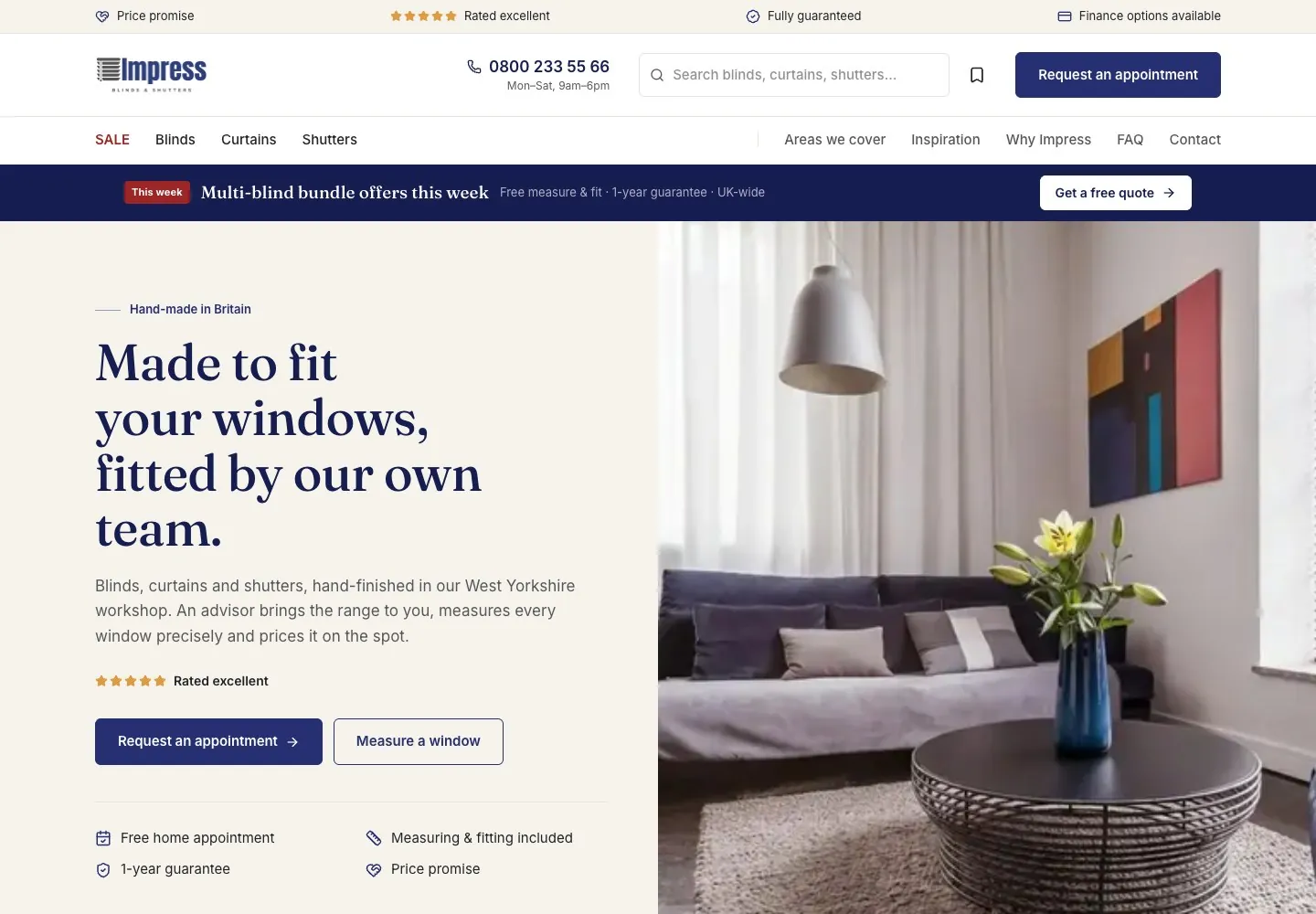
The case study
The project, connected.
The brief, the work and what it delivered.
The starting point
Impress Blinds
Impress Blinds is a made-to-measure blinds business serving United Kingdom.
Blinds & Shutters
SoudCoh services
- Google Ads management
- Website design and landing pages
What we put in place
The campaign work
- Service-specific campaigns for vertical blinds, product enquiries and home-appointment enquiries.
- A focused campaign for United Kingdom.
- A connected website that explains the services and gives customers a way to enquire.
- Lower Google Ads conversion cost across the reported comparison periods.
What the project delivered
The outcome
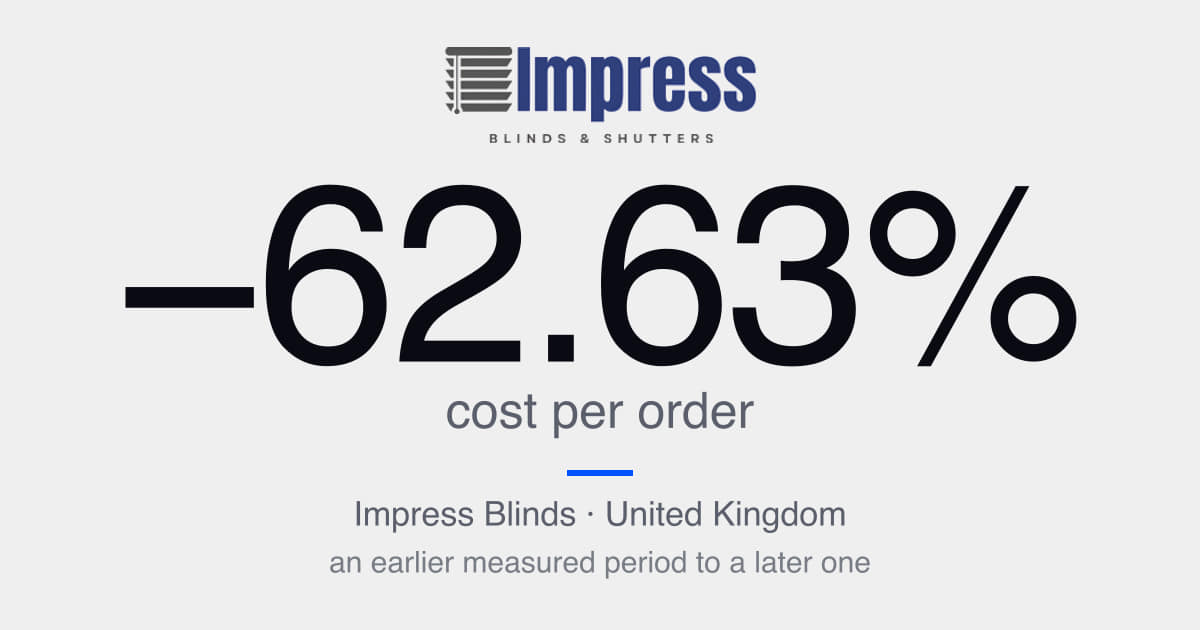
62.63% lower Google Ads conversion cost between the reported comparison periods.
In this case study
White paper · PDF
Marketing for home services in Australia
58 pages · 2.3 MB
Download this PDFRead it on the pageProduct-led blinds enquiries
Impress Blinds is a made-to-measure blinds business serving United Kingdom. The Google Ads campaign covers vertical blinds, product enquiries and home-appointment enquiries.
A specific vertical-blinds advertising stream
The recent Google Ads extract for Impress Blinds identifies a UK vertical-blinds campaign with a dedicated vertical-blinds group. That is a narrower advertising scope than the full product range a visitor may see on the business’s website.
Examples from the campaign
- Vertical blinds
- Product enquiries
- Home-appointment enquiries
Vertical, roller, Roman, Venetian and wooden-blind enquiries give customers a product-specific starting point. Separate messages support a relevant discussion about style, fit and a home appointment.
The recorded result
62.63% lower Google Ads conversion cost between the reported comparison periods.
The website behind the campaign
The website gives the customer space to read about the service and find the next step. See the actual pages, mobile layout and enquiry options in the Impress Blinds website case study.
To make your own service easier to find and understand, see our Google Ads management.
Tags
- Blinds & Shutters
- Facebook Ads
- Instagram Ads
- Lead Generation
That is one account. Yours is a different one.
We read your ads, your search presence and your tracking the same way this one was read, and tell you what we would change first.
Where this sits in SoudCoh Compound.
SoudCoh Compound is how we run ad accounts, from the search you pay for to the job you win. A published result rests on two parts of it: the footing that decides what counts, and the engine that carries each lesson forward.
- Footing
Real-Enquiry Signal
The number it moves: True cost per lead
We agree which calls, forms, bookings or sales count as a result, and a real test enquiry goes through every tracking path before the campaign goes live.
- Engine
The Carry
The number it moves: Waste blocked before the first click
Every change on an account like this one is written to that client's change history, and what it teaches, never the client's numbers, goes into the next account's starting point.
What actually happens after the first call.
Start with your goals and current setup. We review the opportunity, agree the work and plan the next stage with you.
- The call
Thirty to forty-five minutes, free
What you sell, who buys it, and what one customer is worth to you. No deck. You leave with a real number for your situation rather than a range.
- Week 0
The audit
We open your account — or your competitors' ground, if you do not have one yet — and write down every leak we can find. That list is yours whether or not you work with us.
- Week 1
The build
Everything the account needs before it can spend a dollar: what it will bid on, what it must never pay for, the ad copy, the assets, the landing pages and the tracking. It waits in our approval queue, and a real test enquiry goes through every tracking path before anything is live.
- Day one
You press go
Campaigns are created paused, every time, so you can read the whole build first. You activate when you are ready, not when we are.
- Days 1–14
The clean
The busiest fortnight your account will ever have. Search terms read daily, waste negated, early winners promoted, ad copy iterated against what is actually being served.
- From there
Rhythm
Weekly optimisation, reporting on a fixed cadence whether the news is good or bad, and a proper conversation each quarter about where the next block of budget should go.
Before you ask us anything
Here is what everybody asks first.
The questions this raises.
How the results were measured and how the approach could apply to your business.
The first call is free and there is no deck.
Book a callWhat do the results in this case study measure?
Campaign results describe the enquiries or job outcomes reported for the client. Each figure identifies what it measures.
Which records support these results?
Each figure identifies what it measures. The labels distinguish advertising conversions, call/form enquiries and won-job revenue. Enquiry events can include repeat calls; booked jobs are reported separately.
Would this work for my business?
We assess your service area, competition, margins and customer value, then build a plan around the opportunities in your business. The first call establishes the priorities, budget and tracking for that work.
Why does this study show a result but not a starting point?
Where a comparable earlier result is available, the study shows both values. New accounts report their launch result, with the tracking basis explained alongside it.
How would you plan this for my business?
We start with your goals, service area, competition and customer value. From there, we recommend the channels, website improvements and tracking that fit your next stage of growth.
How much would this cost to run?
Two separate numbers. Your ad spend goes to the platform, and what it needs to be depends on how competitive your market is and how many jobs you want — we recommend a minimum of A$5,000 a month for most businesses, and the largest companies we work with currently invest up to A$30,000 a day in advertising, with enterprise programmes above that. Our management fee is separate, isn't published and is custom-built around the work — contact us for packages. The first call is free and you leave it with a real figure for your situation.
How quickly could we start seeing enquiries?
It depends on the channel. Paid search meets demand that already exists, so calls and forms can arrive within hours of launch, and the first two to four weeks are an optimisation period where waste is cut daily. Most accounts settle into their best rhythm around 60 to 90 days. SEO, content and brand work run on a much longer clock — months rather than weeks — and we will tell you which one your situation actually needs.
Am I locked into a long contract?
No long-term lock-in. We would rather keep the work because it is producing than because a contract says you have to stay. What we do ask for is enough runway to be fair to the account — a campaign judged on its first ten days is being judged during the part where we are still cutting waste out of it. Terms are put in front of you in plain English before anything is signed.
Want results like this?
Thirty minutes on your numbers, and a written list of what we would change first. Yours to keep either way.
A real conversation and a written list of opportunities.