
Automotive
Sell My Car Australia: a workspace for vehicle enquiries
Sell My Car Australia: its workspace brings car details, seller information and useful filters together so staff can review the next conversation.
- Services
- Custom web application design · Dashboard design · Search and filtering
Explore related services
The case study
The project, connected.
The brief, the work and what it delivered.
The starting point
The project brief
Sell My Car Australia needed a practical way to organise vehicle sellers, review each car and manage the next conversation.
Automotive
SoudCoh services
- Custom web application design
- Dashboard design
- Search and filtering
What we put in place
The work delivered
- A shared view of vehicle enquiries and their current status.
- Filters for make, odometer, asking price, location and seller readiness.
- Vehicle detail panels with notes and conversation history.
- Simple actions for keeping each enquiry’s next step clear.
What the project delivered
The outcome
The team can find relevant cars, review seller information and see which enquiries need attention without managing separate spreadsheets.
In this case study
White paper · PDF
Marketing for home services in Australia
58 pages · 2.3 MB
Download this PDFRead it on the pageThe problem to solve
Sell My Car Australia handles vehicle-sale enquiries. Its workspace brings car details, seller information and useful filters together so staff can review the next conversation.
Build around the information used every day
The main view presents the car, seller details, location and current status together. Staff can open an enquiry without losing their place in the list, then review the information needed for the next conversation.
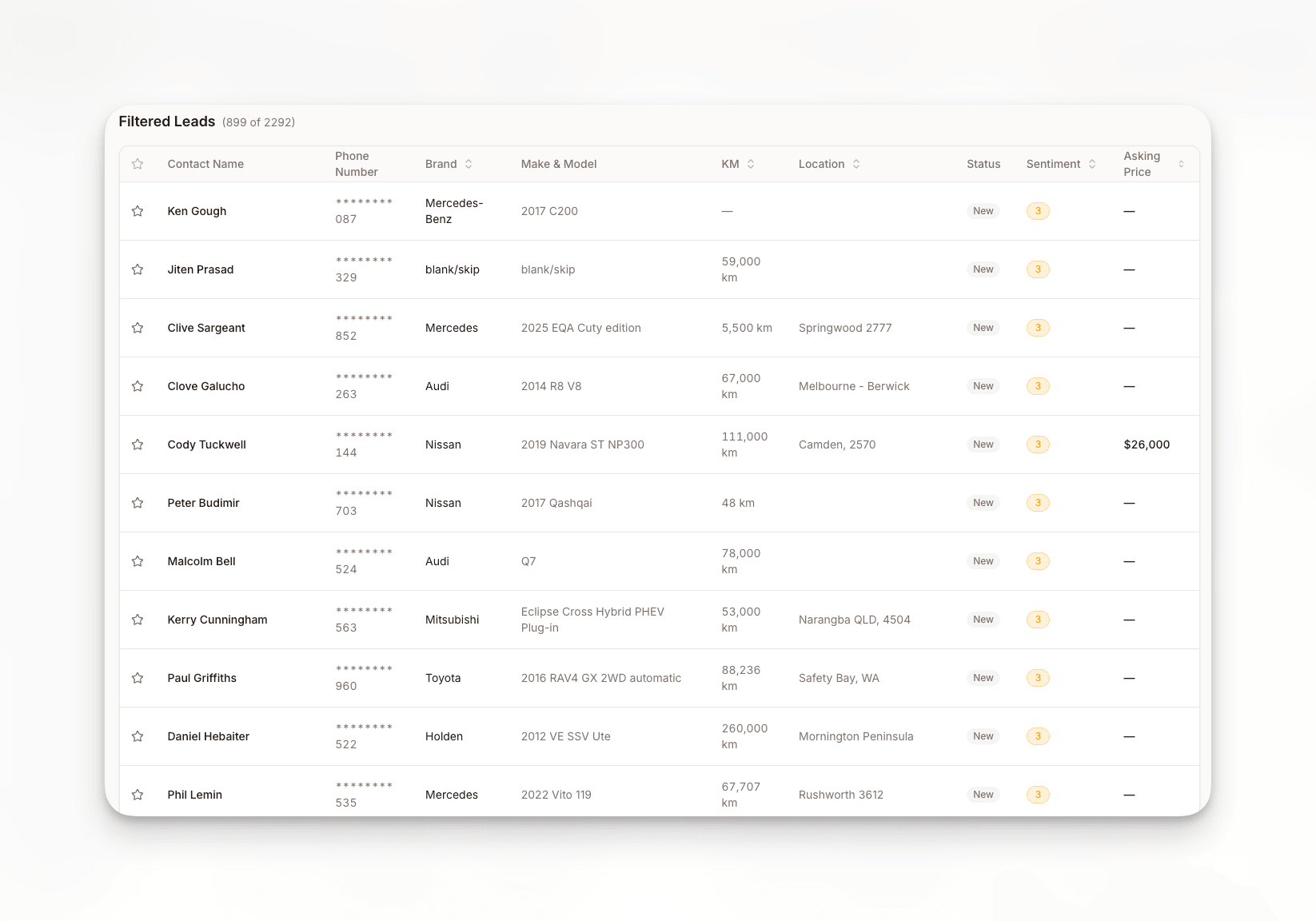
Make the list useful through filters
The filter controls cover vehicle make, enquiry status, odometer range, asking price and seller readiness. Staff can narrow a large list to the cars relevant to the work they are doing, then review those enquiries in detail.
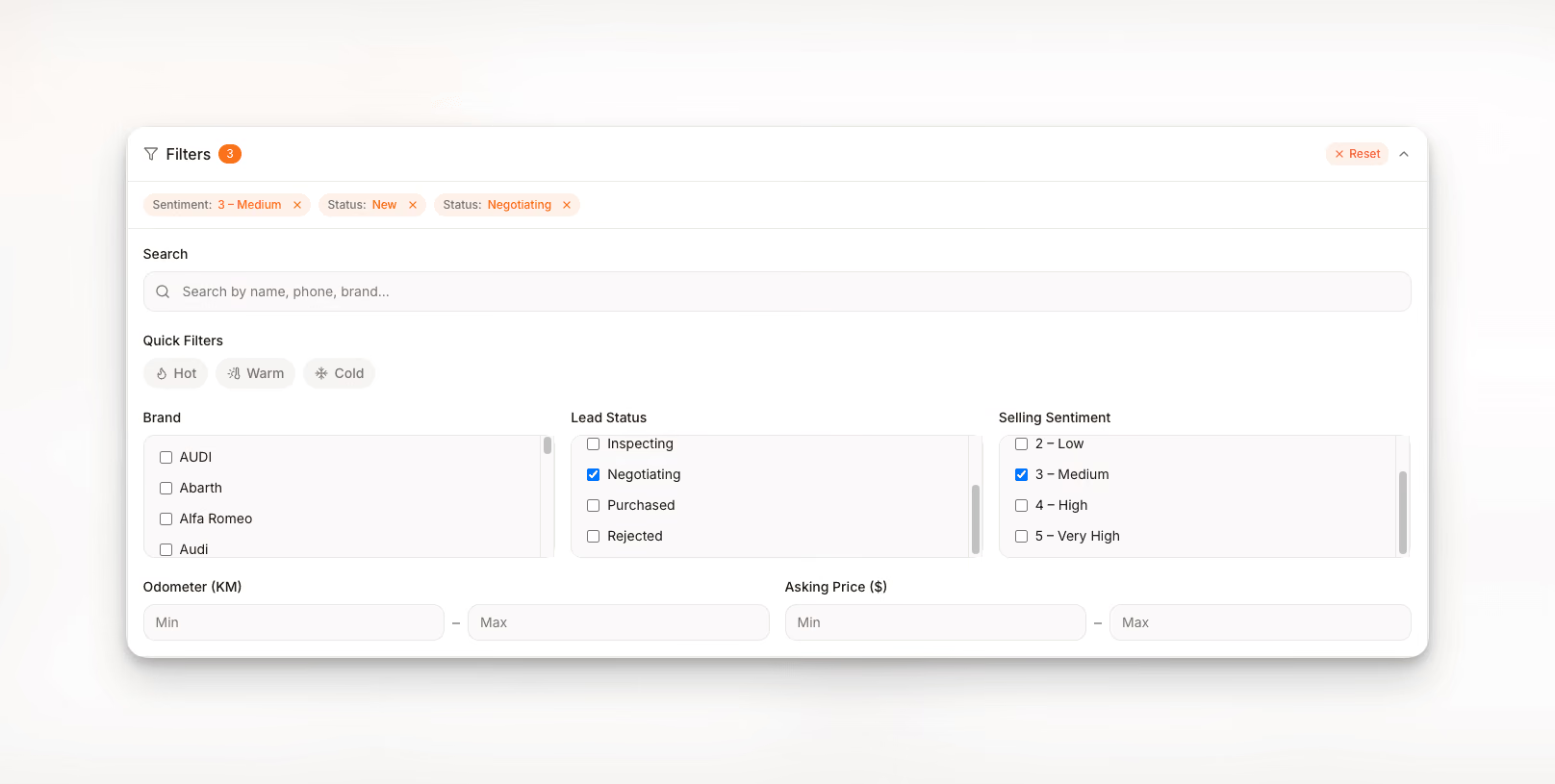
Keep notes beside the vehicle
The detail panel includes vehicle information, enquiry status, staff notes and conversation history. The design gives the team a place to prepare for a call and record what happens next.
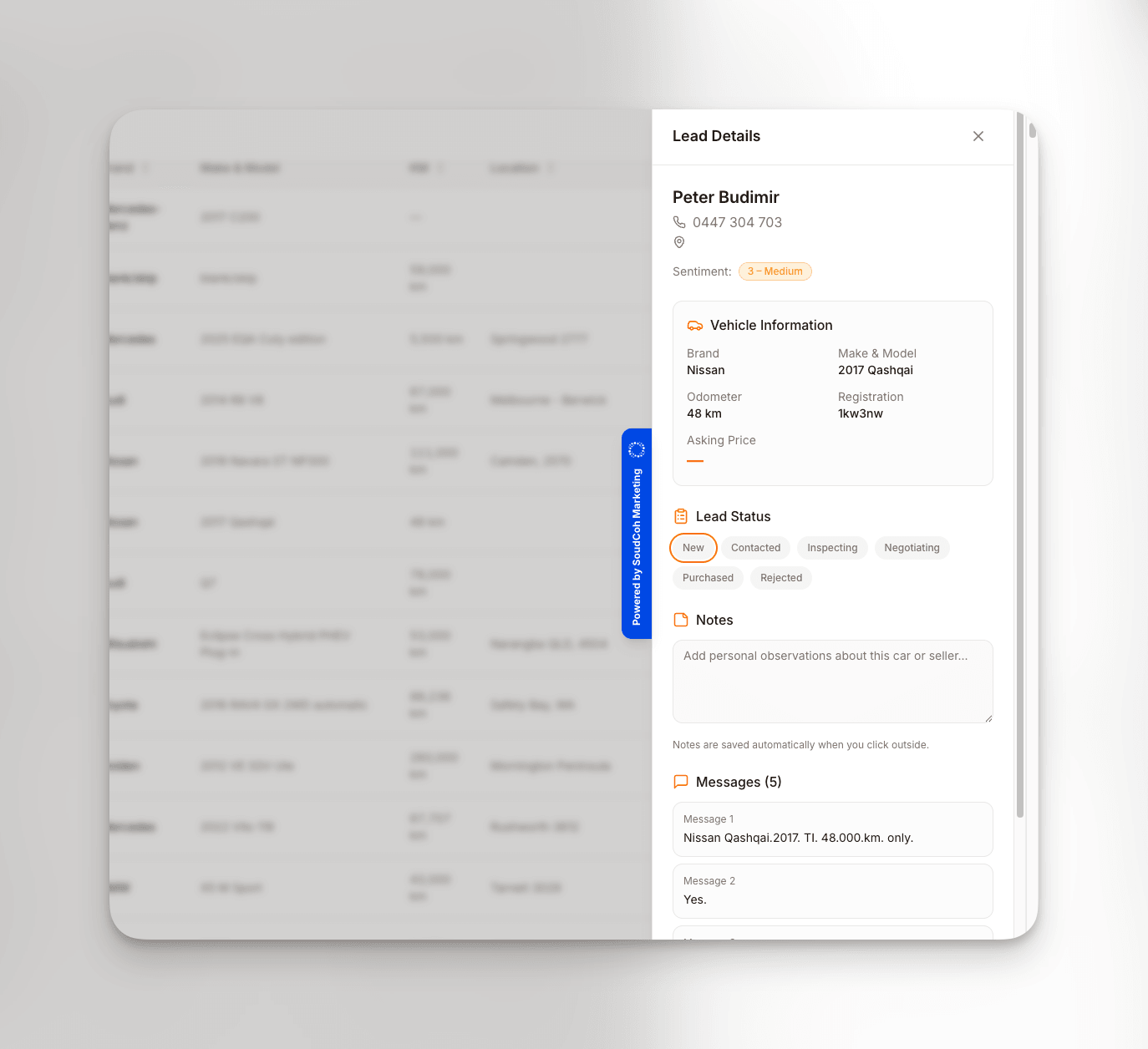
Make the next action clear
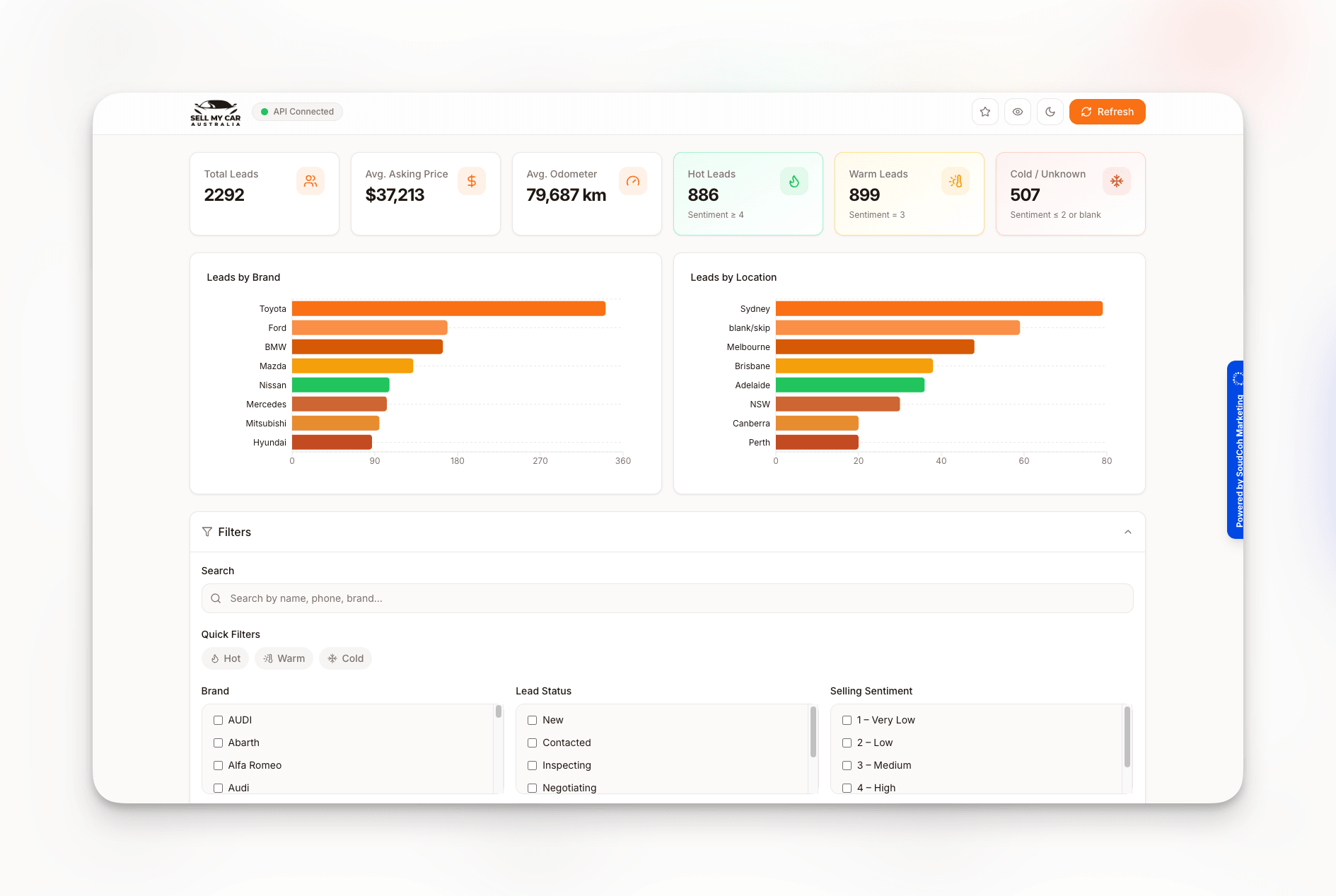
The workspace is organised around the enquiry’s progress, from first contact to inspection, negotiation or purchase. The customer-facing benefit is a team that can refer to the same car information and conversation history when responding.
What we delivered
- A shared view of vehicle enquiries and their current status.
- Filters for make, odometer, asking price, location and seller readiness.
- Vehicle detail panels with notes and conversation history.
- Simple actions for keeping each enquiry’s next step clear.
The completed work
The team can find relevant cars, review seller information and see which enquiries need attention without managing separate spreadsheets.
Talk to SoudCoh about a similar project.
If your customers or team need a clearer digital experience, explore our website design services.
Tags
- Custom Web App
- Automotive
- Dashboard Design
- Enquiry Management
That is one account. Yours is a different one.
We read your ads, your search presence and your tracking the same way this one was read, and tell you what we would change first.
Where this sits in SoudCoh Compound.
SoudCoh Compound is how we run ad accounts, from the search you pay for to the job you win. A published result rests on two parts of it: the footing that decides what counts, and the engine that carries each lesson forward.
- Footing
Real-Enquiry Signal
The number it moves: True cost per lead
We agree which calls, forms, bookings or sales count as a result, and a real test enquiry goes through every tracking path before the campaign goes live.
- Engine
The Carry
The number it moves: Waste blocked before the first click
Every change on an account like this one is written to that client's change history, and what it teaches, never the client's numbers, goes into the next account's starting point.
What actually happens after the first call.
Start with your goals and current setup. We review the opportunity, agree the work and plan the next stage with you.
- The call
Thirty to forty-five minutes, free
What you sell, who buys it, and what one customer is worth to you. No deck. You leave with a real number for your situation rather than a range.
- Week 0
The audit
We open your account — or your competitors' ground, if you do not have one yet — and write down every leak we can find. That list is yours whether or not you work with us.
- Week 1
The build
Everything the account needs before it can spend a dollar: what it will bid on, what it must never pay for, the ad copy, the assets, the landing pages and the tracking. It waits in our approval queue, and a real test enquiry goes through every tracking path before anything is live.
- Day one
You press go
Campaigns are created paused, every time, so you can read the whole build first. You activate when you are ready, not when we are.
- Days 1–14
The clean
The busiest fortnight your account will ever have. Search terms read daily, waste negated, early winners promoted, ad copy iterated against what is actually being served.
- From there
Rhythm
Weekly optimisation, reporting on a fixed cadence whether the news is good or bad, and a proper conversation each quarter about where the next block of budget should go.
Before you ask us anything
Here is what everybody asks first.
The questions this raises.
How the results were measured and how the approach could apply to your business.
The first call is free and there is no deck.
Book a callWhat do the results in this case study measure?
Campaign results describe the enquiries or job outcomes reported for the client. Each figure identifies what it measures.
Which records support these results?
Each figure identifies what it measures. The labels distinguish advertising conversions, call/form enquiries and won-job revenue. Enquiry events can include repeat calls; booked jobs are reported separately.
Would this work for my business?
We assess your service area, competition, margins and customer value, then build a plan around the opportunities in your business. The first call establishes the priorities, budget and tracking for that work.
Why does this study show a result but not a starting point?
Where a comparable earlier result is available, the study shows both values. New accounts report their launch result, with the tracking basis explained alongside it.
How would you plan this for my business?
We start with your goals, service area, competition and customer value. From there, we recommend the channels, website improvements and tracking that fit your next stage of growth.
How much would this cost to run?
Two separate numbers. Your ad spend goes to the platform, and what it needs to be depends on how competitive your market is and how many jobs you want — we recommend a minimum of A$5,000 a month for most businesses, and the largest companies we work with currently invest up to A$30,000 a day in advertising, with enterprise programmes above that. Our management fee is separate, isn't published and is custom-built around the work — contact us for packages. The first call is free and you leave it with a real figure for your situation.
How quickly could we start seeing enquiries?
It depends on the channel. Paid search meets demand that already exists, so calls and forms can arrive within hours of launch, and the first two to four weeks are an optimisation period where waste is cut daily. Most accounts settle into their best rhythm around 60 to 90 days. SEO, content and brand work run on a much longer clock — months rather than weeks — and we will tell you which one your situation actually needs.
Am I locked into a long contract?
No long-term lock-in. We would rather keep the work because it is producing than because a contract says you have to stay. What we do ask for is enough runway to be fair to the account — a campaign judged on its first ten days is being judged during the part where we are still cutting waste out of it. Terms are put in front of you in plain English before anything is signed.
More work in this industry.
Explore the campaigns, websites and customer journeys we have built for more businesses in this industry.
 Automotive
Campaign case study
Hybrid Autos
Sydney, NSW
Service-led
accident repair and replacement-car enquiries
Delivered campaign work
Hybrid Autos: Delivered a focused campaign for not-at-fault accident enquiries, accident repairs and replacement-car enquiries.
Read case study Automotive
Campaign case study
Any Car Towing
Melbourne, VIC
Service-led
towing enquiries by vehicle and location
Delivered campaign work
Any Car Towing: Delivered a focused campaign for car towing, motorcycle towing and breakdown towing.
Read case study Automotive
Campaign case study
Monza Detailing
Sydney, NSW
Service-led
detailing and car-mould enquiries
Delivered campaign work
Monza Detailing: Delivered a focused campaign for interior detailing, ceramic coating and paint correction.
Read case study
The work that produced this.
Explore the services behind this engagement.
- How we scope and build custom softwareFrom the first brief to a practical tool that fits the team, with a clear handover and ongoing support.
- A public website that explains the businessClear pages that explain the offer and help customers find the right next step.
- Software designed around the way a team worksBusiness and government projects that make complex tasks easier for the people doing them.
More on this approach.
The case study records what happened. These explain the channel, measurement or operating decisions behind the result.
Turning business information into useful decisions — Give a project a clear purpose, an accountable owner and a practical benefit for the team.
Keeping the message clear when AI helps with writing — Keep responsibility for accuracy and voice with the people publishing the work.
The work behind this one is written up in full under how we scope and build custom software, and the operating sequence behind every study on this site sets out the sequence in order.
Want results like this?
Thirty minutes on your numbers, and a written list of what we would change first. Yours to keep either way.
A real conversation and a written list of opportunities.