
Organise the site around the job being considered
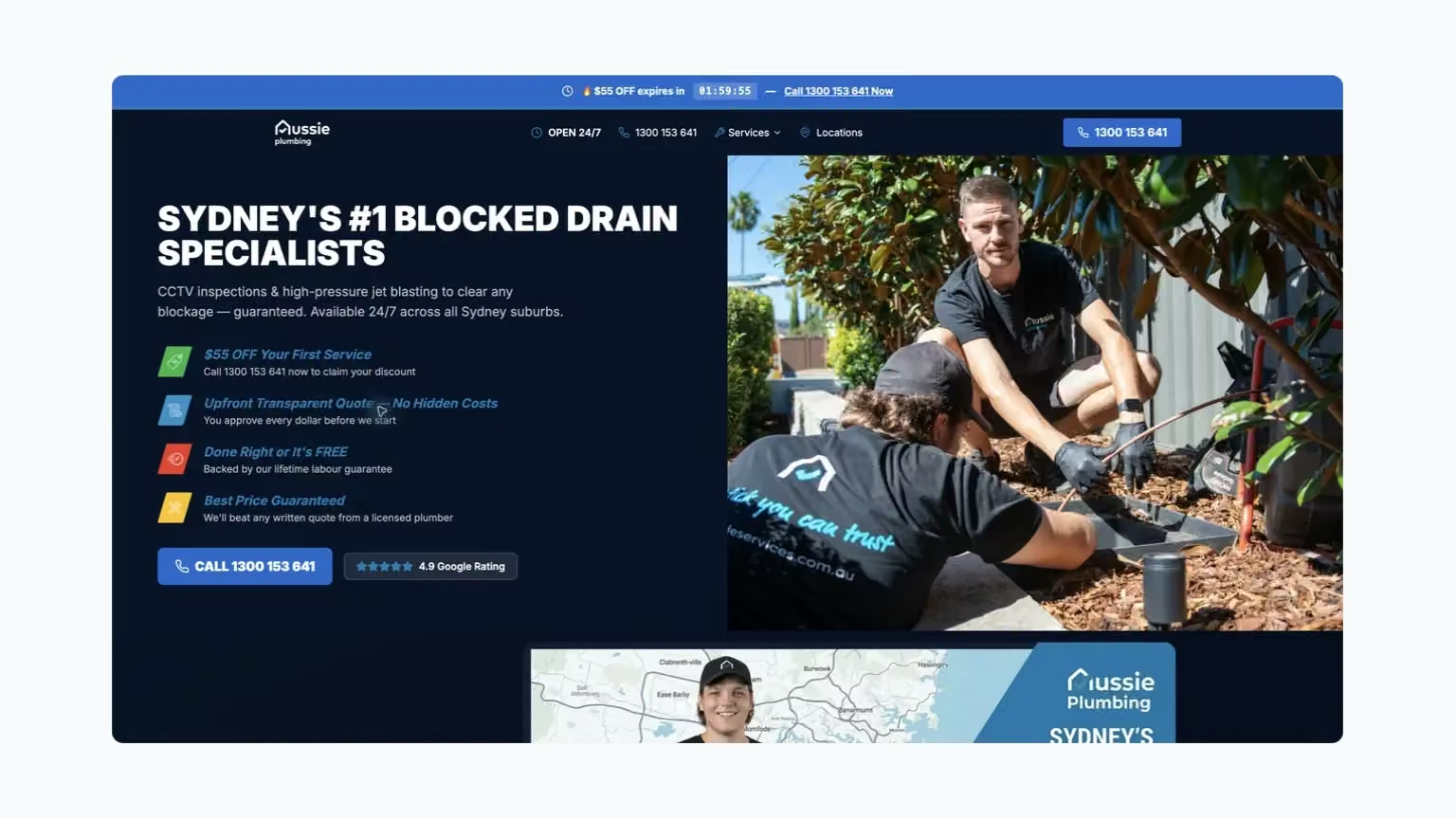
The Aussie Plumbing website gives blocked drains a focused destination with relevant crew imagery. Its hot-water content separates repairs, replacement and continuous-flow installation. The Aussie Roofs website provides a distinct roof-service journey.
These examples are useful because a broad business description is not always enough to answer a specific search. The visitor should recognise their problem before navigating the rest of the range. A clear service structure also gives each subject room for accurate inclusions and questions instead of reducing all work to the same general promise.
Keep similar words from hiding different work
A leak can be described in several ways by a customer who does not know its source. The website can help them explain what they observe without asking them to diagnose the cause. Separate pages for roof work, plumbing and leak detection give the business space to explain the kinds of assistance available.
Avoid assuming that a search phrase reveals the exact job required. A customer can describe where they see water and what has happened, while the service team decides what further assessment is needed. The marketing should make that conversation easier. It should not imply that every visible symptom can be resolved through one predetermined service or fixed scope.
Use images and inclusions that match the page
The plumbing examples include working imagery and service artwork connected to the job being described. The hot-water page uses separate inclusion lists so the customer can compare the options. These features give the page a subject beyond a generic company introduction.
For an owner reviewing a multi-service website, check every photograph and list against the heading. A roof-service page should not depend on unrelated bathroom imagery to explain itself. A drain page should give customers a reason to believe they have reached the right place before presenting other services. Cross-links can help later, but they should not interrupt the main explanation.
Keep reporting aligned with the service choice
The portfolio includes separate Aussie Drains campaign work, Aussie Roofs campaign work and Aussie Plumbing results. That separation is also useful when deciding where advertising needs attention.
Review relevant enquiries and accepted work by service before judging the entire business from one combined total. A change in roof enquiries may have a different cause from a change in blocked-drain requests. Mixing them can make a stable service look weaker or conceal an issue in a smaller service line. Keep the definitions consistent while allowing the review to identify different actions.
Make the first request specific enough to help
The form can retain the chosen service and ask for the area and a brief description. Let customers indicate uncertainty rather than forcing them into a category they do not understand. If the business offers more than one way to make contact, explain which is suitable for an urgent conversation and which begins a quote request.
Check what information the team actually uses. Adding fields that do not change the next step creates effort without clear value. Leaving out the service or location may require an avoidable exchange. The right balance is a request that remains manageable for the customer and arrives with enough context to respond.
Expand the range without making the page confusing
When adding a new service, give it a clear place in navigation, an accurate explanation and relevant creative. Review existing pages for references that may now be ambiguous. A growing range should not require every homepage visitor to read every service before choosing one.
Use navigation labels that a household can understand without knowing how the business organises its teams. Then check that the service introduction explains any overlap. If a customer is unsure whether their concern belongs under leaks or roofing, provide a simple way to describe it rather than forcing a confident selection. A well-organised website guides a person towards the right conversation; it should not require them to understand the cause of the problem before they are allowed to ask for help.
Website design and Google Ads planning should use the same service distinctions. The Aussie examples provide concrete pages and campaigns to inspect. For another business, the practical goal is to help a household find the right conversation while giving the owner a clear view of which services the advertising is supporting.