
Define coverage by service, not only by distance
A team may accept a larger planned job farther away than a small urgent call. Access, route patterns and available staff can also affect which areas make sense. Before changing targeting, describe the services and circumstances the business is prepared to support in each area.
The Wilco website documents Sydney and Newcastle coverage, while Kleening Crew Brisbane has its own local enquiry journey. For each service, confirm which locations the team can support and how those areas should be described on the website.
A practical guide
Before adding another service area
The service needs an urgent visit
Check response and travel capacity
A broad coverage statement should not create an expectation the team cannot meet.
The work can be booked ahead
Check the route and appointment pattern
Planned work may fit a different service area from urgent requests.
An area brings unsuitable enquiries
Review location, service and timing together
The corrective action may be a clearer page or a narrower service promise.
Understand what the location setting means
Google’s location-options documentation distinguishes people in or regularly in a location from people who have shown interest in it. Google also explains that location targeting uses several signals and is not guaranteed to be completely accurate. Selecting a place is therefore not a promise that every enquiry will originate exactly inside its border.
Choose the setting deliberately for the customer you want to reach. A local attendance service and a business helping someone plan a move may have different needs. Review actual enquiry locations afterwards instead of assuming the setting has settled the question permanently. The advertising map and the service map should be compared, not treated as identical by default.
Make local pages useful to residents
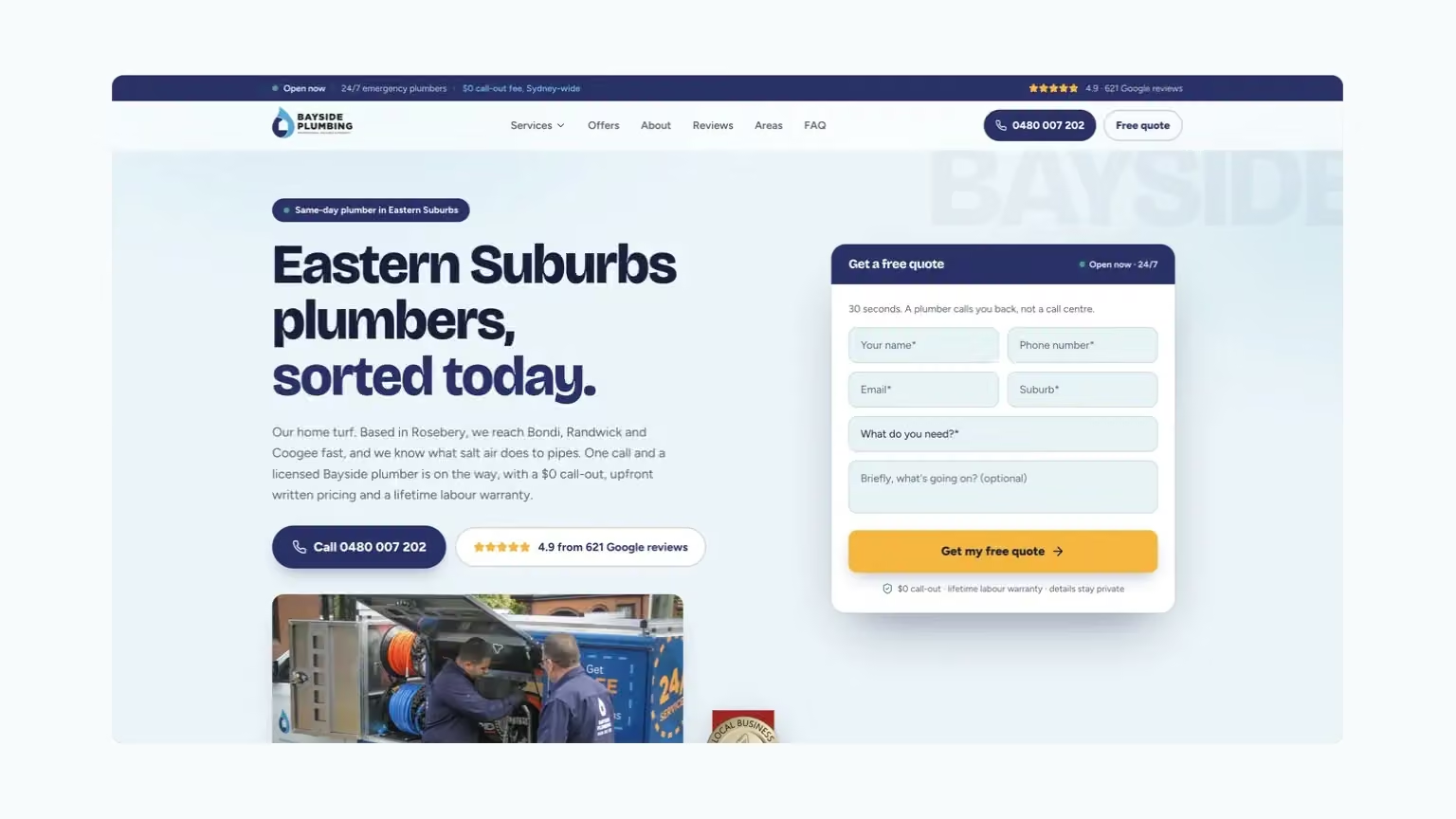
The Bayside website case includes an Eastern Suburbs page with local service information and a quote form. The useful feature is the connection between the area, the service and the enquiry. Repeating a suburb in a heading is only a small part of that work.
A local page should explain what the business offers there and how to ask about availability. Avoid inventing a branch address, local team or attendance time to make the page sound more specific. If coverage depends on the job or timing, provide a clear way to confirm it. Accurate context is more valuable than a long list of unsupported local claims.
Ask for the location early enough to help
A suburb or postcode can help the receiving team decide whether a request fits the service area. Put that question where it belongs in the enquiry, without requiring unnecessary address detail before the customer is ready to provide it. Explain any reason a complete address is required for the next step.
Review the wording when customers regularly select the wrong area or leave the location unclear. A field label that makes sense internally may not be obvious to a visitor. The goal is to reduce avoidable back-and-forth, not to collect every possible location detail at the earliest moment.
Review the work behind an expanded area
After adding coverage, look at accepted jobs, travel demands and reasons requests do not proceed. A distant area might produce enquiries but poor scheduling fit. Another might work well for planned services but not urgent attendance. These differences should inform the next decision.
Keep enough continuity to make the comparison useful. Changing the area, the service offer and the destination page simultaneously makes it harder to understand the effect. Where a business needs to make several changes together, document them clearly and avoid attributing the whole outcome to a single setting.
Keep the public promise current
Review website area lists, advertisements and contact-page wording together when coverage changes. The customer should not receive three different answers depending on the page they read. Make sure anyone handling enquiries understands the same service boundaries.
A useful coverage review includes the jobs the business declined as well as the jobs it accepted. Look for requests just outside the current area, but resist expanding solely because one attractive enquiry appeared. Consider whether there is a repeatable delivery plan and an appropriate service offer. The decision should be specific enough that the team can explain the new boundary consistently, including any circumstances in which the customer needs to confirm coverage before relying on it.
Local search work and paid search planning can support a shared, accurate service map. The best next area is not automatically the largest nearby population. It is an area where there is relevant demand, a clear public offer and a practical way for the business to deliver the work it is inviting.