
Put the service beside the offer
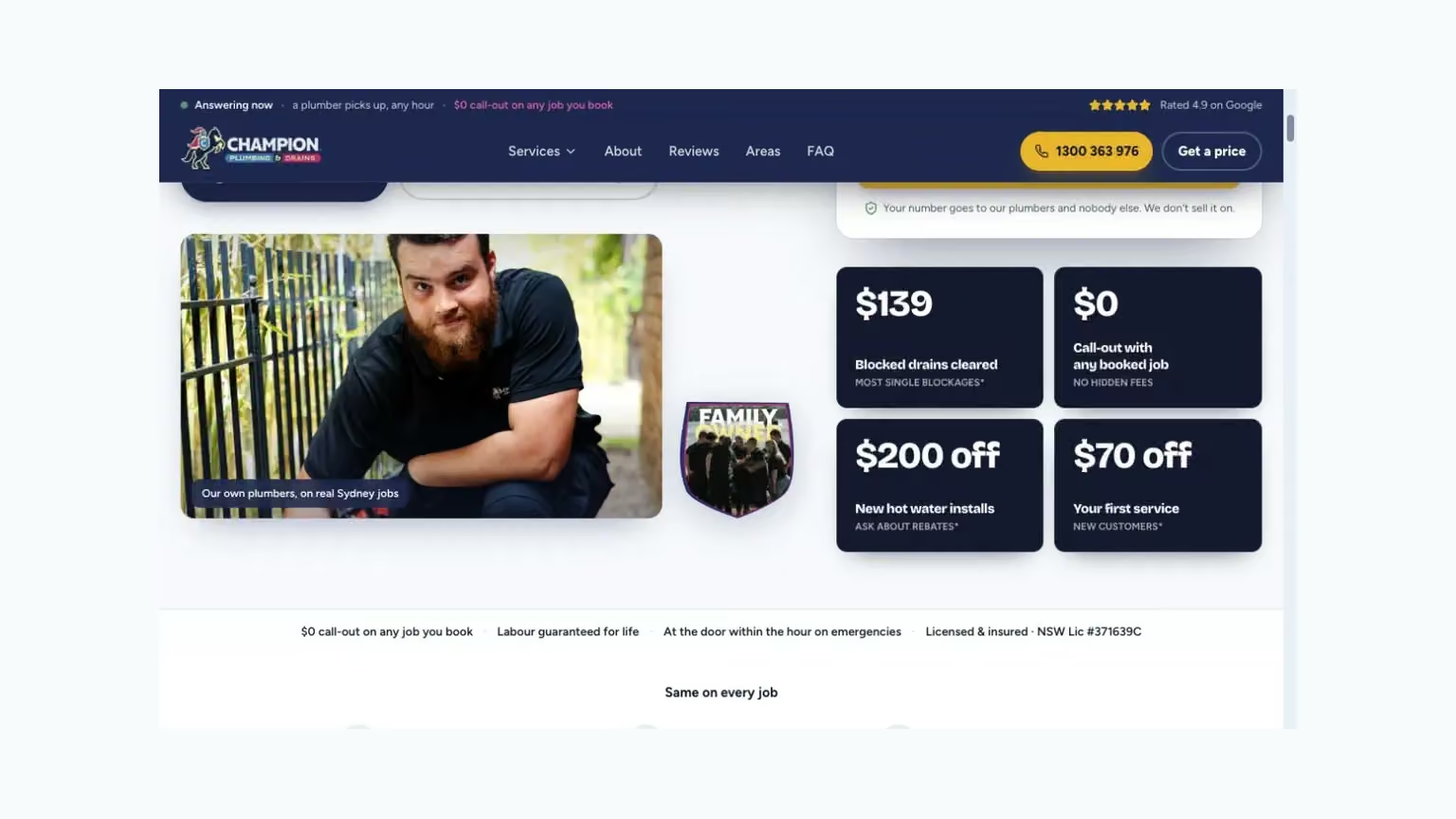
The Champion website case shows separate cards for drain, call-out and hot-water offers. Each has a service label and supporting terms rather than relying on one large number to explain every option. The case also includes actual branded service banners and a short work video.
The useful lesson is how the choices are organised. A customer should be able to distinguish the service they need from an unrelated special. Before a promotion goes live, check the inclusions, conditions and availability with the service team. Put the most important qualification beside the offer so customers can decide whether it fits their job.
Make the conditions part of the decision
Conditions should be close enough to the offer to be read before the customer acts. Explain what is included, what requires assessment and what can change the scope. An attractive first line followed by a very different explanation on the phone creates a problem for both the customer and the service team.
Review the offer on a small screen. Text that is technically present but too small to read is not doing its job. Give the important qualification a clear place in the card or the page. The design should help the customer understand whether the offer is relevant, not merely persuade them to click before they have enough information.
Side by side
Give a plumbing special enough context
A checklist for writing and placing an offer.
An incomplete offer
- A prominent amount without a defined service
- Conditions separated from the decision
- A generic destination after the click
A usable offer
- The service and its practical inclusions
- Eligibility and restrictions where they can be read
- Matching work imagery and a relevant enquiry route
Champion's service pages, offer cards, working imagery and video give the promotion a wider service context.
Show the work behind the promotion
Champion’s website uses working imagery and service banners alongside the offer presentation. This gives the customer something concrete to look at: the kind of work and business being discussed. A short video can add movement and a sense of the work without requiring a long explanation.
Select imagery that fits the service rather than using the same generic photograph for every promotion. Give video an appropriate poster and controls so that a visitor can choose whether to watch, especially when reading on a phone.
Carry the service into the enquiry
The blocked-drain page preselects the service in its form. That continuity is helpful when a visitor arrives from a specific offer: the request can retain the subject rather than restart as an unexplained general enquiry. Local pages, including the Eastern Suburbs example, keep the contact layout familiar.
The receiving team also needs a clear understanding of the promoted offer. A customer should not have to explain which banner they saw before anyone knows what they are asking about. Brief the receiving team on the offer, its conditions and the questions needed to confirm the job.
Give the advertisement and destination the same meaning
The Champion campaign case includes blocked drains, hot-water replacement, leaking taps, toilet repairs, leaking showers and CCTV inspections. An offer should connect with the relevant part of that service range, rather than turning the full list into an ambiguous all-purpose promise.
Read the advertisement and destination together. Check whether the headline implies a completed repair while the page describes an initial service or assessment. Check whether a qualification disappears in a shortened version. If the meanings differ, fix the wording before discussing whether the creative needs a brighter colour or a more prominent button.
Judge the offer by the work it attracts
Review suitable enquiries, accepted jobs and the reasons people do not proceed. An offer that generates many questions about eligibility may need clearer terms. An offer that attracts work the team cannot schedule may need a different availability plan. These are more actionable observations than a simple preference for one banner design.
Keep a review date with the working version of an offer, so someone is responsible for confirming it stays accurate. When terms or availability change, check the page, banner and advertisement together. A current service page can still create confusion if an older creative remains in circulation. The practical task is consistency across the versions a customer might see, with a clear owner for confirming the offer's accuracy before it is promoted again.
For plumbing marketing, a useful special is a clearly described service with a relevant reason to enquire. Champion’s work shows several ways to present that information. The next promotion should be built from the business's current service, accurate conditions and actual ability to deliver it.