
Read the result together with the service scope
The Bayside campaign case covers Sydney plumbing services including blocked drains, emergency plumbing and hot water, with further coverage for leaks, gas fitting and tap and toilet repairs. The return belongs to the reported campaign and period. Compare future periods using the same revenue definition and account for changes in the service mix.
Service scope matters because a campaign can produce jobs with different values, costs and delivery requirements. Reading only the headline ratio leaves those differences invisible. Start with what was advertised and the work the business wanted, then ask how the recorded outcomes relate to that brief. A result is easier to act on when its meaning stays connected to the actual service.
Understand the numerator and the denominator
Return on ad spend compares attributed revenue with advertising spend. It does not by itself subtract labour, materials, vehicles, overheads or other delivery costs. Recorded won-job revenue also needs to be distinguished from money collected, especially where a business accepts work before receiving final payment.
This is a definition question before it is a performance question. Agree which revenue is included, the period used and how cancelled or changed jobs are treated. Keep the basis consistent when comparing periods. A ratio can look different because the underlying business improved, because the mix of work changed, or simply because the reporting definition changed.
Side by side
Read Bayside's 6× result on the right basis
What the ratio compares
- Recorded won-job revenue
- Advertising spend for the reported campaign window
- A consistent revenue definition between periods
What the owner also needs
- Labour, materials, travel and other delivery costs
- Whether accepted work has been completed and paid
- Service mix and capacity for more suitable work
Revenue return and profit answer different questions. Use both the campaign result and the work behind it.
Keep enquiries and accepted work separate
A phone call or form submission can be a useful enquiry without becoming a job. Customers may be outside the service area, need unavailable timing or decide not to proceed. Those outcomes should remain visible rather than being treated as completed revenue at the point of first contact.
Bayside’s result refers to recorded won work. For an owner reviewing another campaign, that prompts a practical question: can the team distinguish an enquiry, a quote, accepted work and a cancellation? Agree these definitions with the people quoting and booking jobs so that everyone discussing performance means the same thing.
Look at the work required to produce the return
A healthy-looking revenue ratio can still accompany a difficult service mix. Jobs may involve long travel, expensive materials or more labour than expected. Review the types of work accepted and whether they make sense for the business, rather than using a single return measure as the whole decision.
This is also why a campaign should not be pushed towards the cheapest possible enquiry by default. A less expensive request is not automatically more valuable, and a higher-value job is not automatically more profitable. The owner needs enough context to compare the work, including the capacity and costs needed to fulfil it.
Use the website to preserve the customer's context
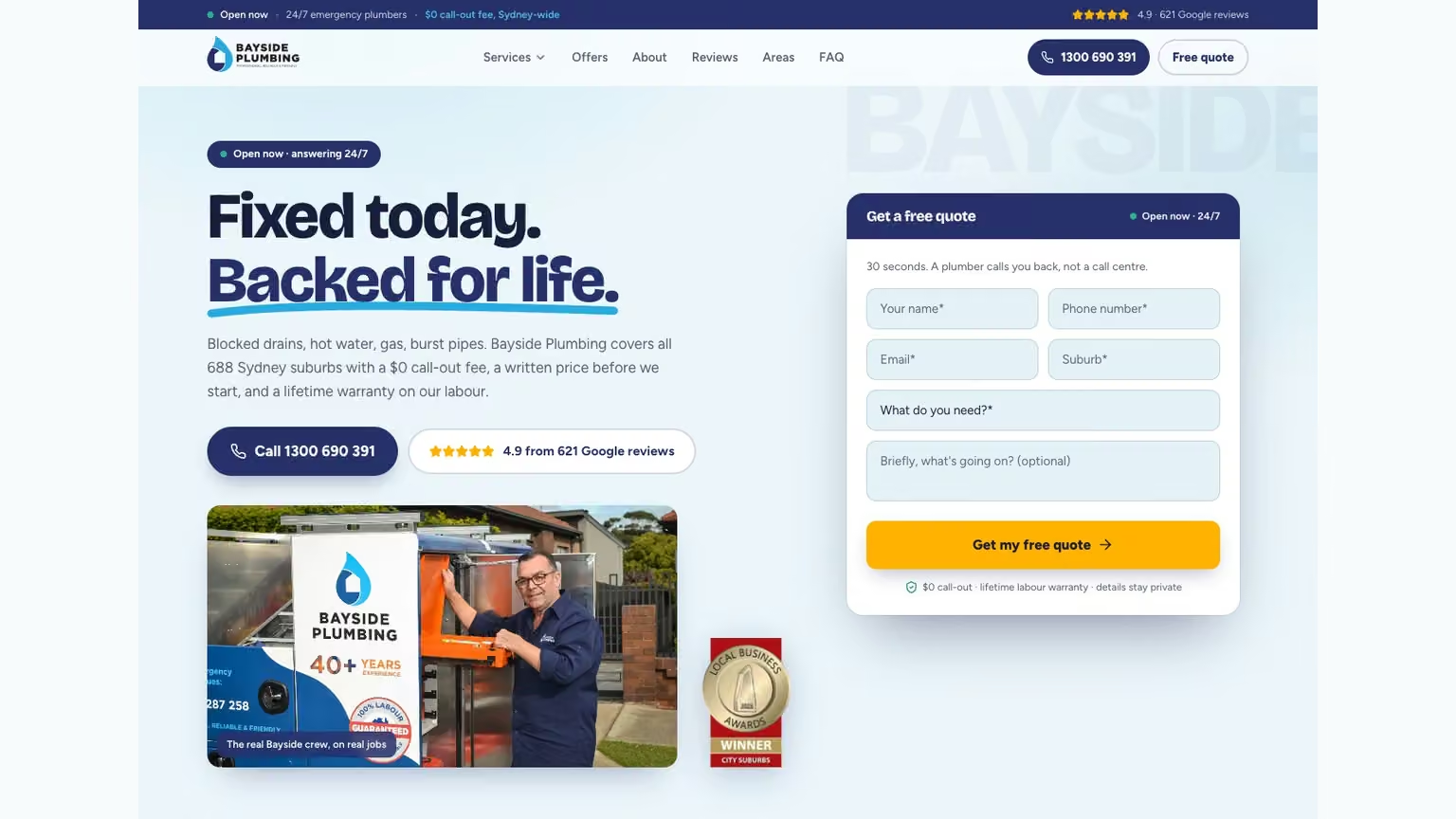
The Bayside website case shows service-specific forms, local information and a mobile phone option. Those features help connect a customer's problem with the business's enquiry journey. They provide concrete work to inspect alongside the campaign result.
Check that the ad, page and first conversation agree about the service and make it straightforward for a relevant customer to ask for help.
Make the next decision from the complete picture
Before changing spend, review the reported return, the quality of accepted work and the team's ability to take on more. Allow for jobs that take time to progress, and compare periods on the same basis. A short successful window can justify further investigation without becoming a promise about the next one.
Keep a short written definition beside any headline return in an owner report. It should identify the period and the revenue basis, and note whether work still awaiting completion or payment is included. Keep the same revenue definition when comparing periods. When the basis changes, mark the change rather than presenting the next ratio as directly comparable. Keep the definition beside the result so the owner can check what changed.
A Google Ads review should leave an owner with a clear action and a reason for it. Bayside’s 6× result is useful because it connects advertising with recorded work. The next business decision still requires the service mix, delivery costs and available capacity that sit behind that headline.