
    Proof
    Impress Blinds — cost per recorded Google Ads conversion down 62.63%SLS Solicitors — cost per recorded Google Ads conversion down 58.48%FixCare Property — cost per enquiry down 56.36%Rubbish Removal WA — cost per enquiry down 53.18%Floral Cakery — cost per enquiry down 49.82%ILLUMINATE Laser Emporium — cost per enquiry down 48.54%Aussie Plumbing — cost per enquiry down 41.96%Sydney Fence Painting — cost per enquiry down 33.68%Alliance Plumbing — cost per enquiry down 29.6%Gridless Build Solutions — cost per enquiry down 29.16%FacilityWorx — cost per enquiry down 23.62%Cornerstone Roofing — cost per enquiry down 20.47%Council finance — budgeting and workforce designCouncil planning — clearer approvals and reportingCultural audiences — media strategy and creative conceptsCommunity participation — surveys, maps and project pagesPublic-sector research — survey design and analysisPublic art — site studies and visual conceptsRegional identity — visitor guides and wayfinding conceptsCouncil systems — integration and migration planningA pressure washing business — service-led search campaignsA pressure washing business — a clear enquiry journeyA carpet cleaner — Google Ads built around cleaning servicesA roofing company — campaigns for repairs and restorationA CCTV installer — campaigns for security enquiriesA fence painter — search campaigns for specific surfacesA maintenance business — live in 8 weeks, 3 stacks gone41 numbered clauses, published in full5.0 across every Google review$120M+ in media under management250+ active engagements across five countries
    Government & Public Sector

    Make a public-service website easier to use

    A public-service website is often the place someone visits when they need a specific answer. The useful design question is whether they can find the right information and complete the next step. Visual design, content, forms and ongoing editing all contribute to that experience.

    • 23 September 2026
    • 3 min read
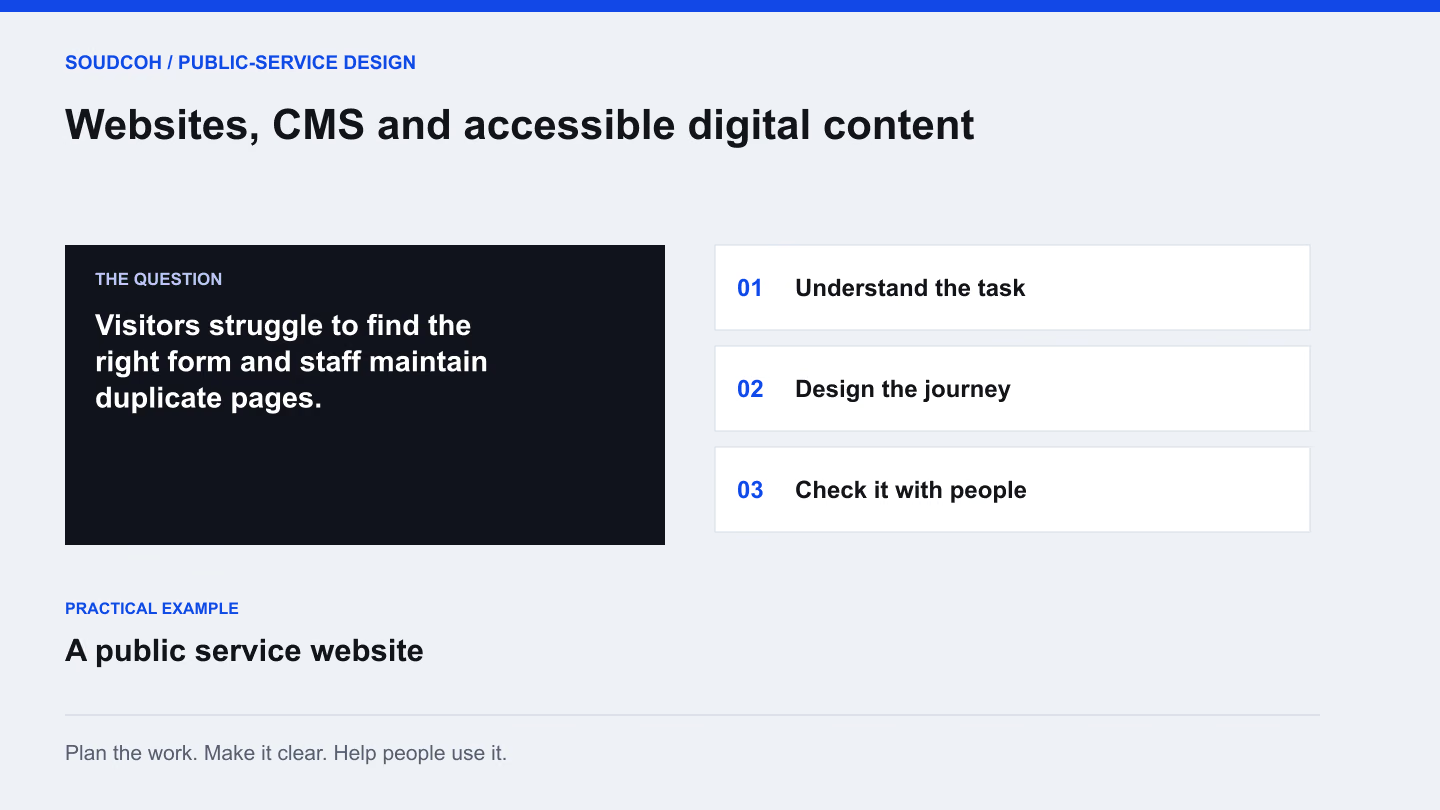
    Websites, CMS and accessible digital content: understand the task, then design the journey, then check it with people.
    An example approach for a public service website.

    The steps

    Design around the task, then test the whole journey

    Find the taskMap the important journeysTest the patternTry representative pages and formsSupport the editorsPlan migration and ongoing ownership

    Find the task

    Identify the information and forms people come to find. Review duplicate pages and agree which content should be maintained and by whom.

    Ready for the next stepA task and content map

    Test the pattern

    Check navigation, wording and interactions with the people expected to use them. Scope formal accessibility assurance with qualified review partners.

    Ready for the next stepReviewed page and form patterns

    Support the editors

    Move approved information, check the resulting journeys and teach the responsible team how to keep the site current.

    Ready for the next stepA migration plan and editor guidance

    Start with the tasks people bring

    Ask the team which questions arrive by phone, email and at the counter. Review the pages and forms connected to those questions. A task might be finding an eligibility rule, reporting a problem or understanding what to bring to an appointment.

    Organise the discovery around those tasks rather than the internal organisation chart. Staff divisions are familiar to employees but may mean little to a visitor. A clear task list gives the team a practical basis for deciding which pages need attention first and what a successful journey should look like.

    Give content a clear home

    Make an inventory of existing information before migrating it. Identify duplicates, outdated pages and material without an owner. Decide which version is authoritative and which team will maintain it. A new design will not resolve conflicting information on its own.

    Use a small set of page patterns for common needs. A service page may need eligibility, required information, timing and contact details in a predictable order. Test that pattern with both a short and a complex service before applying it across the website.

    Design for different ways of using the site

    People use websites with different devices, abilities and input methods. Important controls should be understandable and operable beyond a mouse. Text, layout and images need to support the meaning rather than hide it.

    The W3C introduction to web accessibility explains why keyboard use, text alternatives and human evaluation matter. Bring those considerations into design and testing early. An automated check can find some problems, but it does not replace reviewing whether real people can understand and complete the intended task.

    Treat the form as part of the service

    Explain what someone needs before they begin. Use labels that describe the information required and provide help where a question may be unfamiliar. When an error occurs, make it clear what needs fixing without losing the person’s completed work.

    Review the form with the staff who handle submissions. Every requested field should have a purpose. The W3C forms tutorial provides practical guidance on labels, instructions and feedback. A shorter form is helpful only if it still collects what is necessary for the service to proceed.

    Plan for the next editor

    Train the people who will maintain the site using realistic examples. Show how to update a service page, replace a document and check a form. Include a content owner and review process in the handover so the information remains current after launch.

    The useful output is more than a set of finished screens. It is a website structure, clear content, tested tasks and repeatable editing practices. When a new service arrives, the team should know which pattern to use and how to check that it works.

    Explore our Websites, CMS and accessible digital content, related services and Design digital consultation people can complete.

    What to do next

    Talk to SoudCoh about the service question, the people involved and the outputs your team needs.
    Talk to SoudCoh

    Sources and related projects

    1. W3C WAI: Introduction to Web Accessibility — https://www.w3.org/WAI/fundamentals/accessibility-intro/
    2. W3C WAI: Forms Tutorial — https://www.w3.org/WAI/tutorials/forms/
    Read next

    Filed under the same desk first. The full index is searchable and filters by reader.

    If you would rather we just did it.

    The briefing above is the reasoning. These are the pages that describe what it looks like as a piece of paid work, including what it costs and what gets reported.

    Apply it to your account

    Reading it is the easy half. Thirty minutes with someone who runs accounts and you leave with a written list of what is leaking on yours — yours to keep either way.

    No pitch deck. No upsell. A real conversation and a written list of leaks.