
    Proof
    Impress Blinds — cost per recorded Google Ads conversion down 62.63%SLS Solicitors — cost per recorded Google Ads conversion down 58.48%FixCare Property — cost per enquiry down 56.36%Rubbish Removal WA — cost per enquiry down 53.18%Floral Cakery — cost per enquiry down 49.82%ILLUMINATE Laser Emporium — cost per enquiry down 48.54%Aussie Plumbing — cost per enquiry down 41.96%Sydney Fence Painting — cost per enquiry down 33.68%Alliance Plumbing — cost per enquiry down 29.6%Gridless Build Solutions — cost per enquiry down 29.16%FacilityWorx — cost per enquiry down 23.62%Cornerstone Roofing — cost per enquiry down 20.47%Council finance — budgeting and workforce designCouncil planning — clearer approvals and reportingCultural audiences — media strategy and creative conceptsCommunity participation — surveys, maps and project pagesPublic-sector research — survey design and analysisPublic art — site studies and visual conceptsRegional identity — visitor guides and wayfinding conceptsCouncil systems — integration and migration planningA pressure washing business — service-led search campaignsA pressure washing business — a clear enquiry journeyA carpet cleaner — Google Ads built around cleaning servicesA roofing company — campaigns for repairs and restorationA CCTV installer — campaigns for security enquiriesA fence painter — search campaigns for specific surfacesA maintenance business — live in 8 weeks, 3 stacks gone41 numbered clauses, published in full5.0 across every Google review$120M+ in media under management250+ active engagements across five countries
    Government & Public Sector

    Design digital consultation people can complete

    Digital consultation works best when people understand the decision, the contribution being requested and what happens to their response. The choice of survey, map or discussion tool follows that explanation. A useful engagement website also gives staff a practical way to review and respond to what people share.

    • 23 September 2026
    • 3 min read
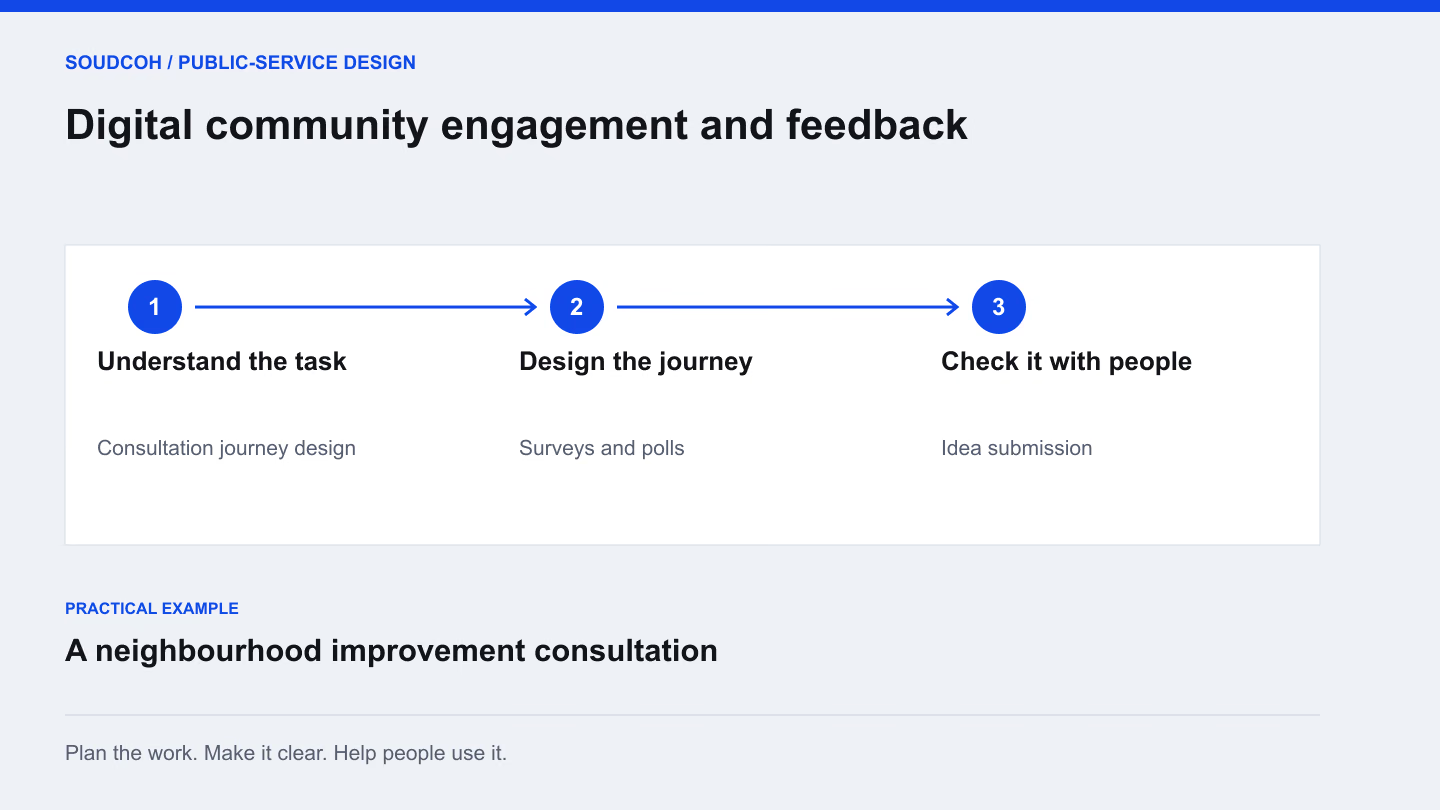
    Digital community engagement and feedback: understand the task, then design the journey, then check it with people.
    An example approach for a neighbourhood improvement consultation.

    A practical guide

    Choose participation tools for the decision being made

    • Residents need to understand the options

      Start with a clear project explanation

      Describe the proposal and the decision before asking people for their views.

    • The team needs comparable responses

      Use a focused survey or guided submission

      Ask questions that connect to the decision and provide accessible ways to participate.

    • A concern depends on a particular place

      Consider a feedback map

      Use location only where it helps the response, then explain how the team will review and close the consultation.

    Explain what can change

    Begin with the decision being made. Describe the parts that are open to input and any constraints that are already established. People can give more relevant feedback when they understand the scope of the conversation.

    For a neighbourhood improvement project, that might mean explaining several options, the features they share and the questions still being considered. Keep the explanation short enough to read before taking part, with supporting detail available nearby. Avoid asking for views on a choice that has already been made.

    Choose a format that suits the question

    A short survey can compare defined options. A map can connect feedback with a place. An ideas space may help when the team wants suggestions that do not fit a fixed list. A discussion format needs a clear purpose and a plan for moderation.

    Do not add every available tool simply because the platform supports it. Walk through what each contribution will tell the team and how it will be used. Where two tools ask the same question, consider whether one clearer activity would make participation easier.

    Help people complete the contribution

    Show the expected effort, explain any required information and make the steps understandable. Review the experience on a small screen and consider people who use a keyboard or assistive technology. Provide a suitable alternative when someone cannot use the online activity.

    Test the questions with people outside the project team. Ask them to explain what they think each question means. This can reveal assumptions that internal reviewers overlook. A beautifully presented consultation still produces weak evidence if participants interpret the same question in several incompatible ways.

    Design the staff work at the same time

    Decide how contributions will be reviewed, grouped and escalated where necessary. Give moderators clear guidance and make responsibilities visible. Agree how the team will handle duplicates, comments outside scope and questions that deserve a direct response.

    Reports should preserve the difference between the number of submissions and the variety of views expressed. A theme summary can help the team read a large volume of feedback, but reviewers should be able to return to the original context before drawing a conclusion or presenting it to decision-makers.

    Close the conversation clearly

    Tell participants what happens after the closing date. When a decision is available, explain the main themes, what influenced the result and what happens next. If the process takes longer than expected, publish an update rather than leaving an old invitation as the latest information.

    The deliverables are a participation plan, clear public screens, a workable review process and a useful closing update. Together they make the consultation understandable from the first invitation through to the explanation of the decision.

    Explore our Digital community engagement and feedback, related services and Make a public-service website easier to use.

    What to do next

    Talk to SoudCoh about the service question, the people involved and the outputs your team needs.

    Try the calculation with your own figures: the review-rating calculator.

    Talk to SoudCoh
    Read next

    Filed under the same desk first. The full index is searchable and filters by reader.

    If you would rather we just did it.

    The briefing above is the reasoning. These are the pages that describe what it looks like as a piece of paid work, including what it costs and what gets reported.

    • Digital community engagement and feedbackGive people clear ways to take part in a consultation and understand what happens next. Design the public information, participation tools and staff review process together. Surveys, ideas, maps and discussion formats are selected for the decision being made, with accessible alternatives considered from the start.

    • Explore Digital community engagement and feedbackExplore the people, scope and practical outputs involved.

    Apply it to your account

    Reading it is the easy half. Thirty minutes with someone who runs accounts and you leave with a written list of what is leaking on yours — yours to keep either way.

    No pitch deck. No upsell. A real conversation and a written list of leaks.