
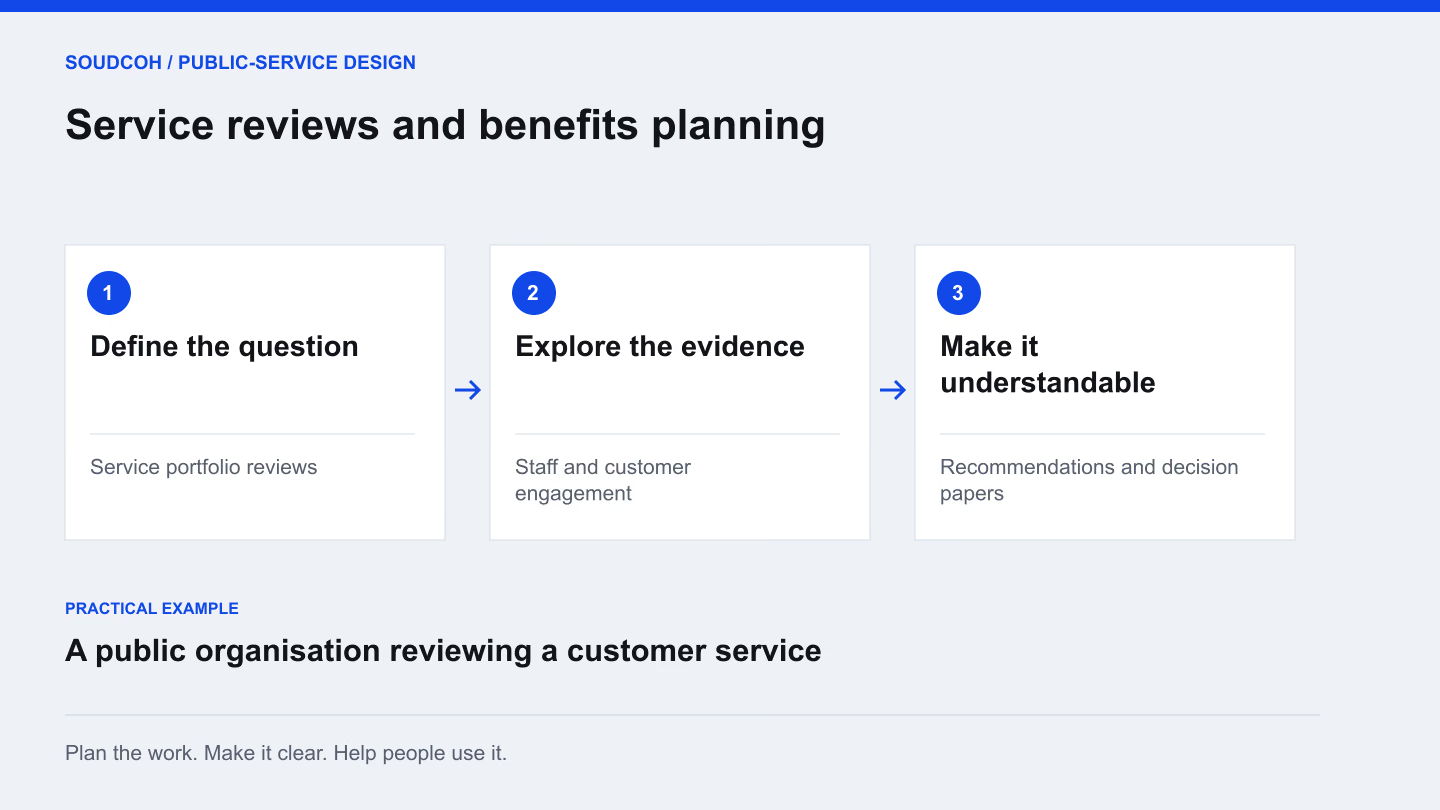
Set a review question with a manageable scope
A request to “improve efficiency” is too broad to guide useful work. Identify the service, the people it serves and the decision the review needs to support. Agree what is inside the review and what remains outside it.
For example, a customer service team might examine why certain requests require repeated clarification. That is specific enough to investigate. The review can consider information, staff work and the customer experience without becoming a general assessment of every process in the organisation. The scope can expand later if the evidence justifies it.
Build a baseline people recognise
Collect the relevant evidence about demand, performance, resources and experience. Speak with the people delivering and using the service. Compare what the records show with what staff say happens in practice, and investigate important differences.
Keep definitions clear. Waiting time may be measured from several different starting points, and a completed task may not mean the customer’s issue is resolved. A baseline needs enough detail to support a fair comparison later. It should also show where the information is incomplete rather than suggesting a precision the records cannot support.
Compare more than one practical option
Start with the causes indicated by the evidence. Possible changes may include clearer information, a different sequence of work, staff guidance or a digital tool. Include a realistic option that improves the current arrangement, not only a large replacement proposal.
Assess options against the same considerations: service quality, effort, cost, dependencies and effects on different users. Explain assumptions and unresolved questions. The decision paper should help the responsible team understand the trade-offs, rather than steer them towards a preferred answer hidden inside the presentation.
Test the change on a useful scale
A pilot can expose problems before a wider rollout. Choose a scope that includes enough ordinary work to test the proposed change, and define what the team will observe. Include feedback from the people affected, not just measures that are convenient to collect.
If the change is a clearer application process, examine whether people understand it and whether staff receive the information needed to proceed. Record the problems and refine the design. A pilot is valuable because it can change the recommendation, not merely demonstrate a conclusion already reached.
Assign the work after the report
Turn the chosen option into an action plan with owners, dependencies and review points. Define the intended benefit and how it will be assessed against the baseline. Separate an expected benefit from one that has actually been observed.
The deliverables are a review brief, evidence pack, options paper, pilot findings and a benefits plan. Give the responsible team a practical way to maintain those records. A clear review leaves people able to explain what happens next, instead of leaving a polished report without anyone accountable for using it.
Explore our Service reviews and benefits planning, related services and Keep a multi-partner programme moving.