
    Proof
    Impress Blinds — cost per recorded Google Ads conversion down 62.63%SLS Solicitors — cost per recorded Google Ads conversion down 58.48%FixCare Property — cost per enquiry down 56.36%Rubbish Removal WA — cost per enquiry down 53.18%Floral Cakery — cost per enquiry down 49.82%ILLUMINATE Laser Emporium — cost per enquiry down 48.54%Aussie Plumbing — cost per enquiry down 41.96%Sydney Fence Painting — cost per enquiry down 33.68%Alliance Plumbing — cost per enquiry down 29.6%Gridless Build Solutions — cost per enquiry down 29.16%FacilityWorx — cost per enquiry down 23.62%Cornerstone Roofing — cost per enquiry down 20.47%Council finance — budgeting and workforce designCouncil planning — clearer approvals and reportingCultural audiences — media strategy and creative conceptsCommunity participation — surveys, maps and project pagesPublic-sector research — survey design and analysisPublic art — site studies and visual conceptsRegional identity — visitor guides and wayfinding conceptsCouncil systems — integration and migration planningA pressure washing business — service-led search campaignsA pressure washing business — a clear enquiry journeyA carpet cleaner — Google Ads built around cleaning servicesA roofing company — campaigns for repairs and restorationA CCTV installer — campaigns for security enquiriesA fence painter — search campaigns for specific surfacesA maintenance business — live in 8 weeks, 3 stacks gone41 numbered clauses, published in full5.0 across every Google review$120M+ in media under management250+ active engagements across five countries
    Government & Public Sector

    Plan a public message and listen to the response

    A communications plan should explain what a programme is saying, who needs to hear it and how the team will respond to questions. Media monitoring then helps the team understand the conversation around that work. Planning and listening are most useful when they inform each other.

    • 23 September 2026
    • 3 min read
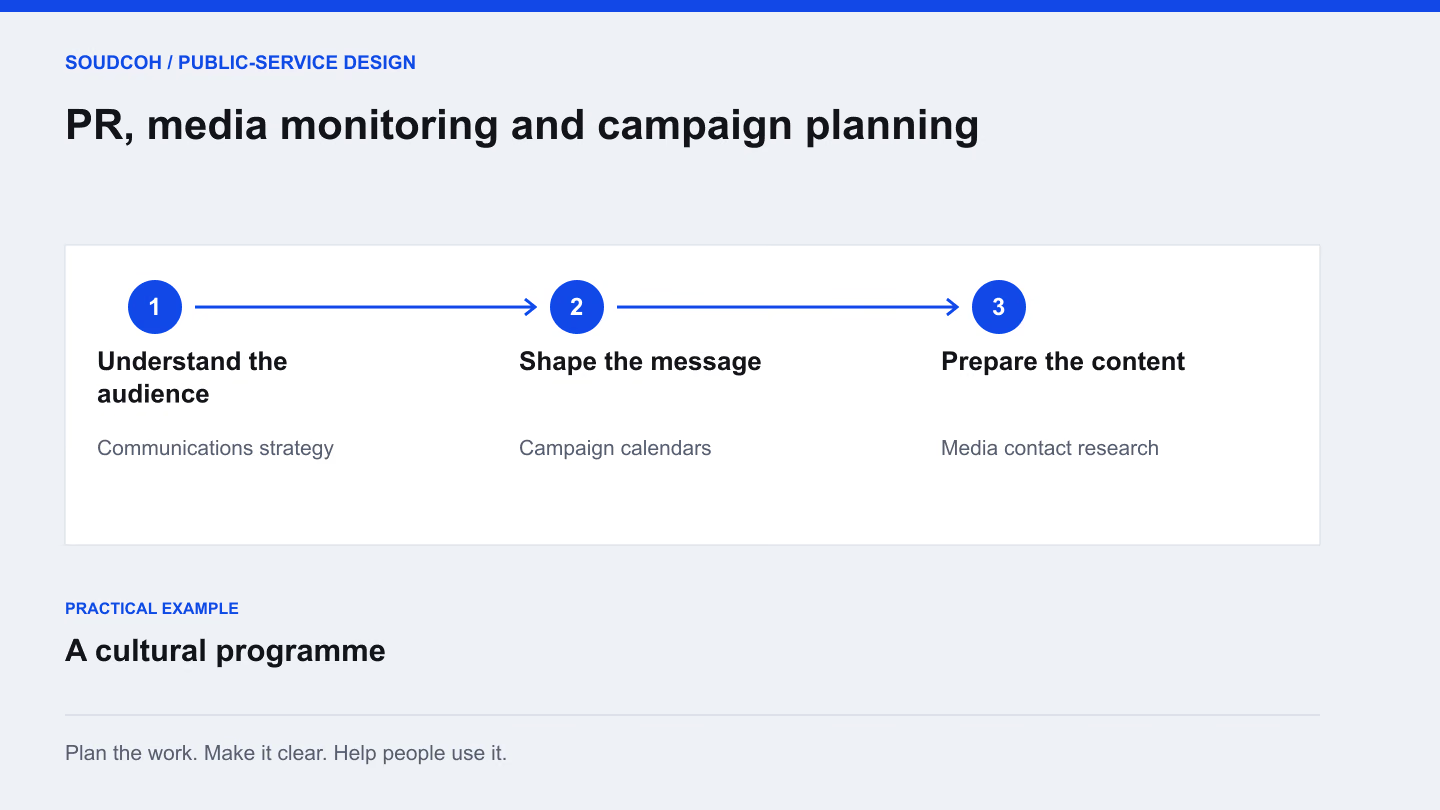
    PR, media monitoring and campaign planning: understand the audience, then shape the message, then prepare the content.
    An example approach for a cultural programme.

    A practical guide

    Let the public question guide the communications work

    • People need to understand an announcement

      Prepare the explanation and release plan

      Agree the key message, supporting materials, timing and responsible spokespeople.

    • Partners need to communicate consistently

      Give them a common set of materials

      A shared calendar and practical briefing help different organisations explain the same programme.

    • Questions or coverage begin to emerge

      Review relevance and meaning

      Tag useful coverage and recurring questions so the next decision draws on more than a mention count.

    Give each message a job

    A launch announcement, a practical update and a response to a public question serve different purposes. Write the main message for each before choosing a channel. Include the facts people need to act: what is happening, when, where and who can help.

    Consider a cultural programme with several events. One message introduces the overall programme. Others explain a particular event, an access arrangement or a change in timing. Keeping those jobs distinct helps the team avoid an announcement that says a great deal without answering the reader’s immediate question.

    Coordinate the people carrying the message

    List the staff, partners and community organisations that will share information. Give them a concise briefing with agreed wording, useful assets and a named point of contact for questions. A shared calendar can make dependencies visible, such as a venue confirmation that must precede an announcement.

    Public relations work adds another perspective: why would the story matter to a particular publication or audience? Build a relevant media list and prepare useful supporting information. Outreach should give a journalist a clear reason to consider the story, without promising coverage.

    Monitor relevant coverage

    A large collection of mentions is not automatically a useful account of public response. Agree which subjects, organisations and issues belong in the review. Check ambiguous names and irrelevant matches before interpreting a trend.

    Group coverage in ways that help the team decide what to do. That might include the subject, audience, location, question raised or whether the information is accurate. Automated classifications can assist the review, but important findings need a person to examine the original context. A critical question and a negative reaction are not necessarily the same thing.

    Make the digest useful to its reader

    The person managing daily enquiries needs different detail from a programme lead reviewing progress. A daily digest might highlight questions requiring a response. A periodic report might explain recurring themes, relevant coverage and gaps in the information being published.

    Separate what the evidence shows from an interpretation. A rise in coverage may follow an announcement; it does not by itself demonstrate greater understanding or participation. Use monitoring alongside the programme’s own service information and feedback, so the report supports a considered decision rather than a flattering headline.

    Let listening change the plan

    Set aside time to turn findings into action. If the same question appears repeatedly, improve the explanation or create a focused update. If a partner shares old information, replace the source material and make the change clear. Record what was changed and why.

    The practical deliverables are a message plan, a publishing rhythm, useful media materials and a review that leads to decisions. As the programme develops, the communications work should become more informed about the audience’s actual questions.

    Explore our PR, media monitoring and campaign planning, related services and Plan paid media around a public information task.

    What to do next

    Talk to SoudCoh about the service question, the people involved and the outputs your team needs.
    Talk to SoudCoh
    Read next

    Filed under the same desk first. The full index is searchable and filters by reader.

    If you would rather we just did it.

    The briefing above is the reasoning. These are the pages that describe what it looks like as a piece of paid work, including what it costs and what gets reported.

    • PR, media monitoring and campaign planningConnect campaign planning with the information people need and the questions they raise. The scope includes public relations, stakeholder communications, media monitoring, social listening and reporting. Teams receive a practical publishing plan and a way to review coverage, relevance and emerging issues.

    • Explore PR, media monitoring and campaign planningExplore the people, scope and practical outputs involved.

    Apply it to your account

    Reading it is the easy half. Thirty minutes with someone who runs accounts and you leave with a written list of what is leaking on yours — yours to keep either way.

    No pitch deck. No upsell. A real conversation and a written list of leaks.