
A customer asking about ducted air conditioning may know the outcome they want without knowing the model, capacity or installation scope. An installer can help that customer take the next step by explaining how the quote works. The marketing job is to connect the search with a useful conversation about the property, the system and the work involved.
The Gridless Build Solutions campaign shows how system types, brands and matching pages can support that journey. Here is how to turn the approach into an installation campaign brief.
Choose the installation work you want
Start with the installations the business can deliver: a single split system, a multi-split arrangement, ducted air conditioning or a replacement installation. Record which areas the team covers and how quote appointments fit around the installation schedule. This gives the campaign a useful commercial boundary before anyone writes a headline.
Gridless's campaign focused on installation. Its service groups reflected the systems it installs, while enquiries about repairs and servicing belonged outside that brief. Another business may offer both; its plan should make the difference clear so the customer reaches a team ready for that type of work.
Give system and brand searches an appropriate destination
Gridless used system-type and brand groups, with each ad leading to a matching page. A ducted-system search and a search naming a specific brand could therefore reach relevant information without the visitor having to start again on the home page.
Build a simple page map before expanding the campaign. Beside each search theme, write the destination, the installation scope and the next action. If several themes all lead to a page that never mentions them, improve that page or narrow the brief. A recognisable brand can open the conversation; the installation offer must carry it forward.
Explain the quote before asking for one
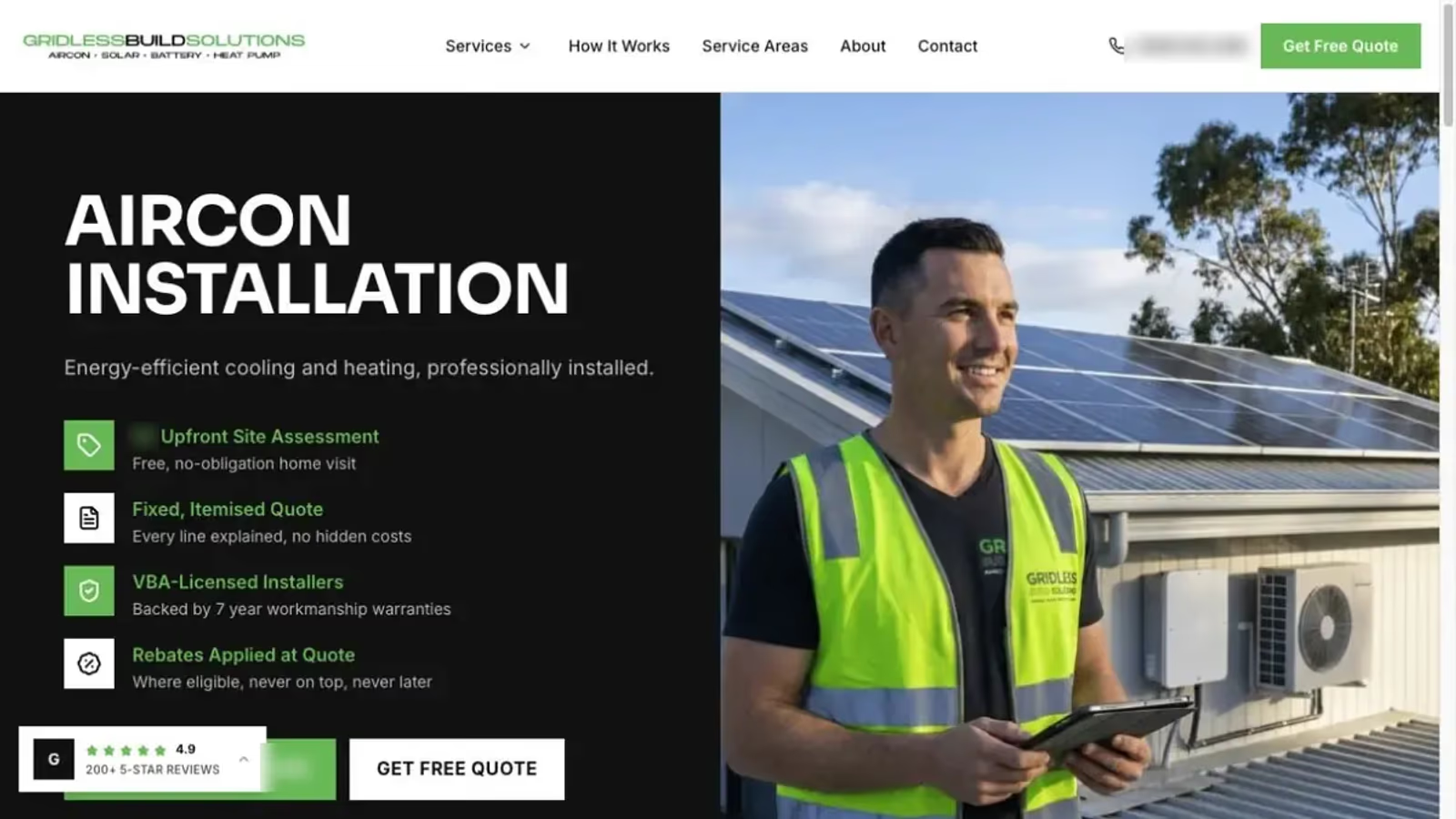
The Gridless website sets out the site assessment, itemised quote and installation process beside the air-conditioning offer. This answers a practical question: what will happen after I submit my details?
A useful installation page explains what the business needs to assess, how an appointment is arranged and what the quote will describe. Make it clear whether the customer is requesting a conversation, an assessment or an installation booking. These are different commitments. People should know which one they are making before they press the button.
Ask what the customer can comfortably answer
Use the first enquiry to collect the suburb, property type, intended system or room area, and whether the work involves a new installation or replacement. Give people an option to say they are unsure. The installer can establish technical requirements during the assessment.
Optional photos or a short message can help explain the space and any existing system. Keep those additions useful rather than compulsory. A customer should be able to request help without selecting a technical specification they do not understand. The first form prepares the assessment; the assessment prepares the quote.
Make the offer understandable on a phone and a computer
An installation customer may browse on a phone, then return later to read the details with someone else. Keep the system description, installation process and contact choices consistent across screen sizes. A short form and a readable explanation both deserve attention.
Test the journey by following an actual ad destination. Can a visitor identify the system being discussed, understand the quote process and send a request? Can the office see which service interested them? Our website design work connects those details so the handover is straightforward.
Try a replacement-installation request
For a replacement enquiry, the customer might know the existing system and the rooms they want to serve, but be undecided about a replacement. A useful response confirms the property, asks about the desired change and explains how the installer will assess it. Record those details with the appointment. This gives the assessor a starting point and makes the quote discussion specific to the customer’s project.
Review requests through to installation
For each enquiry, record the requested system, suburb, whether an assessment was arranged, whether a quote was sent and the eventual outcome. Add the reason when a request cannot progress, such as an area outside coverage or a service the business does not provide.
This makes the next budget decision more useful. A brand group that generates plenty of questions may serve a different role from a system group that produces suitable assessments. Compare the work each brings, the quote value and the capacity available. Use Google Ads management to adjust that service mix as the installation schedule develops.
Questions and answers
Should an installation form require a system model?
Only when it is genuinely needed to route the request. Give customers who are unsure a clear way to enquire, and establish the appropriate specification during the assessment.
Can brand and system searches share a page?
Yes, when the page directly answers both. A customer searching for a specific brand and system should be able to recognise that offer and find its installation and quote information.